If you’ve got a stye on your eyelid, you already know how sore and annoying they can get.
But what if you use contacts? You may be asking, can I wear contacts with a stye?
Technically, you can. But it’s not recommended by eye doctors. The good news is that most styes usually clear up on their own within a week or two.
In this post, we’re going to talk about why contacts and styes don’t tend to mix, what having a stye really means, how long to avoid contacts, and what can help your eye heal faster.
What Is a Stye?
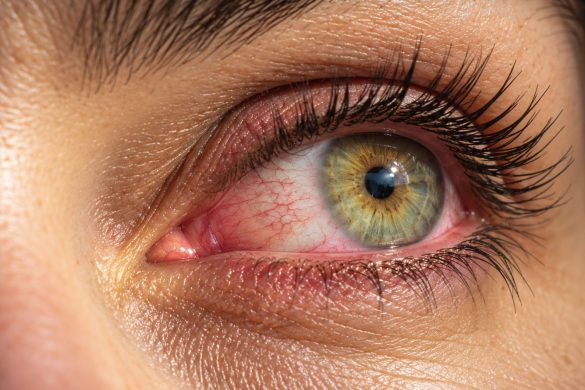
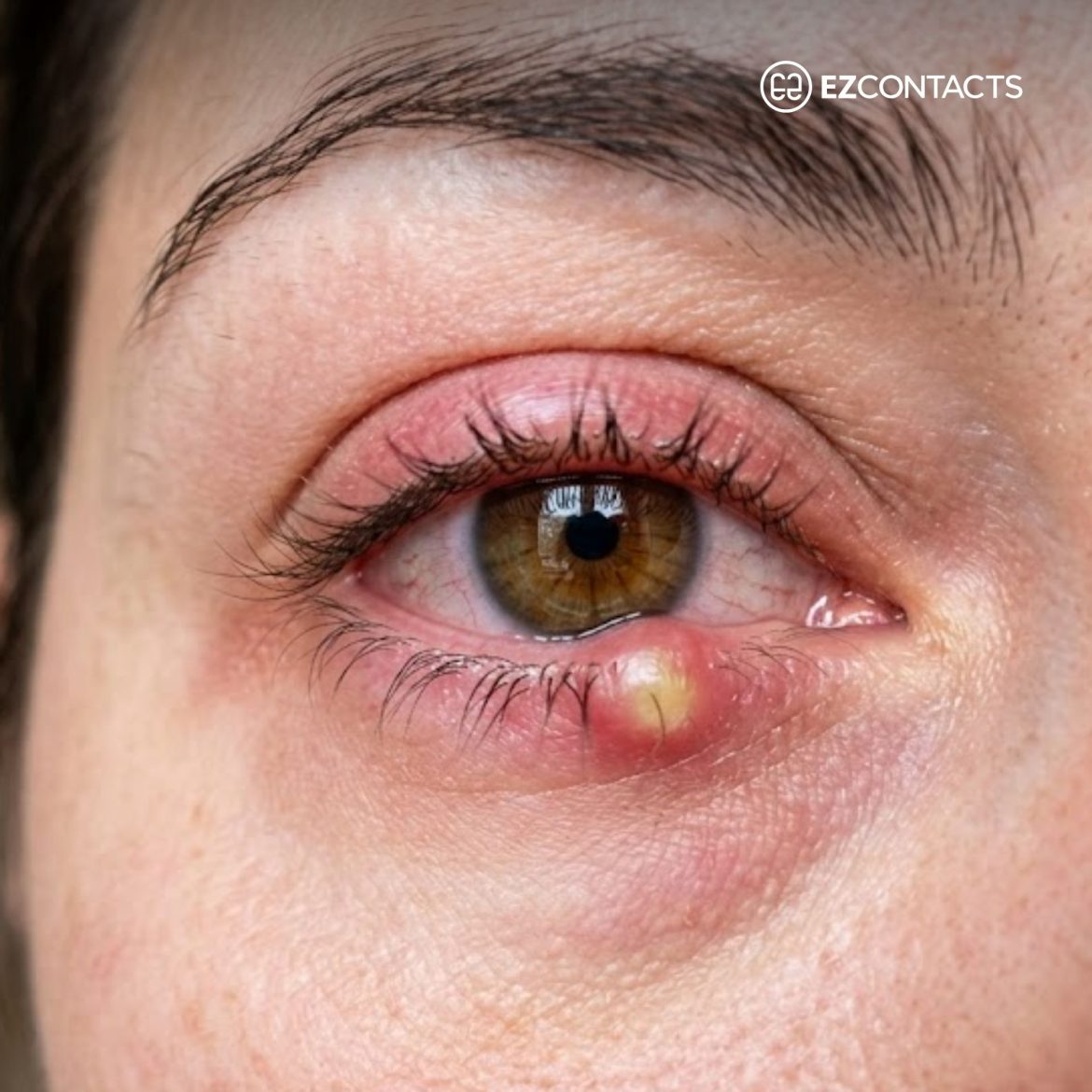
A stye is a small, painful lump that appears on the edge of the eyelid. The medical term for it is a hordeolum. They develop fast, often appearing in just 24 hours.
Most styes happen when one of your eyelids’ tiny oil glands becomes blocked and infected with bacteria. The usual culprit is Staphylococcus aureus, a bacteria that naturally exists on your skin.
These oil glands release oils that help stop your tears from evaporating too quickly. But if a gland gets clogged, oil and bacteria become trapped inside. This is what leads to swelling, redness, tenderness, and the pimple-like bump of a stye.
Why Contacts Become a Problem
Every time you blink, your eyelid slides across the contact lens. If the eyelid is swollen or painful, that constant friction can become irritating very quickly. Many people describe the feeling as scratchy and sore, or sometimes as if something is stuck in the eye.
A stye can also disrupt your tear film. Remember those oil glands we talked about earlier? When they aren’t working properly, your tears evaporate faster, and the eye becomes drier.
Modern contact lenses are intentionally designed to let plenty of oxygen and moisture through. This is especially true for newer silicone hydrogel materials. But they’re still a thin barrier over the eye’s surface. When a stye is already causing dryness and inflammation, lenses can make things worse.
Does Wearing Contacts Make a Stye Worse?
Yes, wearing your contacts while your eye is still recovering can turn a stye into an even worse event. Lenses put a physical cover over your eye, creating the perfect storm for infection and other problems.
Here’s how:
- Trapping bacteria: When you insert or adjust a lens, it’s easy to accidentally transfer bacteria from the stye onto your eye. The lens can then trap that bacteria against your cornea, resulting in a dangerous corneal infection.
- Friction when blinking: A stye makes the inner eyelid swollen and uneven. Every time you blink, your eyelid rubs against the edge of the contact lens. The friction can cause irritation, delay the healing process, and even cause the stye to pop prematurely, spreading bacteria everywhere.
- Contaminating your supplies: If you wear reusable lenses, the bacteria will transfer to the plastic and your storage case. Putting those same lenses back in later, even after the stye heals, can mean you re-infect yourself.
Should You Throw Away Your Contacts?
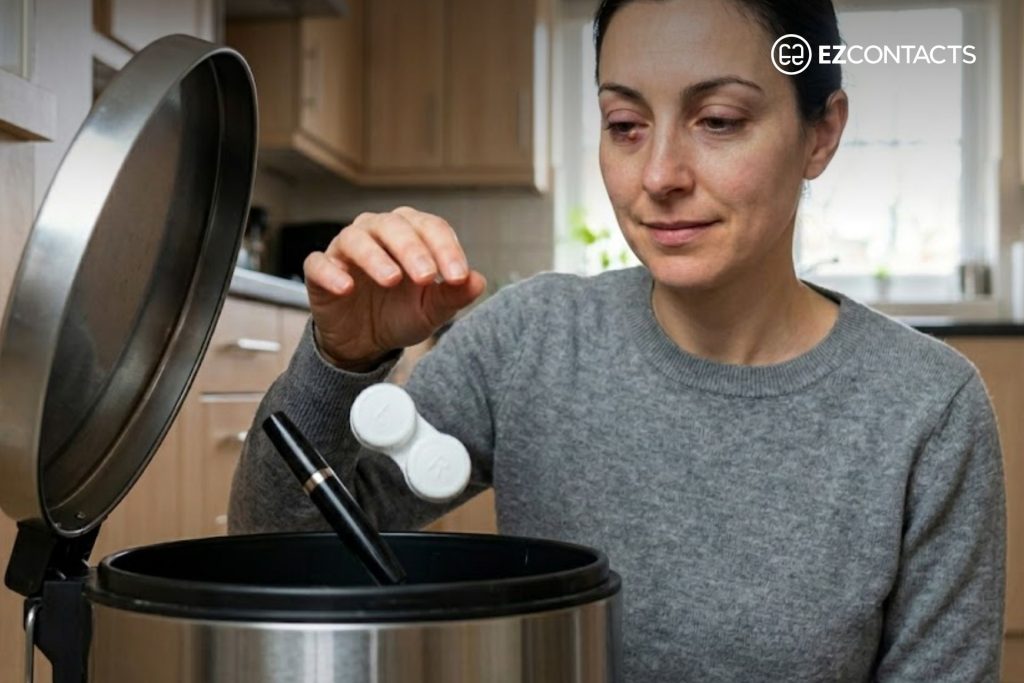
Yes, this is the safest course of action. If you were wearing disposable contact lenses when the stye developed, then obviously, these should go straight in the trash. The same goes for eye makeup like mascaras or eyeliners, since these may be contaminated too.
Some people opt to try disinfecting reusable contacts, like monthlies. But it’s not recommended. Remember, your eye health is more important than salvaging a lens.
It’s also best to replace your contact lens case, or at the very least, disinfect it thoroughly. Cases are one of the biggest sources of bacterial contamination for contact users.
When Is It Safe to Wear Your Contacts Again?
In general, it’s best to wait until:
- The bump has healed
- Redness and swelling are gone
- Your eye feels totally normal again
- There’s no discharge or tenderness
Can You Wear Glasses Instead?
Absolutely! Glasses give your eye a chance to recover without the friction from contacts. They also mean you don’t need to touch your eye to insert and take out lenses.
How To Help a Stye Heal Faster
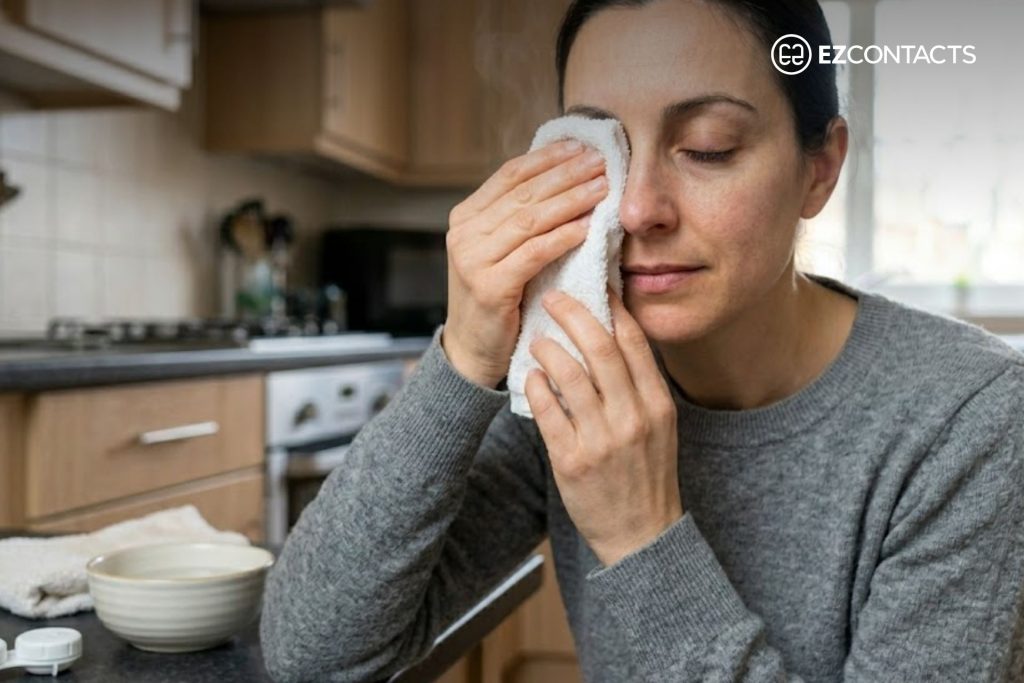
Most styes get better on their own without antibiotics or needing to see a doctor.
The most effective treatment is usually warm compresses. 10 to 15 minutes of holding a clean, damp, and warm washcloth against your closed eye can do wonders.
Heat helps soften the trapped oils inside the blocked gland, so it can open up the stye and help it drain. Just make sure it’s not too hot… you don’t want to make things even worse by burning the stye, ouch!
It’s also important not to squeeze or pop the stye yourself. A stye might look a little like your average pimple, but squeezing or popping it can push bacteria deeper into the eyelid or surrounding tissues.
When Should You See an Eye Doctor?
Most styes are minor and go away without any medical treatment. However, you should see an eye doctor if:
- The swelling becomes severe
- Redness spreads across the eyelid or your face
- Your vision changes in any way
- The pain becomes unusually intense
- The stye keeps coming back
- There’s been no improvement after one or two weeks
Recurring styes can sometimes point to underlying conditions like chronic dry eye or blepharitis, a condition that causes chronic eyelid inflammation.
When a Stye Might Not Actually Be a Stye
Not every bump on your eyelid is actually a stye. Sometimes it’s a chalazion instead.
Like a stye, a chalazion forms when an oil gland becomes blocked. But unlike a stye, it isn’t caused by a bacterial infection. It happens when oils build up inside the gland and trigger inflammation.
Chalazia (that’s the plural form of the word, in case you were interested) are typically firmer, not so red, and usually painless. They also develop more slowly than styes, taking multiple days or weeks to grow. Not a single day, like a lot of styes.
Warm compresses can still help, but a chalazion often sticks around for a good while. Some eventually need treatment from an eye doctor if they don’t go away on their own.
TL;DR
- It’s not recommended to wear contacts if you have a stye. They can further irritate the eye and increase the risk of infection.
- Warm compresses are the best way to help heal a stye. Never squeeze or pop a stye yourself.
- Ideally, you should replace any lenses, eye makeup, and lens cases that were used when you had a stye.
- Most styes heal on their own in one or two weeks. Don’t wear contacts again until the stye is 100% healed.
- People sometimes confuse styes with another eyelid bump called a chalazion.
- See an eye doctor if the swelling gets worse, affects your vision, or doesn’t seem to be healing.