Do blue light contacts work as promised? This depends on what you mean by “work.”
Blue light contact lenses are one of the newest additions to the growing market of blue-light-filtering products. Like blue light glasses, they’re often marketed as a way to reduce eye strain when using digital devices.
But science doesn’t fully support all of the claims that a lot of manufacturers make.
To be clear, blue light contact lenses do filter blue light. We’ll go more into that later in the article. What remains less clear is whether that filtering actually delivers the benefits many consumers expect.
We’re going to look at what the science really says about blue light contact lenses, and what you should realistically expect the benefits to be.
What Are Blue Light Contact Lenses?
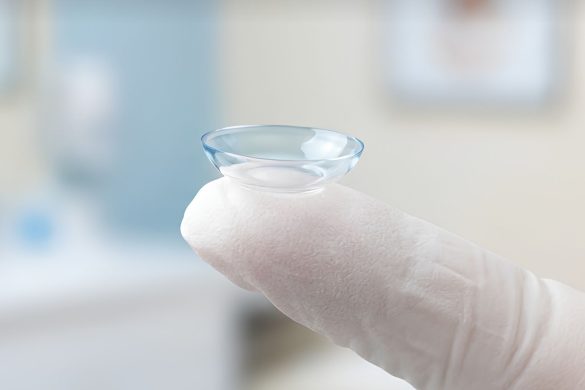
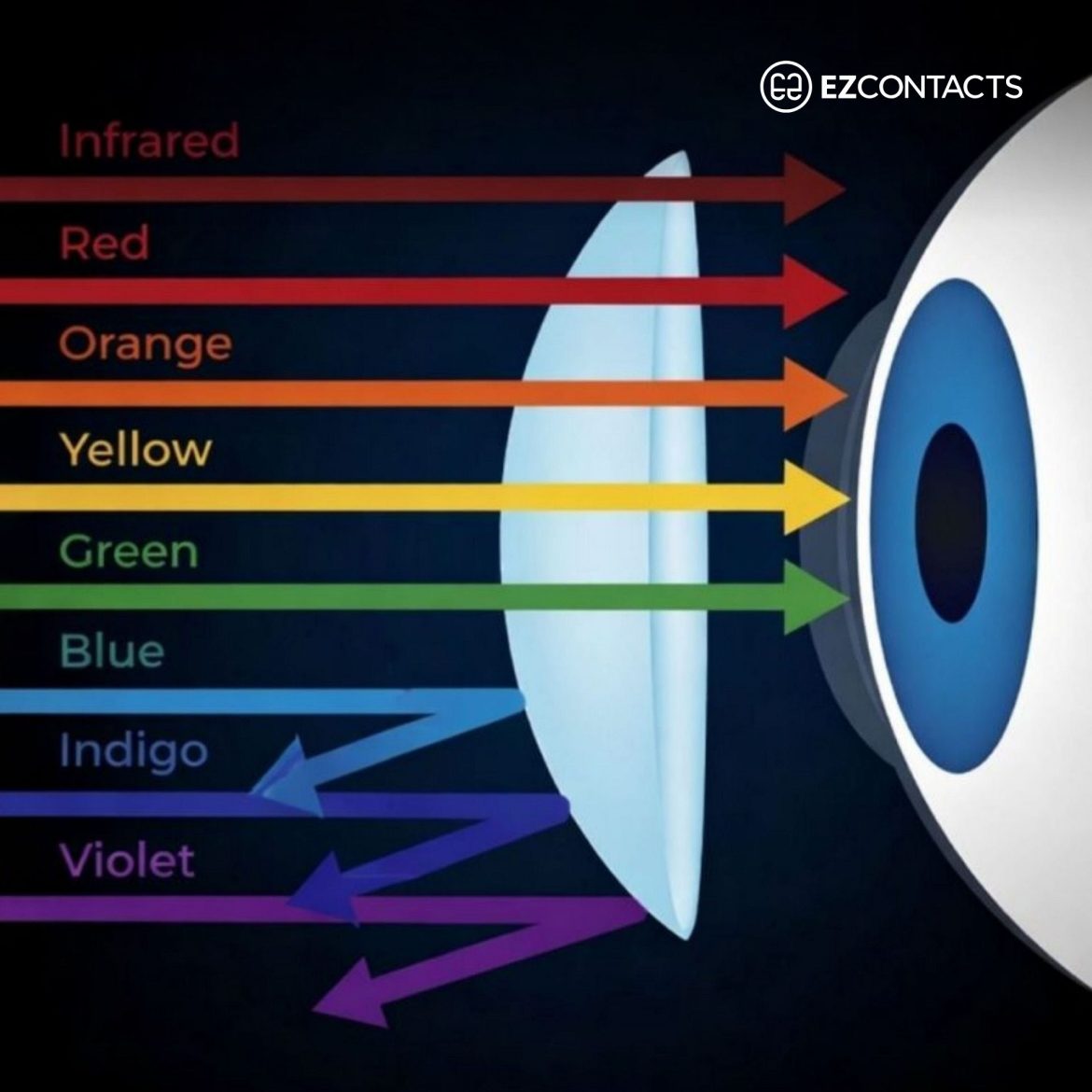
Blue light contact lenses are contacts that incorporate filters designed to reduce the amount of high-energy blue-violet light that can reach the eye.
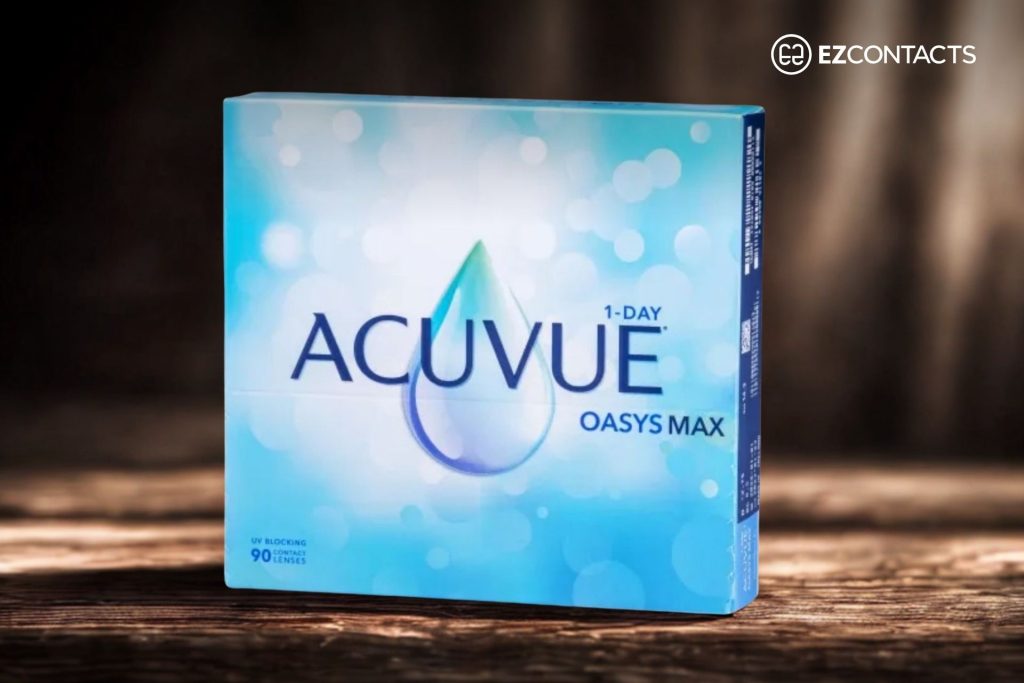
One of the best-known examples is ACUVUE OASYS MAX 1-Day. They feature patented OptiBlue Light Filter technology, which selectively reduces blue-violet light.
Johnson & Johnson’s selling point is that, despite the filter, the wearer’s color perception will still be normal.
Do Blue Light Contacts Actually Block Blue Light?
Yes, modern blue-light-filtering contact lenses do physically reduce the amount of blue-violet light that enters the eye. According to Johnson & Johnson, Acuvue Oasys MAX 1-Day filters approximately 60% of blue-violet light.
For comparison, many clear blue-light-filtering eyeglass lenses typically block between 10% and 25%. So from a purely technical standpoint, blue light contact lenses do exactly what they claim to do.
The bigger question is whether blocking that light translates into meaningful benefits.
Do Blue Light Contacts Help With Digital Eye Strain?
This is where things get a bit more complicated. A lot of people assume digital eye strain is caused by exposure to blue light from screens. But there’s been extensive research into this, and there’s currently little evidence to support that theory.
In 2023, researchers from the University of Melbourne conducted a major review of 17 randomized controlled trials involving blue-light-blocking lenses. They concluded that blue-light-blocking lenses provided little to no short-term benefit for reducing symptoms of digital eye strain.
This doesn’t mean blue light filters are useless. But it does suggest eye fatigue after a long day at a computer may not be caused by blue light in the first place.
What Really Causes Digital Eye Strain?
For most people, the real culprit isn’t blue light at all… it’s blinking, or to be more specific, a lack of blinking.
Blinking is how our eyes stay hydrated. Each blink spreads a fresh layer of tears over the surface of the eye, keeping it lubricated.
When we look at a phone, tablet, or computer, the rate at which we blink slows down drastically. Normally, a person blinks around 15 to 20 times per minute. But when looking at a screen, your blink rate can drop in half.
To make matters worse, the quality of our blinks also suffers. “How can a blink be bad quality?” you might ask.
Well, looking at screens triggers a massive spike in “incomplete blinks,” which is when the eyelids don’t fully close. This means our tears can’t be washed across the entirety of the cornea like they’re supposed to.
For contact lens wearers, this becomes even more of an issue because the tear film also needs to keep the surface of the lens hydrated. On top of that, spending hours focusing on nearby objects puts a lot of demand on our eyes.
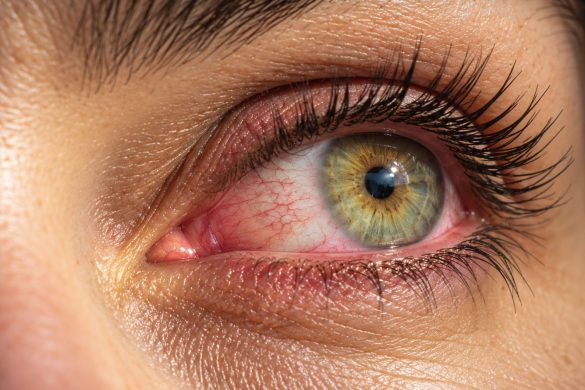
All of this means that we could see some symptoms, including:
- Dry eyes
- Burning sensations
- Changes to vision
- Eye fatigue
- Irritation
Screens Produce Less Blue Light Than Most People Realize
One of the most surprising findings from recent research is how little blue light modern screens actually emit compared to natural daylight.
A 2024 analysis published in Photonics found that electronic screens emit less than 0.4% of the accepted long-term viewing safety limit for blue light exposure.
Perhaps most surprisingly, the researchers noted that spending just one minute outdoors can expose a person to more blue light than if they were to look at a screen for 24 hours straight.
This is in direct contrast to the way artificial blue light is often portrayed in marketing. It’s frequently presented as a major threat to the health of our eyes and our general well-being.
It doesn’t mean blue light doesn’t exist, nor that it doesn’t have any impact on us. It just puts screen use into some perspective.
Where Blue Light Contacts May Actually Help
While the evidence for blue light contact lenses solving digital eye strain remains weak, there is evidence that they may be good for something else: sleep.
Blue light isn’t inherently bad. In fact, it’s an important part of how your body keeps track of time. Special cells in the retina are sensitive to blue wavelengths and send signals to the brain’s internal clock, helping regulate your sleep-wake cycle.
The issue is when you’re exposed to blue light.
Exposure to blue-rich light in the evening can suppress the release of melatonin, the hormone that tells your body it’s time to wind down for sleep. Multiple systematic reviews have found that evening light exposure can delay your circadian rhythm and make it harder to fall asleep.
A review of various research in 2023 found that eight out of 12 studies reported improvements in sleep after participants wore blue-light-blocking lenses in the evening.
Overall, they found small to moderate improvements in overall sleep quality and sleep duration. However, the benefits were most noticeable in people who already had sleep disorders or disrupted sleep patterns.
While more research is still needed, sleep is an area where blue light filtering seems to have genuine scientific support. So if you have trouble sleeping or with the quality of your sleep, blue light contact lenses may help.
Blue Light Contacts vs Blue Light Glasses
If you decide to try blue light lenses, should you go with contacts or blue light glasses? Well, each have their advantages:
Blue Light Contact Lenses
- Filtering moves with your eyes
- No reflections like you can get with glasses without anti-reflective (AR) coatings
- No need to switch between your standard glasses and blue light glasses
- Full field-of-view coverage
Blue Light Glasses
- Available to non-contact-lens wearers
- Easier to remove
- Available in a wider range of filter strengths
- Can be less expensive than specialty contact lenses
It just comes down to your personal preference and what works best for your lifestyle.
TL;DR
- Blue light contact lenses do physically filter blue-violet light. Some lenses, like ACUVUE OASYS MAX 1-Day, filter up to 60% of blue-violet light.
- Large clinical reviews have found little evidence that blue-light lenses significantly reduce digital eye strain. However, some research suggests that blue light lenses are useful for healthy sleep.
- Digital eye strain is more closely linked to reduced blinking, dry eyes, and looking at things up close for prolonged periods.
- Modern screens emit far less blue light than many people realize, especially when you compare screens to natural daylight.
- If your eyes feel tired after screen use, taking regular breaks and addressing dryness with eye drops or rewetting drops will probably make a bigger difference than blue-light lenses.