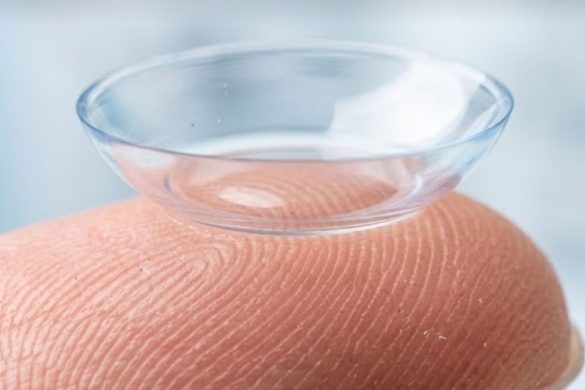
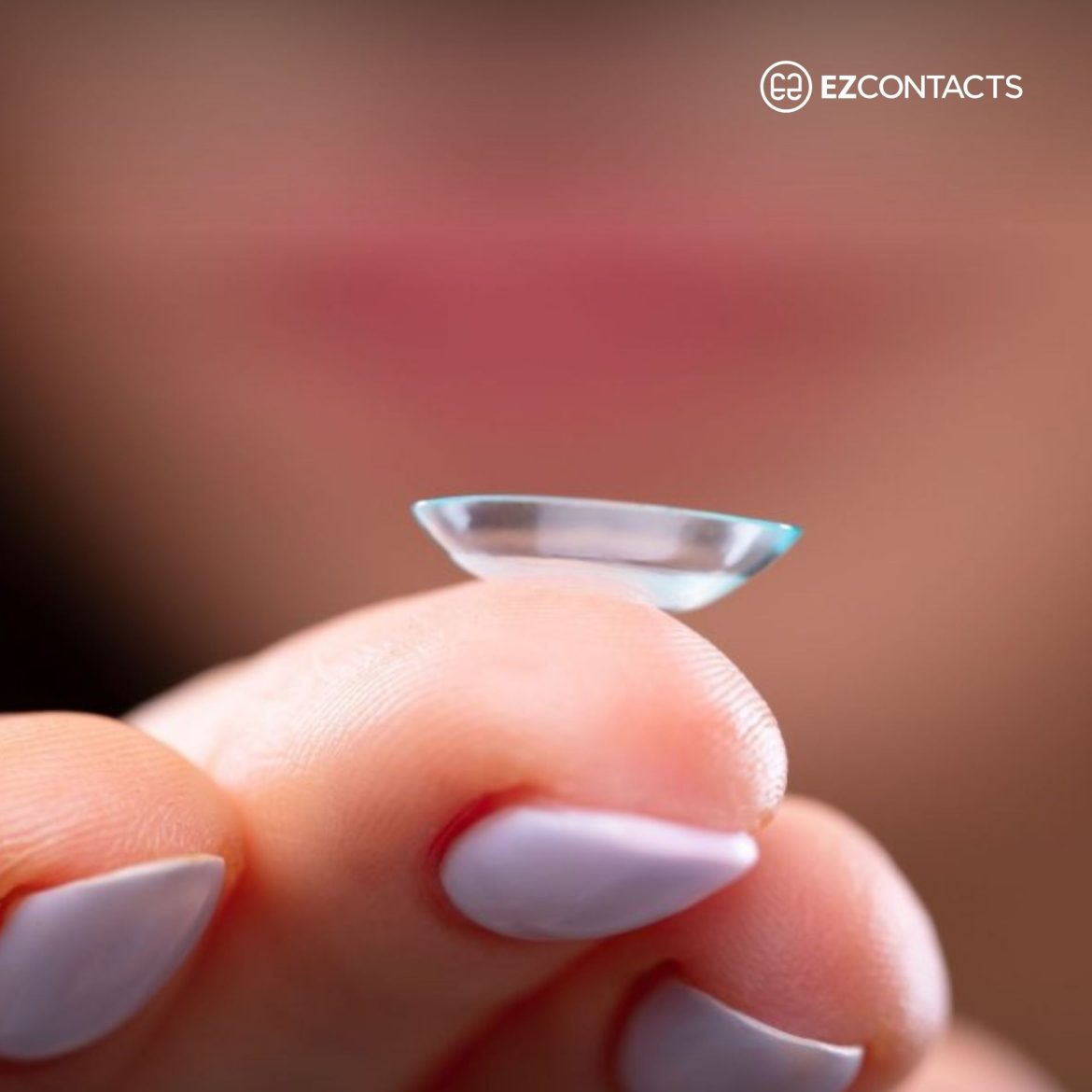
Are you thinking about trying rigid gas permeable contact lenses for your keratoconus?
Rigid gas permeable (RGP) contacts have long been a standard treatment option for people with keratoconus. Newer specialty lenses, like scleral lenses, have also started to gain popularity. But RGP lenses still play an incredibly important role in the management of keratoconus.
Let’s get into what keratoconus is and how RGP lenses work.
What Is Keratoconus?
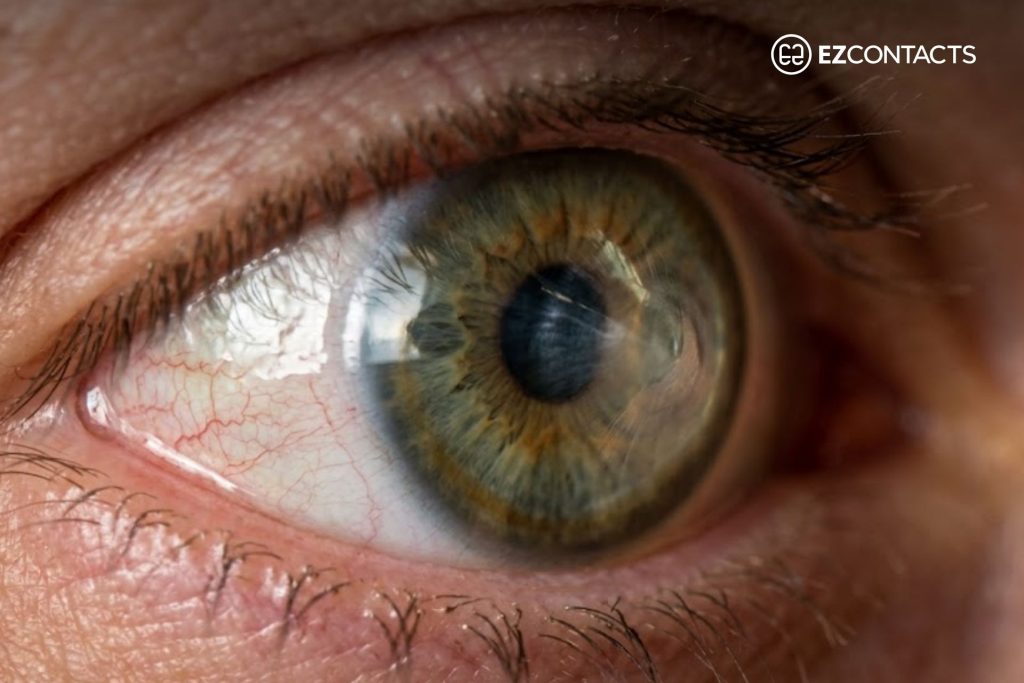
Keratoconus is a progressive eye condition that affects the shape of the cornea.
Instead of keeping its normal round shape, the cornea slowly gets thinner and starts to bulge outward into a cone-like shape. This ends up creating visual distortions that become increasingly more difficult to correct with glasses or soft contact lenses.
The irregular shape prevents light from focusing properly on the retina and can cause various symptoms, including:
- Blurred vision
- Ghosting
- Glare
- Halos around lights
- Double vision
- Sensitivity to light
Keratoconus typically develops during childhood or early adulthood, between the ages of 10 and 25. It usually progresses for 10 to 20 years before stabilizing later on in life.
Although keratoconus initially affects one eye more severely, it almost always affects both eyes eventually.
Newer research suggests the condition may be far more common than previously thought. Older estimates placed its frequency at about 1 in 2,000 people. Modern studies that used advanced corneal imaging suggest the true figure may be closer to 1 in 375 people.
One of the strongest known risk factors is chronic eye rubbing. A large review found that frequent eye rubbing more than tripled the risk of developing or worsening keratoconus.
Why Glasses and Soft Contacts Often Stop Working
In the early stages of keratoconus, glasses and soft contact lenses usually provide adequate vision correction. As the disease progresses, though, the cornea becomes increasingly irregular, and this is when they stop being enough.
Soft contact lenses are specifically designed to be flexible. When you place them on your eye, they conform to the shape of the cornea underneath. For someone with a normal cornea, this isn’t a problem.
But for a person with keratoconus, the lens essentially drapes over the cone-shaped cornea. This means the contact lens has an irregular shape when it’s worn. The visual distortions associated with keratoconus also won’t be corrected.
How Rigid Gas Permeable Contact Lenses Work

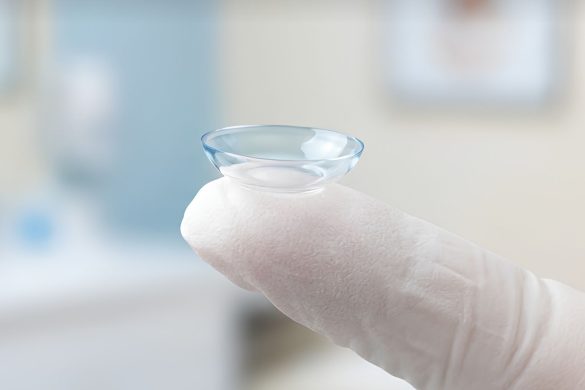
Unlike soft lenses, rigid gas permeable (RGP) lenses keep their shape when on the eye. They’re “rigid” or hard. So instead of conforming to a cone-shaped cornea caused by keratoconus, they create a sort of bridge over it.
When a person is fitted with an RGP lens, their natural tear film fills the microscopic gaps between the lens and the cornea. This creates what specialists call a “liquid lens.” That layer of tears creates a smooth optical surface. This can neutralize the irregularities on the cornea caused by keratoconus.
So instead of light passing through a distorted cornea, it passes through a much smoother surface. This surface is made by the rigid lens and the tear layer under it.
That’s why rigid gas permeable contact lenses often give much better vision than glasses or soft contacts for people with keratoconus. This is especially true if they have a more severe case of the condition.
How Much Can RGP Lenses Improve Vision?
The improvement in vision with RGPs can be substantial. One clinical study compared keratoconus patients before and after clinicians fitted them with RGP lenses.
On average, patients’ vision got better. With standard glasses, their vision was about 20/70. With rigid gas-permeable lenses, their vision often improved to better than 20/25.
The takeaway is that after participants got rigid gas permeable contact lenses, most achieved normal or near-normal vision.
Do RGP Lenses Cure Keratoconus?
No, the research doesn’t suggest this. Some people think that because RGP lenses rest firmly on the eye, they can flatten the cornea. They may also think the lenses can stop the cornea from becoming more cone-shaped.
Long-term studies have found that rigid gas permeable contact lenses neither accelerate nor slow the progression of keratoconus. Their primary role is simply to correct the wearer’s vision while they wear them.
RGP Lenses vs. Scleral Lenses
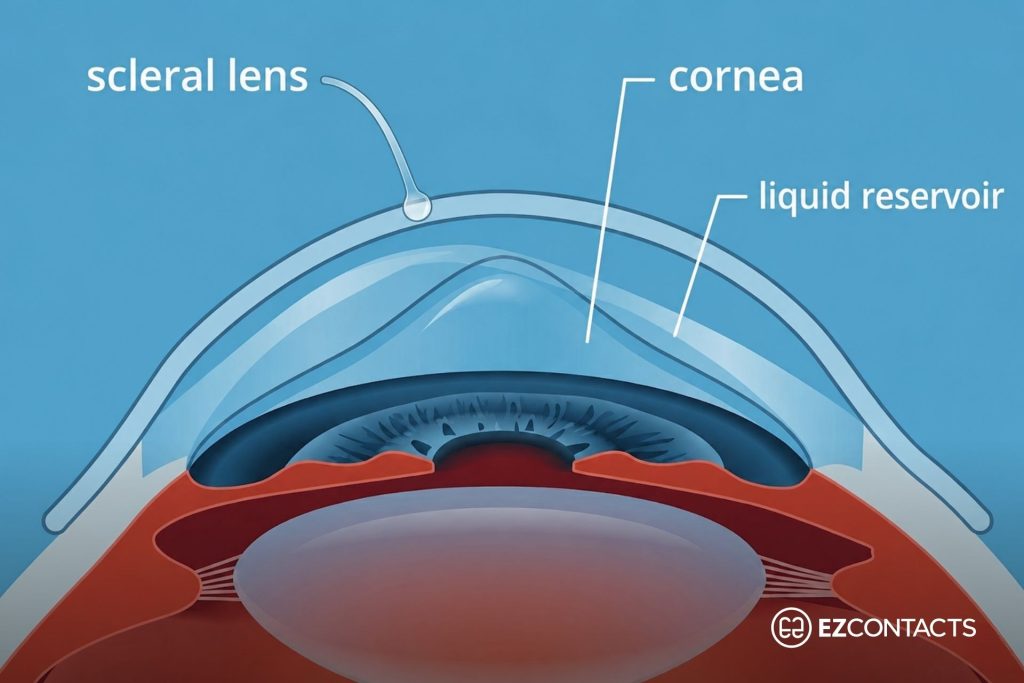
Scleral lenses have become increasingly popular as a solution for keratoconus over the past decade. Scleral lenses are larger lenses that vault over the entire cornea and rest on the white part of the eye.
Some patients find them more comfortable than RGPs because the lens doesn’t actually touch the cornea. But that doesn’t mean RGP lenses have become obsolete.
Rigid gas permeable contact lenses are still highly successful in treating keratoconus. They’re also usually less expensive, easier to handle, and less prone to issues like fogging up.
But if you do try RGPs and you don’t think they’re working out for you, scleral lenses are a solid option.
Do RGP Lenses Prevent the Need for Corneal Transplants?
It might be a relief to know that the majority of people with keratoconus never require a corneal transplant. Research has indicated that only about 10% to 20% of patients get to the point where surgery becomes necessary.
Around 90% of people with advanced keratoconus can achieve functional vision with RGPs and sclerals.
This very clearly demonstrates how important specialty contact lenses, including RGPs, are in managing keratoconus.
TL;DR
- Keratoconus causes the cornea to thin and bulge outwards into a cone shape. This distorts the patient’s vision because light is unable to focus on the retina as it used to.
- Research in 2017 that used advanced imaging technology found that keratoconus affects roughly 1 in 375 people. Before this, it was thought the disease only affected around 1 in 2,000.
- Soft contact lenses become less effective as keratoconus progresses and the cornea becomes more irregular.
- Rigid gas permeable contact lenses create a “liquid lens” that helps mask irregularities of the cornea.
- Studies show RGP lenses can drastically improve visual acuity in keratoconus patients.
- RGP lenses improve vision, but they don’t slow the progression of the disease or offer a “cure.”
- Most keratoconus patients can avoid corneal transplant surgery by using specialty lenses. These include RGP lenses and scleral lenses.