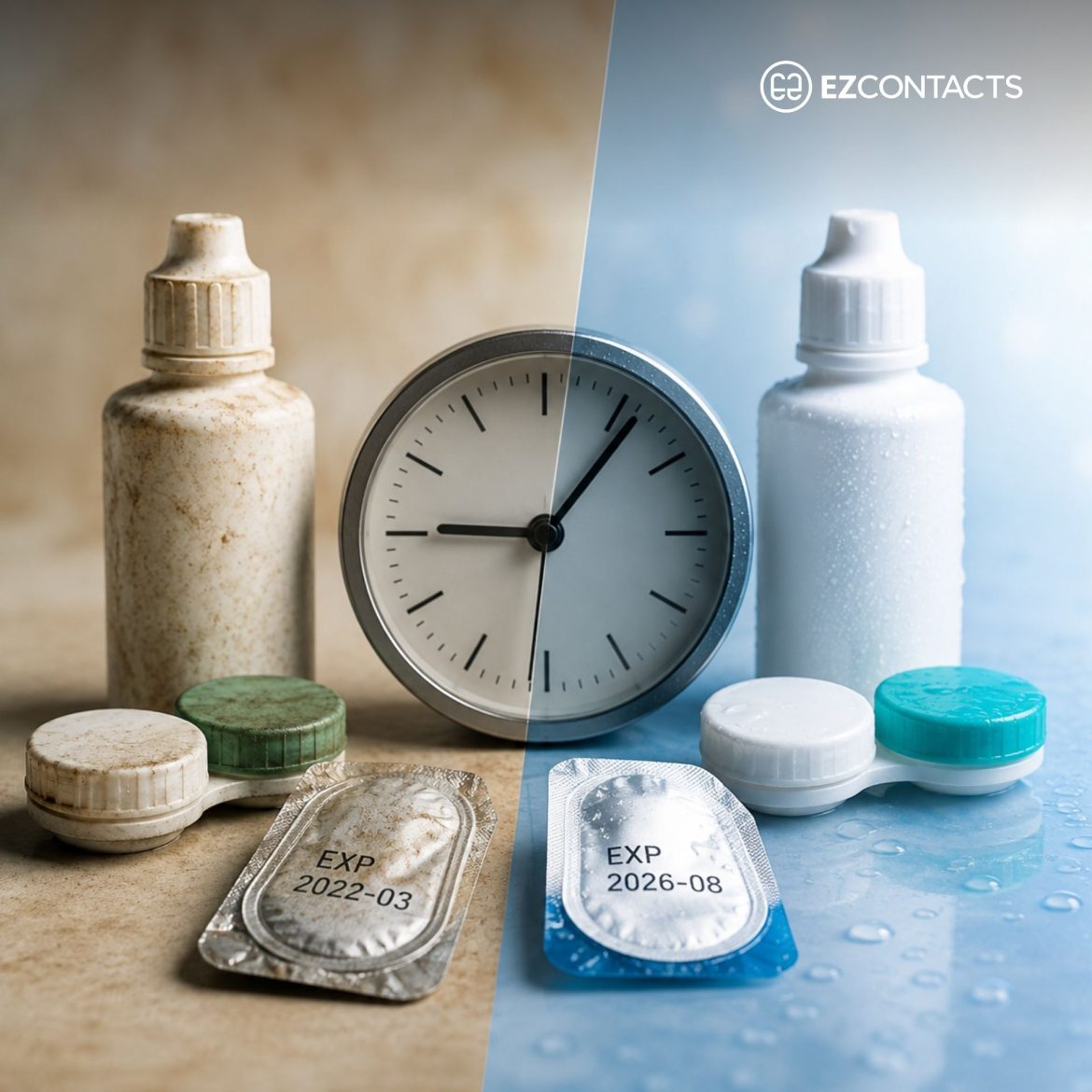
Did you find an old bottle of contact solution in your cabinet? You might be wondering if it’s still safe to use. Does contact solution expire?
The answer is yes. In this article, we’ll talk about why it’s best not to use expired contact solution and ways to ensure you always have enough.
At-a-Glance Summary
This guide answers the question ‘does contact solution expire,’ and it goes through why it’s not a good idea to use expired solution. It also includes other strategies to help keep your eyes healthy with regular contact use.
What To Know About Your Contact Solution’s Expiration Date
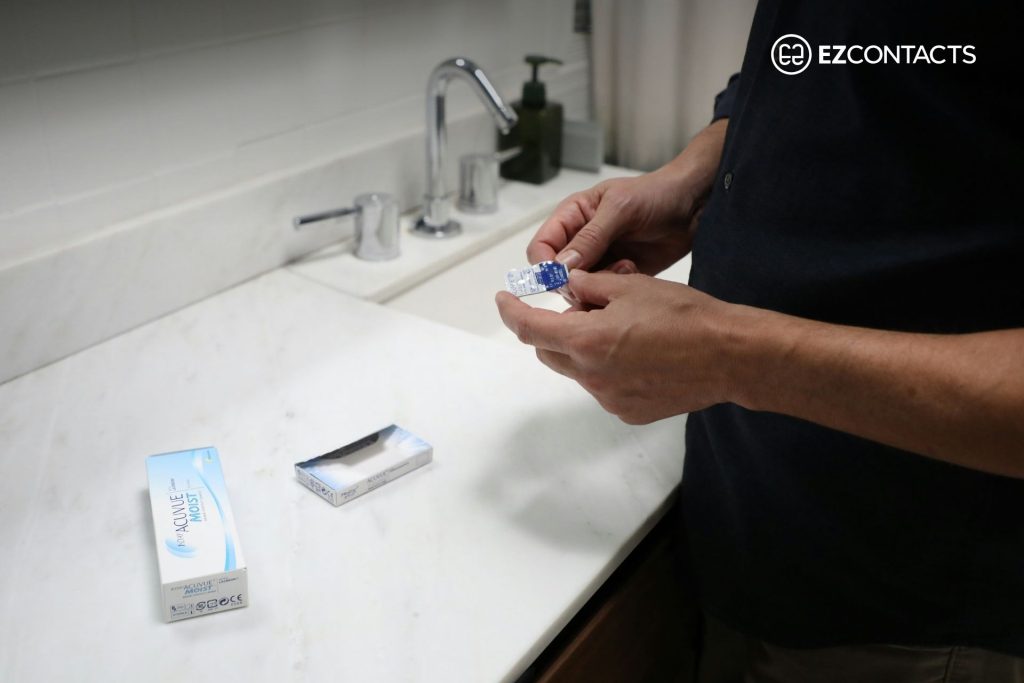
Take the expiration date on your contact solution seriously.
It’s helpful to remember the purpose of contact solution: to clean and disinfect your lenses to prevent eye infections or irritation. For this purpose, contact solution contains specific ingredients to kill microorganisms that could cause infection.
However, these ingredients can become degraded over time, which means they may not work as well. As a result, your lenses may not get as clean, and germs could grow on them. Then, when you put your lenses in, those germs could be transferred to your eyes.
Other Signs Contact Solution May No Longer Be Good
In some cases, the ingredients in contact solution can degrade even if it’s not expired. For example, heat or cold can cause contact solution to deteriorate, becoming less effective at cleaning and killing germs.
A good rule of thumb: Avoid leaving your contact solution in hot or cold temperatures. This can help reduce the risk of it failing to work properly.
Be on the lookout for these signs that your contact solution is no longer safe to use:
- Changes in how it looks. Contact lens solution should be clear and free of any debris. If it looks cloudy or contains clumps or particles, it’s best to throw it out and buy a new bottle.
- An unusual smell. Contact lens solution shouldn’t have any strong odors. If you notice a whiff of something strange when you open the bottle, this could be a sign of bacterial contamination.
- Eye pain or discomfort. If you suddenly experience redness, pain, or irritation in your eyes, this could be a sign that your contact solution is no longer working. In this case, it’s a good idea to throw out the contact solution and switch to your backup glasses for a day or two. If the irritation persists, see an eye doctor right away.
Tips for Keeping Your Eyes Healthy With Contacts
Here are some things to keep in mind when you wear contacts regularly:
- Store contacts and contact solution in a cool, dry location away from heat, cold, and sunlight. Additionally, it’s best to avoid exposing them to humidity. So, the bathroom cabinet may not be the best option.
- If you’re going to be spending a lot of time outdoors and don’t have many temperature control options, consider buying a small travel-sized bottle of contact solution and throwing it away after your trip.
- Always have extra contact solution on hand. I can’t stress this enough. Stuff happens. Contact solution bottles are small, easy to spill, and get lost easily. And unfortunately, there is no good alternative when you need to remove and store your contacts.
- For this reason, I like to keep 3-4 bottles on hand at all times. You can easily stock up on EZContacts; there are numerous types of contact solution available.
- If you do run out of contact solution or suspect yours is spoiled, the best option is to get more, even if that means going to the only store that’s open.
- If you absolutely can’t get more solution, it may be time to retire your current pair of contacts early and switch to a new pair, or your backup glasses.
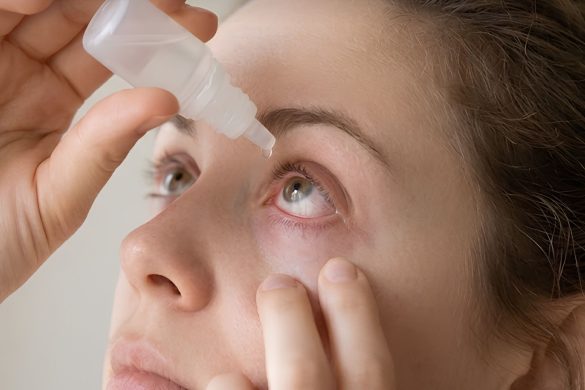
- Avoid rubbing your eyes if they’re irritated. It’s tempting, but rubbing your eyes can actually cause damage and introduce pathogens that may lead to infection. Instead, try eye drops for dryness or anti-allergy eye drops. If the irritation continues, see your eye doctor right away.
FAQs
What about the contact lenses themselves? Do they expire?
Yes, although they usually last longer than contact solution when stored properly. Contact lenses are packaged in sterile solution. But over time, this solution can dry out, the seal might fail, or the lenses could dry out or become warped. All these issues can lead to irritation or infection.
When you buy contact lenses, the box they come in should have an expiration date to let you know how long they are good for. However, if you notice one of the packages appears damaged or open, go ahead and discard it, regardless of expiration. It may not be safe to use anymore.
If I have a lot of buildup on my contact lenses, does that mean my contact solution is bad?
There are a number of potential causes for buildup on contact lenses, and expired or degraded contact solution is only one of them. You can try a new bottle to see if that solves the problem, but if not, here are a few other reasons you might have more buildup:
- You slept in your contact lenses. Sleeping in contact lenses reduces oxygen flow and leaves tear byproducts nowhere to go but your lenses. Sleeping in contacts isn’t a good idea unless you’ve been approved for extended-wear contacts by your doctor.
- Wearing your contacts for longer than recommended can also increase buildup.
- Some people have more proteins in their tears, and this can make buildup a persistent problem.
- If you sometimes skip or forget the “rub or rinse” part of your nightly routine, this can also increase buildup.
- When you suffer from dry eyes, the lack of moisture makes it easier for proteins and lipids to stick to lenses.
- Particles from air pollution can also get into your eyes and stick to contacts.
- Traditional hydrogel lenses are more prone to protein buildup, while silicone hydrogel lenses attract more lipid buildup. Depending on your personal eye chemistry, one or the other might work better for you.
TL;DR
- Many people wonder, does contact solution expire?
- And the answer is yes: contact solution does expire, and expired solution may not be effective at killing germs and keeping your lenses clean.
- For this reason, it’s best to keep several bottles handy and regularly check their expiration dates.
- Be sure to store your contact lenses and contact lens solution in a cool, dry place away from humidity and extremes of temperature.