The majority of contact lenses are designed to be replaced every day, week, or month. But some contacts can be used again and again for a year, or sometimes even longer. What makes those ones different?
Let’s look at why it’s possible to use the same pair of lenses for up to a year (or even more). Here’s what you need to know.
At a Glance
- Yearly contact lenses are usually rigid gas-permeable or other specialty lenses designed for long-term use.
- In the US, it’s very rare to find yearly soft contacts.
- Scleral, RGP, Ortho-K, and some hybrid lenses can last a year or longer, but it depends on the lens.
- Colored contacts that advertise themselves as yearly lenses aren’t necessarily safe to use for that long.
- You still need to monitor yearly lenses for scratches or problems with their fit. You also need to have check-up appointments with a doctor to ensure it’s still safe to wear them.
What Are Yearly Contact Lenses?
The term “yearly contact lenses” describes lenses that can be used for up to a year (sometimes longer), but there are several different types of lenses that fall into this category.
In the past, it used to be much more common to find soft contact lenses with a replacement schedule of up to a year. But as scientists and contact lens manufacturers have become more knowledgeable about the risks associated with reusing lenses for too long, yearly soft contact lenses have become very rare in the US.
Long-lasting lenses today are much more likely to be something like rigid gas-permeable (RGP) lenses. These are made from a hard material that can maintain its shape for many months. The American Academy of Ophthalmology says RGP lenses are generally reusable for around 18 to 24 months, but this will depend on each individual.
Just to be clear, “yearly” is referring to how often you need to throw away the lenses and replace them with new ones. It definitely doesn’t mean you can wear the lenses for a whole year without removing and cleaning them!
Which Contact Lenses Can Last a Year or Longer?
There aren’t that many types of lenses that can be worn for a year or longer, but usually they fall into these five categories.
Scleral lenses
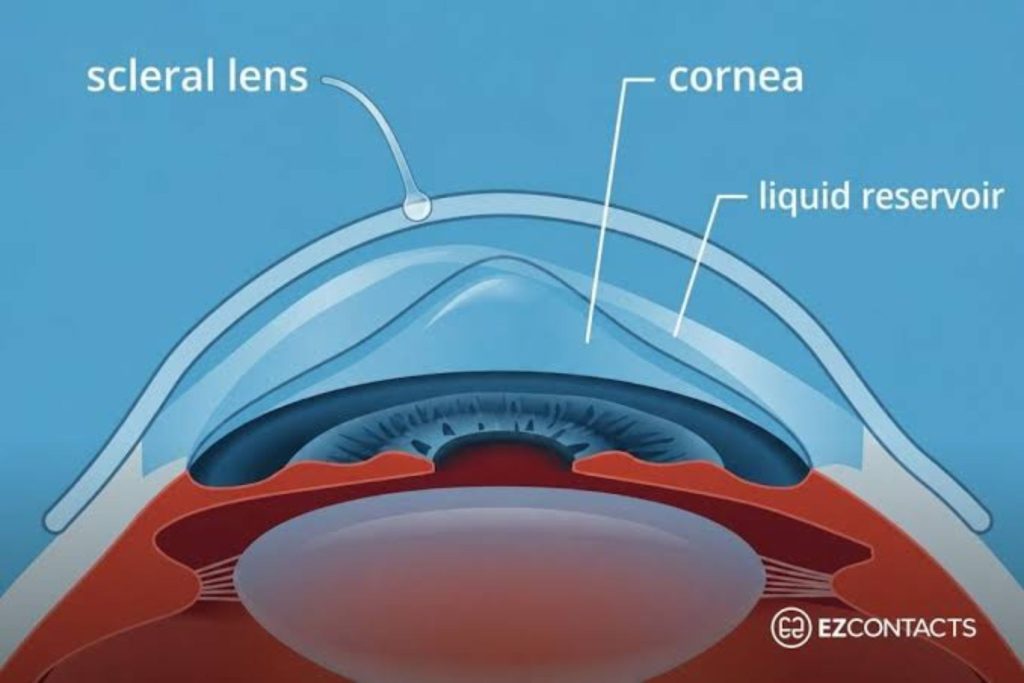
These are large, rigid gas-permeable (RGP) lenses. They’re called scleral lenses because the edges of them touch the part of the eye called the sclera, or the white of the eye. They vault over the cornea and leave a space underneath, which needs to be filled with fluid by the wearer before insertion.
Scleral lenses are most often prescribed for people with keratoconus or irregular corneas. Sometimes they’re also prescribed if someone has a very bad case of dry eye.
Rigid gas-permeable (RGP) lenses
RGP lenses are smaller than scleral lenses, and they rest right on top of the cornea instead of vaulting over it. The lenses are made from a rigid material that is highly oxygen permeable—this means oxygen can easily pass through the lens to your eye.
They can be used to correct nearsightedness, farsightedness, and astigmatism. They’re also used for certain conditions that result in irregular corneas, such as keratoconus.
Orthokeratology (Ortho-K) lenses
Ortho-K lenses are specially designed RGP lenses that are usually worn overnight. The goal of them is to temporarily reshape the cornea overnight so that the wearer can see clearly in the morning without needing to wear contacts or glasses.
An eye doctor has to custom-fit and regularly monitor them. Some can last for a year, but others have to be replaced more often.
Hybrid contact lenses
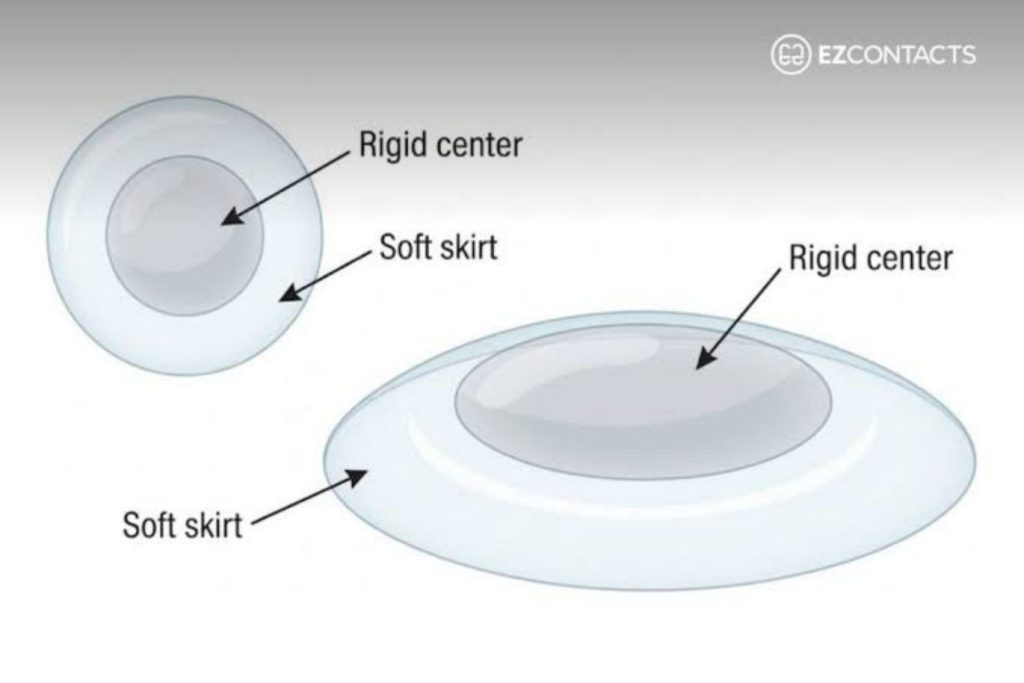
Hybrids combine the best characteristics of RGP lenses and soft contact lenses. They have an RGP center and then a soft outer skirt around the edge. The RGP center can provide excellent vision, especially for people who have an irregularly shaped cornea.
The job of the soft outer skirt is to make the lens more comfortable to wear and also to improve the stability of the lens so it doesn’t move around on the eye.
Some hybrids can last for a year or longer, while some will need to be replaced more regularly. It depends on the brand and what your eye doctor tells you.
Colored and cosmetic contact lenses
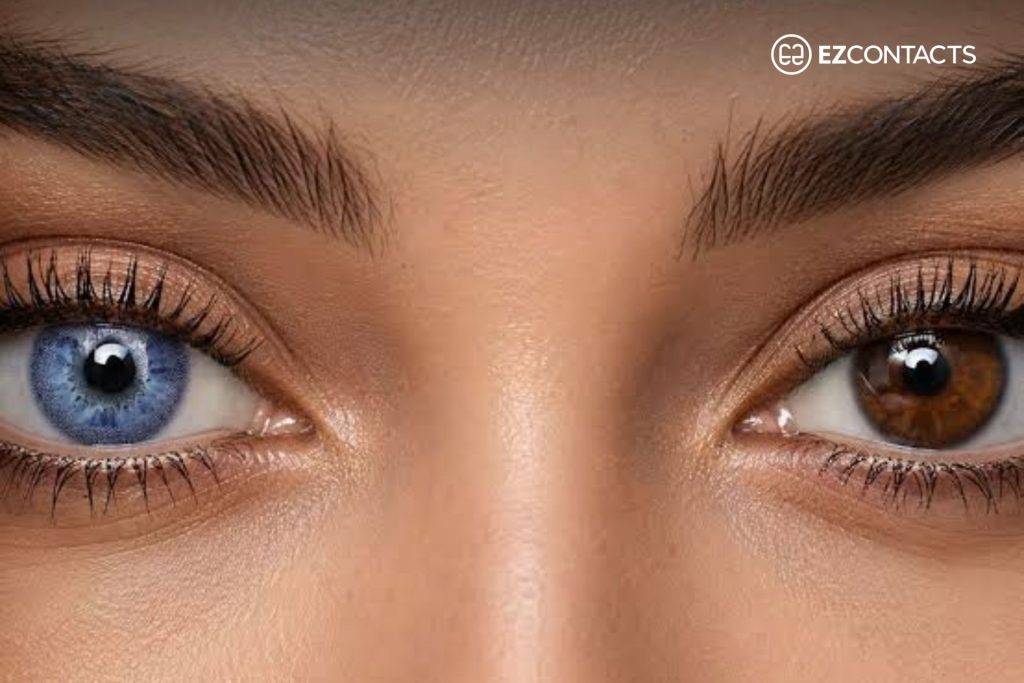
I’ve decided to include this category of lenses because many sold online are advertised as “yearly” lenses. However, you should take this replacement schedule with a grain of salt.
A lot of people buy colored or cosmetic lenses online to use for a special occasion, but then they don’t properly clean or store the lenses. Wearing them again after a few weeks or months can be very risky. During that time, the lenses might have gathered buildup and bacteria that are difficult to remove, even if you clean them before use.
In the US, colored and decorative lenses are classed as medical devices by the FDA, and they require a fitting and a prescription. Despite this, many less reputable retailers let you buy them without a prescription. The bottom line is that you shouldn’t assume cosmetic lenses are safe to use for one year just because they’re advertised as such.
How Can Some Contact Lenses Last a Year When Soft Lenses Can’t?
It comes down to the materials used to make the lenses. Soft contacts are usually made from hydrogel or silicone hydrogel. They’re very flexible and contain water, which lets them mold to the shape of your eye.
However, over time, the lenses gather deposits from your eyes, and the material starts to deteriorate. This is what makes it unsafe to use them longer than intended.
The other types of lenses we’ve discussed are made using rigid materials. They’re durable, they don’t tear, and they don’t lose their shape. It’s also easier to remove buildup from the surface when you clean them.
It’s still possible for yearly replacement lenses to become unsuitable for use in a shorter time period, though. For example, the lenses might get scratched or lose their shape.
Different types of lenses have different replacement schedules, too, so a hybrid lens will need to be replaced at a different time than an RGP lens. It all depends on what your eye doctor tells you.
FAQs
Can you wear yearly contact lenses for a whole year?
This depends on what you mean. You still have to remove yearly lenses, clean them, and store them in disinfecting solution every day. “Yearly” describes the replacement schedule rather than the wear limit. That means you need to replace the lenses every year with new ones.
Whether you can keep reusing them for a year (or perhaps longer) will depend on the type of lenses you have. Your eye doctor will also need to confirm that it’s ok to keep using them when you go for a check-up appointment.
Can you sleep in yearly contact lenses?
Usually, you cannot. The only exception is typically Ortho-K lenses, which are designed to be worn overnight. In rare cases, other types may allow you to sleep in them; ask your doctor.