Are you struggling with monovision contacts? Wondering how long it will take to get used to them?
Adapting to monovision contacts can take anywhere from a few days to several weeks. Some people adjust quickly, while others need more time.
So, what kind of adaptation period are you looking at? And what does the process feel like?
At a Glance
- Many people notice an improvement in their vision and their comfort with monovision contacts after the first few days or weeks.
- Monovision can affect depth perception and your ability to see well in the dark. Some people aren’t comfortable driving at night, but some can do it with no problem.
- Headaches, dizziness, nausea, or blurry vision that doesn’t improve in a few weeks could be signs your prescription needs some adjustments.
- If monovision doesn’t work for you, multifocal contacts are another option for presbyopia.
What Does It Feel Like When You Start Wearing Monovision Contacts?

Wearing monovision contacts for the first time can feel… strange.
That’s because you’re deliberately giving each eye a different job. One eye is being corrected for distance, and the other is being corrected for near vision. So your brain has to learn which eye to rely on for different tasks.
In the beginning, you can expect a few quirks with your vision:
- One eye might seem blurry when you’re looking at something far away, while the other seems blurry when you’re looking at something close. One example is if you’re looking between your phone and an object across the room.
- It’s common to lose some of your depth perception in the adaptation period. You might not be able to judge distances or speeds as well as you could before. This can make it harder to track moving objects like an approaching car or motorbike.
- Some people feel dizzy or nauseated because the contacts cause visual imbalance before the brain has time to adapt.
- You may become more aware of the differences between what each eye sees. So you might really feel your eyes working to focus correctly. This is especially true when quickly switching your gaze between near and far distances.
- Overall, your vision might not feel quite as natural as it did with your old glasses or contacts. This is the hardest one to explain well in words; it’s probably something you have to experience to fully understand.
But the good news is that for most people, none of this is permanent. During the adjustment period, your brain is actively rewiring itself to process this new way of seeing. Many people find that their brains adapt surprisingly quickly.
How Long Does It Take to Adapt to Monovision?
There isn’t an exact number of days, since everyone’s experience is different. However, there is some research that can provide us with an idea of the typical range.
An eight-week study was done featuring 60 people with presbyopia (the gradual, age-related loss of the eyes’ ability to focus clearly on close-up objects), who were fitted with monovision contact lenses. Within the first week, 48% said they had complete tolerance. By the end of the eight weeks, 78% said they were completely satisfied with their new contacts.
The researchers tested the participants’ vision throughout the study to see if it was improving as they got more used to the contacts. They measured things like how clearly participants could see, depth perception, and how well they could ignore blurry images from one eye.
Interestingly, the study found no significant changes to these measurements during the eight weeks, even though the participants themselves were reporting that their vision was improving.
Does this mean these contacts don’t actually work?
No, the participants did notice a change as their brains adapted to them. But the findings suggest that monovision adaptation doesn’t necessarily show up on standard vision tests.
The most important thing we can learn from this study is that for most people, the biggest adjustment happens early on. Almost half of the participants adapted to monovision within the first week.
Let’s go through what you could experience in the adaptation period.
The first few days
This is when you may notice the most oddities with your vision.
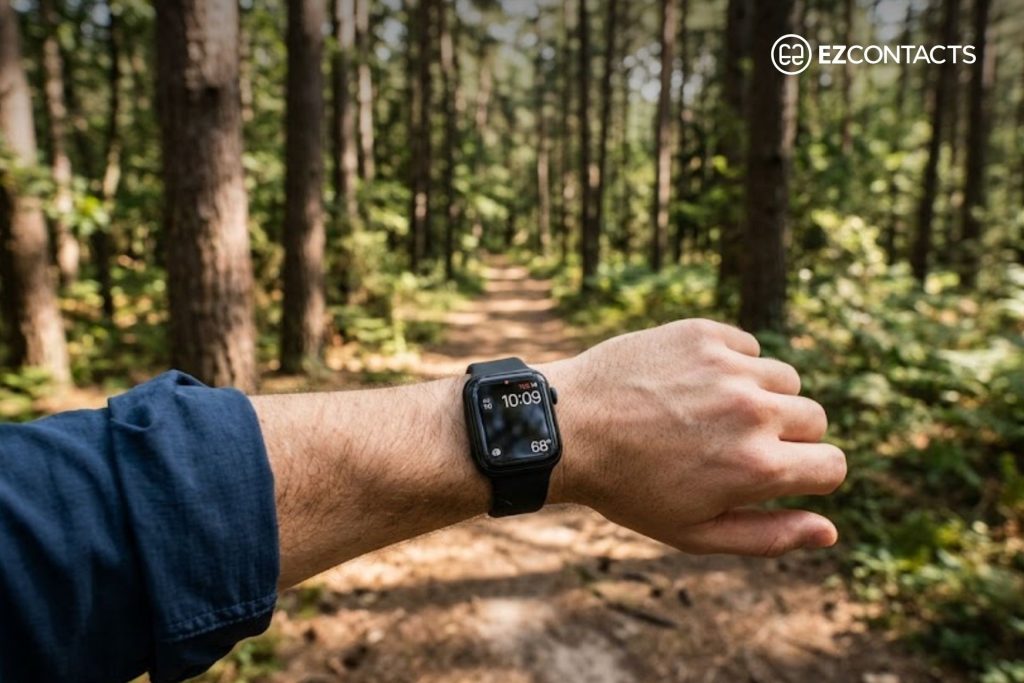
You’ll likely be quite aware of the difference between each of your eyes, especially when switching your focus from something close to something far. For example, if you stop to check your watch while on a walk, you might find it hard to get your distance vision back into focus immediately.
Some people also get headaches or a feeling that their vision just isn’t quite… right.
Give yourself time to really experience your new lenses. Try not to make a snap decision after only wearing them a short while.
After a week or two
If monovision is going to work well for you, things will typically start feeling more natural the more you wear them.
This is around the time most people stop consciously thinking about which eye is being used for near or distance vision. Everyday tasks like reading, working on a computer, and walking should start to feel less weird.
But bear in mind that some people need longer than two weeks.
After several weeks
If you’re still struggling after several weeks, it’s worth going back to your eye doctor instead of soldiering on.
The problem might not be that you need more time. Your near prescription could be too strong. The distance and near powers could need adjustments. Or, your doctor may suggest switching the eye that’s used for near vision to give you a better result.
Why Is Monovision Hard to Get Used to?
With ordinary “single-vision” contacts, both eyes are corrected for the same distance. Monovision deliberately introduces a difference between them.
This can affect stereopsis, the brain’s ability to use the slightly different images from each eye to judge depth. It’s most noticeable when you’re doing things that require precise judgment of depth.
For some, monovision contacts tend not to be so great in low light. Driving at night is often something these people find tricky.

But it doesn’t mean you can’t drive with monovision; you often can if your vision adjusts. However, you may want to avoid driving altogether during the adjustment period if you find yourself struggling significantly with things like depth perception. If you have any questions about this, reach out to your eye doctor.
What If I Can’t Get Used to Monovision Contacts?
You don’t have to force yourself to wear contacts that don’t work well for you. Although your eye doctor can make adjustments to your contacts, sometimes monovision just doesn’t work out.
There are other ways to correct presbyopia. For example, multifocal contact lenses use different optical zones within the lenses so both eyes are corrected for near and distance vision at the same time. Another option is to wear regular distance contacts and use reading glasses when you need them.
Explore EZContacts’ selection of contact lenses, reading glasses, and other eyewear to find options that work for you.
FAQs
Can you wear monovision contacts all day?
Yes, if your doctor has prescribed them for all-day wear. But if your eyes become painful, excessively dry, red, or uncomfortable, take the lenses out and get in contact with your eye doctor.
Is monovision better than multifocal contacts?
Neither is better than the other. They correct presbyopia in different ways, and people can have different experiences with each. A study comparing the two found that monovision can provide better distance and near vision, whereas multifocal contacts can give better intermediate vision and depth perception.
Some clinical reviews report that depth perception may improve in the first few weeks, but controlled studies measuring it directly haven’t found a measurable change.