Are you curious about what a bandage contact lens is exactly?
When you hear the name, you may be picturing a classic bandage, the kind you put on a scrape or cut. But a bandage contact lens works differently. I’ll walk you through what these contacts are and how they work.
At a Glance
- A bandage contact lens protects the cornea as it heals.
- Standard, off-the-shelf contact lenses are often used as bandage lenses. Commonly prescribed brands include ACUVUE OASYS, AIR OPTIX NIGHT & DAY AQUA, and PureVision2.
- Bandage lenses can reduce pain and irritation from blinking when you have a damaged cornea.
- They can be used after eye surgeries, corneal abrasions, and conditions that damage the corneal epithelium.
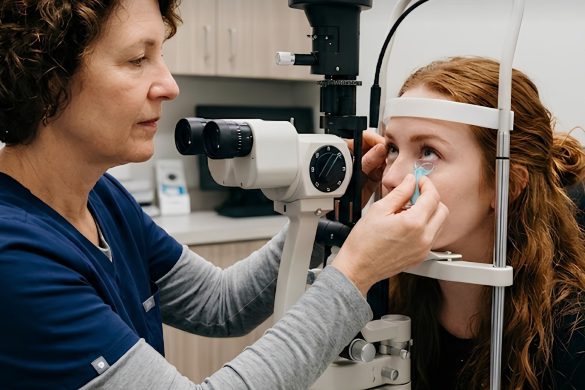
- They’re fitted and monitored by a doctor and shouldn’t be inserted or removed yourself since you could cause more damage to your healing eye.
- A bandage lens is still a contact lens, and it can increase the risk of infection. Make sure you stick to your eye doctor appointments and get the proper follow-up care if you’re wearing one.
What Is a Bandage Contact Lens?
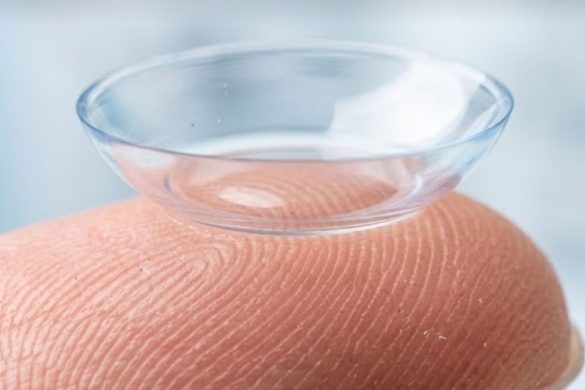
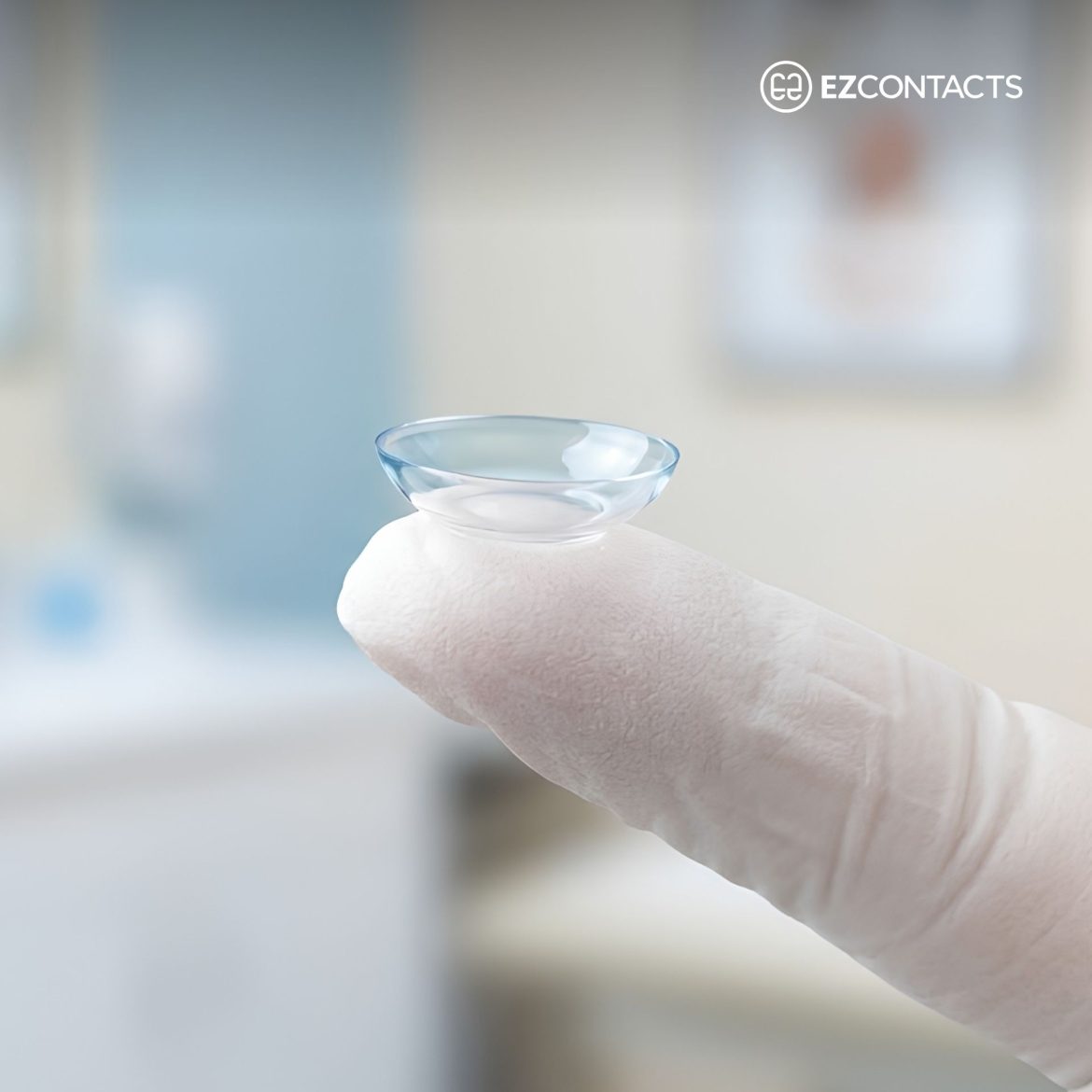
A bandage contact lens is a soft contact lens used to protect the cornea.
As the name implies, you should think of it as a temporary bandage. It protects a damaged corneal epithelium as it heals.
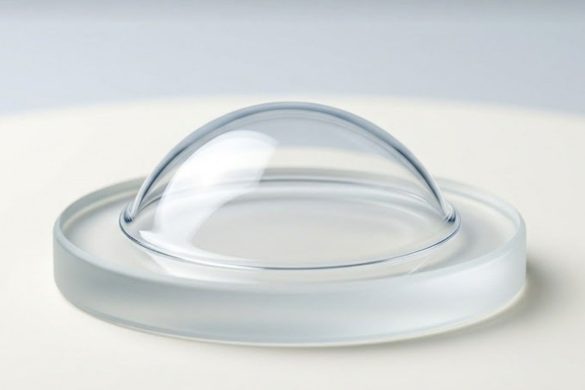
The cornea is the clear front window of the eye, and the outermost layer of cells is called the epithelium. A healthy corneal epithelium should look something like the illustration below, with all the cells intact.
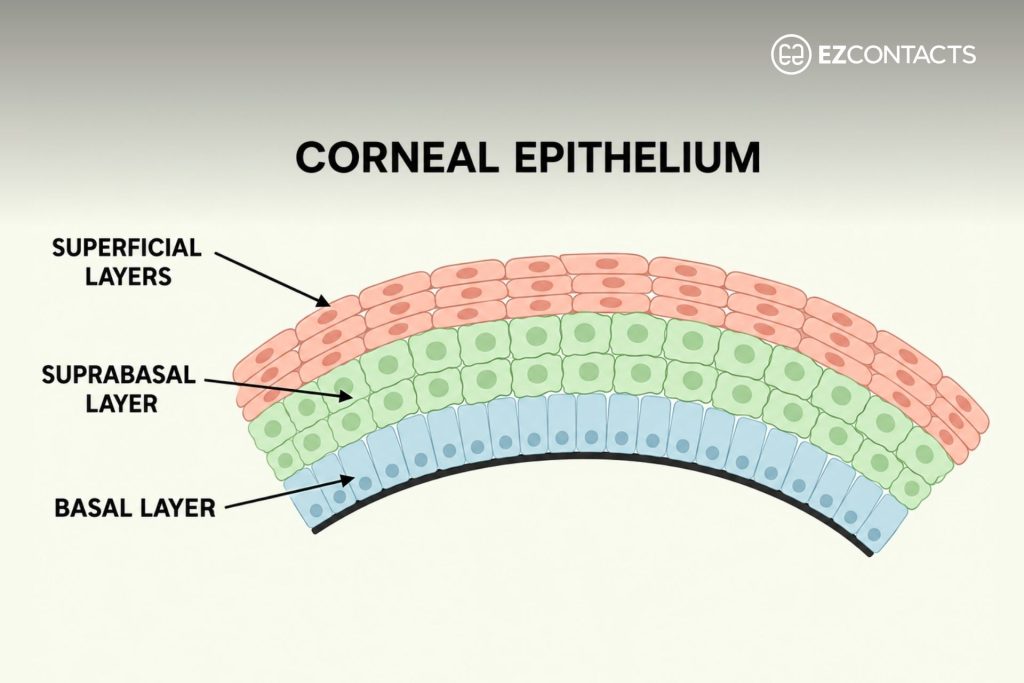
When you blink, your eyelid moves over the cornea. That’s normally a good thing because blinking is what moves your tears across it. But if the corneal epithelium is damaged, blinking can be painful and cause more damage.
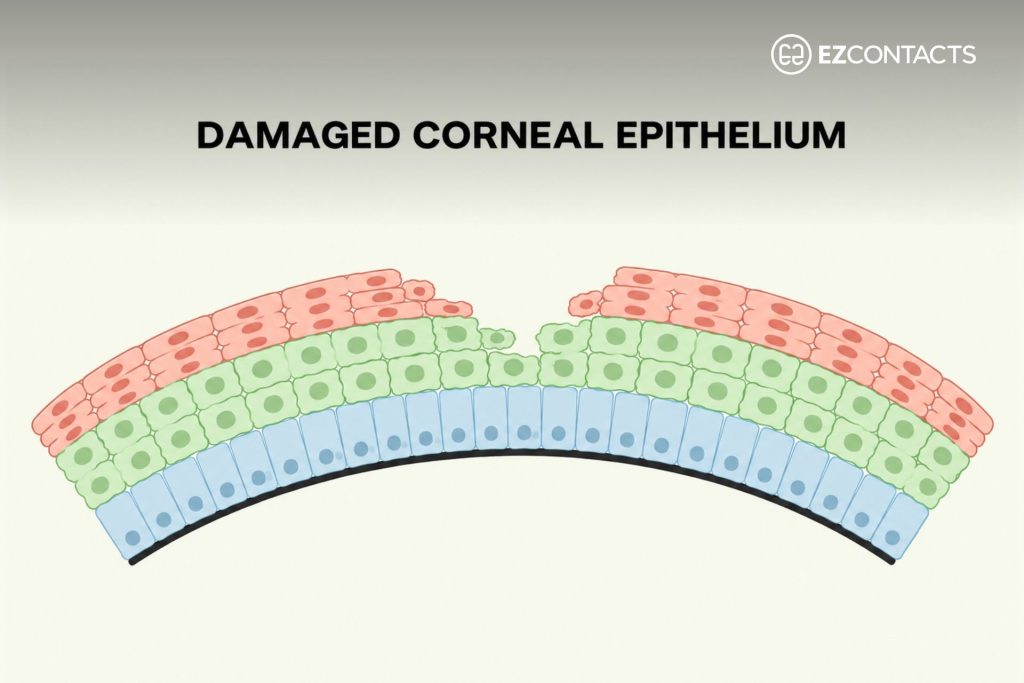
A bandage contact lens goes on top of this damaged surface to create a barrier between the eye and your eyelid, reducing pain. It also creates a smoother surface and reduces friction to protect newly forming epithelial cells while they grow back.
Bandage lenses can:
- Protect regenerating epithelial cells
- Reduce irritation from blinking
- Help the corneal surface re-epithelialize
- Make your eye feel more comfortable as it heals
The American Academy of Ophthalmology lists bandage contact lenses as an alternative to pressure patching for some corneal abrasions because they can relieve pain and support corneal healing while allowing patients to see.
It’s important to understand that a bandage contact lens itself can’t “heal” a cornea. But it does create better conditions for the cornea to heal.
When Are Bandage Contact Lenses Used?
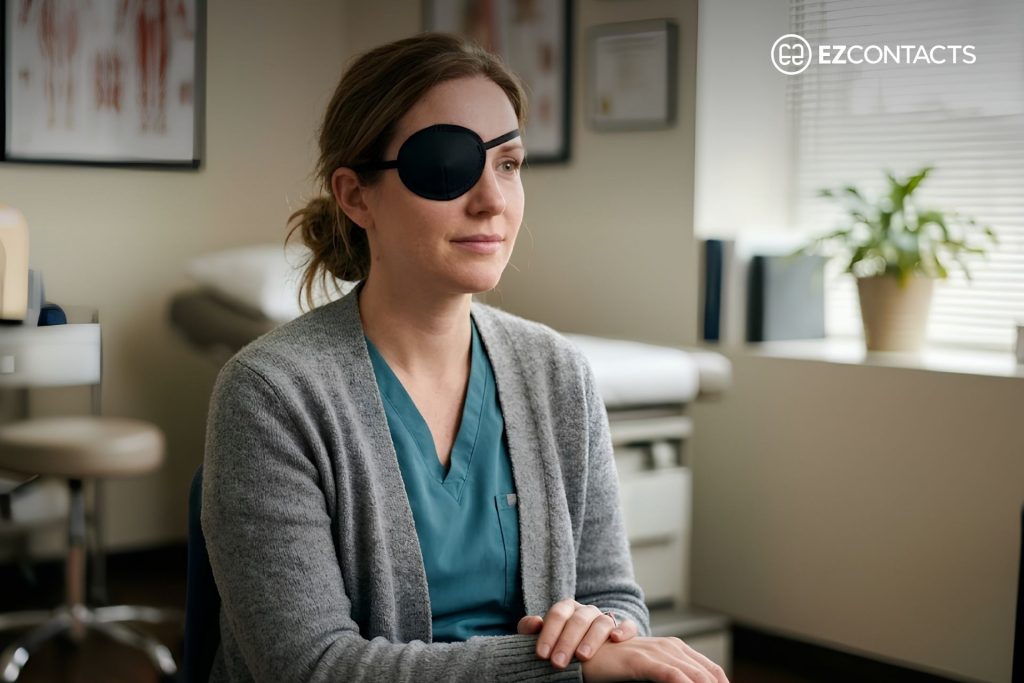
Bandage lenses can be used for multiple different problems with the eye. In some cases, they have several advantages over traditional eye patches.
After eye surgery
Bandage contact lenses are commonly used after procedures that temporarily remove or disrupt the corneal epithelium, including some refractive surgeries such as PRK. The lens protects the healing eye and can reduce post-op pain and sensitivity to light.
For corneal abrasions
A corneal abrasion is a scratch on the surface of the cornea. Depending on the size and cause of the injury, an eye doctor might use a bandage lens to protect the damaged area and make blinking less painful.
But they’re not appropriate for every abrasion. For example, if you injured your eye with something that carries a high risk of infection, a bandage lens is unlikely to be used.
For recurrent corneal erosion
Some people experience repeated episodes where the corneal epithelium separates from the tissue underneath it. A bandage lens can protect the surface and might be used for longer periods under close medical supervision.
After other corneal procedures or injuries
Bandage lenses can be used after procedures that affect the corneal surface, or after certain injuries that create an epithelial defect.
How Long Do You Wear a Bandage Contact Lens?
Some people will wear them just a few days after a surgery or injury. But some people may wear them a few weeks if the bandage contact lens is being used to treat a condition like a recurrent corneal erosion.
Your eye doctor will decide when it’s time for the lens to come out depending on how well the cornea is healing. It’s important you follow your doctor’s instructions because these lenses can’t be treated like ordinary contact lenses. You shouldn’t remove, replace, or reuse it unless your doctor specifically tells you to.
Can You See With a Bandage Contact Lens?
Yes, you can. Normal contact lenses are used as bandage lenses, just in a therapeutic way, and they’re monitored by a doctor.
If you wear glasses or contacts, your doctor can usually choose a bandage lens with your prescription so you can still see as your eye heals. If you don’t need vision correction, they’ll use a lens without any correction powers (a “plano” lens) instead.
Doctors usually choose silicone hydrogel lenses to use as bandage lenses because the material is highly breathable. Common brands used as bandage lenses include ACUVUE OASYS, AIR OPTIX NIGHT & DAY AQUA, and PureVision2.
But keep in mind that your vision might still be a bit blurry at first. Not necessarily because of the lens used, but due to the swelling or injury itself.
Are Bandage Contact Lenses Safe?
Yes, when used properly and safely.
The main concern is infection. Any kind of contact lens can increase the risk of microbial keratitis if you don’t use them properly. And that risk can be higher when a lens stays on the eye overnight or for extended periods, like bandage contact lenses often do.
So you’re fully informed, the risks associated with bandage lenses include:
- Infection
- Corneal swelling
- Reduced oxygen reaching the cornea
- Inflammation
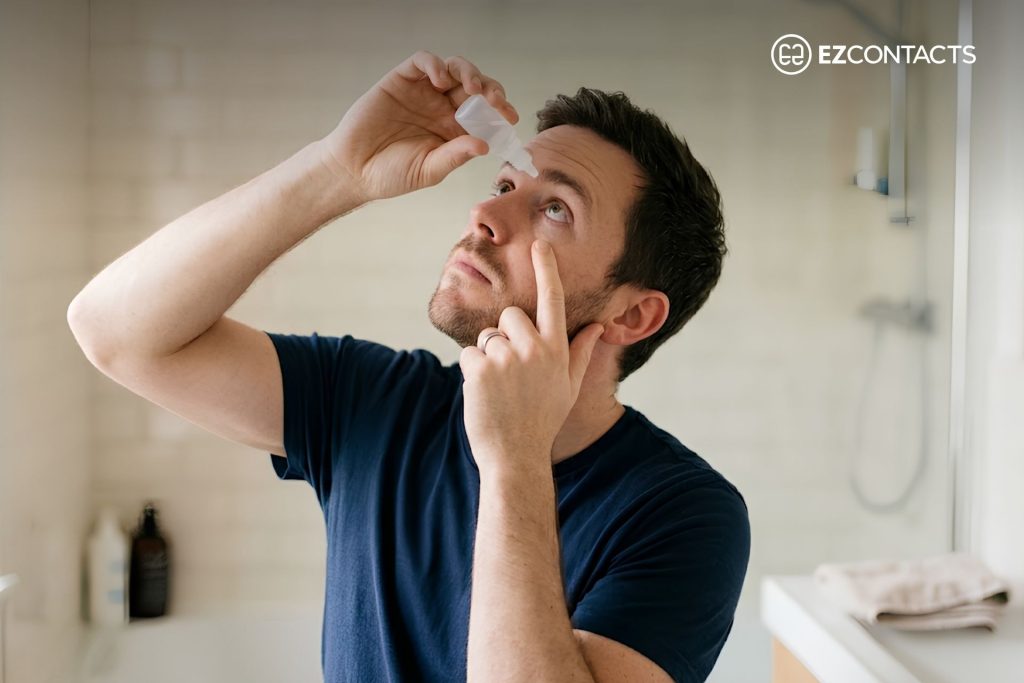
In most cases, you’ll be given antibiotic eye drops to use with your bandage lens. Follow-up appointments are important so the healing process can be evaluated, and so the lens can be replaced or removed by a doctor when the eye has healed.
FAQs
Can you sleep with a bandage contact lens?
Yes, it’s quite likely you will sleep in it. Bandage lenses are designed for overnight wear so they can give the cornea time to heal. If your treatment lasts for several weeks, you still don’t take it out at night yourself. Instead, you’ll have appointments with your doctor so they can check the healing process and replace the bandage lens with a new one.
If the lens needs to remain in place for an extended period, your doctor will determine when it should be checked, replaced, or removed. The schedule varies depending on the condition being treated and how the cornea is healing.
Can you shower with a bandage contact lens?
Follow your eye doctor’s instructions. In general, contact lenses should be kept away from tap water because water can contain microorganisms that cause serious eye infections.
Contact your doctor if you’re not sure what to do about showering with the lens in place.