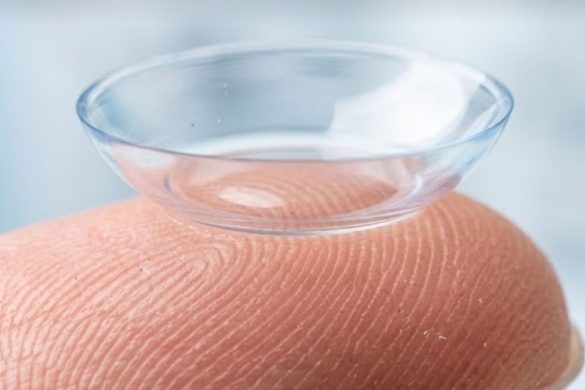
“Hydrogel and “silicone hydrogel.” They may sound similar, but these materials actually represent two different generations of contact lens technology.
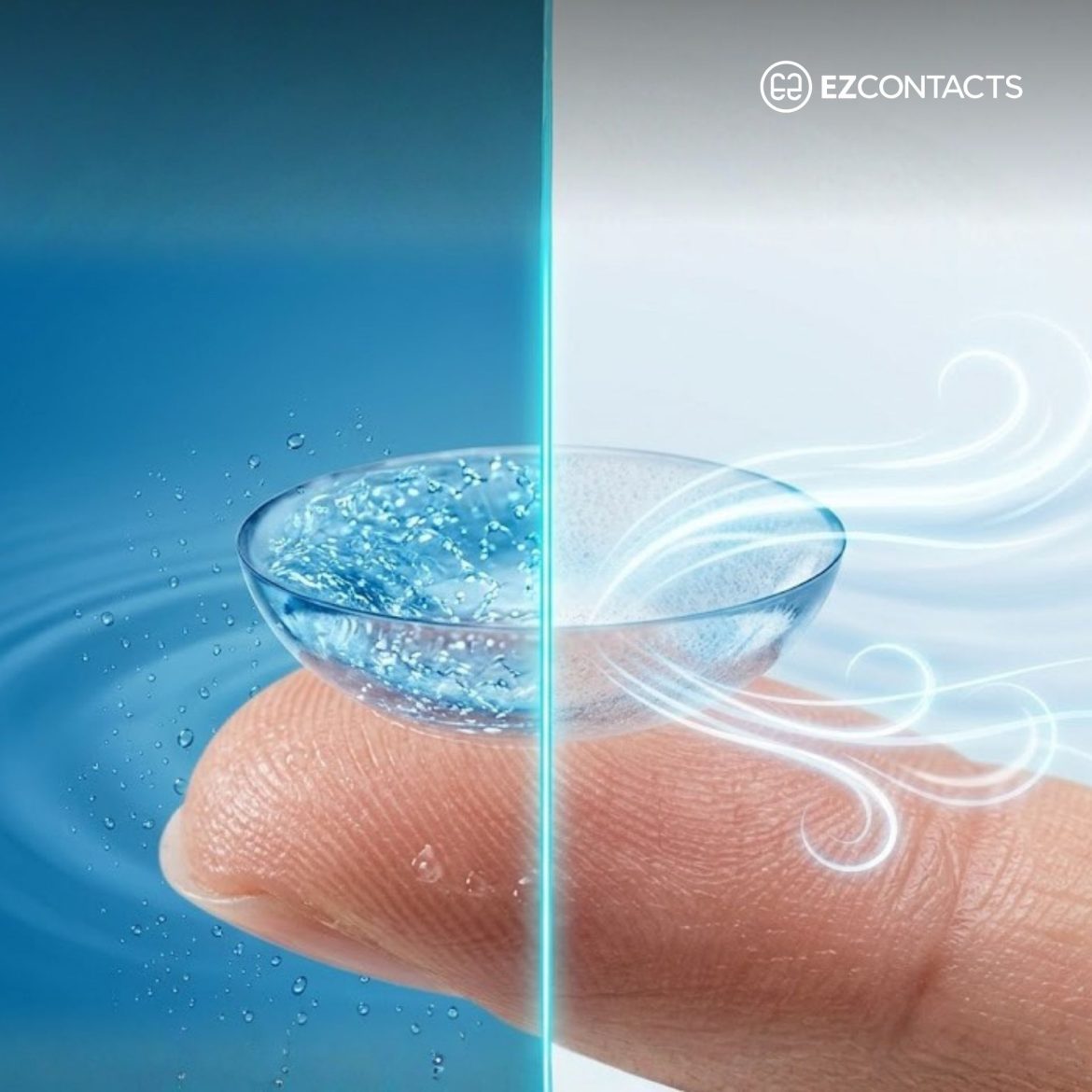
So how are they different? The short answer is that silicone hydrogel contact lenses let much more oxygen through to the eye than traditional hydrogel lenses.
That’s why most modern soft contact lenses are now made from silicone hydrogel materials.
But if silicone hydrogel is newer, does that automatically make it better? And how exactly are the two materials different? Let’s take a closer look.
Silicone Hydrogel Contact Lenses vs Hydrogel: The Quick Answer
Hydrogel lenses were the original soft contact lenses. They became popular in the 1970s because they were far more comfortable than the hard lenses many people wore at the time.
Silicone hydrogel lenses came later, becoming popular in the early 2000s. They were developed in response to a problem that riddled traditional hydrogel lenses: limited oxygen being delivered to the eye.
Traditional hydrogel lenses rely on water to transport oxygen through the lens material to the cornea. Silicone hydrogel lenses use silicone, which allows around five times more oxygen to pass through. How much exactly will depend on the brand and type of lens.
This breakthrough was so significant that silicone hydrogel quickly became the material of choice for most modern contact lenses.
The Invention That Changed Contact Lenses Forever
Before soft contact lenses existed, there were “hard lenses.” They worked, but a lot of people found them uncomfortable.
Everything changed in the late 1950s when Czech chemists Otto Wichterle and Drahoslav Lím developed a new material called hydroxyethyl methacrylate, better known as HEMA.
HEMA belongs to a family of materials known as hydrogels, which can absorb large amounts of water but stay soft and flexible. In 1961, one of those same chemists, Wichterle, did something pretty remarkable. Sitting at his kitchen table, he built a machine using an Erector toy set and a phonograph that could make HEMA into contact lenses.
The technology was eventually licensed to Bausch & Lomb in the U.S., who launched the first soft contact lenses in 1971. For millions of people, these hydrogel lenses made wearing contacts far more comfortable and accessible than they had ever been.
What Is a Hydrogel?
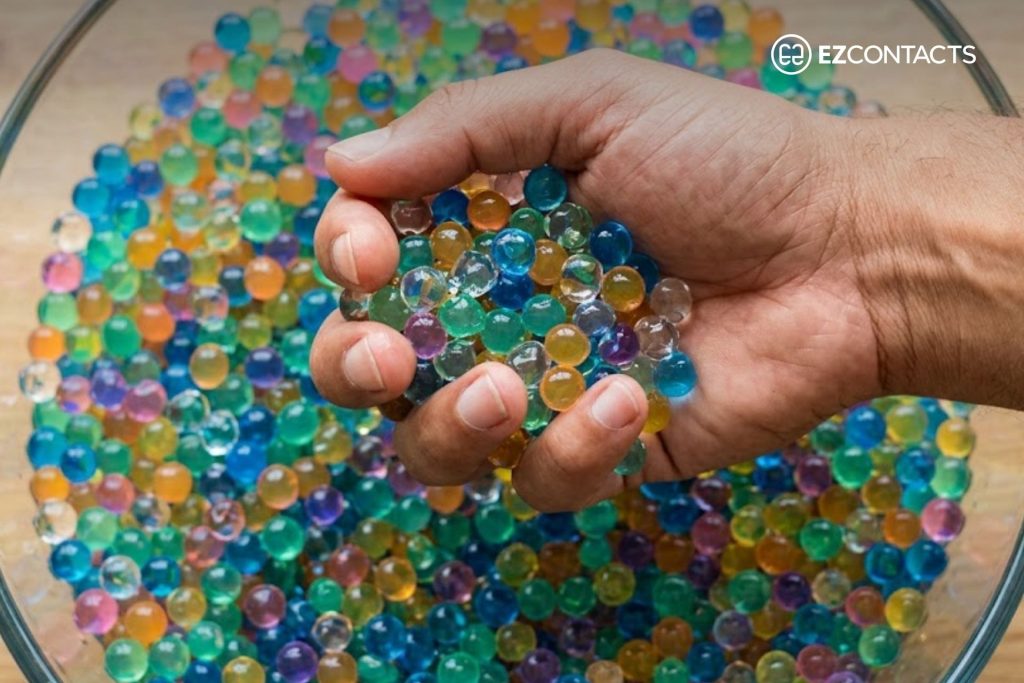
A hydrogel is a network of polymers that can absorb and hold water. That’s what makes hydrogel contact lenses feel soft. The water inside the lens also has another purpose. It helps carry oxygen through the lens and toward the cornea.
For years, manufacturers thought increasing the water content of lenses was what they needed to focus on to improve their performance. As a result, manufacturers were constantly competing with each other to create lenses with higher and higher water content throughout the 1980s and 1990s.
But they were missing something. Researchers eventually discovered that water content alone wasn’t the key to better lens performance. No matter how much water a lens contained, there was still a limit to how much oxygen it could deliver to the eye.
The Oxygen Problem
The cornea is unusual because it doesn’t contain any blood vessels. If it did, the vessels would interfere with your vision because they would block light before it could reach the retina. So instead, the cornea gets the majority of its oxygen from air.
This presents an obvious problem when you think about how contact lenses work. They cover the eye, reducing how much oxygen can get through.
Researchers soon discovered that lenses needed to meet certain oxygen levels to reduce the risk of complications. These included more serious conditions like corneal swelling as well as milder symptoms like discomfort and irritation.
The problem was that traditional hydrogels could only go so far. Because they rely on water to transport oxygen, increasing oxygen transmission meant increasing water content. But lenses packed with high amounts of water often became more fragile. Sometimes they’d even lose water faster as a result.
How Silicone Changed Everything
Researchers had known about silicone’s ability to transmit oxygen for years. In fact, silicone allows oxygen to move through it far more easily than water. So it was always an obvious choice for contacts.
The problem was that silicone naturally repels water. So it wouldn’t be possible to make a lens entirely from silicone. Throughout the ‘80s and ‘90s, scientists worked on combining silicone with hydrogel, hoping to create a lens that improved oxygen transmission while still being comfortable to wear.
Eventually, they succeeded. In 1998, CIBA Vision launched the world’s first silicone hydrogel contact lens in Mexico, called Focus Night & Day. The product received FDA approval in the United States in 2001. You might know the product today as AIR OPTIX Night & Day Aqua by Alcon, a rebranded and even more refined product.
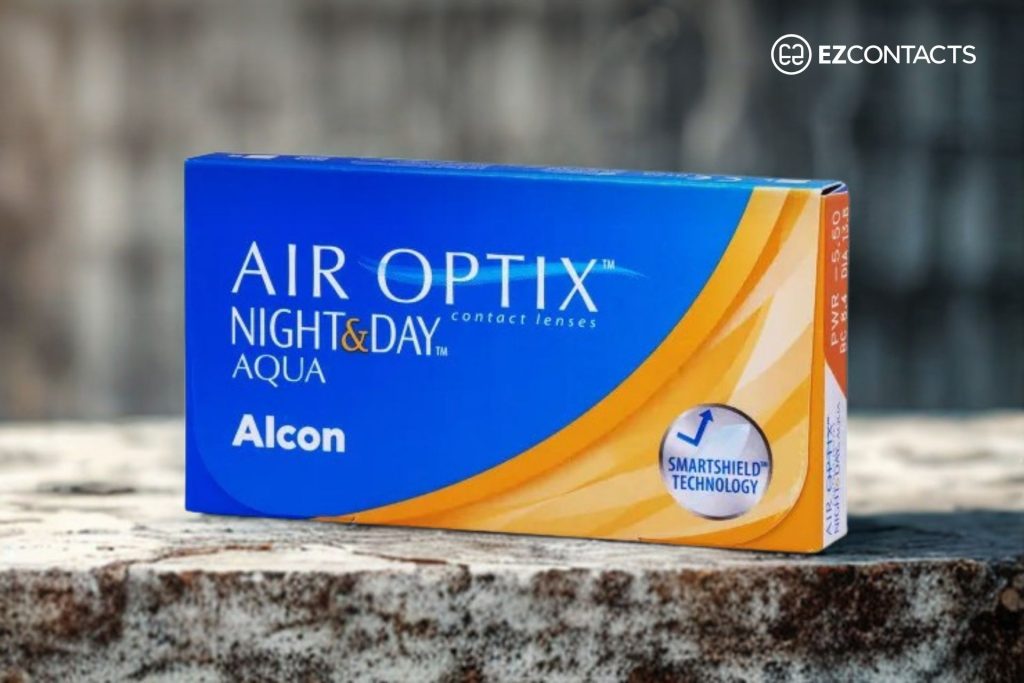
Most traditional hydrogel lenses back then had oxygen transmissibility (Dk/t) values roughly between 20 and 40. Focus Night & Day had a Dk/t of around 175. That meant they had more than four times higher oxygen transmissibility than the top traditional hydrogel lenses.
For the first time ever, people could wear soft contact lenses that could deliver oxygen levels pretty much on par with what the cornea receives without wearing contacts at all.
So this wasn’t just another product launch. Many ophthalmologists consider the introduction of silicone hydrogel lenses to be the biggest advance in contact lens technology since the invention of soft lenses themselves.
Are Hydrogel Lenses Still Used Today?
Yes, they are. Silicone hydrogel has become the dominant soft lens material, but that doesn’t mean traditional hydrogel lenses are totally obsolete.
Traditional hydrogel lenses are still used in many daily disposable contacts. Since these lenses are only worn for 12 to 16 hours in most cases, the lower oxygen permeability isn’t so much of a problem as it is with monthly lenses.
Traditional hydrogel can also be less expensive to manufacture, helping keep costs down for some brands.
That said, the industry has largely moved toward silicone hydrogel. The material solved the decades-long challenge of delivering more oxygen to the eye without sacrificing the comfort that made soft contact lenses so popular in the first place.
TL;DR
- Hydrogel lenses are soft contact lenses made from water-absorbing polymers. They became the first successful soft contacts when Bausch & Lomb launched SoftLens in 1971.
- Silicone hydrogel lenses are a newer type of soft contact lens that combine traditional hydrogel materials with silicone, allowing much more oxygen to pass through the lens and reach the cornea.
- Traditional hydrogel lenses use water to transport oxygen to the eye. Researchers eventually discovered that water alone could only deliver a limited amount of oxygen, creating a ceiling on the performance of the lenses.
- In 1998, CIBA Vision launched the world’s first silicone hydrogel contact lens, Focus Night & Day. It was later made to be an even better product and rebranded into Air Optix Night & Day Aqua.
- Most traditional hydrogel lenses have Dk/t values around 20–40, while most silicone hydrogel lenses are typically in the 80–100 range. So the addition of silicone allows up to five times more oxygen delivery.
- Silicone hydrogel solved one of the biggest challenges in contact lens design and has become the dominant material used in modern soft contact lenses.