Are you wondering, why is my eyesight getting worse? A lot of people think that declining eyesight is simply a part of getting older. And sometimes that’s true.
But other times, changes to your vision can be linked to different eye conditions.
Reading an article like this one is no replacement for getting an eye exam. But understanding how your vision is changing can provide some clues about what could be going on and what treatment options you could try.
Are road signs getting harder to read? Do you find yourself holding your phone farther away? Or is your vision normal in the morning but blurry after a long day at work?
The answers to those questions can often give you an idea about the underlying cause. Let’s look at some of the most common reasons people’s eyesight gets worse and what can be done about it.
Is Your Distance Vision Getting Worse? It Could Be Myopia
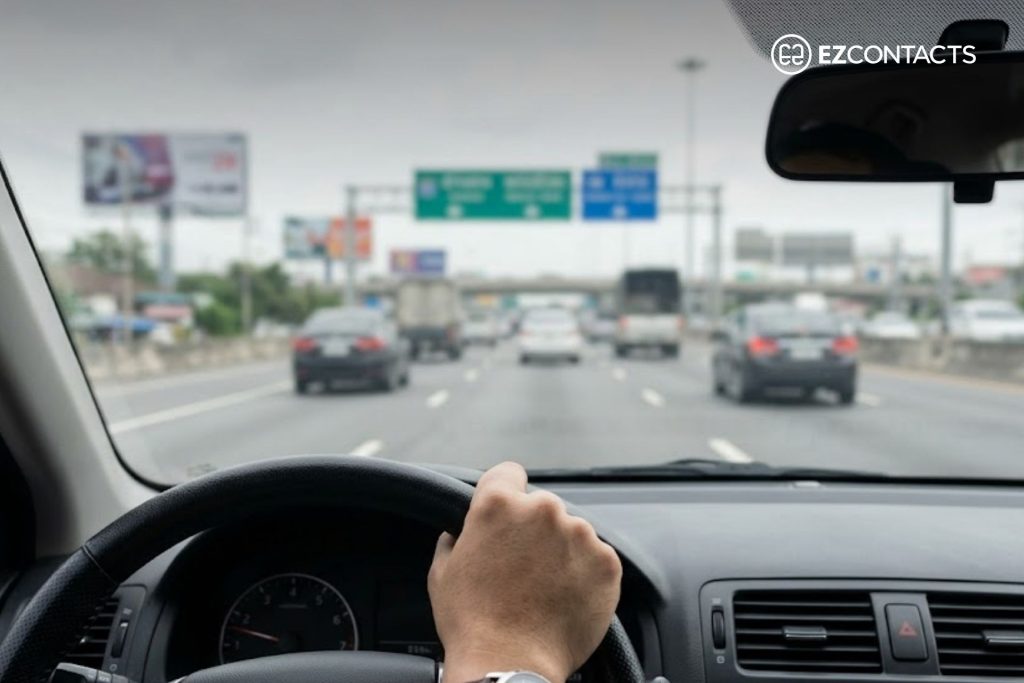
Do faraway objects look blurrier than they used to? Myopia (nearsightedness) is one of the most likely explanations.
Myopia happens when the eye grows too long from front to back or when the cornea bends light too strongly. Instead of focusing directly on the retina, light focuses in front of it. This makes objects that are far away look blurry.
Myopia has become more common over the last few decades. According to a study published in Ophthalmology, nearly half of the world’s population could be myopic by 2050. It estimates that global myopia rates will rise from around 34% in 2020 to nearly 50% by the middle of the century.
In the United States, approximately 42% of adults are now nearsighted. This is nearly double the rate reported in the early 1970s. Researchers believe several factors are contributing to this increase, including:
- Increased use of screens
- More near-vision activities like reading and studying
- Less time spent outdoors during childhood
- Genetic predisposition
Why Worsening Myopia Matters
Because myopia affects so many people, there’s a tendency to think of it as no big deal. Your prescription gets a little stronger every couple of years… so what? You can just get new glasses, right?
Well, over the last 10–15 years, more research has been done on myopia. We now know that myopia can cause the eye to grow longer. This is more common in severe myopia. It can raise the risk of retinal disease and vision loss later in life.
That’s why you’ll now hear much more about “myopia management” and “myopia control” than you might have in the past.
Research suggests that each additional diopter of myopia roughly doubles the risk of certain sight-threatening complications later in life, including myopic macular degeneration. So doctors now focus on slowing the progression of myopia, instead of just giving out a new prescription as a patient’s vision worsens.
Are You Holding Your Phone Farther Away? It Could Be Presbyopia
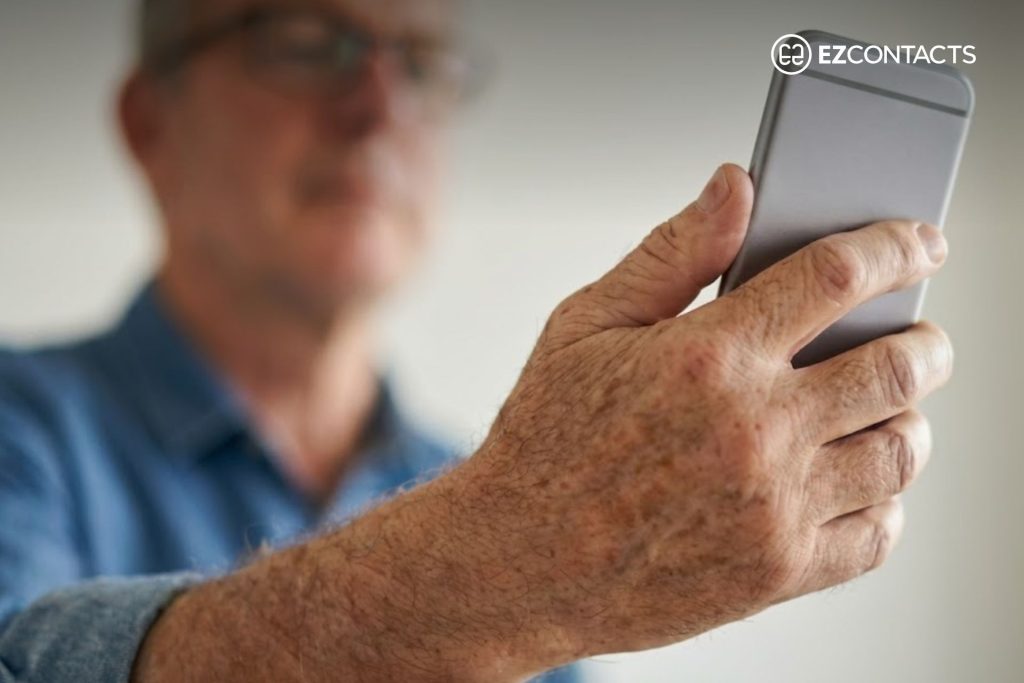
If you’re over the age of around 40 and finding yourself having to extend your arm to read your phone, presbyopia is a likely culprit.
Unlike myopia, presbyopia isn’t caused by the eye becoming elongated. Instead, it happens because the eye’s cornea gradually becomes less flexible with age.
When we’re young, the cornea can change shape to focus on nearby objects with ease. As we get older, this natural lens in our eye gets stiffer and loses some of its ability to adjust its focus. This means things like reading a book or looking at screens become more difficult. Small text on things like medication bottles can be almost impossible to make out.
According to the American Academy of Ophthalmology, presbyopia typically begins to affect people during their early to mid-40s.
Common Signs of Presbyopia
- Holding reading material farther away
- Difficulty reading small print
- Needing brighter lighting to read
- Eyes feel fatigued when doing close-up tasks
- Headaches after reading
- Distance vision still seems normal
If you’re experiencing symptoms like these, you’re likely going through what many people experience as they age. While it might not feel great to admit we’re getting a little older, it’s nice to know that presbyopia is a completely normal age-related change.
In fact, research suggests that more than half of adults over the age of 30 show measurable signs of near-vision loss. Still, many go without having their eyes examined or being prescribed glasses or contacts.
Presbyopia is typically easy to correct for. Reading glasses, multifocal eyeglasses, multifocal contact lenses, and other vision correction options restore near vision for the overwhelming majority of people with presbyopia.
Does Your Vision Get Worse After Looking at Screens?
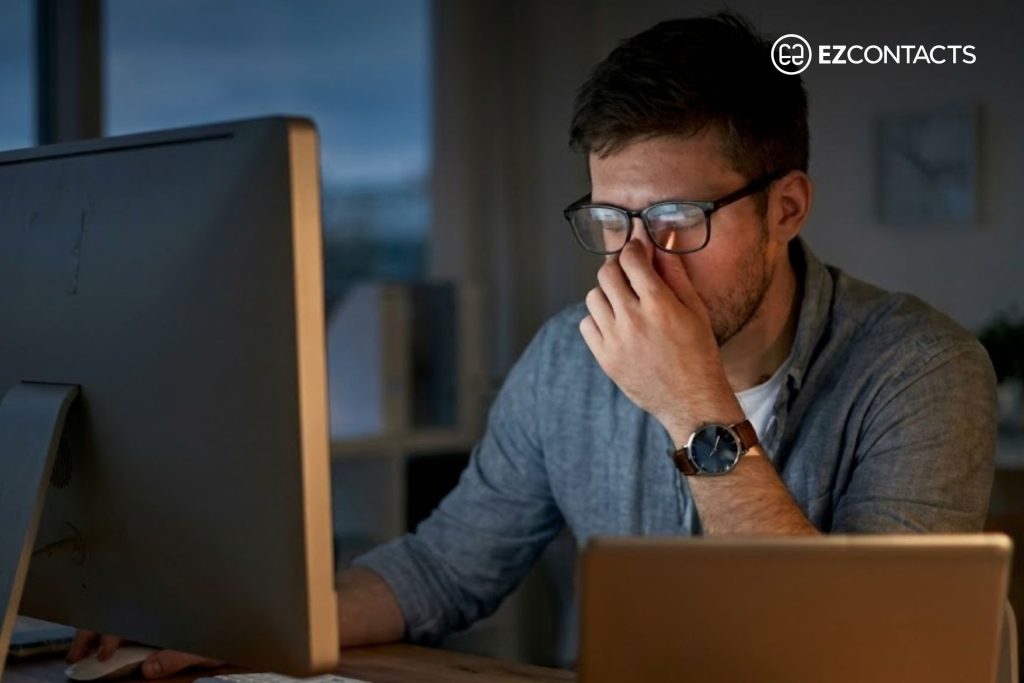
Sometimes, your eyesight isn’t actually the problem… it’s what you’re doing with it. Human eyes didn’t evolve to spend eight-plus hours a day staring at spreadsheets, emails, and TikTok videos. But many of us do just that.
Computers, tablets, and smartphones are the big three culprits because we look at them closely as we use them. So if your vision is fine in the morning but gets blurry by the end of a workday, it could be digital eye strain.
According to the American Optometric Association, as little as two hours of continuous screen use can trigger symptoms.
Why Screens Affect Vision
It mostly comes down to blinking. Normally, when you’re not looking at a screen, you blink around 15 times a minute. But when you look at a screen, your blink rate can drop in half. This is a huge decrease, and it has a big effect on your eyes.
Less blinking means the surface of the eye is less lubricated, and this, in turn, can lead to:
- Temporarily blurred vision
- Dry eyes
- Burning or irritated eyes
- Headaches
- Difficulty focusing
- Eye fatigue
Digital Eye Strain Is Extremely Common
A large survey conducted by The Vision Council found that approximately 65% of Americans report symptoms associated with digital eye strain.
As part of another study, researchers identified the most common symptoms of digital eye strain and the percentage of people affected by them:
- Neck and shoulder pain: 35%
- Eye strain: 32.4%
- Blurred vision: 27.9%
- Dry or irritated eyes: 27.2%
The 20-20-20 Rule
If you spend most of your day looking at a screen, the easiest way to avoid digital eye strain is by using the 20-20-20 rule:
Every 20 minutes, look at something at least 20 feet away for 20 seconds.
Short breaks like these give the muscles in your eyes a chance to relax. It can make a huge difference over the course of a workday in terms of comfort and eye strain.
Why Is My Eyesight Getting Worse? Other Reasons for Eyesight Changes
Myopia, presbyopia, and digital eye strain are three common reasons for worsening eyesight. But of course, it could be something else.
Other issues that can lead to changes in vision include:
- Cataracts
- Dry eye syndrome
- Diabetes
- Glaucoma
- Certain medications
- Retinal conditions
- Changes to your astigmatism
While some of the above conditions are serious, they’re also far less common. Try not to stress or self-diagnose until you’ve scheduled a comprehensive eye exam with an optometrist.
When Should You See an Eye Doctor?
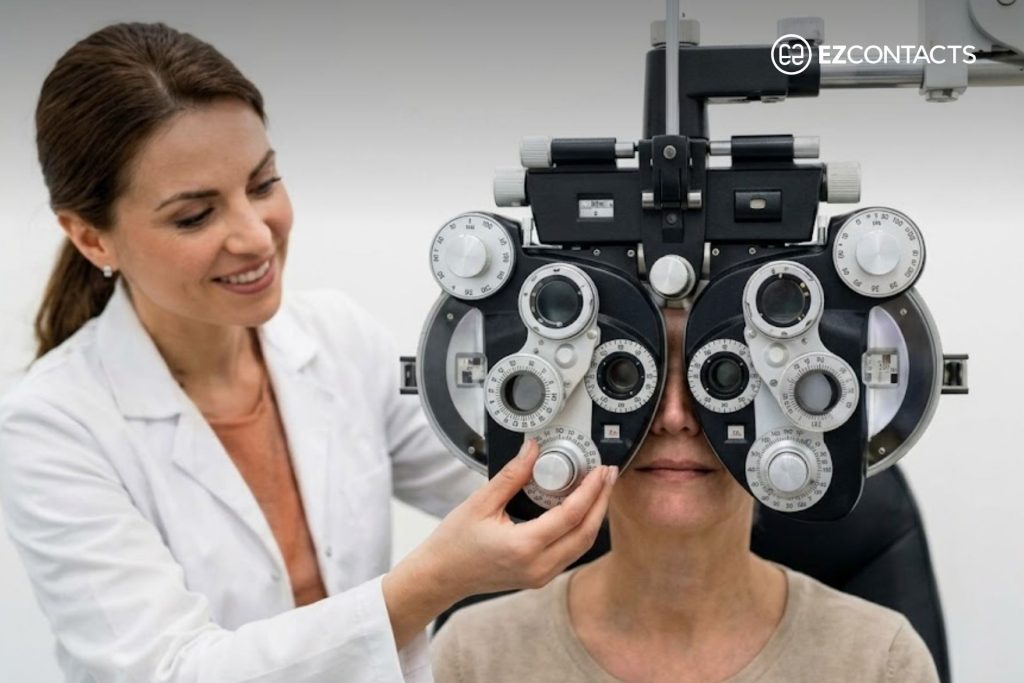
If vision changes very suddenly, or only affects one eye, seek immediate medical attention. The same goes if you start seeing flashes or floaters, or experiencing eye pain or loss of peripheral vision.
But any noticeable change in your vision means you need to book an exam. Most causes of worsening eyesight are easy to correct with an updated or new prescription for glasses or contacts.
Other conditions are more serious and may need immediate treatment to prevent further vision loss. A comprehensive eye exam is the only way to know the real reason your eyesight is getting worse. And the sooner you find out the cause, the sooner you can take steps to protect your vision.
TL;DR
- Are you asking, why is my eyesight getting worse? There are a few common reasons why this happens.
- Distance vision getting blurrier is a common sign of myopia (nearsightedness).
- Myopia rates are rising worldwide. Researchers predict half the global population will have it by the year 2050.
- If you’re over the age of 40 and starting to have trouble reading books or are holding your phone farther away to see it clearly, it’s likely presbyopia.
- Digital eye strain can cause temporary blurred vision, dry eyes, headaches, and other symptoms. Looking at screens can reduce how often you blink in a minute from 15 times to half of that.
- Any sudden or significant change to your vision should be treated as an emergency.
- You can’t be sure what’s causing your eyesight to get worse until you have a comprehensive exam by an eye care professional.