Monovision contact lenses are an innovative solution for people with presbyopia. But some people worry about the side effects they can cause.
Monovision contacts are generally safe and non-invasive. However, some people do find visual trade-offs that persist beyond the expected time it takes to get used to them.
I’ve done the research so you don’t have to. This article summarizes numerous studies to give you the most accurate information on what the science says about the long-term side effects of monovision contact lenses.
What Are Monovision Contact Lenses?
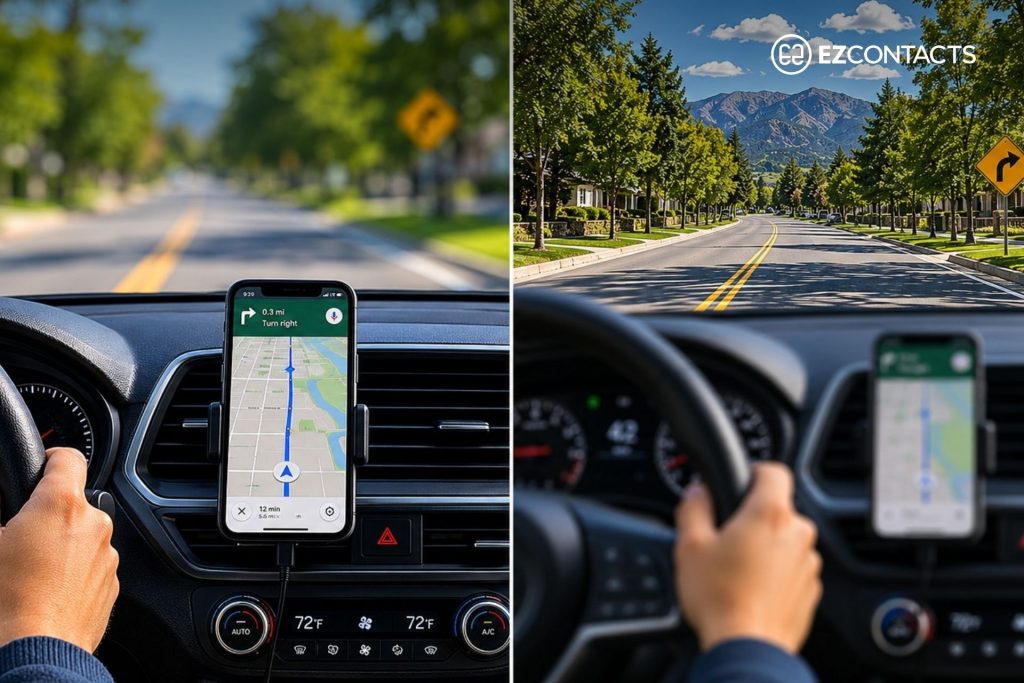
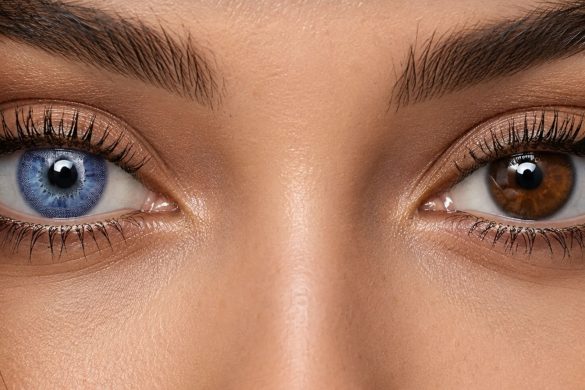
Monovision contacts make your eyes work in a totally different way than they normally do. One eye is given a lens that’s optimized for distance vision. The other eye is fitted with a lens for near vision.
To explain this better, imagine if you were to use your hand to cover your right eye while looking at your phone. Next, you cover your left eye. Depending on which eye has been fitted for near vision, you’d either see your phone in focus or it would look blurry.
The way monovision contacts work sounds unusual, but your brain does learn to work with this new way of seeing. Given enough time, it trains itself to rely more on the eye that gives you the best vision for the distance you’re looking at.
At the same time, your brain starts to pay less attention to the blurrier image from the other eye. This process is a neurological adaptation called “suppression.”
Many people adapt well enough that monovision eventually feels natural. The timeline differs for everyone, but the majority of people get used to monos within a month.
However, monovision contacts don’t recreate totally “normal” vision for every wearer.
What Are the Long-Term Side Effects of Monovision Contacts?
There have been several studies that have looked at how monos affect visual performance in the long term. Here are the most commonly reported trade-offs associated with monovision contact lenses.
Reduced depth perception
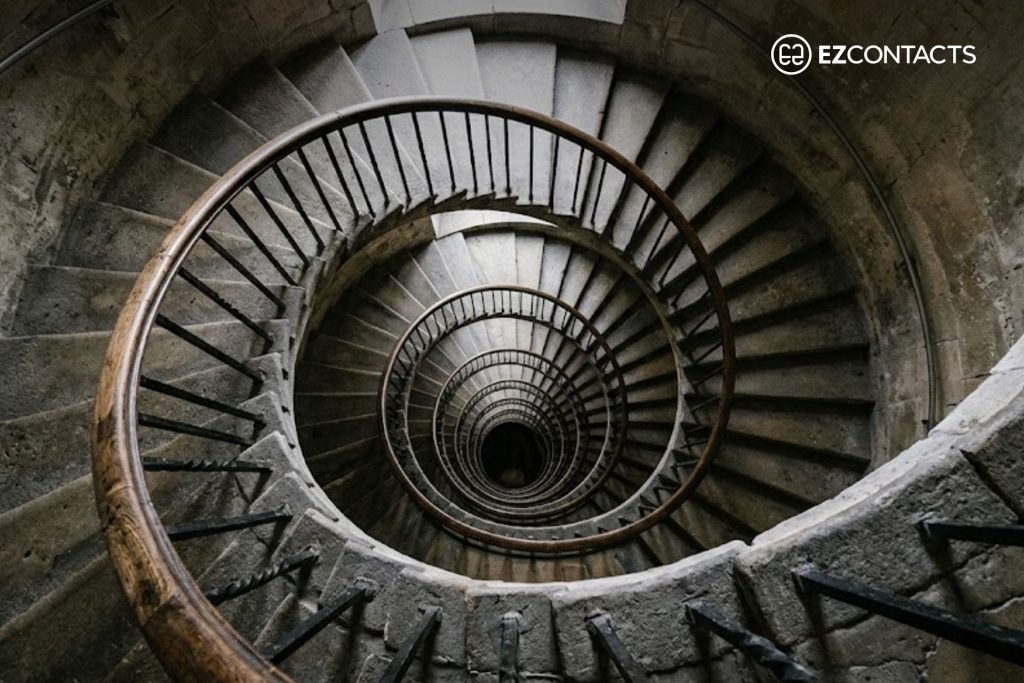
Since your eyes are separated by a small distance on your face, your brain can use these slightly different images to judge depth and distance. This is called stereopsis. Multiple studies have demonstrated that monos limit the brain’s ability to do this.
One 2019 study called “Monovision: Consequences for depth perception from large disparities,” published in Experimental Eye Research, found that monos had a significant impact on depth perception when walking. It suggested this could be a problem for older patients’ stability when they walk.
Reduced contrast sensitivity
Contrast sensitivity is the ability to distinguish subtle differences between shades and edges, especially in dim lighting. The research shows that this reduces more as the prescription difference between the eyes increases.
A large study called “Does the optimal level of illumination improve both visual functions and visual comfort in schoolchildren with low vision?” for the Transactions of the American Ophthalmological Society tested this. The study found progressively larger reductions when people were tested in both low-light environments and daylight as the contact strength was increased.
Problems driving at night

This is usually one of the main complaints of mono contact wearers. When it’s dark, your pupils get bigger to let in more light. This helps you see better. This also lets more unfocused light rays into the eye, so glare and halos are more noticeable.
When you wear monos, the brain is already working harder to combine the images from your eyes. Low-light conditions can add to the additional workload and negatively impact vision.
In 2019, researchers even identified something called the “reverse Pulfrich effect.” They found that when one eye sees a blurrier image than the other eye, the brain can process the blurry image a few milliseconds faster.
Under certain conditions, this can change how moving objects are perceived in 3D space and affect distance judgment. It can mean objects like ongoing cars look as if they’re in a slightly different place than they really are.
Researchers began studying the effect specifically because it can occur when monovision contacts are worn. Due to its discovery, more modern monovision contacts have a tint added to the near-vision lens to neutralize the effect.
Eye strain and mental fatigue
Most people adapt to monovision within days or weeks, but not everyone adapts equally well in the long term.
Some people keep experiencing:
- Eye strain
- Mental fatigue
- Brief blurriness when switching focus between different distances
- Discomfort after using screens for a long time
This happens because of that process we talked about earlier called “suppression.” For some people, it eventually becomes automatic. But for others, it can remain mentally tiring.
It’s been known for some time that stronger prescriptions increase the likelihood of more side effects with monos. So some doctors prefer something called “mini-monovision,” where the difference between the two lenses is smaller than with traditional monos.
Do Monovision Contacts Cause Permanent Damage?
From all the research done on monovision contacts, no studies have found that they cause any permanent change to any part of the eye.
When a person takes their contacts out, it normally takes less than an hour for their vision to go back to the way it usually is without any form of correction.
Why Do Some People Adapt Better Than Others?
This is one of the biggest unanswered questions in monovision contact lens research. Some people adapt so naturally to monos they forget they’re wearing them. Others continue noticing side effects.
Researchers believe a few factors have an influence. This includes the prescription strength difference, age, existing vision quality, lifestyle demands, and neurological adaptability.
However, studies note that even for patients who report side effects, satisfaction rates remain high overall.
Choosing Monovision Contacts
The long-term side effects of monovision contact lenses are real, but many people are able to adjust. The human brain is very good at adapting to change, and many people report good results with monos. Contact your eye doctor if you have any questions about side effects you’re experiencing with monovision.
TL;DR
- Monovision contacts correct one eye for distance and the other for near vision.
- Long-term side effects can include reduced depth perception and lower contrast sensitivity. You could also experience more difficulty driving at night, eye strain, and mental fatigue. There’s also the normal dryness or irritation risks associated with long-term contact lens wear.
- Stronger monovision prescription differences usually have more side effects.
- There is currently no evidence to show that monos result in any permanent damage or changes to vision or the eyes.
- Many people do well with monovision contacts and stay with them long term.