Are hard contact lenses and rigid gas-permeable lenses the same? The answer is… yes and no.
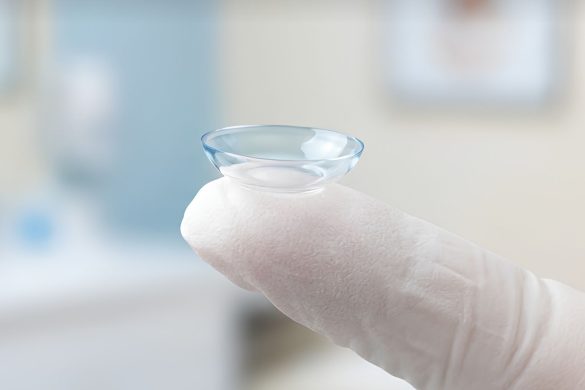
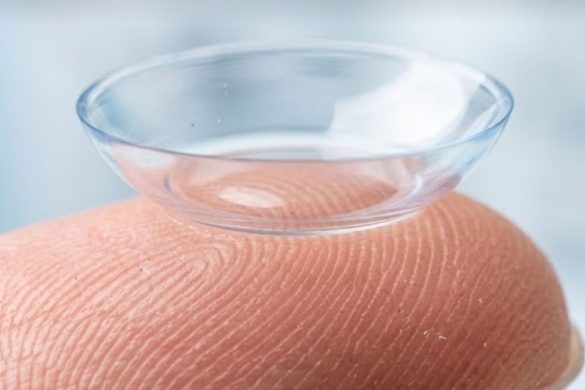
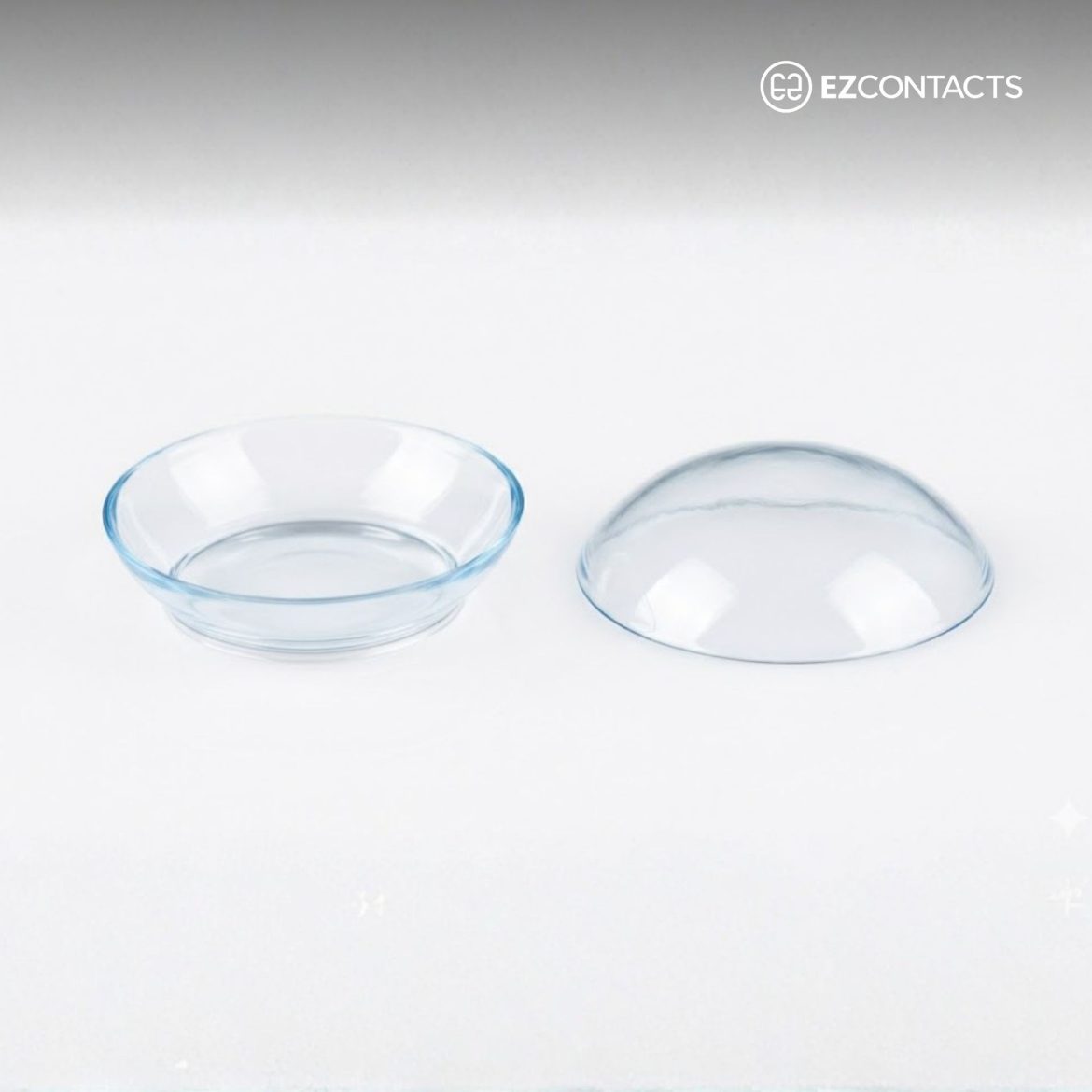
Today, if someone says they wear “hard contact lenses,” they’re most likely talking about rigid gas permeable (RGP) lenses. These are hard (or rigid) contact lenses that allow oxygen to pass through them. Or, in other words, they are “gas permeable.”
The terms are now used so interchangeably that they’ve effectively become synonymous. However, technically, they’re not the same thing. While most modern hard contact lenses are RGP lenses, the original hard contacts were something quite different.
Keep reading to find out how the original hard contacts evolved into the RGP lenses used today, and how that evolution changed contact lens technology forever.
The Original Hard Contact Lenses
Hard contact lenses first became popular during the 1940s and 1950s. They were made from polymethyl methacrylate (PMMA). This is a transparent plastic that many people know by trade names such as Plexiglas and Perspex.
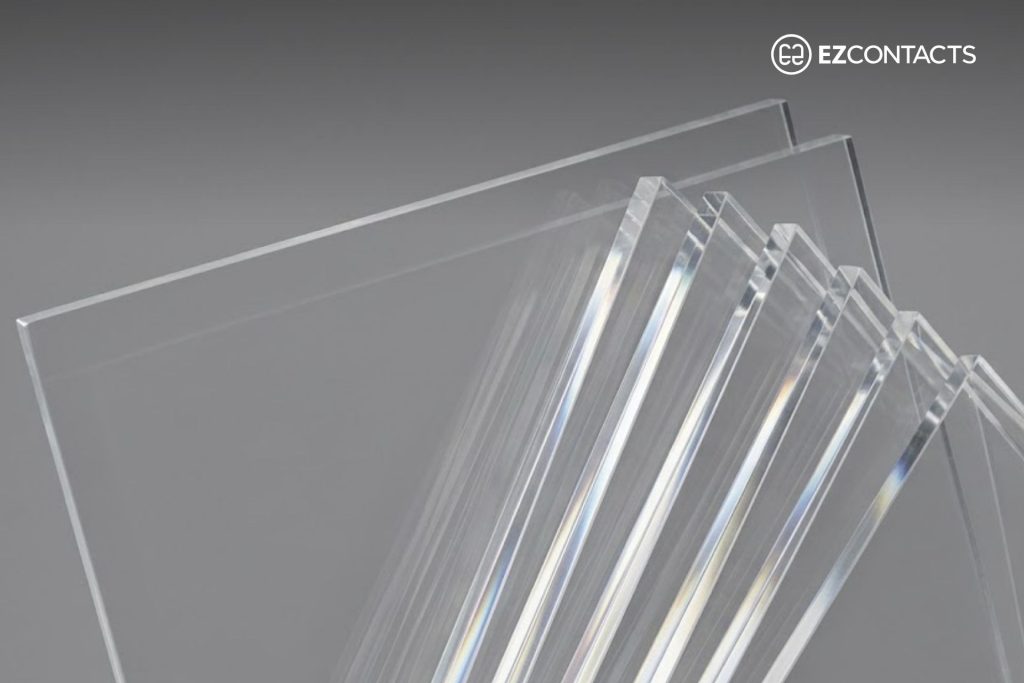
At the time, PMMA was a major breakthrough since earlier contact lenses had been made from glass. PMMA lenses were lighter, more durable, and much easier to manufacture. They also provided wearers with exceptionally sharp vision.
For decades, PMMA hard lenses were the standard form of contact lens correction. Millions of people successfully used them, and many patients appreciated their durability.
Unlike the modern soft lenses most of us are used to, a pair of PMMA hard lenses could often last for years if cared for properly. But they had one major flaw.
The Problem PMMA Could Never Solve
The cornea doesn’t contain blood vessels. Instead, it gets most of its oxygen from the air around us. This creates an obvious challenge for contact lenses, which, depending on the material, seal off the eye from the environment.
If enough air isn’t able to reach the eyes, the cornea becomes deprived of oxygen. This can lead to a condition called corneal hypoxia.
One way scientists measure how easily oxygen passes through a contact lens material is by using a number called Dk, or oxygen permeability. PMMA has a Dk value of zero.
So when a person wears PMMA lenses, oxygen can only reach the corneas when tears (which contain oxygen) move underneath the lens as they blink. It was obvious that a better solution was needed.
How RGP Lenses Were Invented
In the 1970s, there was a breakthrough. Researchers began experimenting with new materials that could maintain the rigid shape of PMMA while also letting oxygen pass through the lens.
The big milestone was in 1978 with the introduction of silicone acrylate. Lenses with this material still provided excellent vision but achieved oxygen permeability values of around 12 to 25 Dk. That’s not particularly impressive when compared to modern standards. But since the previous generation of PMMA hard lenses had a Dk of zero, this was a major leap forward.
Scientists continued refining the technology throughout the ’80s. By adding fluorine into the mix, they created fluorosilicone acrylates, offering even higher oxygen permeability. Not only did the material allow more oxygen to reach the cornea, but the contacts also had fewer problems with buildup and dryness.
Most modern RGP lenses still use fluorosilicone acrylate materials today. Depending on the specific lens, Dk values can range from around 30 to well over 100.
In just a few decades, hard contact lenses had evolved from a material that blocked oxygen entirely to one that could rival some soft contact lenses in oxygen transmission.
Why Do People Still Wear RGP Lenses?
Soft contact lenses dominate the market today, but RGPs are absolutely still used and serve a very important role in eye care.
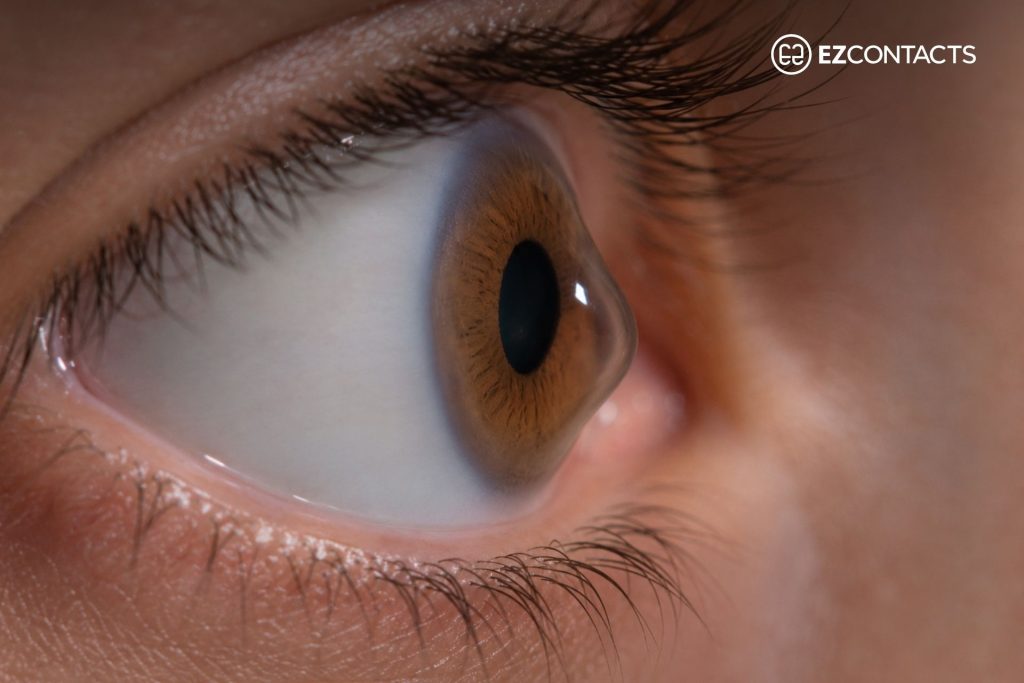
A person might be prescribed RGP lenses if they have keratoconus, a condition that causes the cornea to thin and bulge into a cone shape. Rigid gas-permeable lenses maintain their “rigid” shape on the eye, so they smooth out the irregular shape of the cornea. In many cases, RGP lenses give people with keratoconus visual clarity that glasses and standard soft lenses simply can’t.
They’re also commonly prescribed for people with strong astigmatism or other corneal irregularities. Although people with mild astigmatism can often wear soft toric lenses and achieve good results, more complex cases often benefit from the RGPs.
Sometimes people are also prescribed RGP lenses after certain surgeries, like corneal transplants.
RGP lenses come with a few additional advantages. Because they hold their shape on the eye, they can provide very sharp vision. They also tend to last much longer than soft lenses, with many lasting a year or more when properly cared for.
For the average contact lens wearer, soft lenses are usually the more convenient choice. But for people with keratoconus, severe astigmatism, or other corneal irregularities, RGP lenses can sometimes make the difference between acceptable vision and excellent vision.
Are Hard Contact Lenses Obsolete?
If you’re talking about the original PMMA hard contact lenses, then yes, they are. Most doctors working today have never even prescribed these types of lenses.
In fact, I did some research into whether it was even still possible to buy the original PMMA hard contact lenses, and I was unable to find a single retailer that stocks them.
Some sites claim to sell them, but when you investigate further, they’re actually just the standard modern RGP lenses. This is probably for the best, since true PMMA lenses are no longer deemed safe for long-term wear.
The original hard contacts didn’t exactly disappear. They just evolved into the RGP lenses we use today. By solving the oxygen problem that had limited them for decades, RGPs preserve the benefits of hard contacts while being safe for the corneas.
So are hard contact lenses and rigid gas permeable lenses the same thing? Historically, no. But in modern eye care, the distinction has pretty much become irrelevant. When someone says they wear hard contact lenses today, you can be pretty certain they’re talking about RGP lenses.
TL;DR
- When people talk about “hard contact lenses” today, they’re usually referring to rigid gas permeable (RGP) lenses.
- Traditional hard contact lenses were made from a plastic called PMMA and became popular during the ’40s and ’50s.
- PMMA lenses provided excellent vision, but they didn’t allow any oxygen to pass through the material.
- The first RGP lenses were created in the late 1970s by incorporating oxygen-permeable materials.
- Modern RGP lenses are made with silicone acrylate or fluorosilicone acrylate.
- RGP lenses have the same benefits as the original hard contacts while being much safer due to their breathability.
- They’re still commonly prescribed for conditions including keratoconus and high astigmatism.
- True PMMA hard lenses have become obsolete. However, their successor, RGPs, remains an important part of modern eye care.