Monthly contacts are designed for up to 30 days of wear, but only if they’re cleaned and stored correctly.
If you’re a monthly contact lens beginner, cleaning them can feel like a lot of work at first. But once you get the hang of things, it becomes second nature.
This guide tells you how to clean your lenses step by step, lists the common mistakes to avoid, and explains what kind of solution you should be using.
Why Cleaning Monthly Contacts Matters
Daily disposables never need to be cleaned since you just throw them away at the end of the day. But for monthlies, it’s important they’re cleaned properly every single day.
Depending on the brand and wear limit, monthly contacts are on the eye for up to 16 hours at a time. They collect protein deposits, oil, dust, and bacteria throughout the day.
If you don’t clean all of that off, you might notice:
- Blurry or fluctuating vision
- Dryness or discomfort
- A gritty feeling in your eye
- Increased risk of infection
Your Daily Cleaning Routine

This is what you should be doing every time you remove your monthly contacts.
Step 1: Wash and dry your hands
First, you should always wash your hands to remove any dirt, oil, or bacteria.
Water from the faucet can contaminate your lenses, so make sure you dry your hands, too. Ideally, you should use a lint-free towel and not paper towels or anything that could leave fibers behind.
Step 2: Remove one lens at a time
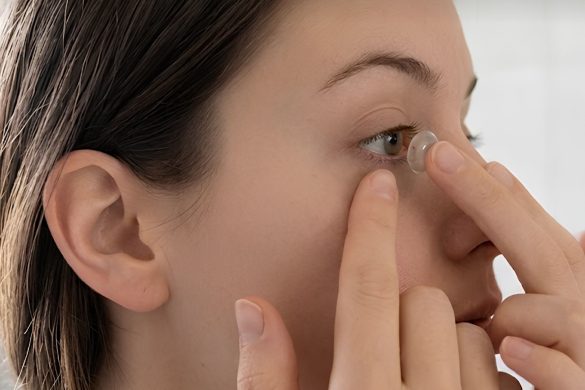
You don’t want to mix your lenses up, especially if your prescriptions are different for each eye. After removing, place the lens in the palm of your hand.
Step 3: Apply cleaning solution
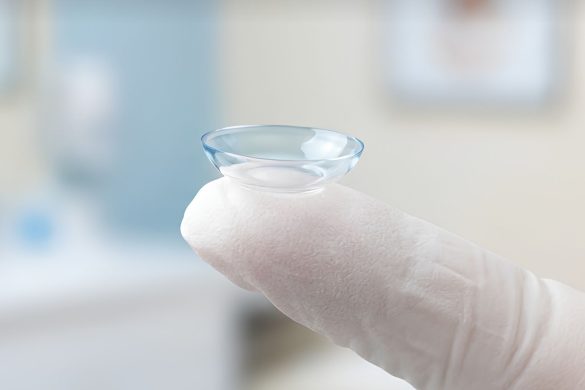
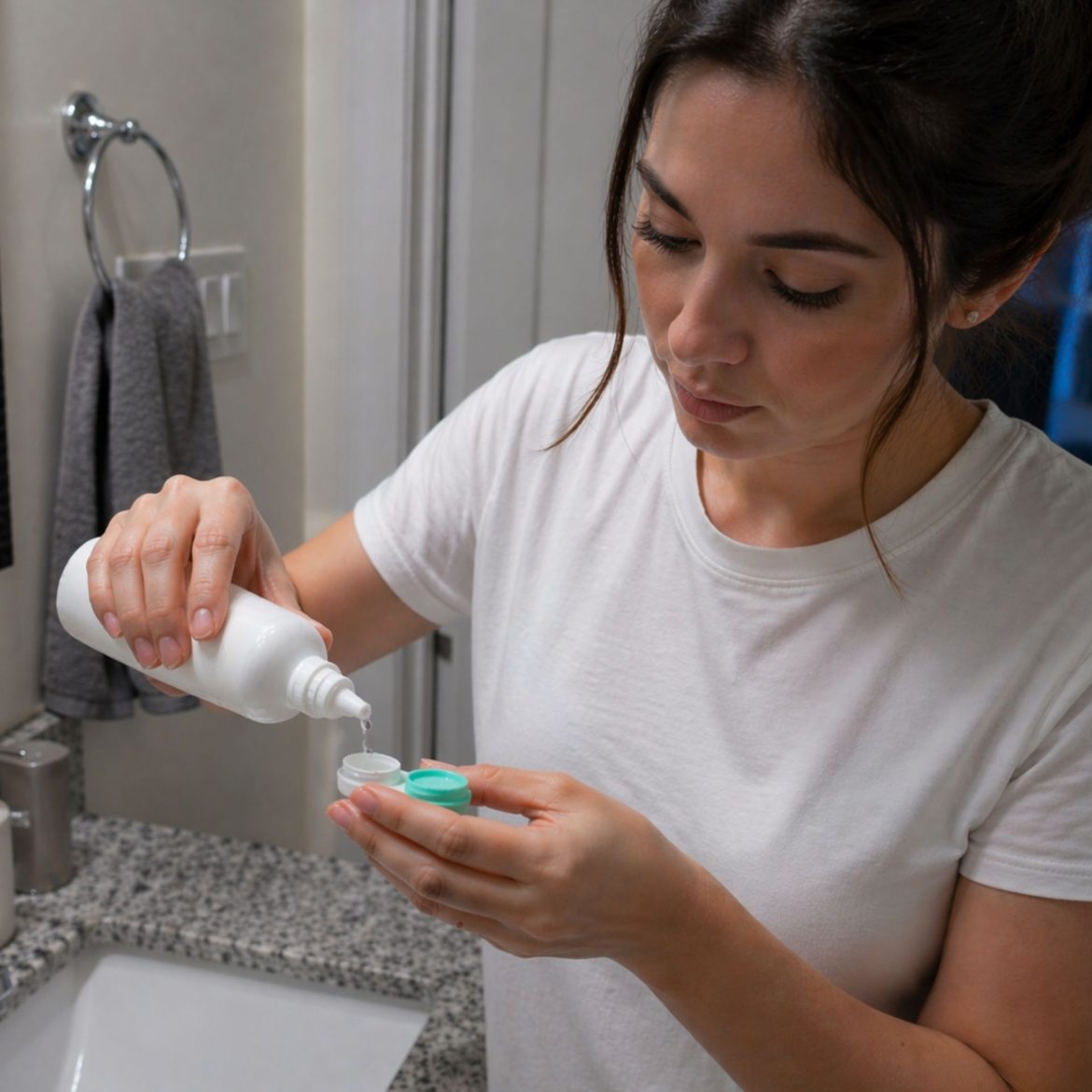
Add a few drops of contact lens solution onto the monthly contacts. Never use water or saliva, as it can contain microorganisms that you don’t want to introduce to your eyes.
Step 4: Gently rub the lens
While the lens is on your palm, use a fingertip from your other hand to rub the lens in small circular motions for about 10 to 15 seconds.
Even if you use a “no-rub” solution, we still recommend you follow this step to remove buildup.
Step 5: Rinse the lens
After rubbing, thoroughly rinse the lens with a new solution to wash away any debris that has been loosened. Do this to both sides.
Step 6: Store in a clean case
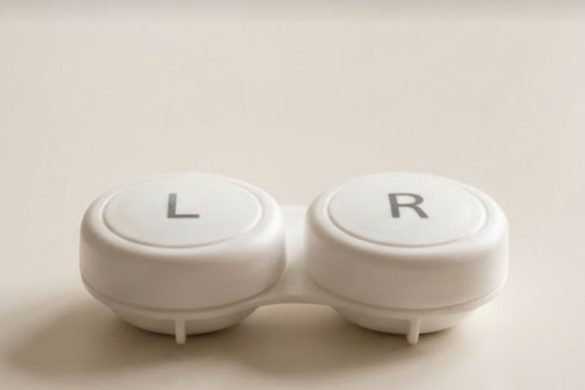
Before you even remove your lenses, make sure you have a clean case to put them in (we’ll talk about how to clean the case further down).
Place the lens in your contact lens case and fill it with new solution. It’s important that the lens is completely submerged.
Now that you’ve finished the cleaning process for one lens, it’s time to do the other.
Step 7: Let them soak overnight
Leave them in solution for at least six to eight hours, or follow the instructions on the packaging of the solution.
What to Do in the Morning
You want anything that’s going to be touching your actual eyeballs to be as clean and safe to wear as possible.
So, always give your lenses a quick check in the morning. You’re looking for any tears, debris, or dried-out lenses. If something doesn’t look quite right, or you’re unsure, just don’t wear it. Your eye health is too important.
Rinse the lenses with new solution before putting them in your eyes. This’ll remove any residue that’s been loosened from their overnight soak.
How to clean your contact lens case
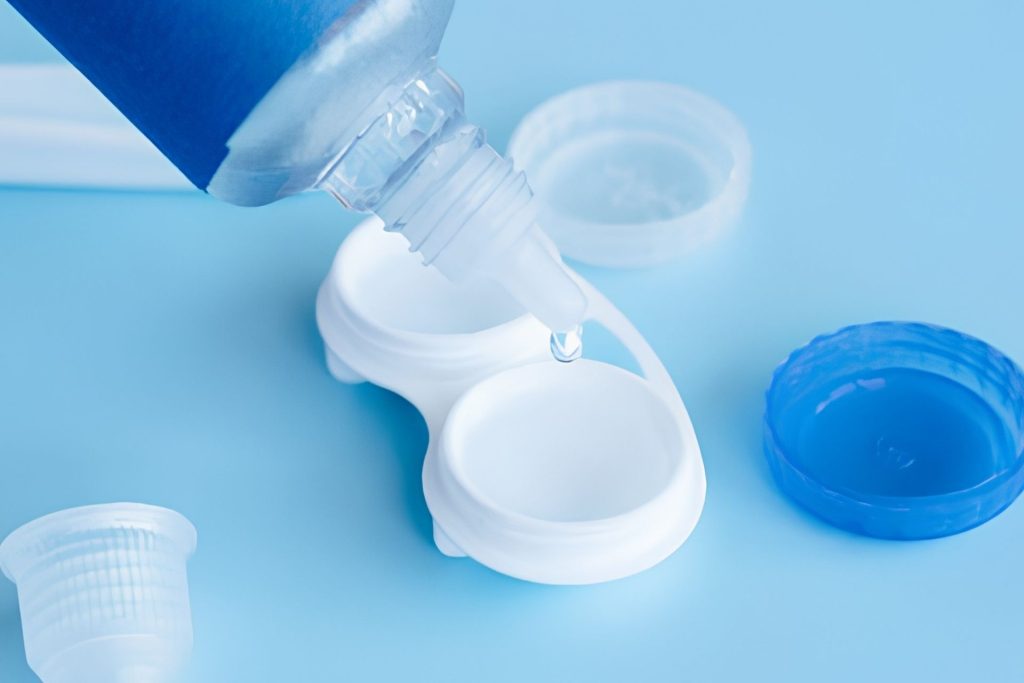
Part of your morning routine should be cleaning the case that you’ll store your lenses in later that evening.
- Empty out the old solution after you’ve put your lenses in.
- Rinse the case with new lens solution (not water).
- Gently rub the inside of the case with clean fingers to get rid of debris and buildup.
- Leave the case open and upside down to air dry on a clean surface.
- Replace your case every one to three months.
Common Mistakes to Avoid With Monthly Contacts
Mistakes that might seem minor can greatly increase the risks to your eye health.
- Reusing old solution: Always use new solution to fill up your case. “Topping off” the solution means the old solution, with all its potential bacteria and debris, is still in there.
- Skipping the rub step: Some solutions are touted as “no-rub” solutions, but gently rubbing the lenses with your finger will still remove buildup more effectively. So why not be on the safe side?
- Using water instead of solution: Faucet water is not safe for contact lenses. It can contain microorganisms that can lead to eye infections.
- Putting your lenses into a dirty case: Your case collects bacteria just like your lenses. If you don’t regularly clean and replace it, you’re putting clean lenses straight back into a dirty case.
- Wearing contacts too long: Monthly contacts are not intended to last longer than 30 days after they’re opened. The material will start to break down over time.
- Sleeping in your lenses (unless doctor-approved): Unless your lenses are designed to be worn overnight (extended-wear contacts), sleeping with them isn’t safe.
What Kind of Solution Should I Use?
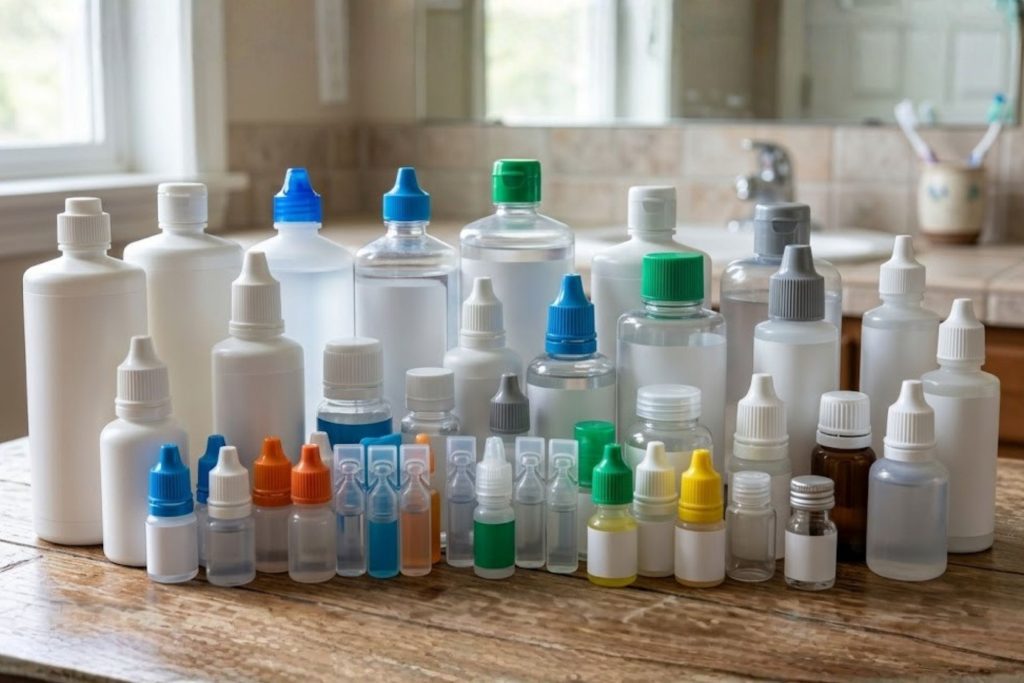
There are so many different solutions out there, and it can get a little confusing, especially for beginners.
Multipurpose solution
A multipurpose solution is used to clean, rinse, disinfect, and store contact lenses in their case. It’s convenient and widely used by contact users, and it does the job perfectly if used properly.
Hydrogen peroxide
Hydrogen peroxide is sometimes recommended for people with sensitive eyes or heavy buildup, as it’s supposed to do a better job at disinfecting than standard solutions.
However, it’s important to note that hydrogen peroxide solution must be used with a special case that neutralizes the solution over time. The neutralization process generally takes about six hours to complete.
Saline
Saline can be used for rinsing lenses, but never for disinfecting or storing. It’s often recommended for people who have sensitive eyes. They use saline to remove the harsher cleaning solution from their lenses before putting them in their eyes.
Rewetting drops (eye drops for contacts)
Rewetting drops add moisture to contacts while they’re still in your eyes. They can help with daytime dryness, but that’s their only purpose.
TL;DR
- Monthly contacts need to be cleaned every day.
- Always wash your hands before handling your lenses.
- When cleaning your lenses, never use faucet water. Use a contact lens solution.
- Rub, rinse, and store lenses in new solution each night. There are a couple of different solutions you can use, including a multipurpose solution and a hydrogen peroxide solution.
- Clean and replace your contact lens case regularly.
- Never wear your monthly lenses longer than the 30-day replacement schedule.