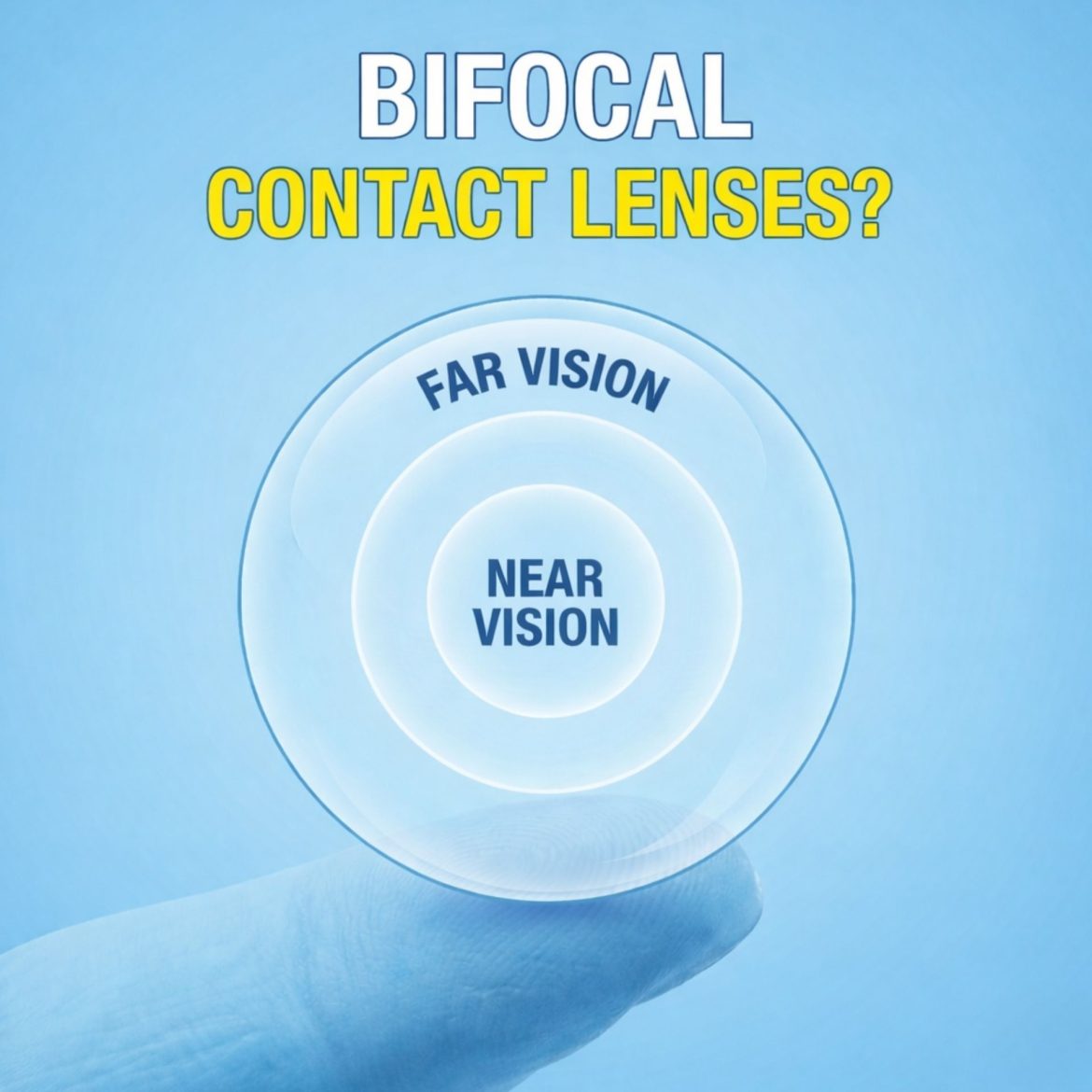
Thinking about trying bifocal contact lenses? You may be wondering how exactly they work and if they’re a good choice for you.
That’s what I’m here to discuss! I’ll walk you through the different types of bifocal contact lenses along with some alternative options.
What Are Bifocal Contact Lenses?
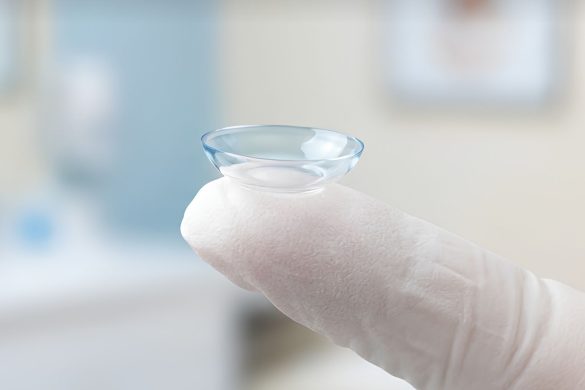
Bifocal contact lenses have two prescriptions in a single lens. One part of the lens helps you see clearly at a distance. The other helps you see close-up, such as when you’re reading or using your phone.
The most common condition for which bifocal contact lenses are prescribed is presbyopia. This is a change to your vision that usually starts in your forties. It makes it harder to focus on nearby objects.
If you opt for bifocals, it means you don’t need to carry around multiple pairs of glasses. Bifocals can correct both vision problems at once.
How Do Bifocal Contact Lenses Work?
Most bifocal contact lenses fall into two main categories: alternating vision and simultaneous vision contacts. They work in different ways.
Alternating Vision Contacts
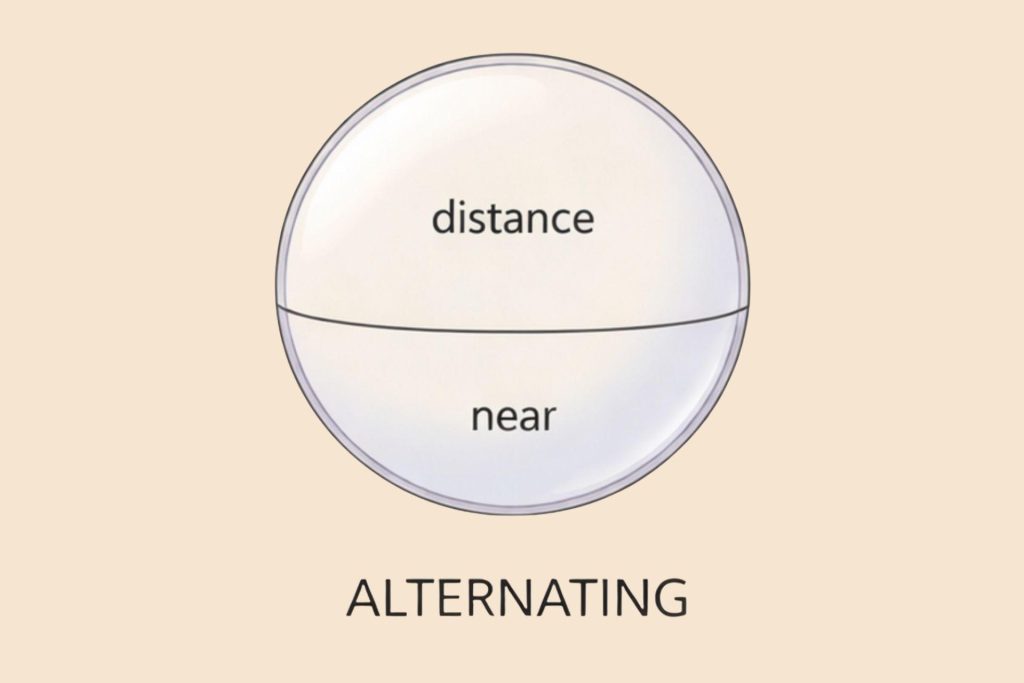
Alternating contacts are also known as translating or segmented contact lenses. They are less common than simultaneous vision contacts. They work a bit more like traditional bifocal glasses, with the lens separated into two distinct sections for near and distance sight.
When you look straight ahead, you’ll be using the distance section. When you look down, you’ll use the near section for tasks like reading.
They aren’t prescribed as often today because contacts naturally shift slightly throughout the day when you blink. Because of that, the lens doesn’t always stay in the position needed for the sections to line up with your vision.
Simultaneous Vision Contacts
Simultaneous vision contacts feature both near and distance prescriptions across the entire surface of the lens. Your eyes and brain work together to focus on what you need to, depending on whether you’re looking at something close or far away.
Simultaneous vision contacts have an adjustment period as your brain learns to adapt to the contacts. Most wearers get used to the contacts within seven to 14 days. However, some people find it takes longer.
Concentric vs. Aspheric
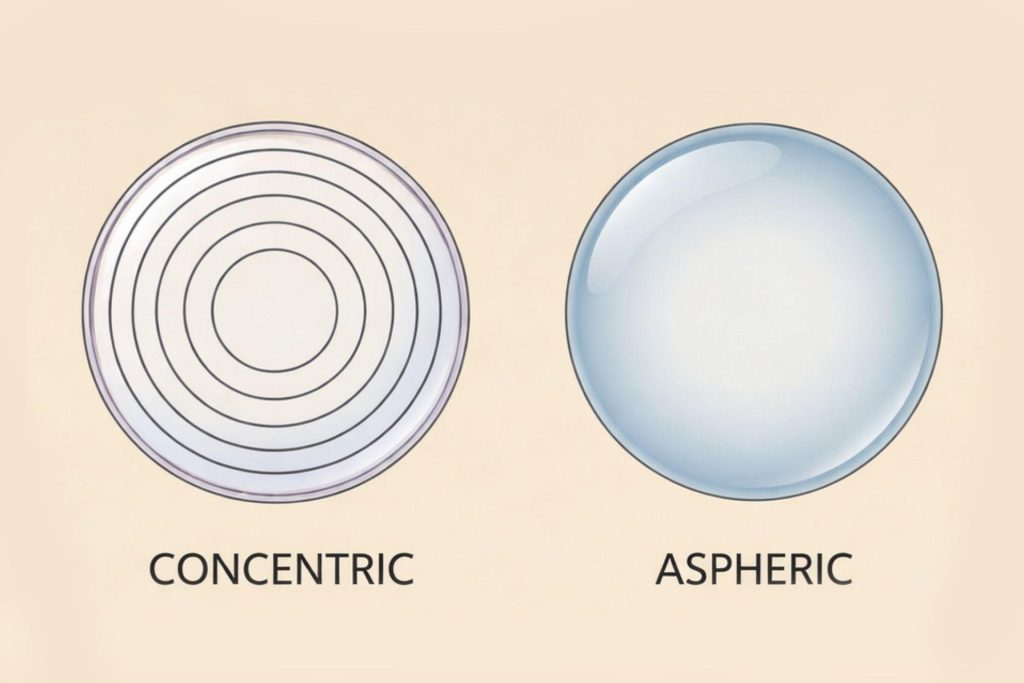
Within the simultaneous vision contact lens umbrella, there are two main designs: concentric and aspheric.
Concentric
This lens has multiple rings that alternate between near and distance prescriptions, with a larger distance viewing circle in (or near) the center.
When you look at something, light passes through multiple rings at once. Your brain then works out which image to focus on based on what you’re trying to see.
These lenses tend to provide more defined viewing zones. This can work well for certain prescriptions. However, it may feel less natural at first.
Aspheric
This design gradually changes power across the lens instead of using distinct rings. The center of the lens is usually optimized for either near or distance vision. Then, power shifts gradually toward the edges.
Near-centered designs are often used for people who spend more time on close-up tasks.
Aspheric designs create a more gradual transition between near and far vision. Many people find this more natural because it reduces the visual “jump” experienced with more defined zones.
Pros and Cons of Bifocal Contact Lenses
There are some positives and negatives of bifocal contacts. One of the big pros of bifocal contacts is that you’ll be able to use one lens for both near and distance vision. You also won’t have to carry around reading glasses.
In addition, you’ll get a more natural field of view compared to glasses. There are also no visible lines or close-up sections like with bifocal glasses.
However, some of the cons of bifocal contacts include an adjustment period as your brain adapts to the contacts. You could also experience slightly reduced sharpness compared to single-vision lenses. They can also be more expensive than standard contacts, and they could require multiple fittings to get right.
Many people find that the convenience outweighs the downsides once they’ve had time to adjust to the contacts.
Bifocal Contact Lenses vs. Multifocal Contact Lenses
You’ll often hear these terms used interchangeably. This can be confusing.
Most modern “bifocal” contact lenses are really multifocal lenses. That means they include multiple zones or a gradual change in power rather than just two distinct areas.
The difference comes down to design. Bifocal contacts focus on two main prescriptions (near and distance). Multifocal contacts include intermediate vision for tasks like computer use.
For everyday use, multifocal lenses often feel more natural for most people. They have more gradual transitions between distances. This is helpful if you spend a lot of time on screens.
Alternatives To Bifocal Contact Lenses
Bifocal contacts are just one way to manage presbyopia. There are a few other options you can consider, too.
Bifocal glasses
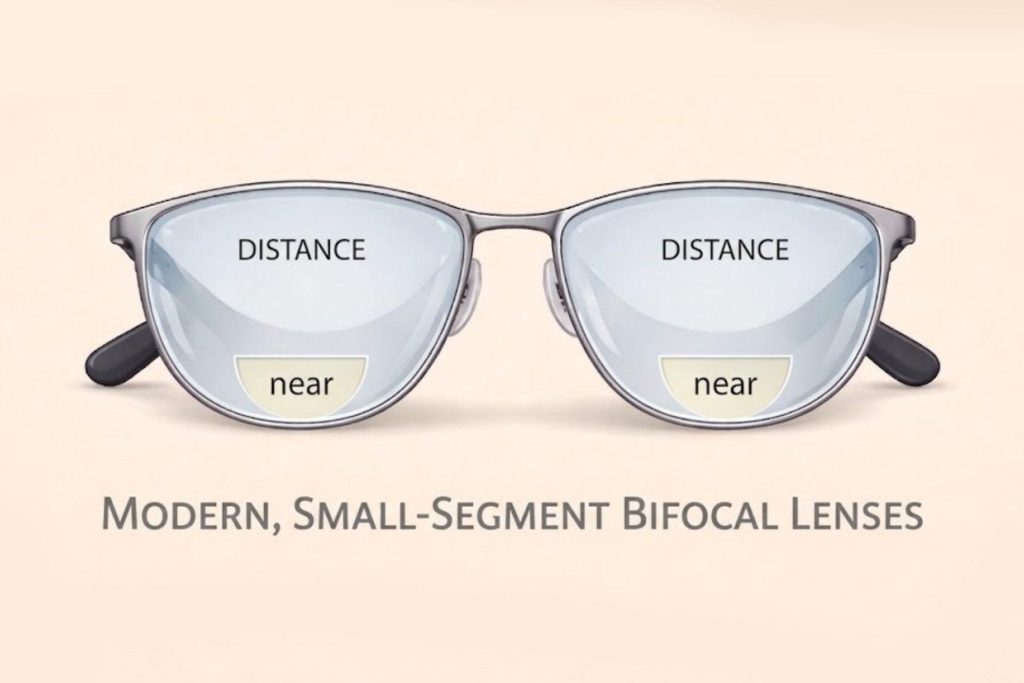
Modern bifocal glasses still use separate distance and near zones. However, the design is better than the older bifocals you might be imagining. The near segment is smaller and shaped to be less noticeable, and the lens is thinner. But they don’t have a dedicated intermediate zone.
Progressive glasses
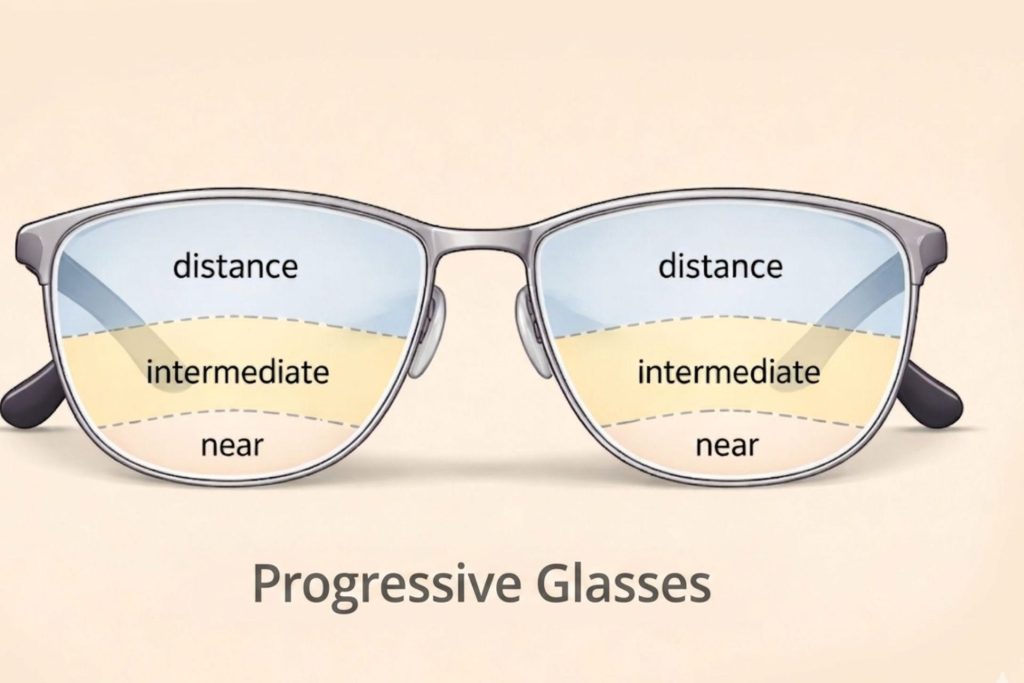
Progressive glasses offer a gradual transition between distance, intermediate, and near vision. There’s no visible line in these glasses. The downside is that they can be a little pricey.
Reading glasses with contacts
Some people prefer to wear standard contact lenses for distance and use reading glasses when needed. It’s a simple solution, but it means you’ll have to carry a pair of glasses with you.
Monovision contacts
With monovision contacts, you’ll use two different prescription lenses. The dominant eye is corrected for distance, and the non-dominant eye is corrected for near vision. They work well for some people, but they can affect depth perception.
Are Bifocal Contact Lenses a Good Option?
Bifocal contacts can be a good choice for many people with presbyopia. They offer a level of convenience.
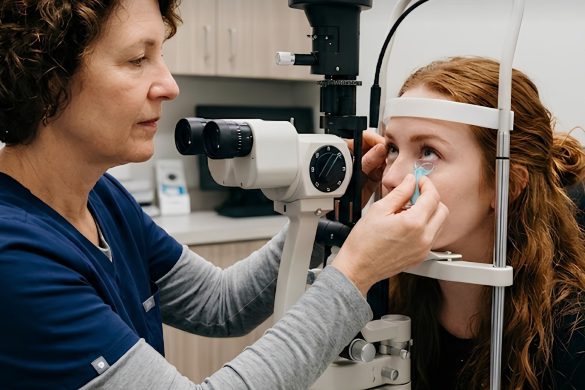
If you’re noticing changes in your near vision and don’t want to start wearing glasses, talk to your eye doctor. They can help you decide if bifocal contacts are right for you.
TL;DR
- Bifocal contacts feature near and distance prescriptions in one contact. They’re often used by people with presbyopia.
- Most bifocal contacts use multiple zones. They do this instead of having two distinct zones like bifocal glasses.
- The two most common types of bifocal contacts are alternating vision and simultaneous vision contacts. Most people are prescribed simultaneous vision contacts.
- There can be an adjustment period for new wearers. It takes around seven to 14 days for most people to adjust.
- Some alternatives include bifocal glasses, multifocal lenses, progressive glasses, and monovision contacts.