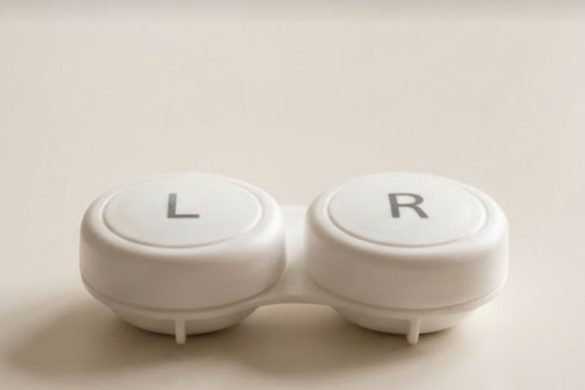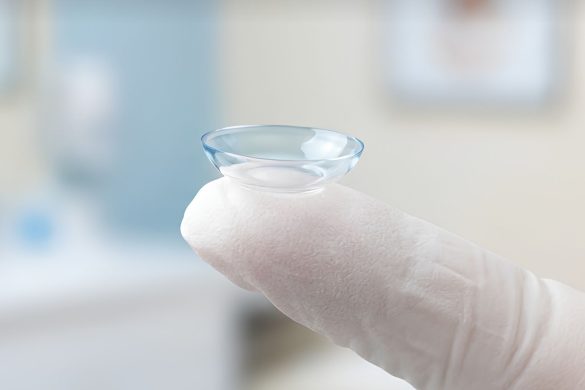
When was the last time you replaced your contact lens case? And when was the last time you really cleaned the case?
It’s easy to forget about your contact lens case. But you can’t have clean contact lenses without a clean case.
Cases can collect bacteria, protein buildup from your eyes, and debris from the environment. Replacing your case on a schedule is so easy to do. It will also greatly help to reduce the risk of eye infections and irritation.
Let’s dive in and discuss how to keep your case clean and how often you should replace it!
How Often Should You Replace Your Contact Lens Case?
Most doctors and eye care professionals recommend you replace your case every one to three months.
This is still true even if your case looks clean. Bacteria can build up on the surface of the case even when you can’t see it, especially within microscopic scratches or cracks.
A lot of contact lens solution brands include a new case with every bottle for this very reason. It’s good to replace your case whenever you open a new bottle of solution.
Signs It’s Time to Replace Your Case
No matter what, you need to replace your case every one to three months. You shouldn’t wait until you can actually see damage before replacing it, but there are a few obvious signs that mean it definitely needs to go:
- Cracks or damage: Small cracks or scratches can trap bacteria and make cleaning less effective.
- Cloudy or discolored plastic: This can be a sign of buildup.
- Sticky or slimy residue: Points toward biofilm growth.
- Persistent odor: This is a sign that bacteria is present.
How to Keep Your Contact Lens Case Clean
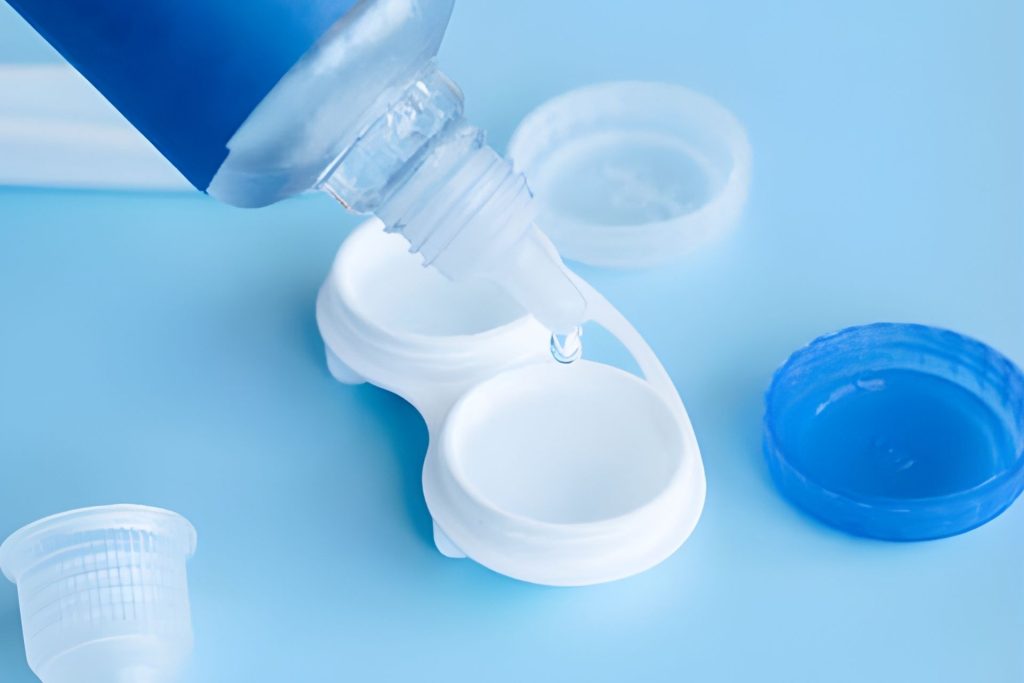
Replacing your case regularly is important, but cleaning your case every day also makes a big difference.
Once you have removed your lenses, pour the old solution down the sink and rinse the case with new solution. Don’t use water from the faucet, as it can contain microorganisms.
After you’ve rinsed it, leave the case open and let it air dry. Store it upside down on a clean surface to let the moisture out.
Mistakes to Avoid
Actions that don’t seem like a big deal can have a huge impact on lens hygiene, and in turn, on your eye health.
- Topping off old solution: Always use new solution instead of adding to what’s already in the case.
- Using water to clean the case: Tap water can introduce harmful microorganisms, so you should always use saline or contact lens solution.
- Touching the inside of the case: This can transfer bacteria from your hands onto the inside of the case.
- Keeping the same case for too long: Even if it looks fine, there’s a good chance it’s not hygienic anymore.
Avoiding these mistakes helps keep both your lenses and your eyes safer.
Does the Type of Case Matter?
Most ordinary contact lens cases work well when used correctly. But there are a few variations, and some aim to reduce bacteria and buildup.
Flat cases
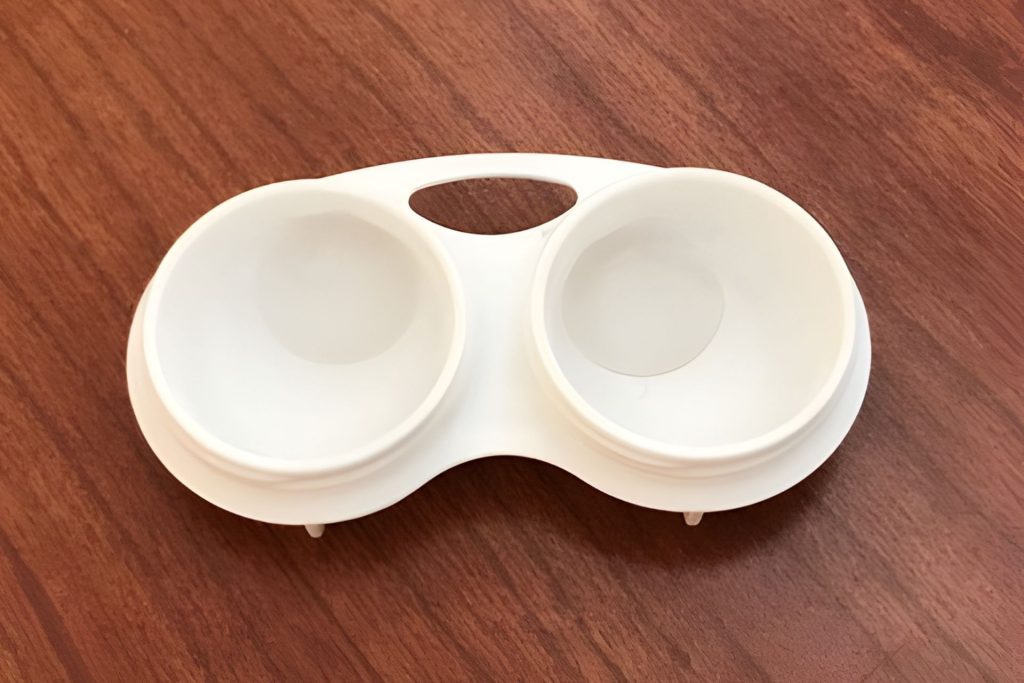
This is the type of case you see everywhere. It has two wells, one for each lens. They work just fine, but they rely entirely on proper cleaning and the regular replacement of the solution to keep bacteria under control.
Barrel cases
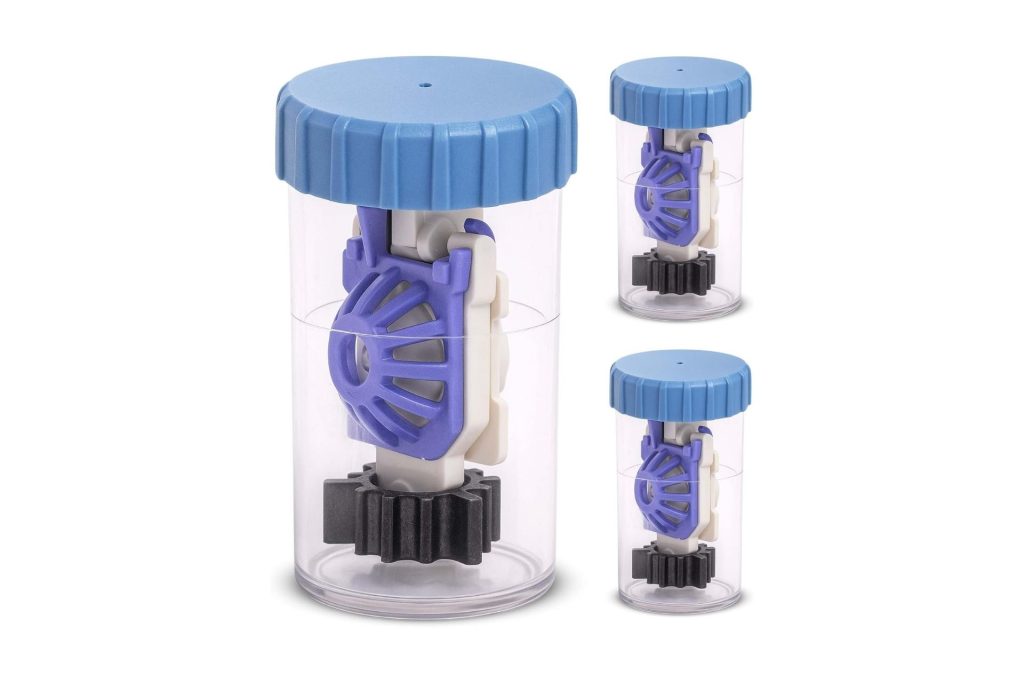
Barrel cases are used along with a hydrogen peroxide cleaning solution. They’re “barrel” shaped (who would know it?), and you put both lenses into one container, using the separate baskets labeled L and R. It’s shaped in a way that lets you spin it to help aid the cleaning process.
Hydrogen peroxide is not safe to put directly in your eyes, so the cases have a built-in disc that neutralizes the solution over time.
First, the solution disinfects the lenses by killing bacteria and breaking down deposits from your eyes. The disc, usually coated in platinum, then converts the peroxide into water and oxygen so that you’re left with a solution akin to saline.
After the full cleaning cycle (usually six hours) has been completed, it’s safe to wear your lenses. You must be careful to never put the lenses in too soon, as unneutralized peroxide can be harmful to your eyes.
Antimicrobial cases
These modern cases look similar to ordinary cases, but they’re made with materials designed to slow bacteria growth down. Some of them use something called “silver ions,” which can kill bacteria, mold, and viruses.
Even if you use an antimicrobial case, you still need to replace the case every one to three months. All cases need to be replaced regularly.
What Happens If You Don’t Replace the Case?
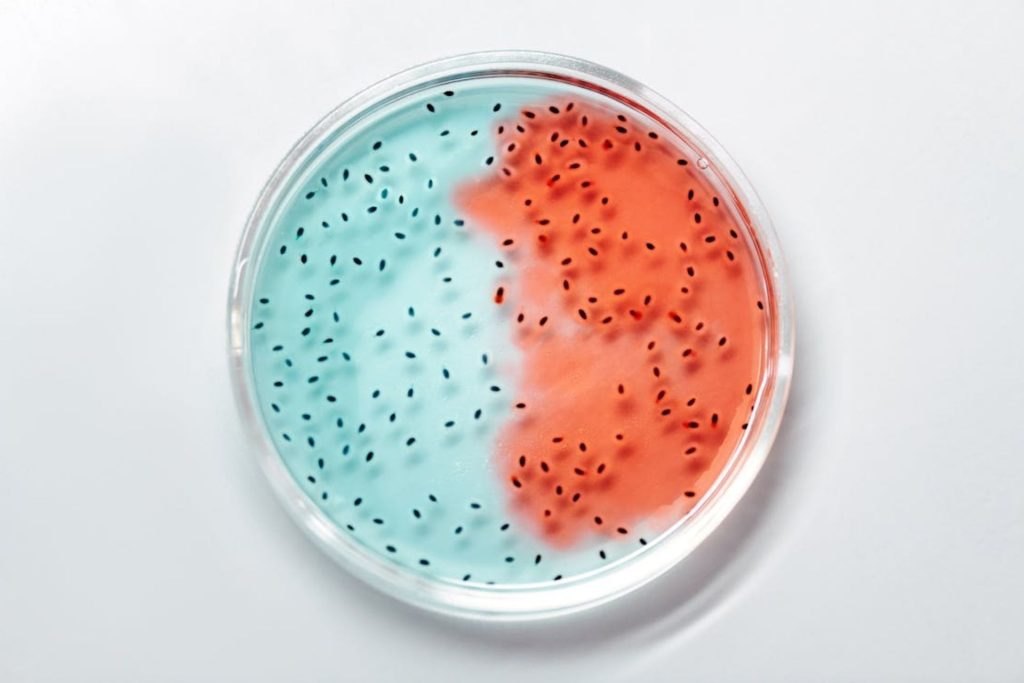
Your contact lens case is a moist environment, making it the kind of place that bacteria loves to grow.
Bacterial buildup and biofilm
Even with all the right cleaning, microorganisms can form something called biofilm. Once this gets started, it becomes much harder to fully disinfect the case.
Eye infections
When you wear lenses that came from a contaminated case, you can get infections like keratitis. Symptoms include redness, pain, discharge, and sensitivity to light. Some infections are very serious, requiring immediate medical attention before your vision is affected.
Irritation and discomfort
Even if you don’t get a full infection, bacteria and deposits can still irritate your eyes. You might find you have dry eyes or a gritty feeling. The lenses might also start to feel uncomfortable earlier in the day than they usually would.
Cleaning is less effective
A worn-out case can make your cleaning solution less effective. Bacteria and buildup inside the case can get into the new solution, meaning it can’t disinfect your lenses properly.
A Simple Habit That Protects Your Eyes
Replacing your contact lens case is easy, and it has a direct impact on your eye health.
Set a reminder on your phone that will alert you to replace your case. You can also switch cases whenever you open a new bottle of solution, but that doesn’t mean you can skimp on the one-to-three-month rule. Replace it at whichever point comes first.
TL;DR
- You’ll want to replace your contact lens case every one to three months.
- It’s also a good idea to switch cases when you open a new bottle of solution.
- Old cases are likely to contain bacteria even if they look clean.
- Always clean the case with contact lens solution, and never use water as a replacement.
- Let your case air dry after each use.
- There are a few different types of cases available. This includes the classic flat case, which has two wells, one for each lens. There’s also a barrel case, which uses a hydrogen peroxide cleaning solution. Then there’s an antimicrobial case, which is made with materials designed to slow bacteria growth down.
- Set a reminder on your phone to help you remember to replace your contact lens case regularly.