Are you wondering if you have keratoconus?
Keratoconus symptoms generally start slowly. Your vision might gradually become blurrier, or lights may start to look strange at night. You’ll also probably find your glasses stop working as well as they should.
In this article, we’ll discuss the most common signs of keratoconus and talk about why it affects vision the way it does.
However, these symptoms could point to a huge range of conditions, so it’s important not to leap to any conclusions about what could be going on with your vision. Instead, speak to your eye doctor so they can properly diagnose you.
What Is Keratoconus?
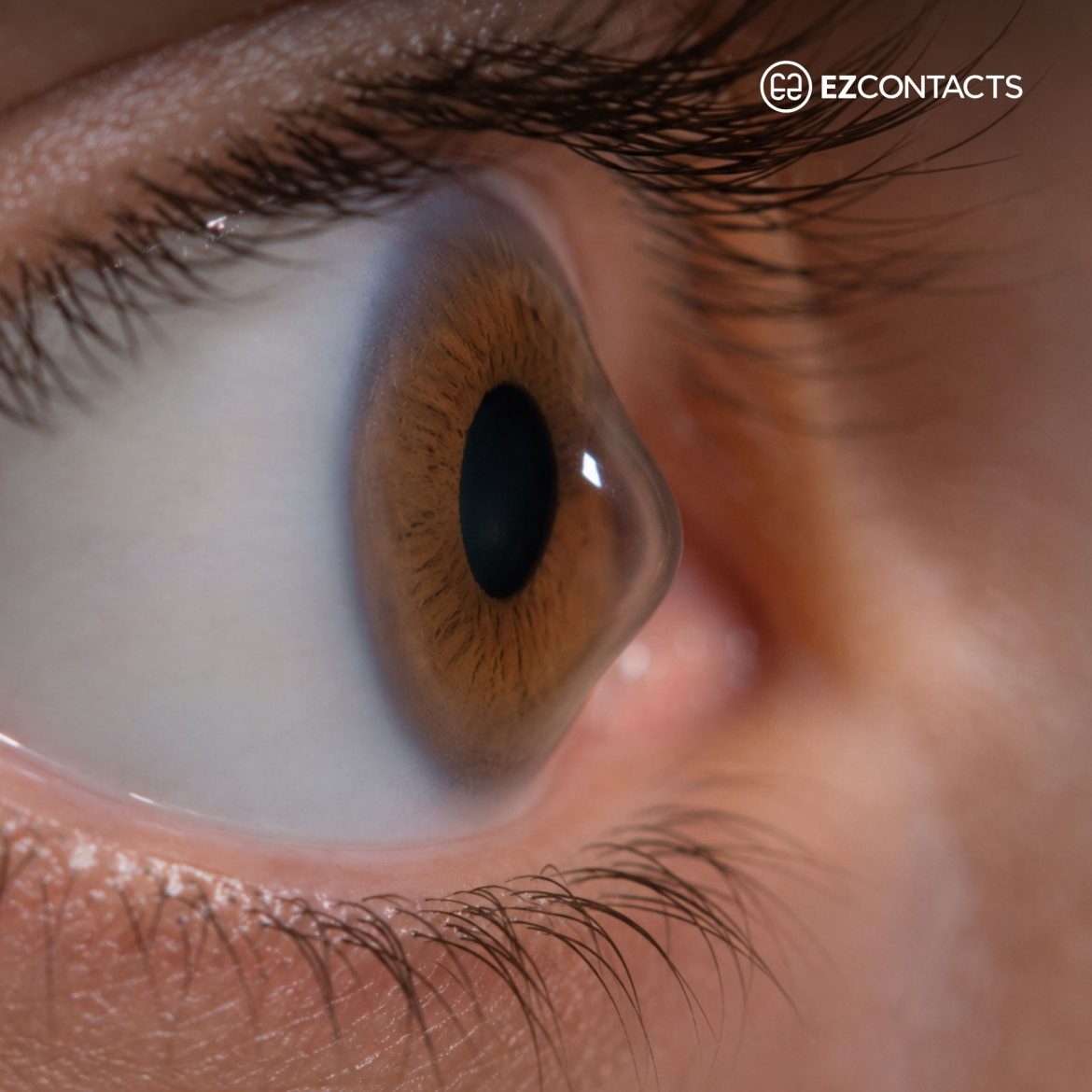
Keratoconus is an eye condition that affects the cornea, the surface at the front of your eye.
Normally, the cornea has a smoothly curved shape to help focus light properly onto the retina. With keratoconus, the cornea gradually becomes thinner and starts bulging outward into more of a cone shape.
That change in shape bends light unevenly as it enters the eye. The result is distorted and constantly changing vision that regular glasses struggle to fully correct.
Keratoconus usually starts during people’s teenage years or early adulthood and slowly progresses over time. It often stabilizes later in life, but how much an individual’s vision changes can vary a lot from person to person.
Currently, there isn’t a “cure” that can reverse keratoconus entirely. But treatments can slow its progression and drastically improve vision, especially when it’s caught early. That’s why it’s so important to understand and recognize the symptoms.
What Are the Symptoms of Keratoconus?
Keratoconus symptoms vary from person to person, especially in the early stages. But there are common symptoms, including ones that repeatedly appear as the cornea changes shape.
Blurry vision that keeps changing
One of the earliest symptoms of keratoconus is blurred vision that progresses much faster than you’d expect.
You might experience:
- Your glasses stop effectively correcting your vision surprisingly quickly
- One eye becomes much blurrier than the other
- Your vision changes between eye exams at a fast rate
- Looking at small objects and text is difficult because the details look smeared or stretched out
This happens because the cornea is no longer maintaining the smooth shape it’s supposed to. The distorted cornea scatters light in multiple directions, warping your vision.
Ghosting
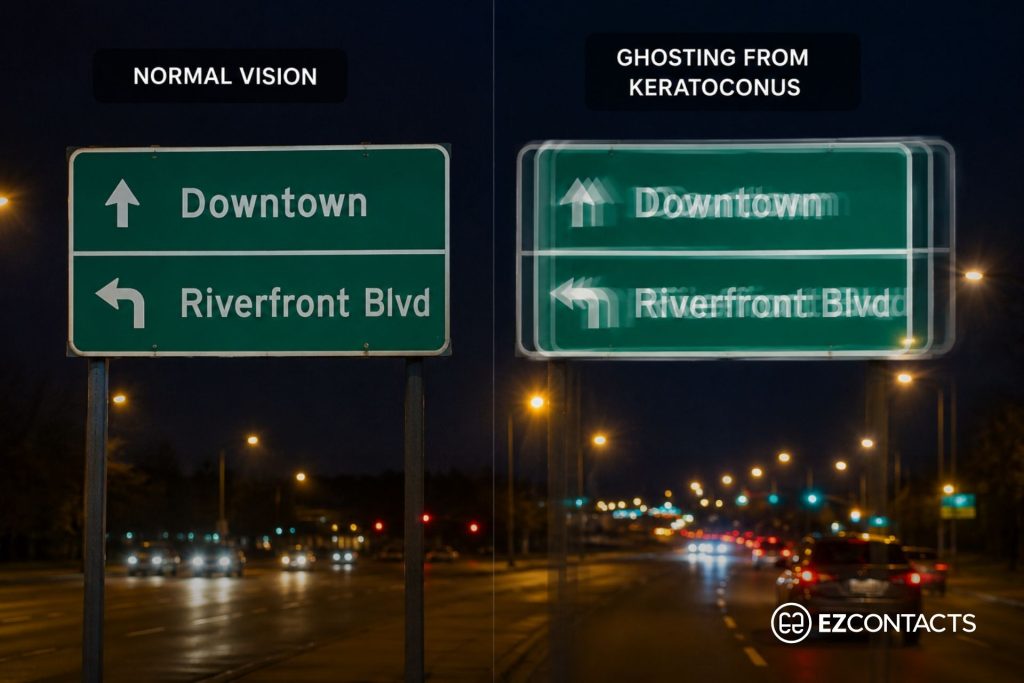
Keratoconus can create a symptom called “ghosting.” This isn’t the same as standard double vision.
Instead of seeing two completely separate images, ghosting means you see a faint duplicate or shadow around objects. For example, the writing on street signs can look like it’s been stretched across the sign. You might also see outlines or “trails” around lights.
Increased sensitivity to light
Many people with keratoconus become unusually sensitive to bright light. Sunlight, car headlights at night, or bright screens can start causing discomfort if used for a long time.
The effect becomes more noticeable in low light because the pupil naturally expands in the dark. A larger pupil allows more distorted light rays to enter the eye at once.
Frequent prescription changes
Normally, people don’t need major prescription updates every few months. But for people with keratoconus, changes to their vision can happen more rapidly.
A person may get new glasses and feel happy with them initially, only to notice their vision becoming blurry again relatively quickly afterward. This is one reason keratoconus sometimes gets mistaken for “bad eyesight” before a proper diagnosis is made.
Astigmatism that keeps getting worse
Keratoconus is strongly associated with irregular astigmatism.
Regular astigmatism happens when the eye curves unevenly in one direction. Keratoconus creates a much more irregular surface shape, leading to more complex visual distortion.
Eye doctors often become suspicious of keratoconus when:
- Astigmatism increases rapidly
- Vision remains poor even with updated prescriptions
- One eye changes much faster than the other
- Standard contact lenses stop correcting vision properly
Eye strain and headaches
Trying to force blurry or distorted vision into focus all day can become mentally exhausting.
Some people with keratoconus experience:
- Eye fatigue
- Headaches
- Difficulty concentrating
- Tired eyes after reading or screen use
These symptoms aren’t because keratoconus directly causes pain inside the eye. It happens because the brain is constantly trying to process unclear visual information.
Halos and starbursts around lights
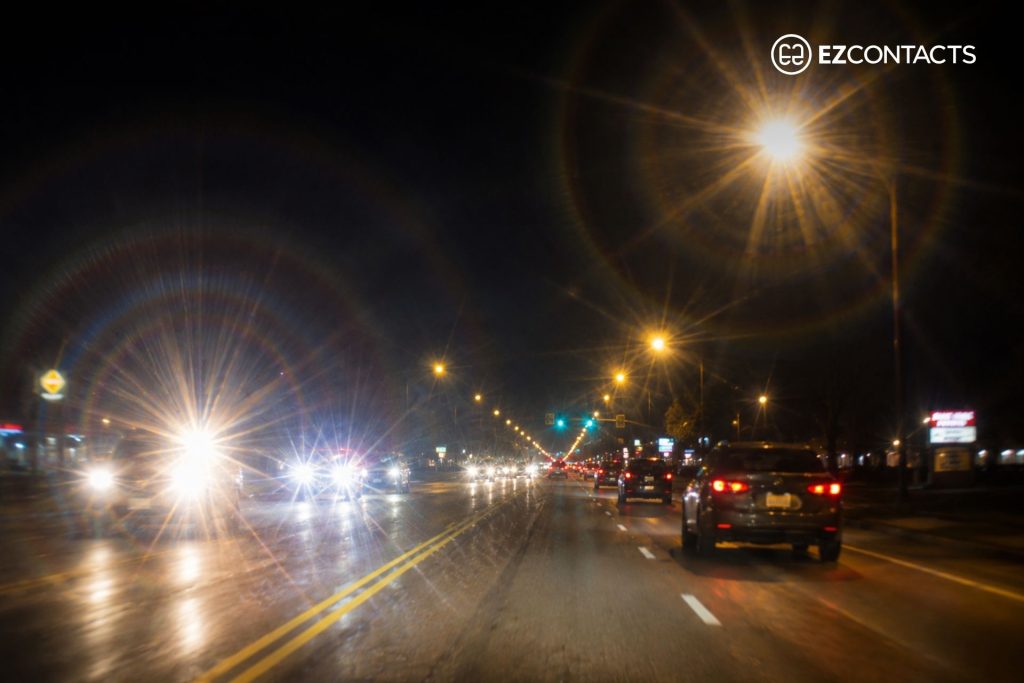
This is a symptom people notice most at night.
Lights may develop:
- Halos
- Glare
- Radiating streaks
- Starburst patterns
Oncoming headlights are a common complaint. Instead of appearing as focused points of light, they spread outward into large, blurry bursts.
This symptom can make night driving exhausting for some people, especially as keratoconus progresses.
Symptoms often start in one eye first
Keratoconus almost always affects both eyes, but it can progress at different rates in each eye.
This can be confusing in the beginning because the stronger eye can be compensating for the weaker one. Some people don’t realize how distorted one eye has become until they cover the stronger eye during an exam.
What Causes Keratoconus?
Doctors still don’t fully understand why keratoconus develops, but it has been found that people with a family history of keratoconus are more likely to develop it themselves.
Chronic eye rubbing is also strongly linked to the condition. It puts stress on the cornea over time, which can contribute to thinning of the cornea in vulnerable eyes. It’s also why allergies and chronic itchy eyes are associated with keratoconus.
Do Glasses or Contacts Work for Keratoconus?
In the early stages, normal glasses or soft contact lenses may be enough. But as the cornea continues to change, you may be prescribed specialty lenses for keratoconus.
These might include:
- Rigid gas-permeable lenses
- Hybrid contact lenses
- Scleral lenses
Final Thoughts
Keratoconus symptoms can be easy to dismiss. People just assume they need a stronger prescription or that their eyes are getting screen-fatigued.
But if you recognize any of the symptoms we’ve talked about, it’s important to schedule an eye exam. Keratoconus is easier to deal with when caught early, plus modern treatments can slow its progression and preserve your vision.
TL;DR
- Keratoconus causes the cornea to get thinner and bulge outward.
- It causes changes to your sight. You’ll likely experience blurred vision, glare from lights, ghosting, and astigmatism that keeps getting worse.
- The condition typically appears in the teen years or young adulthood. But it usually stabilizes when people are middle-aged.
- Symptoms usually begin in one eye before affecting both.
- Chronic eye rubbing and genetics are both associated with the condition.
- Specialty contact lenses can often improve vision much better than glasses.