
CYL, SPH, Axis… what are they?
If you’re staring at the numbers and letters on your lens prescription, you might be curious. Maybe you want to know whether your prescription has changed or if it was filled correctly. You could also have questions about what all those abbreviations are.
So, what is CYL in eye prescription? Let’s get more into what CYL and those other abbreviations mean!
What Is Astigmatism?
CYL and Axis are specifically used on astigmatic prescriptions. You’ll only see numbers in these columns if you have astigmatism.
But you may be asking, what is astigmatism, exactly?
Astigmatism is a condition that can cause blurry, fuzzy, or distorted vision at all distances. With astigmatism, your cornea is shaped more like an American football than a spherical basketball.
This means that light passing into the eye isn’t focused on a single point on the retina. Instead, it focuses on two or more areas, causing your vision to blur or stretch.
When astigmatism is mild, you might not even realize you have trouble seeing clearly until the ophthalmologist checks your eyes. If the astigmatism is more severe or combined with other conditions, like myopia (nearsightedness) or hyperopia (farsightedness), you may have more vision problems.
What Is CYL in Eye Prescription?

Now, let’s start diving into those abbreviations on your prescription. CYL is an abbreviation for ‘cylinder.’ It indicates the amount of lens power needed to correct your astigmatism.
Check the CYL column on your prescription; is there a number in it? If so, this number should have a + or – sign in front of it. The number and the plus or minus designation tell the lensmaker how to correct for your level of astigmatism. The higher the number, the more severe your condition.
CYL is used in conjunction with Axis. Axis describes where the astigmatism is located on the eye. It’s measured between 1 and 180 degrees.
How Do Corrective Lenses Work for Astigmatism?
The lensmaker will use the CYL and Axis designations to make the lenses for your eyes. They’ll use the CYL number to determine the amount of lens power needed. They’ll use the Axis number to determine where to place the correction on the lens.
If you’re ordering contacts or glasses online, always copy the numbers carefully and double-check them before submitting your order. A correction in the wrong place won’t improve your vision, and it could make things worse.
What if the CYL Column is Empty?
The CYL column may be left blank, or it may say “plano” or “0.00.” These designations just mean you do not have astigmatism.
What Does the SPH Mean on My Eye Prescription?
You may also have questions about the ‘SPH’ abbreviation on your prescription. ‘SPH’ is short for ‘Sphere.’ If you are nearsighted or farsighted, the number in this column explains what level of correction your lenses need to address that.
The number will be accompanied by a plus or minus sign. A minus sign indicates nearsightedness, and a plus sign indicates farsightedness.
Do I Really Need a New Lens Prescription for Astigmatism Every Year?
Eye doctors and the American Academy of Ophthalmology typically recommend an exam every 1-2 years to check on how your eyes are doing. For some people, astigmatism can remain the same for many years. But for others, it can progress, especially with age.
Here’s another way to look at it: Even though you may not feel it, your eye’s shape often changes with age. When you have astigmatism, these changes sometimes mean that less light focuses on the retina. Cue blurry vision! At this point, only a new prescription will help you see better.
There are several reasons why regular exams are helpful for people with astigmatism:
- Corneal changes. Sometimes, warping or alterations of the eyeball’s curve can reduce your vision, requiring a new prescription.
- Changes in the eye’s lens. These can also cause more refractive errors, worsening astigmatism.
- Progression of your condition. While astigmatism is sometimes stable for years, it can also worsen, especially as you age.
- Other conditions can impact your vision. Eye exams will also determine if other conditions, like myopia, have worsened or if you’ve developed new challenges.
- Using an old prescription can be problematic. If you continue wearing lenses that no longer work for you, struggling to see clearly can cause headaches or other symptoms.
- Old contact lenses can be damaging. Contact lenses that no longer fit your eyes correctly are even worse than outdated glasses, causing pain, irritation, and even damage to your eyes.
The bottom line: Get the exam, and if needed, the updated prescription. While it’s easy to be complacent if your prescription has remained the same for years, it’s best to continue with regular eye exams as recommended by your doctor.
What if My New Astigmatism Prescription Doesn’t Feel Right?
Sometimes, people immediately feel better with a new prescription, noticing that everything is suddenly clearer. However, others may instead find the change jarring or experience new difficulties.
So you might find yourself wondering what to do if your new prescription doesn’t feel right. First, it’s a good idea to give your new lenses a few days. This situation is not unusual, and for some people, the feeling goes away after they get used to the new lenses.
Sometimes when your vision has improved, it can still take time to adjust. With contact lenses, you may also need to acclimate to the feeling of a different lens.
However, if your new lenses continue to bother you, if you feel like your vision is worse, or if you are experiencing new headaches, eye pain, or other symptoms, you should contact your eye doctor right away.
Can I Get Contacts for Astigmatism?
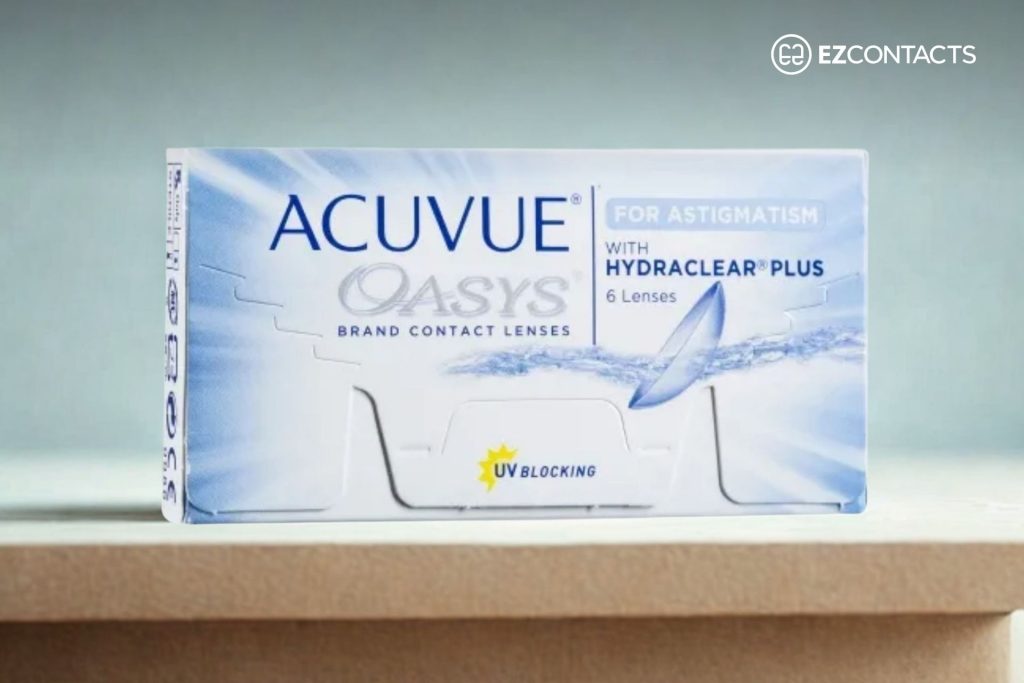
Yes! Many people have had success with toric contact lenses. These contacts are specifically made for astigmatism, and they feature stabilizers that help the lenses stay in place.
TL;DR
- Are you wondering, what is CYL in eye prescription? CYL is short for ‘cylinder,’ and it’s included in eye prescriptions for astigmatism. It indicates the amount of lens power needed to correct astigmatism.
- CYL is used in conjunction with Axis. Axis tells the lensmaker where to place the correction on your lens.
- Astigmatism is a condition where the eye is more football-shaped than spherical. This causes blurred or distorted vision.
- If the CYL column is empty, it typically means you don’t have astigmatism.
- The ‘SPH’ column is another important column in your eye prescription. The number in this column indicates the lens power needed to correct nearsightedness or farsightedness.
- It’s a good idea to get an eye exam every one to two years to see if your vision has changed.
- It can take some time to adjust to new glasses or contacts. You could experience some dizziness and headaches while you get used to the new eyewear. If these symptoms persist, though, it’s best to contact your eye doctor.
- There are contact lenses for astigmatism available. These are called toric lenses, and they have stabilizers to help the lens stay in place.
- If you’re placing an order for glasses or contacts online, be sure to double-check that you’ve entered all the numbers from your prescription correctly.