Does your new eye prescription look like jibberish to you? Are all those acronyms causing you to scratch your head in confusion?
OD and OS? SPH and CYL? What does it all mean?
If you’re struggling to decode your prescription, I’ve got you. Let’s go through what OD vs. OS means. We’ll also discuss some other acronyms you may see on your prescription.
Let’s begin by breaking down OD vs. OS. Essentially, these are abbreviations for the Latin terms for the eyes. I’ll walk you through what these acronyms stand for.
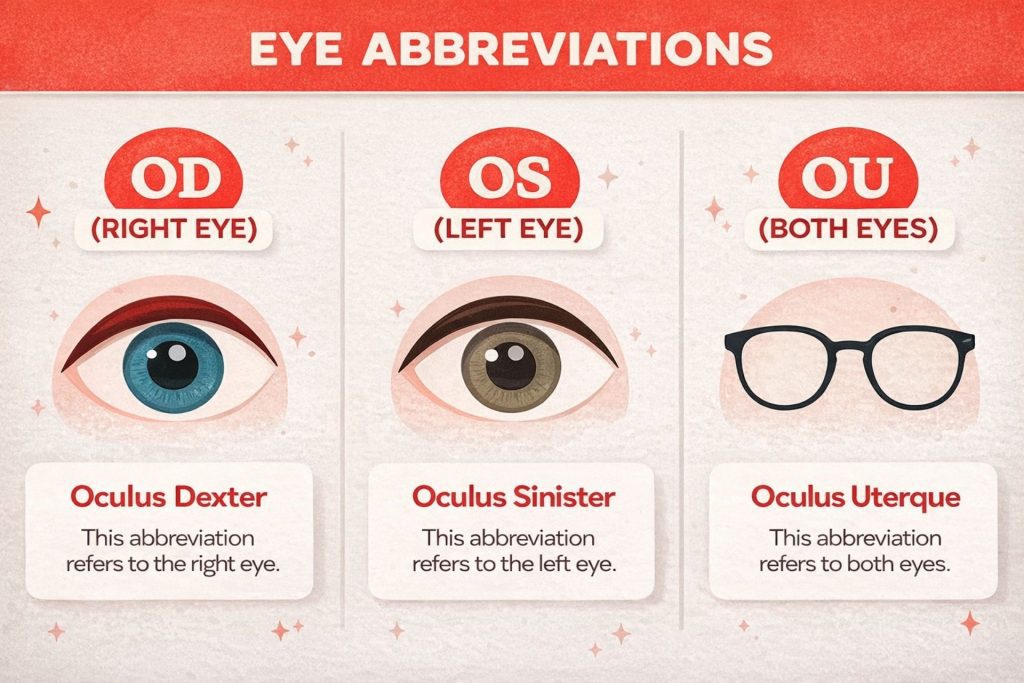
OD
OD stands for ‘oculus dexter.’ This is the Latin term for the right eye.
OS
OS stands for ‘oculus sinister.’ This is the Latin term for the left eye.
OU
Plot twist: There’s one more acronym you’ll sometimes see below OD and OS! OU stands for ‘oculus uterque,’ which is the Latin term for both eyes.
This acronym might be included on your prescription if your vision correction requirements are identical for both eyes.
What OD, OS, and OU Stand For
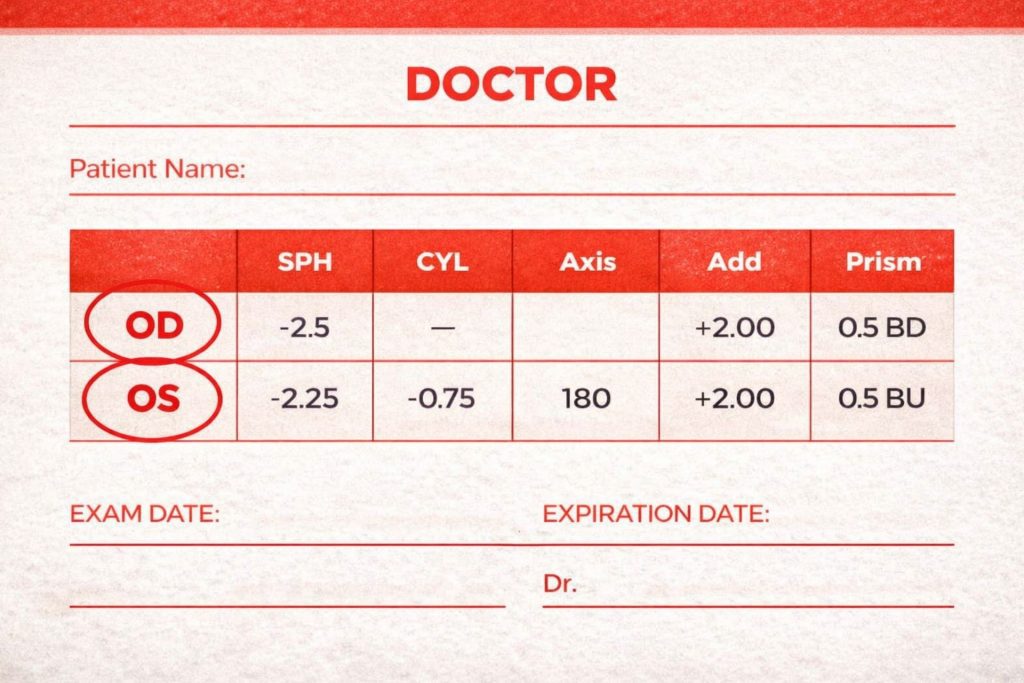
Where Are OD and OS on a Prescription?
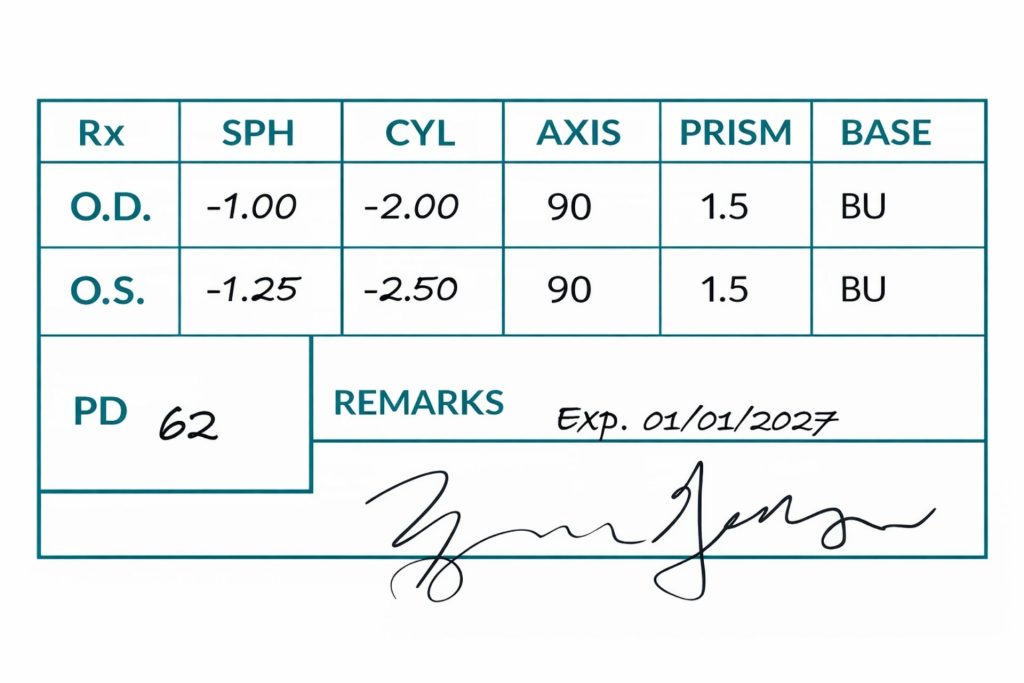
Both OD and OS are usually on the left side of your prescription, with OD being in the top row, and OS beneath it.
Prescription Showing OD and OS
Will You Always See OD and OS on a Prescription?
Many eye doctors use OD and OS on their prescriptions. However, nowadays, some have switched to simply using ‘RE’ for the right eye and ‘LE’ for the left eye. This helps avoid confusion.
Common Questions About OD and OS
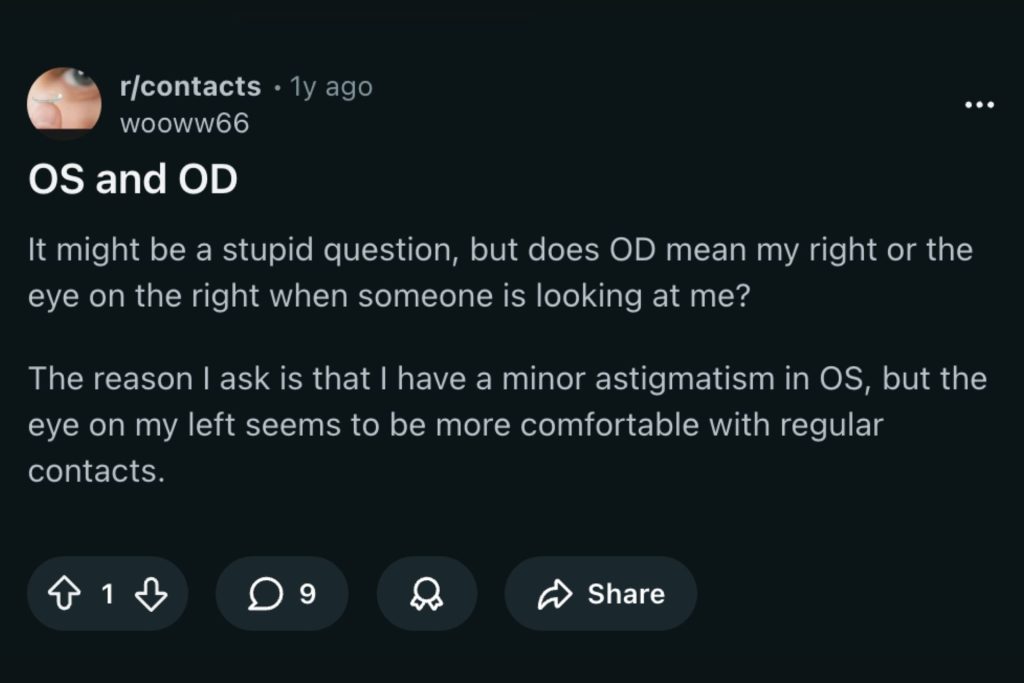
Since most of us don’t have a working knowledge of Latin (who does?), It’s natural to have some questions about OD and OS. So it’s no surprise that lots of people have taken to Reddit to voice their questions.
“Does OD mean my right or the eye on the right when someone is looking at me?
The reason I ask is that I have a minor astigmatism in OS, but the eye on my left seems to be more comfortable with regular contacts.”
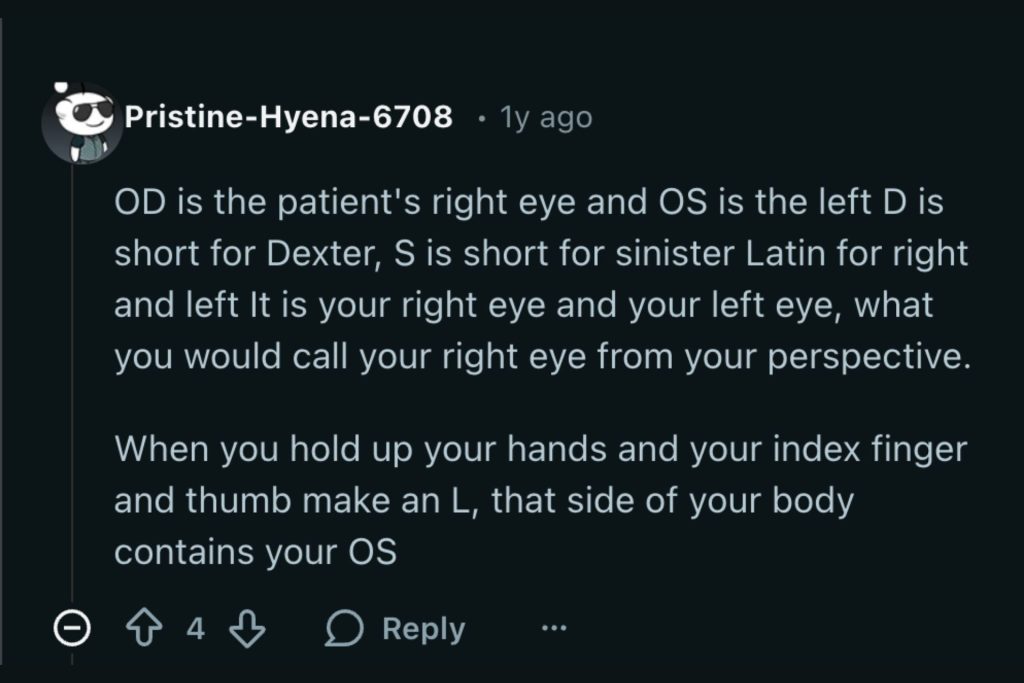
Other Redditors jumped in to clarify this:
“OD is the patient’s right eye and OS is the left. D is short for Dexter, S is short for sinister. Latin for right and left. It is your right eye and your left eye, what you would call your right eye from your perspective.
When you hold up your hands and your index finger and thumb make an L, that side of your body contains your OS.”
Other Acronyms on a Prescription
Now, let’s dive into all those other acronyms on a prescription and see what they mean. Depending on your prescription, you may have numbers in some or all of these categories.
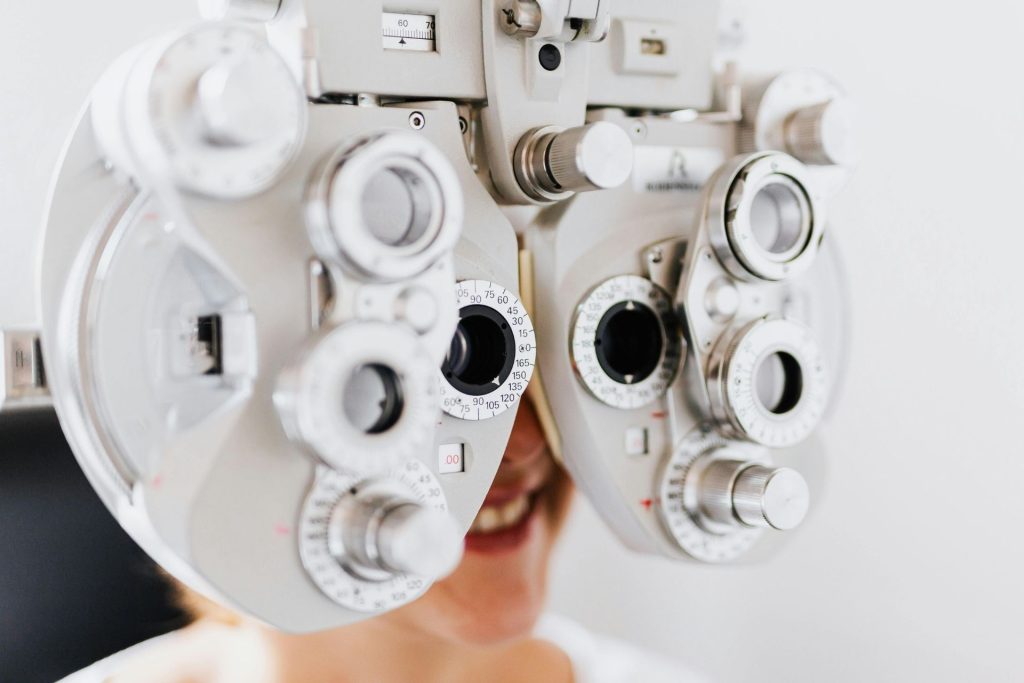
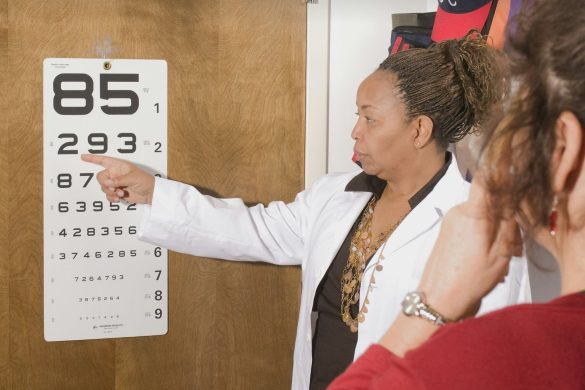
Woman Gets an Eye Exam
SPH
SPH stands for ‘sphere.’ This indicates the lens power needed to correct your refractive error. It’s measured in diopters (a unit of measurement that indicates the optical power, or refractive strength, of each lens in your glasses).
If there’s a minus sign in front of the number, it means you’re nearsighted. If there’s a plus sign, it means you’re farsighted.
CYL
CYL stands for ‘cylinder,’ and it indicates the lens power needed to correct astigmatism. There will only be numbers in this column if you have astigmatism.
CYL numbers can be positive or negative. The larger the number, the greater the amount of astigmatism you have.
Axis
Axis is also only included on astigmatic prescriptions. It indicates where the cylinder correction should be placed to treat astigmatism. It’s measured in degrees and can range from 0 to 180.
ADD
Add stands for ‘addition,’ and it’s included on multifocal, bifocal, and progressive prescriptions. It refers to the magnifying power that’s added to the bottom part of a multifocal lens. This is most commonly used for presbyopia, the age-related loss of near focusing ability.
Prism
Prism glasses correct eye misalignment or double vision. Glasses with prism lenses reduce eye strain by bending light before it enters the eye. The lens power of prism glasses is measured in prism diopters.
Base
Base is also used for prism glasses and refers to where the thickest edge of the prism lens is located.
There will typically be an abbreviation in this column. You’ll usually see either BI, BO, BU, or BD. Here’s what these abbreviations mean:
BI
This stands for ‘base in,’ which means the prism’s base is on the inner edge of the lens toward the nose.
BO
This stands for ‘base out,’ and it means the prism’s base is on the outer edge of the lens toward the ear.
BU
This stands for ‘base up,’ and it means the prism’s base is at the top edge of the lens.
BD
This stands for ‘base down,’ and it means the prism’s base is at the bottom edge of the lens.
PD
Finally, PD stands for pupillary distance. This is the distance between the centers of your pupils. It’s a very important measurement because it ensures the optical center of each lens lines up with your pupils exactly.
Acronyms on a Contact Lens Prescription
Some acronyms are contact lens-specific. This includes:
DIA
DIA stands for diameter. This is the measurement of the total width of the contact, and it’s measured in millimeters.
BC
BC stands for base curve. This is a measurement of the curvature of the contact lens’s back surface. It’s measured in millimeters.
Glasses Lens Acronyms on a Prescription
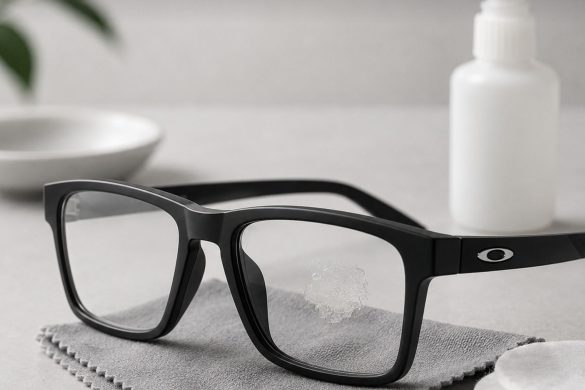
Close-Up of a Glasses Lens
We’re almost done, I promise!
The last acronyms you may see on your prescription refer to the type of lens you need.
SV
SV stands for ‘single vision.’ This means the lens only has one prescription.
BF
BF stands for ‘bifocal.’ These types of lenses have two prescriptions: one for seeing distant objects (which is the top of the lens) and one for seeing near objects (which is the bottom of the lens).
TF
TF stands for ‘trifocal.’ These lenses have three separate prescriptions: distance at the top, intermediate in the middle, and near at the bottom.
PAL/PL
PAL and PL both stand for progressive. These lenses provide seamless vision at near, intermediate, and far distances.
How to Interpret Your Prescription
Let’s put it all together and take a look at two example prescriptions. We’ll look at a glasses prescription and a contact lens prescription.
Glasses Prescription Example
Glasses Prescription Example
Our example person is nearsighted, as you can see by the minus sign, and they need different lens powers in each eye. They also have astigmatism, as indicated by the number in the ‘CYL’ column. Their axis is 90, which means the steepest curve in their eye is vertical.
This person also has mild double vision, and so they need prism correction in their lens as well. The BU includes the base for their glasses that needs to be at the top of the lens. They need single vision lenses.
Their pupillary distance is 65, which is in the average range for adults.
Contact Lens Prescription Example
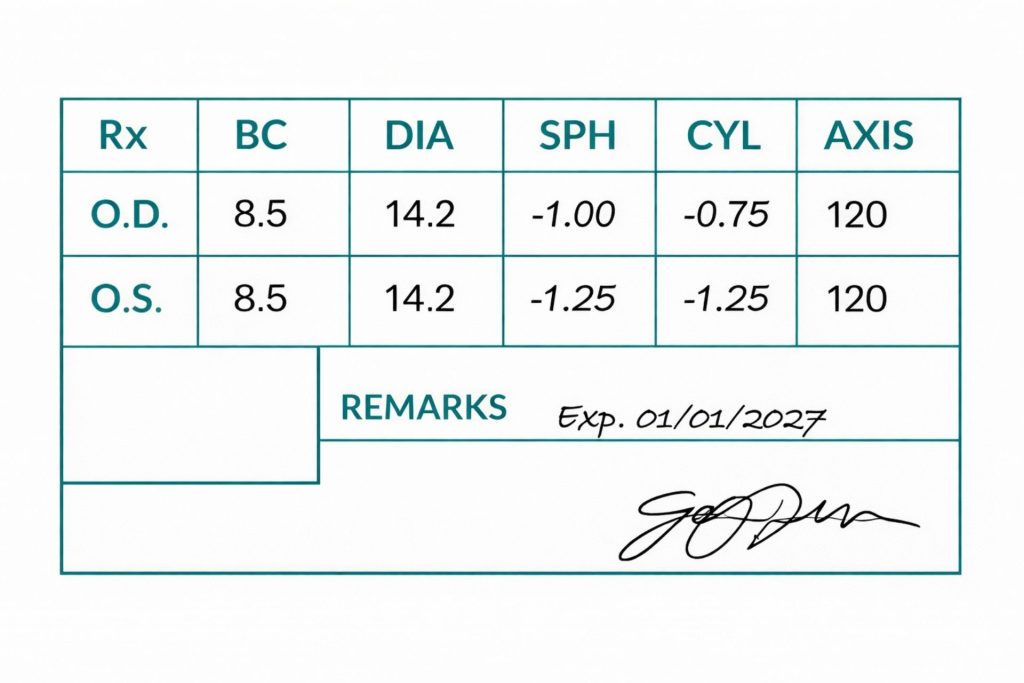
Contact Lens Prescription Example
Now, let’s take a look at an example of a contact lens prescription. Our contact lens wearer has a base curve of 8.5, which is in the average range. Their contact diameter is 14.2. So, they’re nearsighted and have a low prescription.
Our example person also has astigmatism, and so they’ll need to get toric contacts. Their cylinder is slightly different in each eye, and they have an axis of 120.
After You Get Your Prescription
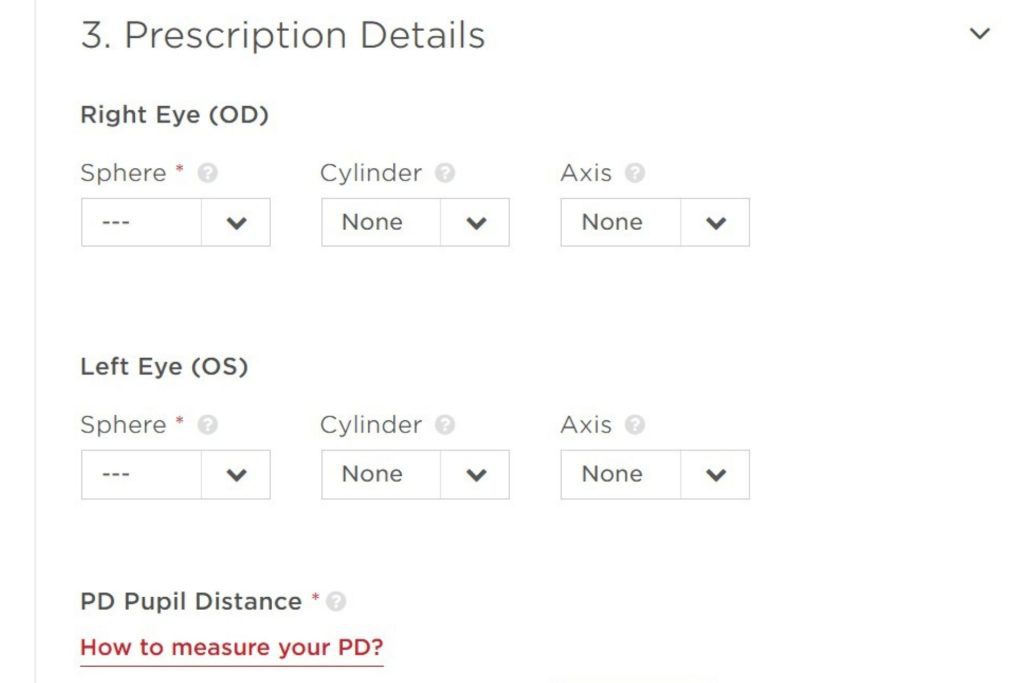
Prescription Details on EZContacts
Once you get your prescription, it’s time for the fun part: shopping for new glasses that suit your style. Head to your favorite eyewear store or online retailer, like EZContacts, and start your search for new glasses.
But have your prescription ready, as you’ll need to enter those details before you check out.
And hey, you may notice that OD and OS are in the prescription details. Now, you can confidently say you know just what those acronyms mean!
TL;DR
Eyeglasses and contact lens prescriptions feature a variety of acronyms, including OD, OS, and OU.
OD stands for oculus dexter, which is the Latin term for the right eye.
OS stands for oculus sinister, which is the Latin term for the left eye.
OU stands for oculus uterque, which is the Latin term for both eyes. It’s typically used if your eyes have identical prescriptions.
Some optometrists have switched to using ‘RE’ for the right eye and ‘LE’ for the left eye to avoid confusion.
Another common acronym you’ll see on a prescription is SPH. It stands for sphere, and it indicates the lens power needed to correct vision.
If you have astigmatism, you’ll have numbers in the CYL and Axis columns. CYL stands for cylinder and indicates the lens power needed to correct astigmatism. Axis is measured in degrees and indicates where the cylinder correction needs to be placed on the lens.
There will be a number in the Add column if you have multifocal glasses. It refers to the magnifying power in the bottom part of the lens.
Prism glasses are used to correct eye misalignment or double vision. Prism power is measured in prism diopters. The acronyms BI, BO, BU, and BD will indicate where the lens’s thickest edge is.
Finally, PD stands for pupillary distance, and it’s the measurement between the centers of the pupils.
For contact lenses, there are two other acronyms: BC and DIA. BC stands for base curve, and it measures the curvature of the back of the lens. DIA stands for diameter, and it’s the measurement of the width of the lens.
There are also acronyms that indicate the lens type. SV stands for single vision, BF stands for bifocals, TF stands for trifocals, and PL/PAL stands for progressive.
I’m a Florida-based lifestyle and content creator who writes about the latest in eyewear, from smart lenses to sustainable frames. I have a Bachelor’s degree from Fairleigh Dickinson University and a Master’s Degree from the University of Edinburgh. I’ve previously worked for Gemini Literary Magazine, Featured, Brainfall, Shareably, and The Feed. When I’m not writing, you’ll find me exploring museums, hiking new trails, or soaking up the sun at the beach (always with great sunglasses, of course).