Are you trying to decide between refractive surgery and implantable contact lenses (ICLs)?
Both can improve your vision, but they work in very different ways. Some people are also better candidates for one over the other.
We’re going to look at how both surgical options work, their differences, and which procedure might suit you best.
What’s the Difference Between Refractive Surgery and ICLs?
Refractive surgery alters the shape of your cornea to correct your vision, while ICL surgery implants an artificial lens inside your eye.
- Refractive surgery: LASIK, PRK, and SMILE are all different types of refractive surgery that use a laser to reshape the cornea. This changes the way light enters your eye and can correct nearsightedness, farsightedness, and astigmatism.
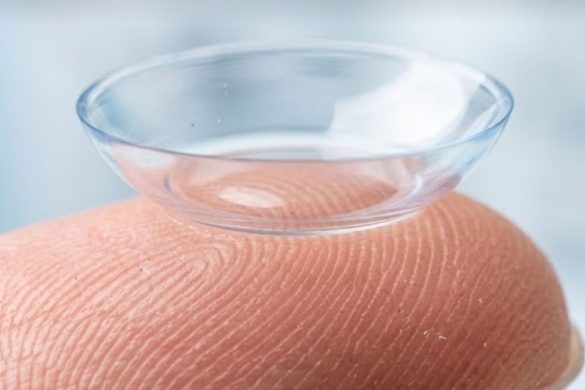
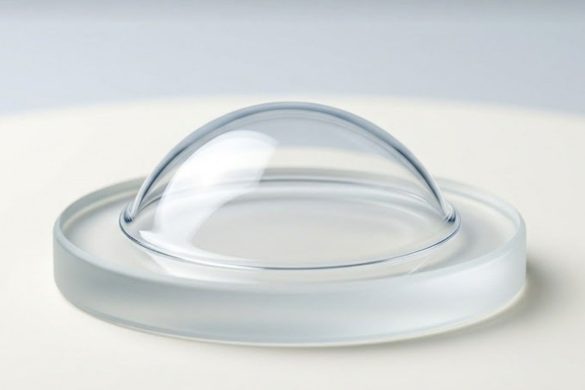
- Implantable contact lenses (ICLs): These are thin lenses inserted into the eye during a short surgery. They work just like contact lenses, except you don’t have to put them in and remove them every day.
How Refractive Surgery Works
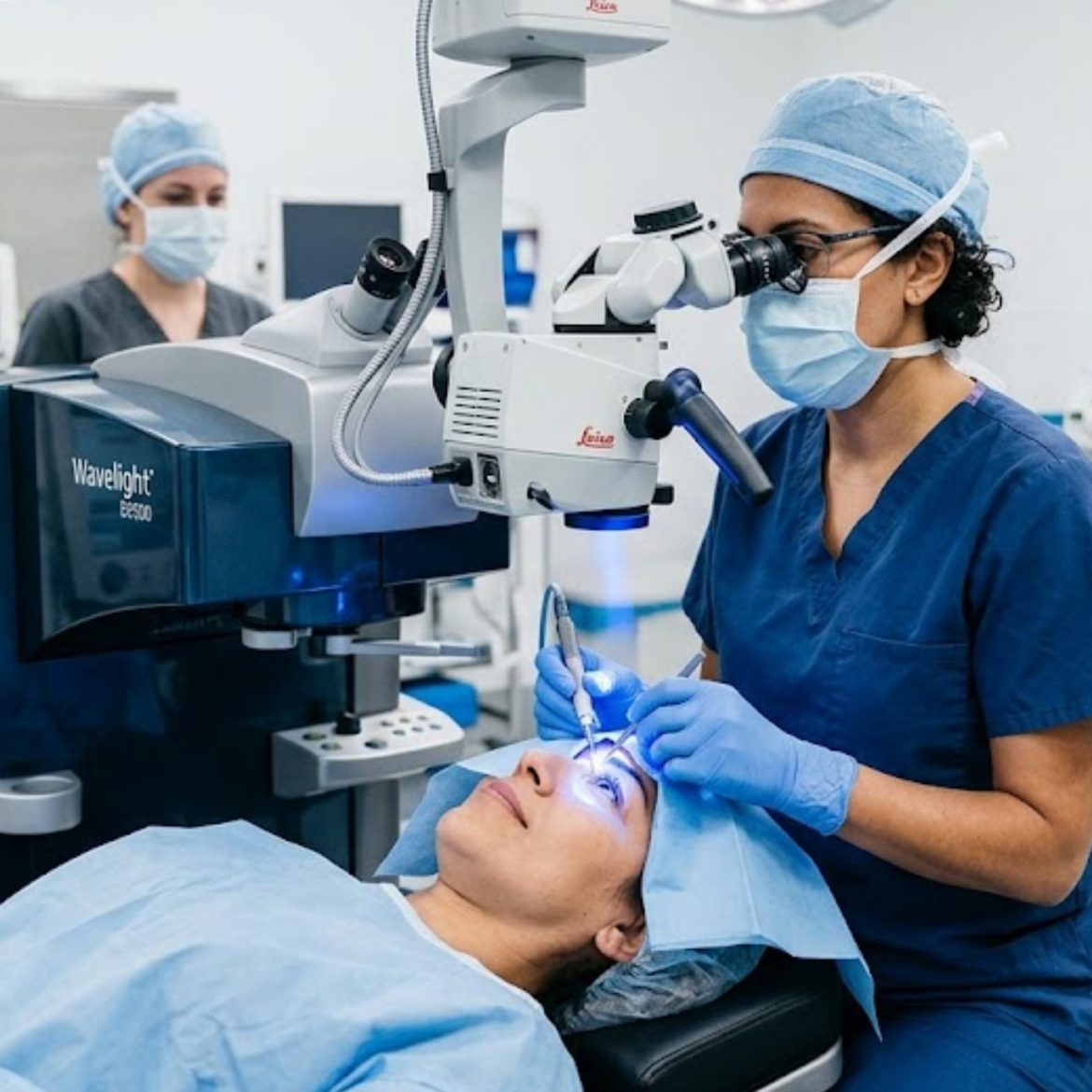
Refractive surgery is a procedure on the cornea. This is the clear front layer of your eye that controls how light enters. PRK, LASIK, and SMILE change the shape of the cornea so light can focus properly on the retina at the back of your eye.
LASIK (laser-assisted in situ keratomileusis)
LASIK is the most common type of refractive surgery and can be completed in 15 to 30 minutes. A thin flap is created on the cornea so that a laser can reshape the tissue underneath. The flap is then put back, where it naturally re-adheres.
Recovery is usually fast, with most people noticing clearer vision in 24 to 48 hours, but full stabilization can take a few weeks. Temporary dryness, glare, or halos are common early on.
LASIK works best for people with stable prescriptions, meaning they don’t have vision that is changing. The procedure also requires corneas that are thick enough to create a flap.
PRK (photorefractive keratectomy)
PRK removes the thin outer layer of the cornea instead of creating a flap with it. A laser is used to reshape the surface, and the outer layer will regrow over a few days.
The operation itself is very short. It typically takes just 10 to 20 minutes for both eyes. But recovery takes longer than LASIK, and vision improves more gradually, too.
PRK can be recommended for people with thinner corneas because there’s no need to create a flap in the cornea like with LASIK.
SMILE (small incision lenticule extraction)
SMILE is a minimally invasive surgery that takes about 10 to 15 minutes to complete. A laser creates a small disc of tissue (called a lenticule) within the cornea and a tiny surface incision. The lenticule is removed through this opening, and this changes the shape of the cornea.
There’s no need to create a flap with SMILE, so the surface of the cornea stays mostly intact. Recovery is quick, but your vision can take slightly longer to stabilize than with LASIK.
Key takeaways for refractive surgery
- Takes 10 to 30 minutes, depending on which surgery you have
- Reshapes your natural eye structure
- No implant or added lens
- Long-term vision correction
- Vision can still change with age
How Implantable Contact Lenses Work
Implantable contact lenses (ICLs) correct vision by placing a lens with your prescription inside your eye.
An incision of about three millimeters is made at the edge of the cornea. The lens is folded, inserted through this opening, and then positioned behind the iris. Once in place, it unfolds and will stay securely positioned.
The natural structure of your eye remains pretty much the same, and the lens can be removed or replaced if needed if your prescription changes in the future.
Most patients notice their vision has improved after a day or two.
Key takeaways for ICLs
- Adds a lens inside the eye
- Does not reshape the cornea
- Removable if needed
- Long-term vision correction
- Changes in vision can still happen over time
Who Is A Good Candidate?

Eligibility is a huge deciding factor, and it depends on the structure of your eye as well as your prescription. Your doctor will help you weigh up the options, but these are the key differences in candidacy:
Refractive surgery candidates
Refractive surgery is usually suited to people with mild to moderate prescriptions. It requires a cornea that is thick enough to be safely reshaped. You also have to have no major issues with dry eye, as the surgery can worsen it.
ICL candidates
The procedure is usually better for people with higher prescriptions or thin corneas. If you have dry eyes, you might be recommended ICLs because they don’t remove tissue or create a corneal flap, so the eye’s natural surface and tear production are preserved.
Some people prefer not to have their eye structure permanently changed, and they like knowing that the ICL can be removed further down the line.
An eye exam is the only way to know which option is realistically available for you. Your doctor will take measurements like your corneal thickness and eye shape to determine the safest and most effective procedure.
Refractive Surgery vs ICLs: Key Differences
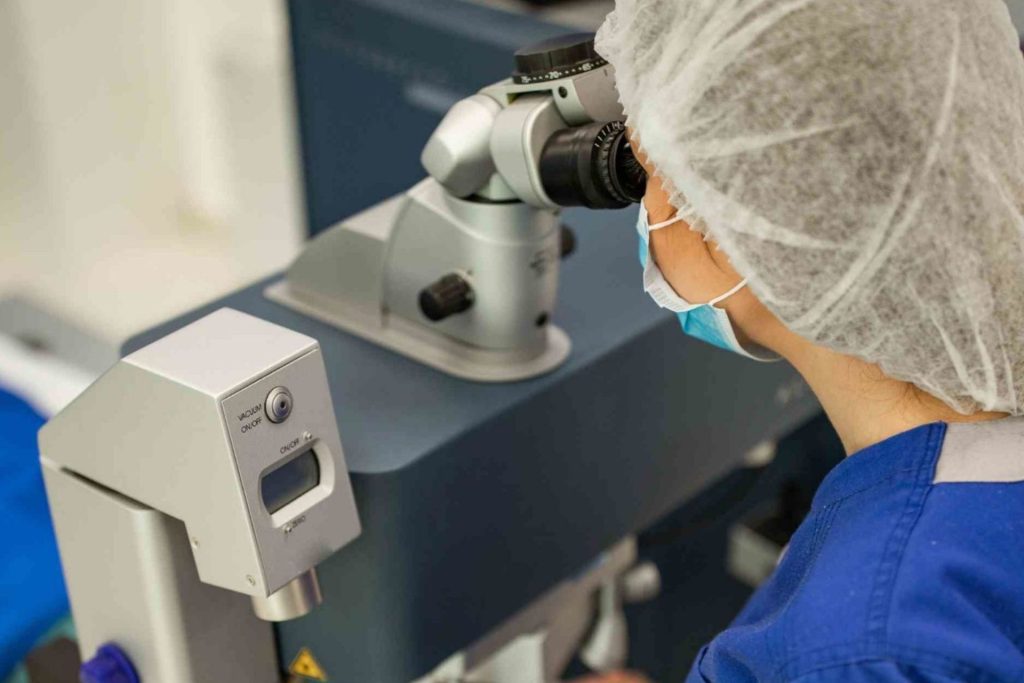
Vision quality and results
Both are capable of giving patients entirely corrected vision. Refractive surgery is predictable, but there’s a small risk of glare or halos. ICLs often provide better results for high prescriptions and have fewer issues with dry eye.
Recovery
Within refractive surgery, LASIK and SMILE recovery is usually fast (about 24 to 48 hours for functional vision). PRK takes longer, with initial recovery over several days and vision stabilizing over a few weeks.
ICLs improve vision within a day or two, but you’ll typically have more follow-up appointments with ICLs than with refractive surgery. With LASIK, you’ll often have a one-day check-up. But with ICLs, a one-day, one-week, and sometimes one-month check-up is common. This is to help ensure proper healing and to monitor eye pressure.
Risks
Dry eye is the most significant risk with refractive surgery, which is why you shouldn’t have it if you already suffer from this problem.
ICLs have risks like increased eye pressure or lens-related issues. These will be evaluated at your follow-up appointments.
Cost
Refractive surgery typically costs less than ICLs. However, both can still be expensive. The current average cost of LASIK, for example, is around $2,000 to $3,500 per eye.
ICL typically costs around $3,500 to $5,000 per eye. There’s also the cost of the follow-up with ICLs and the potential for more appointments in the future if there’s a problem.
Which One Should You Choose?
Refractive surgery can work well for people with standard prescriptions who want a permanent alternative to glasses or contacts. It’s generally the preferred option if the patient is a good candidate.
However, ICLs give better results for higher prescriptions or people with thin corneas.
There’s no “right” choice. It mostly depends on the structure of your eyes and your prescription. The only way to find out the best option for you is to book a consultation with an eye doctor.
If you decide ICLs and refractive surgery are too expensive or not right for you, don’t fret! There are plenty of great options for contact lenses and eyeglasses available. These will cost less, and with eyeglasses, you’ll be able to express your unique style.
TL;DR
- Refractive surgery makes changes to your cornea to correct your vision.
- ICLs are artificial lenses inserted into your eyes.
- Refractive surgery is permanent, whereas ICLs can be removed.
- ICLs are commonly used for high prescriptions or thin corneas.
- Both options can potentially deliver perfect vision for life with the right candidate.
- Your prescription can change over the course of your life, so you may still need additional procedures in the future.
- If refractive surgery or ICL isn’t right for you, there are plenty of good eyeglass and contact lens options available.