
Are you struggling to see at both near and far distances? Has reading become trickier?
You could possibly benefit from bifocal lens glasses.
Bifocal glasses are designed to correct both near and distance vision with a single lens. That way, you don’t have to keep switching between two pairs of glasses.
Let’s get into what these glasses are to help you decide if they’re right for you!
What Are Bifocal Lens Glasses?
Bifocal glasses have two prescriptions built into one lens. The upper section is for distance. Then, the smaller section at the bottom is for tasks like reading.
People who are prescribed bifocals often have something called presbyopia. This is a common condition that tends to show up in your forties. It makes nearby objects appear blurry, which can make reading tough.
Instead of carrying around separate reading and distance glasses, with bifocals, you only need one pair of glasses.
The History of Bifocal Lenses
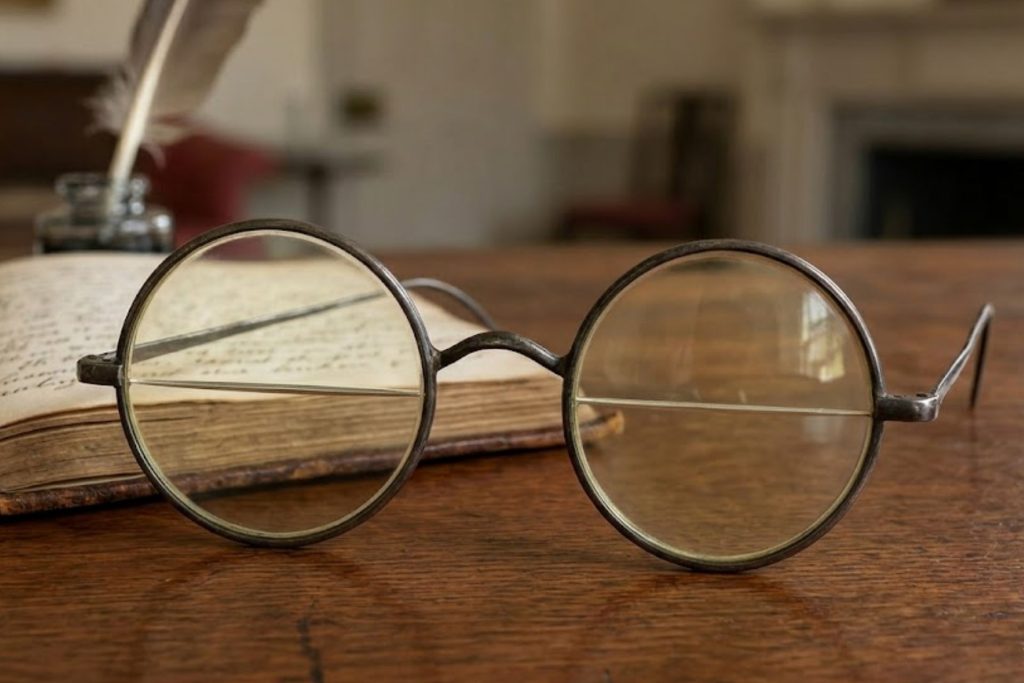
Bifocal lenses are not a new thing. They’re often credited to Benjamin Franklin. He supposedly grew tired of switching between separate pairs of glasses.
Early versions of bifocals were literal in their design. Two different lenses were cut in half and joined together in one frame. This created the visible line across the lens that became the distinctive feature of bifocals.
Modern bifocals still follow the same idea, but the design has improved. Most are now made by fusing a near-vision section into a single lens. This means there are fewer distortions at the join.
How Do Bifocal Lenses Work?
When you wear bifocals and look straight ahead, you’re using the distance section of the lens. When you look down to read a book or check your phone, you’ll be using the lower section for near-vision tasks.
Traditional bifocals have a line separating these two sections. It could take some time to get used to bifocals, but people usually adjust within two weeks. Most people are able to adjust within a few days.
One of the big pros of bifocals is that you can use one pair for near and distance vision. You won’t need to switch between multiple pairs.
However, there are a few cons as well. One of the cons is that there’s a visible line or section in the lens. The adjustment period could be another downside. In addition, there is no intermediate zone in traditional bifocals. And so, objects at a mid-distance may appear blurry.
Who Needs Bifocal Glasses?
Bifocals are meant for people who need help with both near and far vision. This is a common issue for those who have presbyopia. Many people find carrying around an extra pair of glasses to be inconvenient, which is why they opt for bifocals.
You might benefit from bifocals if:
- You already wear distance glasses, but now struggle with near-sighted tasks
- You’re constantly switching between distance glasses and reading glasses
- You suffer from eye strain when moving between near and far focus
- Small text is harder to read, even with your current glasses
If this sounds familiar, bifocals are one of several options your eye doctor may recommend. We’ll get into the alternatives to bifocals further down.
Bifocal Lens Designs
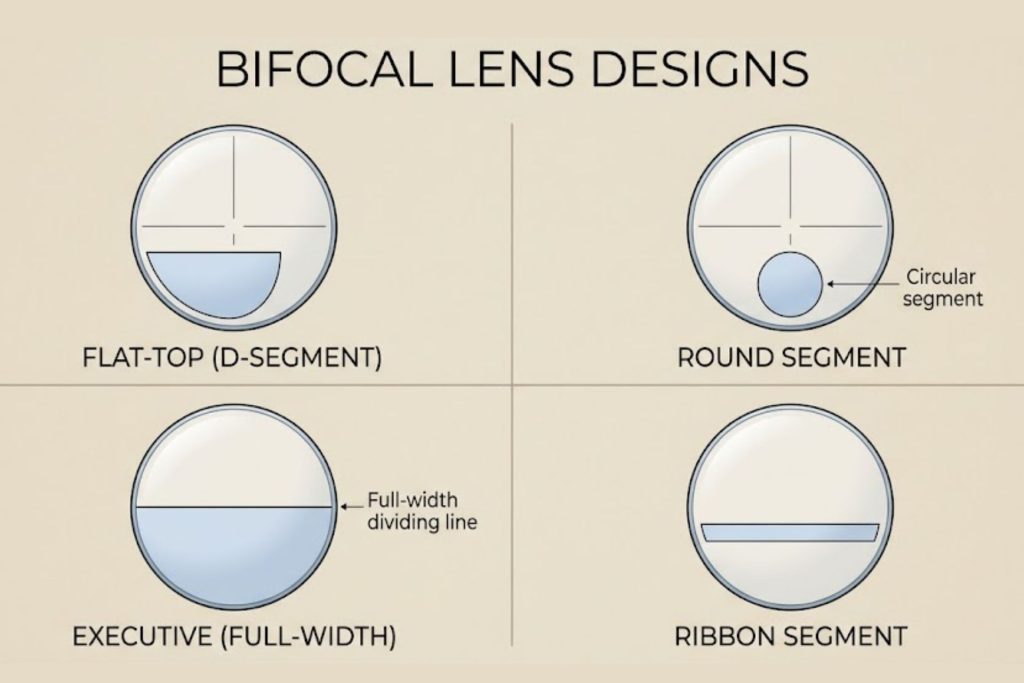
There are several bifocal designs to choose from today:
- Flat-top (D-segment): The most common style. It has a straight top line with a curved bottom, giving you a wide reading area without taking up too much space in the lens.
- Round segment: A smaller, circular reading section. It’s less noticeable but provides a narrower field for close-up tasks.
- Executive (full-width): The near-vision section runs across the entire bottom half of the lens. It gives you a large reading area, but the line is quite visible.
- Ribbon segment: A thin horizontal strip for near vision. It’s more subtle but less commonly used today.
Modern Alternatives to Bifocals
Bifocals are still used today, but there are a few other options that some people prefer.
Progressive lenses
Progressive lenses don’t have a visible line. Instead, they give you a gradual transition between distance, intermediate, and near vision. This means there’s no line on the lenses, and your eyes can naturally shift between different distances.
Digital progressive lenses
Digital progressives are a more advanced version of standard progressive lenses. They’re designed using more precise measurements, which reduces distortion. Many people find them easier to adjust to, especially for screen use. The downside is that they can be quite expensive.
Multifocal contact lenses
Multifocal contact lenses are a similar concept to bifocals. They’re designed to let you see both near and far objects through a single pair of lenses.
Reading glasses + distance glasses
This is not exactly a modern alternative to bifocals, but a simple way to do things that some people prefer. And it works just fine if you don’t mind switching between pairs throughout the day.
Are Bifocal Glasses Still a Good Option?

Traditional bifocal glasses are still widely used today, and a lot of people like the simplicity of the design.
That said, some find the visible line or lack of intermediate vision to be a problem. If you fall into that category, you might want to look into newer bifocal lens designs like progressive lenses or multifocal contact lenses.
What works best will come down to what a typical day involves for you. For example, if you spend a lot of time looking at screens, you may prefer progressive lenses.
Your eye doctor can help you find the option that fits both your prescription and your lifestyle.
TL;DR
- Bifocal glasses combine two prescriptions in one lens. The top is for distance, and the bottom is for near vision.
- Bifocals are commonly used for presbyopia, which is an eye condition many people experience in their forties. Presbyopia makes nearby objects appear blurry, which can make reading or checking your phone difficult.
- Traditional bifocals have a visible line and no zone for seeing things at an intermediate distance.
- There are multiple bifocal lens designs to choose from today: flat-top, executive, round segment, and ribbon segment.
- Alternatives include progressive lenses, digital progressives, and multifocal contacts.