Eye dilation is a routine part of some eye exams. It helps your optometrist get a proper look at the back of your eye, but the effects can last longer than people expect.
The good news is that it’s temporary. You may be asking, how long does eye dilation last exactly? That depends on a few different factors.
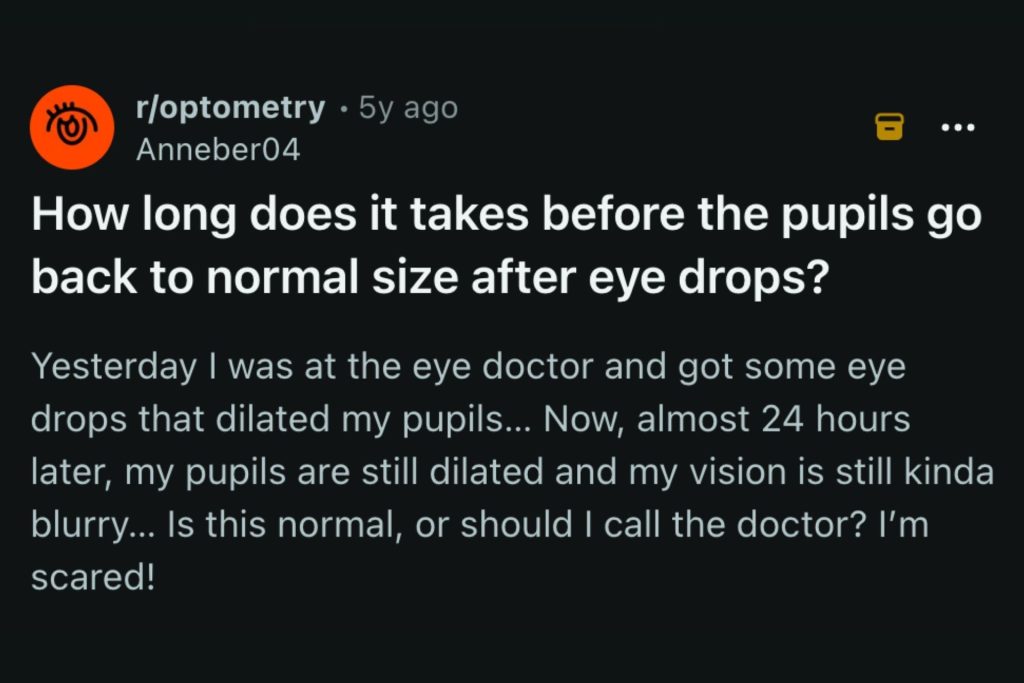
Many people have questions about how long eye dilation lasts after an eye exam. Over on Reddit, there are a variety of threads about eye dilation. One Redditor wrote:
“Yesterday I was at the eye doctor and got some eye drops that dilated my pupils… Now, almost 24 hours later, my pupils are still dilated and my vision is still kinda blurry… Is this normal, or should I call the doctor?”
Reddit Screenshot
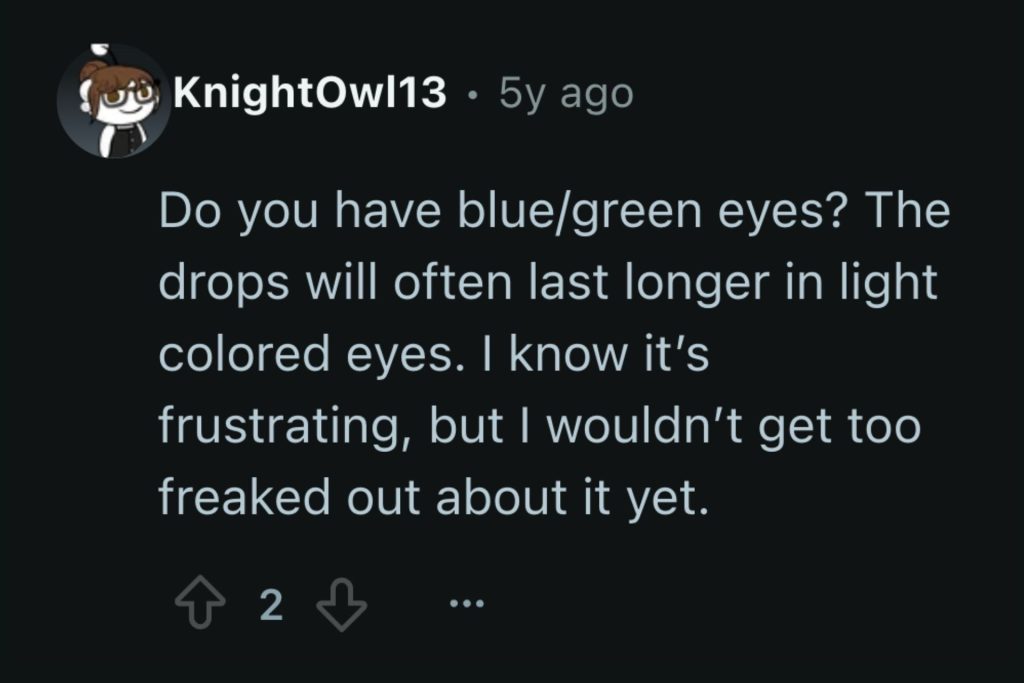
Another Redditor explained that dilation often lasts longer for people with lighter-colored eyes:
“Do you have blue/green eyes? The drops will often last longer in light colored eyes. I know it’s frustrating, but I wouldn’t get too freaked out about it yet.”
“Has anyone had their eyes dilated what did it feel like?”
Reddit Screenshot
Other Redditors explained that lights could look extra bright. They also said it could be hard to read. One user wrote:
“I’ve been dilated probably over 30 times in my life. Some people with dry eyes find the drops irritating. You can bring saline to rinse after or PF artificial tears.”
Reddit Screenshot
This just goes to show that many people have questions about eye dilation. It can be a confusing topic, and it can also be nerve-wracking if your eyes stay dilated longer than you’re expecting. Let’s start breaking it all down.
What Is Eye Dilation?
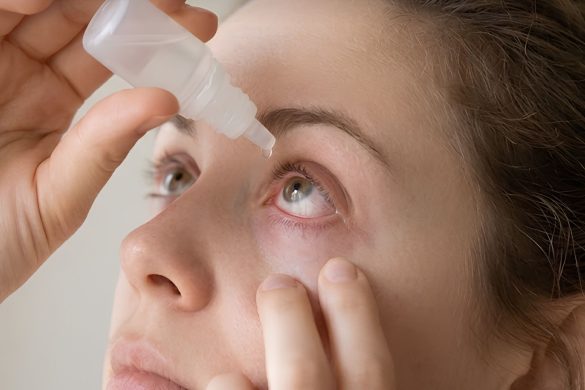
Eye dilation is when your pupils (the black part of your eyes) are intentionally widened using medicated eye drops during an eye exam.
Normally, your pupils constantly change size depending on how much light they’re receiving. In low light, they’ll get bigger. In bright light, they get smaller. Your eyes do this to control how much light enters, protecting your retinas and focusing your vision.
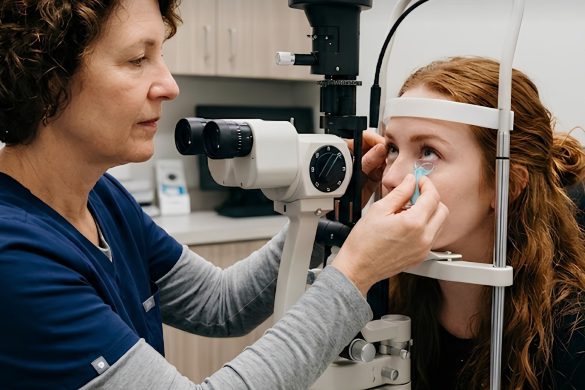
As part of a dilated eye exam, an optometrist will use drops to temporarily override your eye’s natural dilation. The drops relax the muscles that control the size of your pupils and how they focus.
How Long Do Dilated Eyes Stay That Way?
For most people, the effects of dilation after an exam last between four and six hours. During that time, your pupils will be larger than normal. You’ll also likely experience sensitivity to light and blurred near vision.
In some cases, the dilation can last longer than six hours. In fact, it’s not unusual for the effects of the drops to stick around for up to eight hours. In rare cases, it can be even longer.
What Actually Happens During Eye Dilation?
During a dilated eye exam, your eye doctor uses drops that temporarily relax the muscles in your eye. Usually, the drops are tropicamide and phenylephrine.
After they’re applied, your pupils widen and give your optometrist a clear view of the back of your eye, including the retina and optic nerve.
The drops may sting a little for a few seconds when they go in, but this passes quickly. After that, your vision might become blurry, and your eyes will be more sensitive to light.
What Affects How Long Dilation Lasts?
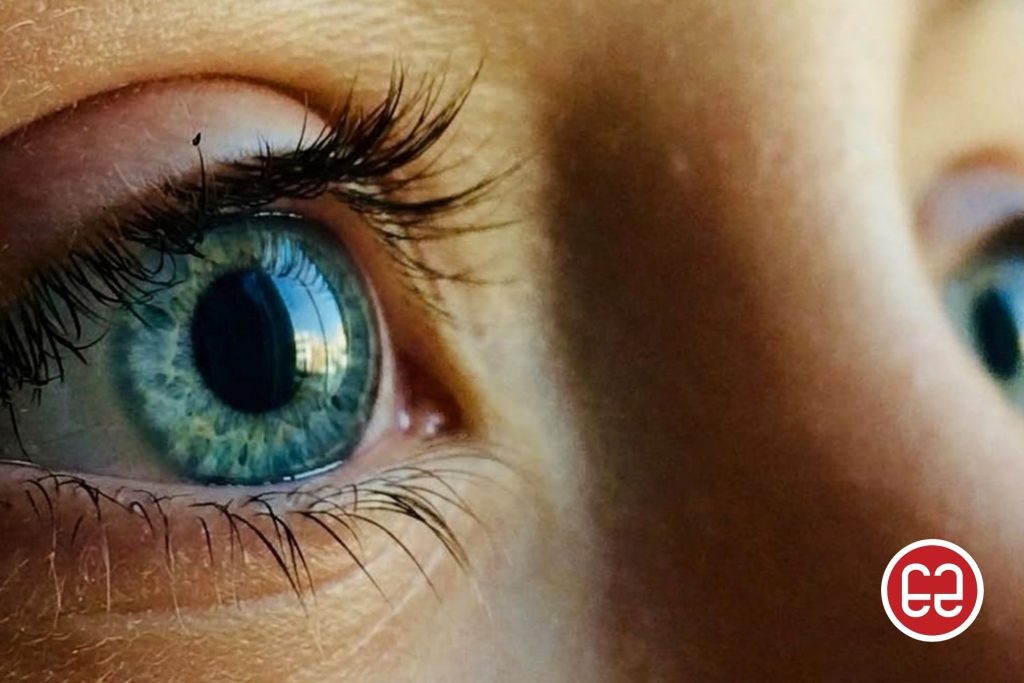
Person With Blue Eyes
Nobody will have the exact same experience when they have a dilated eye exam. One person may be back to normal after a few hours, while another may still feel the effects for much longer.
Here are some of the factors that can affect how long your eyes stay dilated.
The type of drops used
Tropicamide is used for routine exams and usually wears off within four to six hours. Phenylephrine is often used alongside tropicamide and may wear off slightly sooner.
In some cases, stronger concentrations are used to keep the pupil open longer. This means you could still feel the effects hours later.
Your eye color
Darker eyes have more pigment, which can reduce the duration of the drops. As mentioned in the Reddit posts, lighter eyes, which have less pigment than darker eyes, usually stay dilated longer. They can also be more sensitive to light.
Your age
Children are often given stronger drops to fully relax the eye so that accurate measurements can be taken. Because of that, their dilation can last longer. Adults tend to recover more quickly.
Your individual response
Everyone processes medication differently. Some people notice their vision returning to normal within a few hours, while others deal with dilated eyes for most of the day.
Can you shorten how long dilation lasts?
There’s no way to reverse dilation on your own. You just have to wait for your eyes to process the medication. In some situations, doctors might use additional drops to reduce the effects, but this isn’t standard for routine exams.
What to Expect After Your Appointment
You’ll usually notice a gradual return to normal over the course of a few hours to the whole day.
Here’s how it goes for most people:
Light sensitivity is the first thing to improve.
Your pupils slowly shrink back to their normal size over a few hours.
Near vision takes a bit longer to get back to normal (you’ll probably notice your phone looks blurry for a few hours).
You should expect to feel back to normal by the evening if your appointment was earlier in the day.
Tips to Manage Dilation Effects
Woman Wearing Gucci Sunglasses in the Sun
Most people find the after-effects annoying but manageable. There’s nothing dramatic you can do to make the effects go away, but a few things help:
Wear sunglasses: Sunlight can feel uncomfortable right after, so wearing some dark sunglasses out of the clinic will help.
Avoid close-up tasks: Reading or working on a laptop can be difficult until your focusing ability returns. Screens can be too bright as well.
Plan your day around it: If possible, take the day off work and avoid looking at screens for long periods.
Can You Drive After an Eye Dilation Appointment?
It’s best to avoid driving. Many people feel they still can drive, since distance vision isn’t usually affected. But it’s really best not to risk it. The safest option is to arrange a ride to and from the appointment, or use public transport.
If you do end up driving and your vision is too blurry afterward, wait at the clinic until it improves or call someone to pick you up.
When Should You Be Concerned?
Eye dilation is common and generally very safe. But you should contact your doctor if your vision hasn’t improved after a full day, if you feel any pain, or notice changes to your vision after the drops should have worn off.
TL;DR
Eye dilation typically lasts four to six hours, but it can last longer.
Blurred near vision and light sensitivity are the main effects.
The drops relax your eye muscles and enlarge your pupils so your doctor can examine the back of your eye.
You can’t speed up the process, so it’s best to plan your day around it. Take the day off work if you can, and ask someone to drive you to the appointment.
Most people return to normal later the same day. But you should contact your doctor if you still feel the effects after a full day.
I’ve always been obsessed with how a great pair of glasses can completely change a look. With a bachelor’s in Creative Writing and a master’s in Contemporary Literature and Culture from the University of Manchester, I look for the “story” behind a great design. I grew up in the English countryside and have traveled all over the world, but finally settled in Bali. I’ve written for fashion brands including The Outside Society, Superior Ink Apparel, and Colorado Threads. I spend my time scouting the latest global trends and translating my knowledge into practical, honest guides for finding the best eyewear.