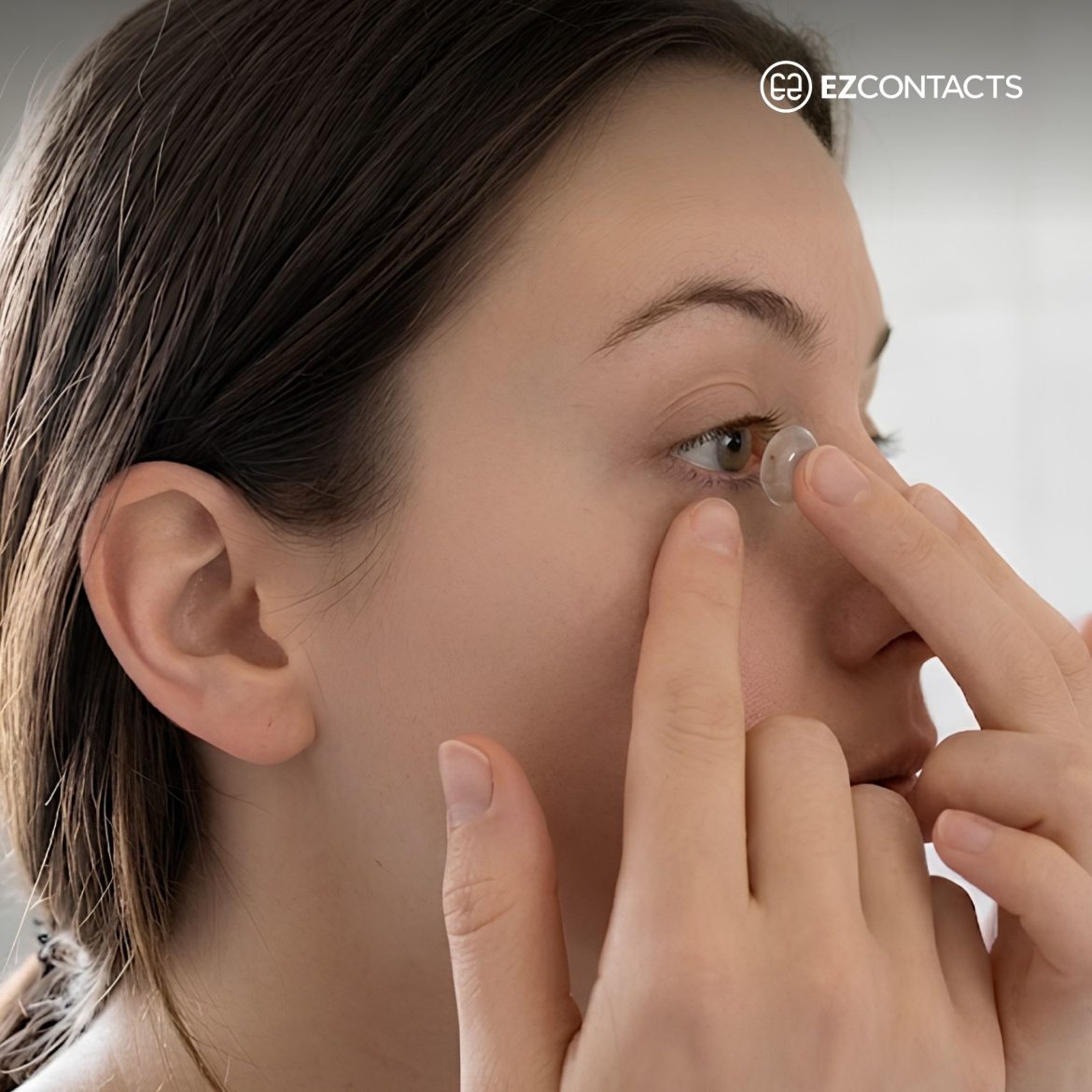
Ever wondered if you can get away with wearing just one contact lens instead of two? The answer is yes, in some cases. Some people are even prescribed a contact lens for only one eye.
But there’s a difference between being prescribed one contact lens and simply deciding to wear one of your normal pair. So let’s go through the reasons a person might consider wearing one contact, and whether or not it’s safe to do so.
At a Glance
- You can wear a contact lens in only one eye if your doctor has specifically prescribed it that way due to your vision needs.
- Some people use just one contact lens because only one eye needs to be corrected.
- Wearing one contact lens can be a form of monovision, where one eye is used for distance and the other for near vision.
- People with significantly different prescriptions between each eye can sometimes benefit from wearing just one lens.
- Wearing only one contact because you lost one of your lenses is not the same as being prescribed a single lens. Your vision will be unbalanced, and it could even be unsafe in some situations.
Why Would You Wear Only One Contact Lens?
There are several reasons someone might intentionally wear a contact lens in just one eye. But whether it’s the right choice for you depends on your vision and your prescription.
Only one eye needs correction
The simplest reason a person might wear one contact is that only one eye needs vision correction, whereas the other has 20/20 or “standard” vision.
For example, you might have good vision in your right eye but be nearsighted in your left eye. In these cases, there may be no reason to put a contact lens in the “good” eye.
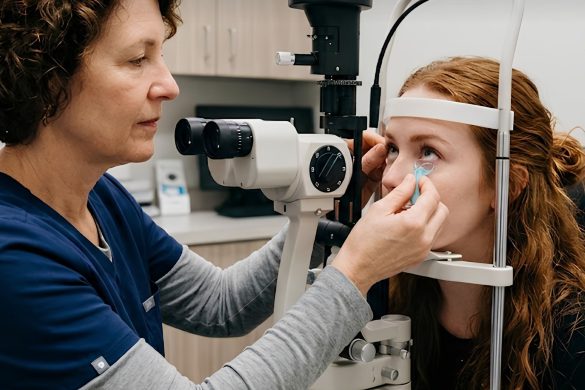
Vision like this is known as a monocular refractive error, meaning the refractive error is only present in one eye. At your eye exam, a doctor will decide whether prescribing just one contact will work best for you.

You want help with reading
Presbyopia changes the way the eyes focus on nearby objects as you get older. If you have good distance vision but need help reading, you might be wondering if there’s a way to correct your near vision without putting contacts in both eyes.
One option is monovision. Usually, monovision means you wear one contact lens to correct your near vision. Then, you use another contact lens to correct your distance vision.
But in some cases, if your distance vision is already good in one eye, you might only need a contact lens in the other eye for reading and other close-up work.
Monovision isn’t right for everyone. Your brain has to adapt to using each eye for a different distance. Some people notice changes in depth perception. They might also find that their vision feels a bit “off” when compared to how it used to be.
Your eyes have very different prescriptions
Sometimes both eyes need vision correction, but the prescriptions are very different. For example, one eye might be significantly more nearsighted than the other.
When a person with vision like this puts on a pair of glasses, they can sometimes produce very noticeably different image sizes in each eye. This is an optical effect known as aniseikonia.
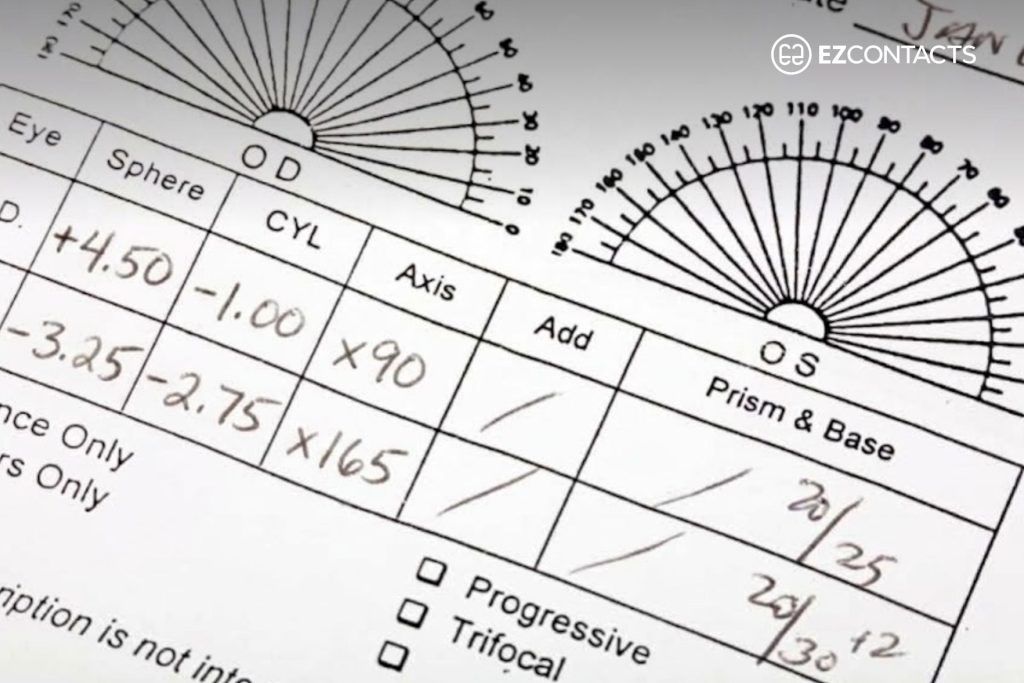
Contact lenses can be recommended in cases like this because they sit directly on the surface of the eye, rather than some distance away from the eyes like glasses do. So contacts can help make it easier for the brain to combine the two images into more of a cohesive image.
In some very specialized cases, an eye doctor can prescribe a contact lens for one eye. They can then use a spectacle lens to correct the other. This combination might be suggested when the aniseikonia would be too great using other methods. This setup is quite rare, though. It certainly isn’t something you should attempt to achieve without a doctor’s prescription.
Can I Wear Just One of My Contacts (Instead of Two)?

If you normally wear two contact lenses and you’ve lost one, you might wonder if you can just pop the other in and go about your day. Or, perhaps one of your eyes is feeling sore, and you don’t think you should put a contact lens in the affected eye.
In either case, wearing just one contact lens isn’t inherently dangerous. However, there are some potential risks associated with it, simply because of how it will impact your vision.
If the eye you’re not using a contact for needs a prescription, you’ll likely have blurred vision in that eye. How noticeable this is depends on how strong your prescription is and how different it is from the prescription in your other eye.
The potential risks of only wearing one of your contacts include:
- Reduced depth perception: Your brain uses the slightly different images from each eye to judge depth and distance. Having one eye corrected and the other being blurry can make things like driving, sports, or navigating stairs harder.
- Difficulty judging distances: You may find it harder to judge how far away objects are. For example, you might not be able to accurately judge how far a vehicle is when you go to cross a street.
- Eye strain or discomfort: Your eyes and brain might be working harder to combine the unequal images they’re receiving. It can cause eye strain, headaches, or general discomfort for some people.
For these reasons, it’s almost always better to switch to your glasses until you can wear both contact lenses again.
FAQs About Wearing One Contact Lens
Can I wear one contact lens if one of my eyes has perfect vision?
Yes. If one eye has good uncorrected vision but the other needs correction, an eye doctor might prescribe just one contact lens for the eye that needs it. But you must have an exam by a doctor first so they can decide if this approach is right for you.
How long does it take to adjust to wearing one contact lens?
It depends on why you’re wearing one contact lens and how different your vision is between your eyes. If you’re adjusting to monovision, it can take days to a few weeks for your brain to adapt to using each eye for a different viewing distance.
If you’re wearing one contact lens because only one eye needs vision correction, you may adjust more quickly. However, some people experience eye strain, headaches, or difficulty judging distances.
If these symptoms persist or interfere with daily activities, check with your eye doctor. They can determine whether your prescription needs adjusting or another type of vision correction would work better for you.