
Have you been told you have 20/100 vision and are wondering what that means exactly?
20/100 is a measurement of visual acuity, not a diagnosis. It tells you how clearly you can see at a specific distance.
It doesn’t tell you why your vision is the way it is or whether glasses or contacts can correct it. That’s a conversation to have with your eye doctor.
But we can help you understand what 20/100 vision means, what “visual acuity” is, and how it’s measured.
At a Glance
- 20/100 vision means you can see at 20 feet what someone with 20/20 vision can see at 100 feet.
- It’s significantly below the 20/20 standard for distance visual acuity.
- 20/100 vision by itself doesn’t meet the U.S. definition of legal blindness based on visual acuity. Legal blindness generally means having vision of 20/200 or worse in the better-seeing eye, even with the best correction. It can also mean having a visual field of 20 degrees or less.
- Myopia, hyperopia, astigmatism, and some other eye conditions or diseases can all cause 20/100 vision. Glasses or contacts can usually correct 20/100 vision when the problem is a refractive error.
- 20/100 is a measurement of visual acuity; it’s not a prescription. A comprehensive eye exam by a doctor can help determine what’s causing reduced visual acuity and whether it can be corrected.
What Does 20/100 Vision Mean?
The numbers in a visual acuity measurement like “20/100” come from the Snellen eye chart. That’s the chart with the big “E” you see in every eye clinic.
You probably already know that 20/20 vision is what’s considered the “standard” for visual acuity. A 20/100 result means your distance vision is less sharp than 20/20.
Here’s how to interpret the two numbers:
- The first number tells you how far away from the chart you are, which is typically 20 feet.
- The second number tells you how far away a person with 20/20 vision could stand and still clearly see the same line on the chart.
Take a look at some common measurements:
| Visual acuity | What it means |
| 20/20 | Standard distance visual acuity |
| 20/40 | Sees at 20 feet what 20/20 vision sees at 40 feet |
| 20/60 | Sees at 20 feet what 20/20 vision sees at 60 feet |
| 20/100 | Sees at 20 feet what 20/20 vision sees at 100 feet |
| 20/200 | Sees at 20 feet what 20/20 vision sees at 200 feet |
So, 20/100 vision means you need to be 20 feet away from the chart to see what a person with 20/20 vision could see from 100 feet away.
Or, to put it simply, you need to stand much closer to the chart to make out the same line of letters.
This might sound bad, but it’s not a comprehensive report on your vision. It’s purely a measurement of your distance visual acuity. It doesn’t take into account things like your peripheral vision, depth perception, or color vision.
Does 20/100 Mean Blindness?
No, having 20/100 vision doesn’t mean you’re blind or legally blind.
In the U.S., the visual acuity standard for legal blindness is generally 20/200 or worse in the better-seeing eye, with the best possible correction. But there’s also more to it than that.
For instance, someone could have 20/100 vision without glasses or contacts but then see 20/20 with the right prescription. In that case, their uncorrected 20/100 vision would not mean they are legally blind.
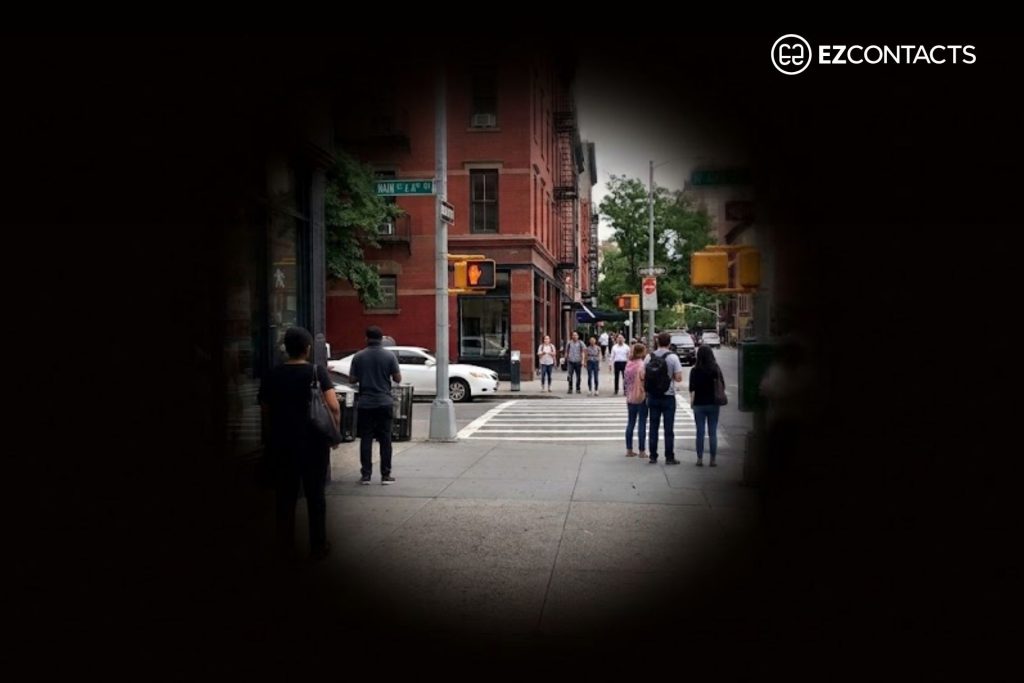
Legal blindness can also be based on severe loss of peripheral vision. This means the visual field is typically restricted to 20 degrees or less. That’s different from visual acuity and isn’t measured by the 20/100 number.
What Is 20/100 Vision Like?
It’s unlikely that two people with 20/100 visual acuity will have the same exact vision. Visual acuity only measures how well you can see at a specific distance.
But if your 20/100 vision is uncorrected or can’t be corrected, distant objects will often look very blurry. You may struggle to read signs from across a road or recognize a person’s face from a distance.

20/100 vision can also be heavily affected by lighting, contrast, and distance. Your vision could also be very different when looking at something close up. Someone with myopia, for example, can have poor distance vision but see nearby objects just fine.
What Causes 20/100 Vision?
20/100 vision can be caused by a few vision issues:
- Myopia (nearsightedness): Light focuses in front of the retina instead of on it.
- Hyperopia (farsightedness): Light focuses behind the retina, blurring near vision. It can sometimes affect distance vision too in severe cases.
- Astigmatism: An unevenly curved cornea stops light from focusing at a single point, causing blur or distortion at various distances.
- Eye diseases & conditions: Issues like cataracts, macular degeneration, or diabetic retinopathy affect the physical structure of the eye and impact vision.
Can Glasses or Contacts Correct 20/100 Vision?

They can, depending on what’s causing it.
It’s important to realize that 20/100 isn’t a glasses or contact lens prescription. You can’t determine what prescription a person needs from their visual acuity measurement alone.
For example, someone with 20/100 uncorrected vision caused by myopia may be able to reach 20/20 with the right prescription. Someone with 20/100 caused by an eye disease may not reach 20/20 with glasses or contacts. But these are just examples.
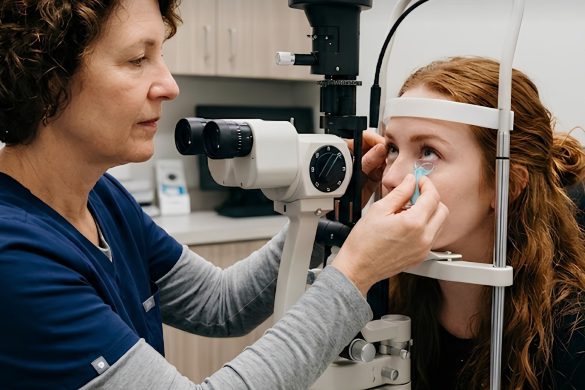
Only an eye doctor who performs a comprehensive eye exam can tell you your prescription and find out how much of the reduced vision can be corrected.
When Should You See an Eye Doctor?
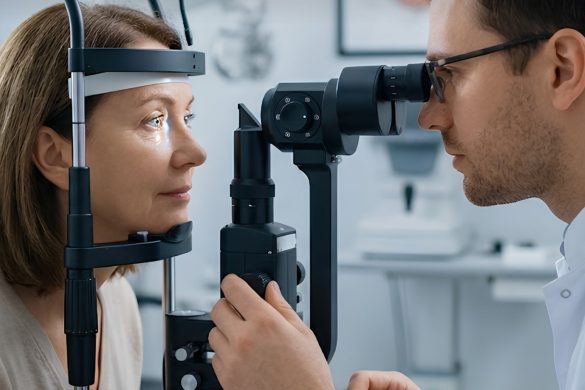
If you’ve been told you have 20/100 vision and haven’t had a comprehensive eye exam, it’s worth finding out what’s causing it.
If you’re experiencing sudden changes in vision, you should seek out immediate medical attention. This is especially true if it comes with eye pain, flashes of light, a sudden increase in floaters, double vision, or another unusual symptom.
FAQs
Is 20/100 vision bad?
20/100 vision means your distance visual acuity is significantly below the 20/20 standard. How “bad” the underlying problem is depends on what’s causing the reduced vision and whether it can be corrected.
Is 20/100 vision legally blind?
No, not based on visual acuity alone. The U.S. standard for legal blindness is 20/200 or worse in your best eye, with the best correction. Severe loss of peripheral vision can also result in legal blindness.
Can you have 20/100 vision in one eye and 20/20 in the other?
Yes. Visual acuity is measured separately for each eye. So it’s totally possible to have a very different measurement in one eye than the other.