
Seeing double can be scary, especially if it starts suddenly or won’t go away.
Sometimes, the reason is relatively minor, like you have dry eyes or an outdated prescription. Other times, the cause can be more serious.
So, what causes double vision? Here are 11 common causes to know about.
At a Glance
- Double vision is called diplopia, and it can affect one eye or both eyes.
- Dry eyes, astigmatism, cataracts, and keratoconus can cause double images in one eye.
- Double vision in both eyes can sometimes be caused by misalignment of the eyes, nerve problems, migraines, or neurological conditions.
- New or persistent double vision should be checked out by a doctor.
- Double vision with other symptoms, such as weakness, confusion, dizziness, slurred speech, or eye pain, needs urgent medical attention. This could be something serious like a stroke or head trauma.
What Is Double Vision?
Double vision, or diplopia, means seeing two images of the same object.
One of the first things an eye doctor will want to know is whether your double vision is monocular or binocular. This can help narrow down the possible cause.
Monocular double vision
Monocular double vision means seeing two images in just one eye, and it continues even when you cover your other eye. It generally happens due to a problem with the affected eye. This can be dry eye syndrome, astigmatism, keratoconus, or a cataract.
Binocular double vision
This type of double vision happens when both eyes are open, but it typically goes away if you cover either of your eyes. It means that your two eyes aren’t working together like they’re supposed to. The cause can include the eye muscles, nerves, or parts of the brain that control eye movement.
How To Tell Which Type of Double Vision You Have
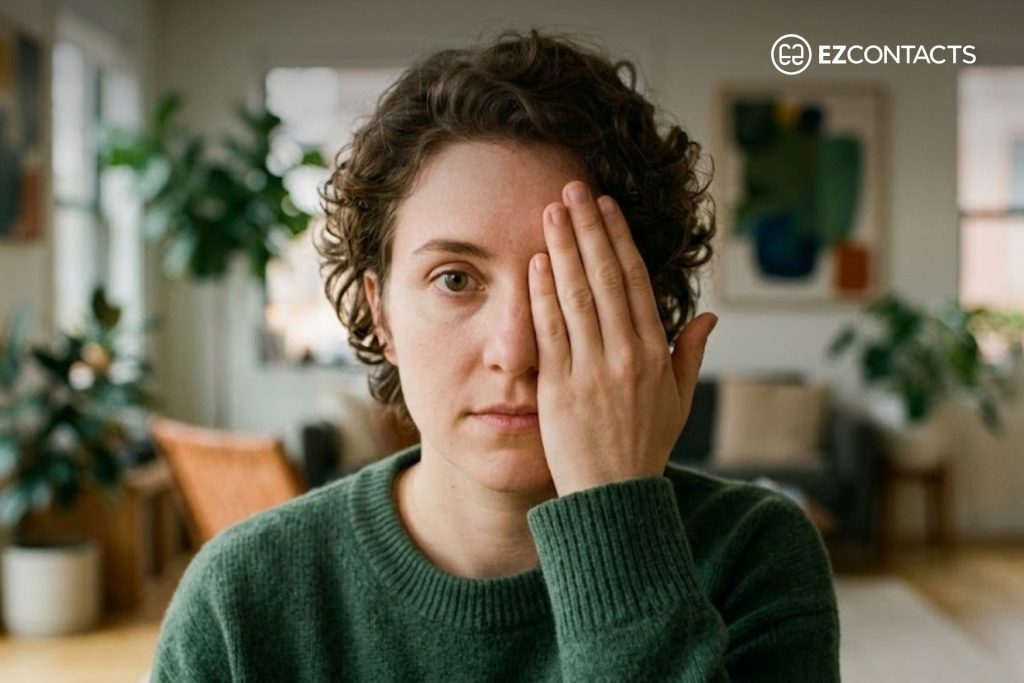
If you’re trying to figure out whether you have monocular or binocular double vision, here’s what to do:
- Cover your left eye first and look at an object in front of you. If you still see a double image with your right eye, the double vision is monocular in that eye.
- Cover your right eye and repeat the test with your left eye. If you still see double, the double vision is monocular in your left eye.
- Look with both eyes open. If the double vision only happens when both eyes are open and completely goes away when either eye is covered, you have binocular double vision.
What Causes Double Vision?
There are a whole host of reasons why you could be experiencing double vision. Some could explain why you’re suddenly seeing double. Others are conditions that develop slowly and wouldn’t cause double vision overnight.
1. Dry eyes
Your tears are needed to create a smooth surface over the cornea. This is known as the tear film. Dry eyes can lead to an unstable tear film, which in turn can cause blurry or double vision.
If your diplopia comes and goes and gets worse when your eyes feel dry or tired, dry eye could be the problem. Air conditioning is a big culprit of dry eye.
Eye drops can help, but you should also try to get to the bottom of the problem. Dry eye that regularly causes double vision isn’t normal.
2. Astigmatism or another refractive error
Astigmatism means your cornea or the natural lens in your eye has an irregular curve. Because of that, it can’t bend light like it’s supposed to.
In the early stages, it’s common to see a faint shadow image next to what you’re looking at. If a new glasses prescription stops the double vision, you can usually rule out more serious issues.
3. Keratoconus
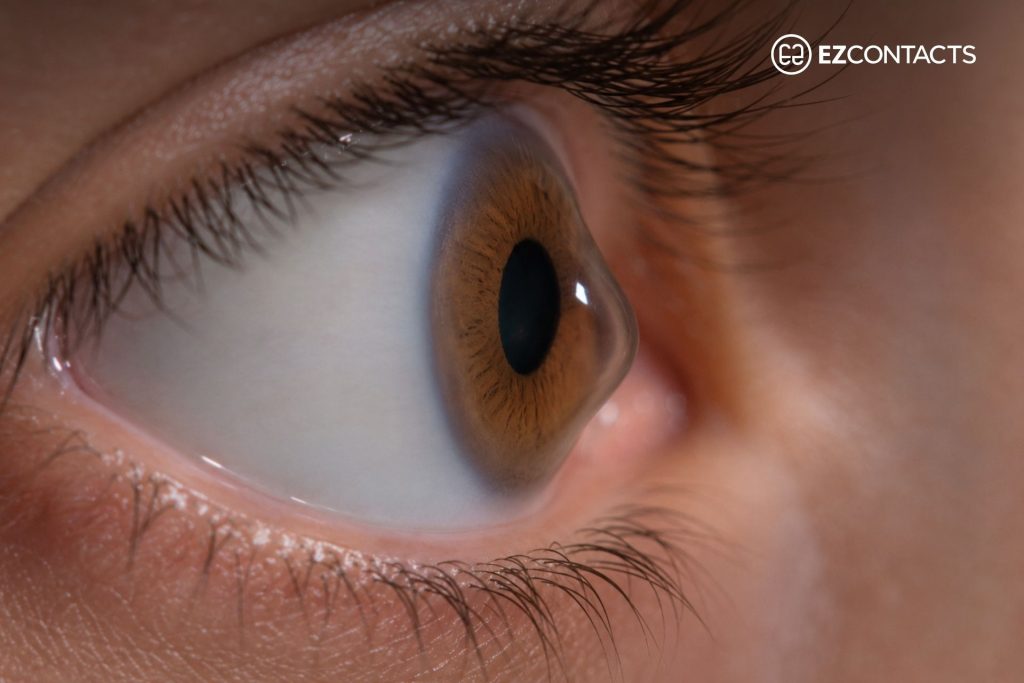
Keratoconus is a progressive condition that means the cornea becomes thinner and bulges into a cone shape. This irregular corneal shape can scatter and distort incoming light. This can cause blurred vision, glare, halos, and ghost images.
Because this is a slow, progressive condition that usually starts in your teens or twenties, it’s unlikely to cause double vision overnight. It usually affects one eye more seriously first.
4. Eye misalignment (strabismus)
Your eyes have to point in the same direction to create one image instead of two. Strabismus, sometimes called crossed eyes, occurs when the eyes are not properly aligned.
It’s more common for children to have strabismus, but it can develop in adults as well. If you have adult-onset strabismus, you’ll often experience sudden binocular double vision. You may only notice it when you’re tired or stressed, too.
5. Cranial nerve problems
Three cranial nerves control the muscles that move your eyes. If one of these nerves is damaged or isn’t working properly, one eye may not move in sync with the other. This could cause binocular double vision.
Poor blood flow due to high blood pressure or diabetes could be what’s suddenly triggering a cranial nerve problem.
6. Myasthenia gravis
This autoimmune condition disrupts communication between nerves and muscles. Fluctuating double vision and a drooping eyelid are often among the first symptoms of myasthenia gravis. Usually, these symptoms are mild in the morning and get worse in the afternoon or evening as your eye muscles get more tired. The pattern can vary from person to person, though.
7. Thyroid eye disease
Thyroid eye disease causes inflammation and swelling in the tissues around the eyes. It’s rare to get diplopia as the first symptom, though. You’ll usually notice redness, puffiness, or a wide-eyed appearance long before the eye muscles stiffen enough for double vision.
8. Cataracts

A cataract clouds the lens inside your eye, scattering the light that enters. Even in the early stages, long before your entire vision in the eye goes cloudy, a new cataract can cause monocular double vision and halos around lights at night.
Cataracts are very common in people over 65. Not all cataracts are a serious concern, but they should always be checked out by a doctor.
9. Head injury or concussion
A head injury can affect the nerves, muscles, or parts of the brain that control vision. If your double vision started after a bump to the head, go straight to the emergency room. Watch out for other head injury signs like dizziness or nausea, too.
10. Migraines
Migraines can cause temporary visual symptoms, and diplopia can happen as part of some migraine attacks. But double vision on its own is unlikely to be caused by a normal migraine. So don’t write it off as “just a migraine” without seeing a doctor.
11. Stroke or another neurological condition
Double vision can sometimes be caused by a problem affecting the brain or the nerves that control eye movement. Sudden, unexplained double vision can be an early warning sign of a stroke, brain aneurysm, or multiple sclerosis. If diplopia strikes instantaneously, especially alongside weakness, slurred speech, or confusion, seek immediate emergency medical care.
When Should You Worry About Double Vision?
Any new or unexplained double vision is worth getting checked by a doctor, even if it goes away. Get urgent medical attention if the diplopia comes with:
- Weakness
- Confusion
- Slurred speech
- Dizziness
- Severe eye pain
- Any other sudden neurological symptoms
These can be signs of a more serious problem, including a stroke.
But it could also be as simple as getting a new prescription or treating dry eye. Either way, the best thing to do is speak to a doctor as soon as possible.
FAQs About Double Vision
Can tiredness cause double vision?
Not usually. Eye strain and fatigue can make existing problems with your vision more noticeable. But you shouldn’t blame sudden-onset double vision on being tired without having your eyes checked.
Can double vision go away on its own?
It can. Some cases of double vision are temporary. But even if it does go away, it’s still worth discussing recurrent or unexplained episodes with a doctor.
Can glasses fix double vision?
Sometimes. If the cause is a refractive error, glasses or a change to your prescription may fix the problem. But it all depends on what’s causing your diplopia. So if you have persistent double vision, then you need an eye exam as soon as possible.