A scratched cornea can be searingly painful for such a “small” injury.
And while it can heal fast (usually in around 24 to 72 hours), those hours can feel like an eternity.
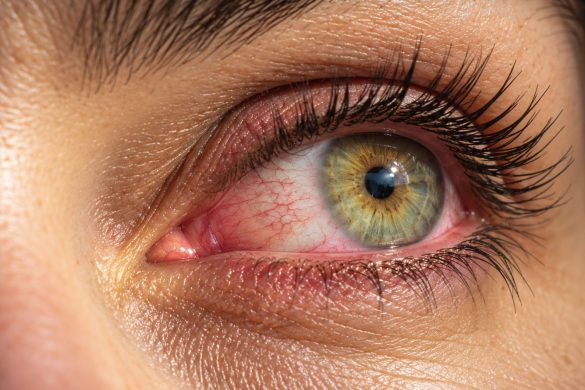
Along with the initial pain, you might feel like there’s something stuck in your eye… even when there definitely isn’t. Your eye might water all the time and become red and sensitive to light. More serious scratches can make your vision blurry.
Eye drops for scratched cornea seem like a logical next step. But are these safe on a scratched cornea? Will they actually help heal it?
At a Glance
- A scratched cornea is called a corneal abrasion. They usually heal in one to three days.
- Lubricating eye drops for a scratched cornea can make the eye feel more comfortable while it heals, but they don’t speed up healing.
- Antibiotic drops might be prescribed if there’s a risk of infection.
- Numbing eye drops should only be used by a doctor.
- Don’t wear contact lenses until your eye has fully healed.
- If you have very bad pain, changes to vision, or symptoms that don’t get better in 24 hours, seek medical treatment immediately.
What Is a Scratched Cornea?
The cornea is the clear window at the front of your eye with the job of focusing light so you can see. It also happens to be one of the most nerve-dense parts of your entire body. That’s why a scratch just a fraction of a millimeter deep can feel like a hot poker in your eye.
The medical term for a scratched cornea is a “corneal abrasion.” It happens when the outermost, protective layer of the cornea (the epithelium) gets scraped or nicked.
This exposes the cornea’s nerve endings to the air, and that’s why such a tiny injury can be SO painful. Luckily, most corneal abrasions heal on their own within one to three days.
Common causes of scratched corneas include:
- A stray fingernail, pet paw, or low-hanging tree branch
- Particles like dust, sand, or sawdust
- Applying eye makeup
- Getting hit in the eye by a flying object like a football
- Rubbing your eyes vigorously when you feel something stuck
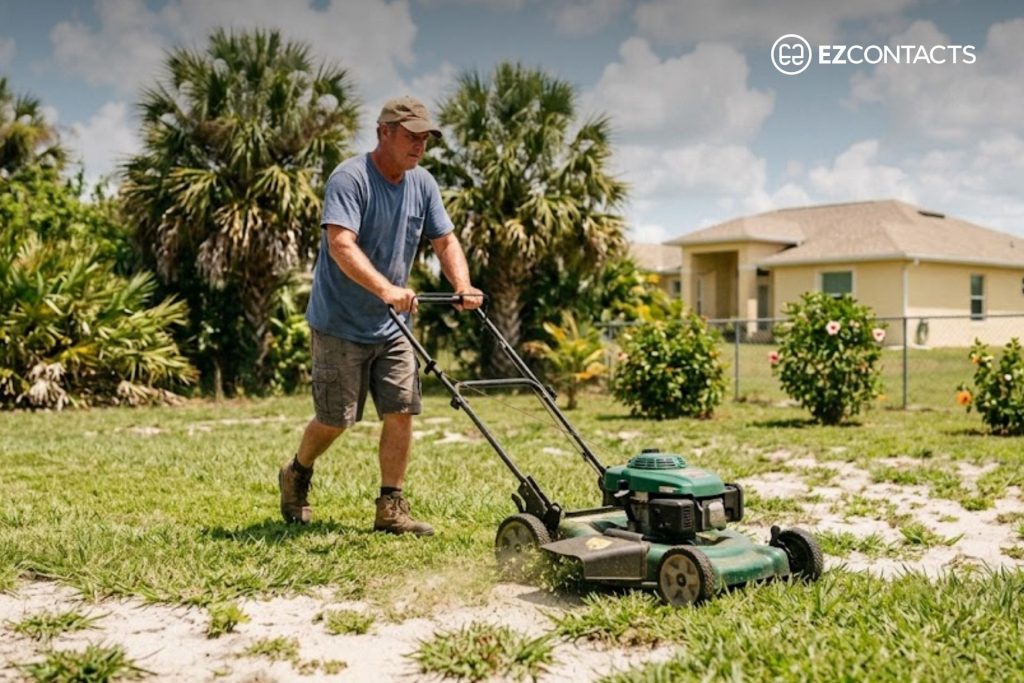
- Mowing the lawn without safety glasses/goggles
- Contact lenses
How Contact Lenses Can Scratch the Cornea
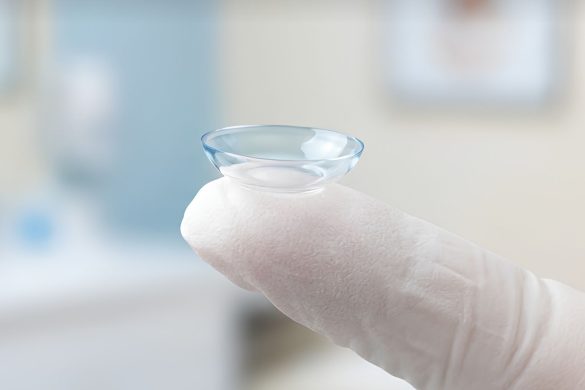
Clean contact lenses used as intended are very unlikely to cause a corneal abrasion. But if it does happen, it could be due to:
- Trapped debris: Dust or eyelashes can get caught under the lens. If something gets trapped there, it can rub back and forth against your eye with every blink. This is more likely if you use reusable lenses that you handle every day, since there are more opportunities for debris to collect on the lens. With proper lens care, this risk is greatly reduced.
- Wearing lenses too long: Wearing contacts past their daily limit or replacement schedule dries them out. They can end up sticking to the eye instead of gliding over your tears like they’re supposed to.
- Damaged lenses: A tiny tear or chip on a lens can be like sandpaper on your epithelium. Another reason not to wear lenses past their replacement schedule.
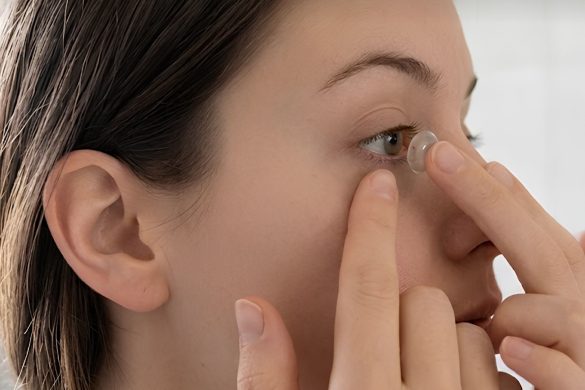
- Improper removal: Aggressively peeling or pinching off a contact when it’s dry can pull a tiny patch of surface cells away with it. As long as your eye is properly hydrated when you remove your lenses, this shouldn’t happen.
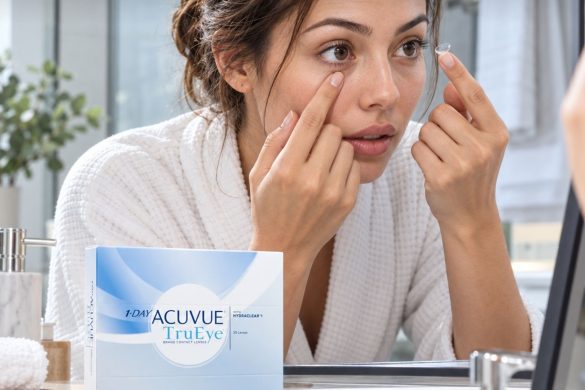
Corneal abrasions caused by contacts should be taken seriously. If they happen when you’re still wearing the contact, bacteria could get trapped underneath. So it’s best to remove the lens immediately and not insert another.
Do Eye Drops Help a Scratched Cornea?
They can, but different eye drops do very different things.
Artificial tears
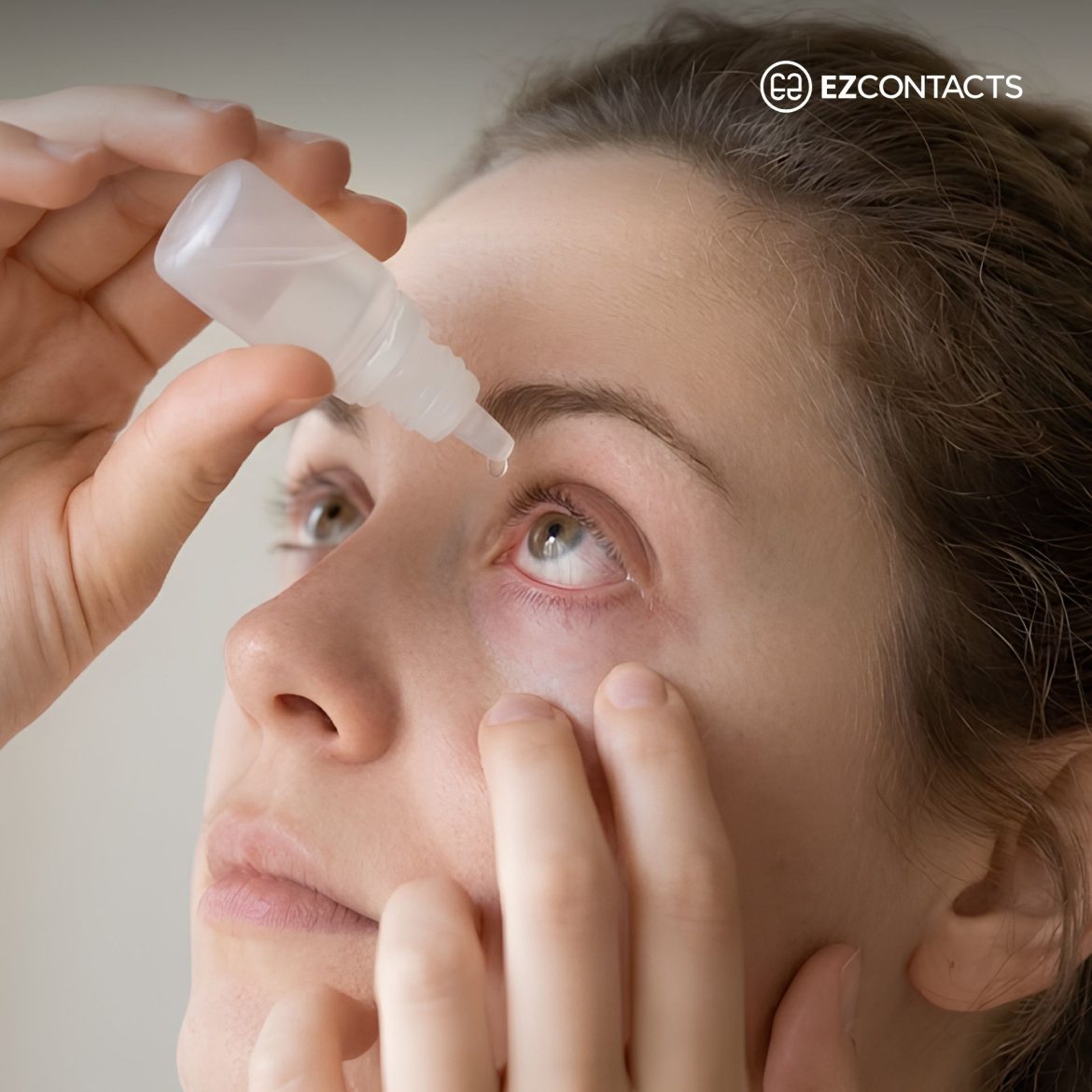
Artificial tears add moisture to the surface of your eye, which can make a scratched cornea feel less irritated during the healing process. Preservative-free artificial tears are best, since preservatives can sometimes irritate the eye if used frequently.
But it’s important to understand that artificial tears can’t actually heal the scratch; they just make the healing process more tolerable.
Here are three preservative-free artificial tear drops to help keep an irritated eye lubricated as it heals. You can find these eye drops on EZContacts.
Refresh Optive Mega-3 PF
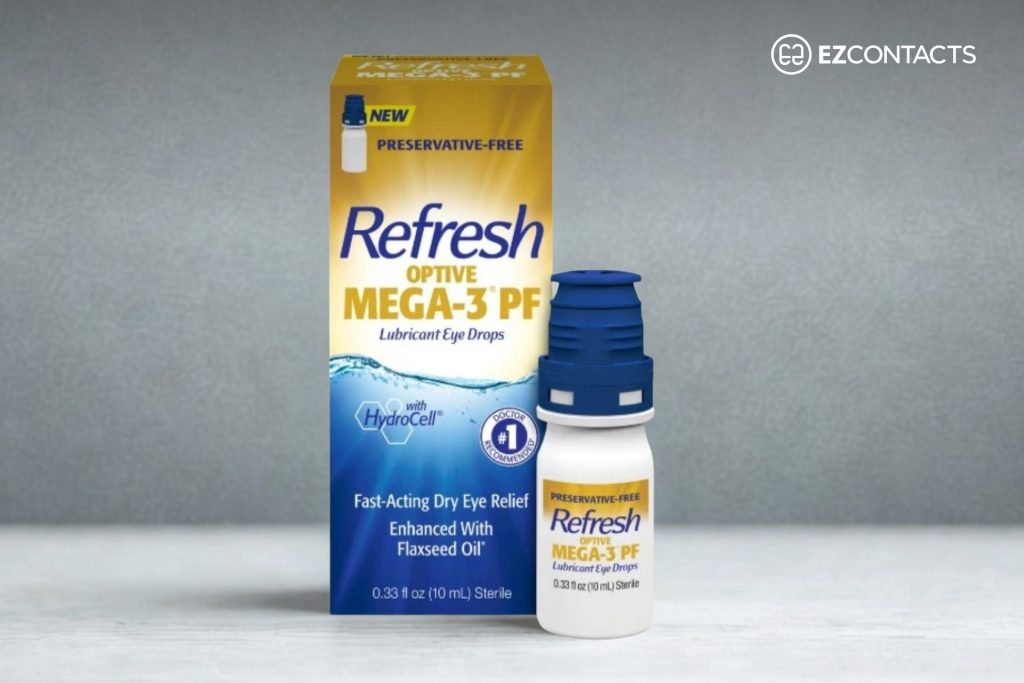
The formula contains flaxseed oil to support your eye’s tear film and limit moisture loss.
Optase Preservative Free Dry Eye Intense Drops
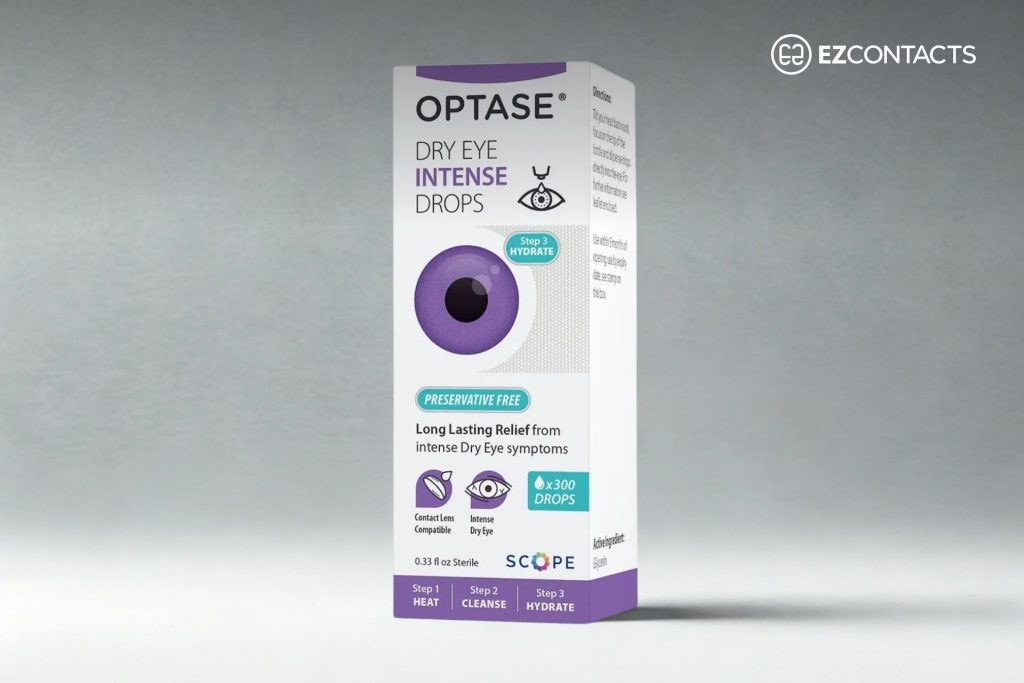
Formulated with glycerin and hyaluronic acid, it cushions irritated eyes and reduces friction from blinking as the cornea heals. Bonus: if you wear contacts, you can continue to use them with your lenses after your eye is healed, since they’re contact lens compatible.
OCuSOFT Retaine MGD Complete Dry Eye Relief Lubricant Eye Drops
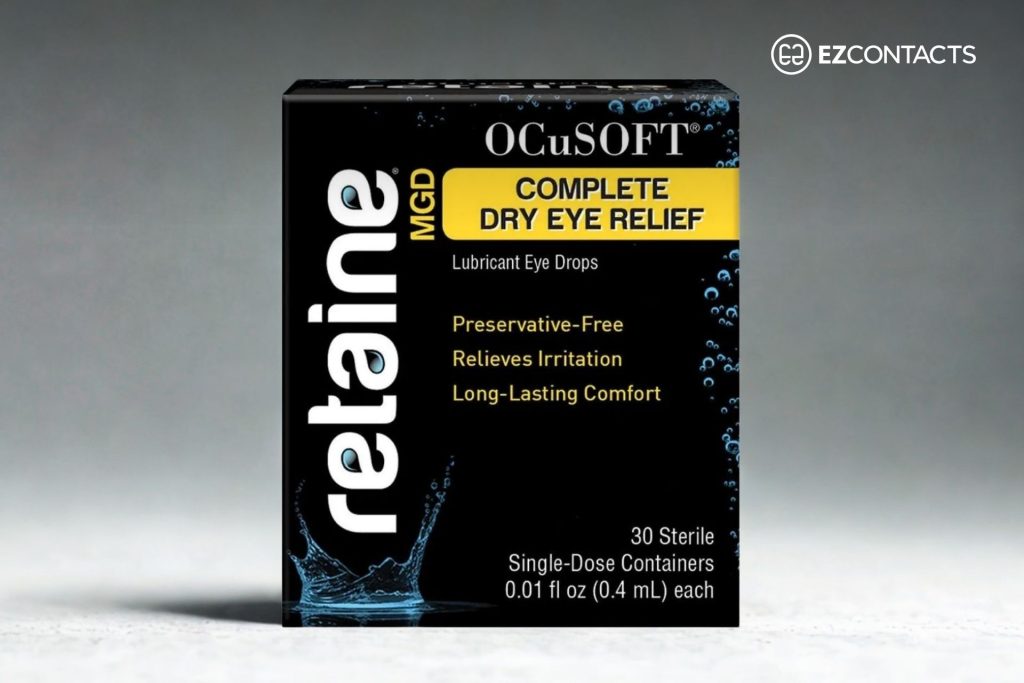
The formula uses a lipid emulsion containing mineral oil to lock in moisture and restore the tear film, protecting a healing cornea from friction.
Antibiotic eye drops
Antibiotic drops have a different job. They don’t make the scratch heal faster, but they help stop bacteria from causing an infection while the damaged cornea heals.
An eye doctor might prescribe antibiotic drops or ointment after a corneal abrasion. This is especially true if the scratch is serious and was caused by something likely to introduce bacteria.
Numbing eye drops
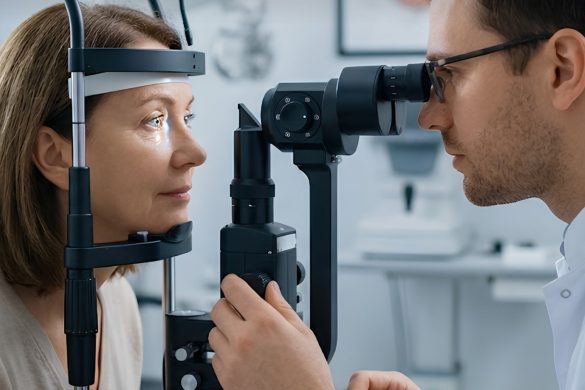
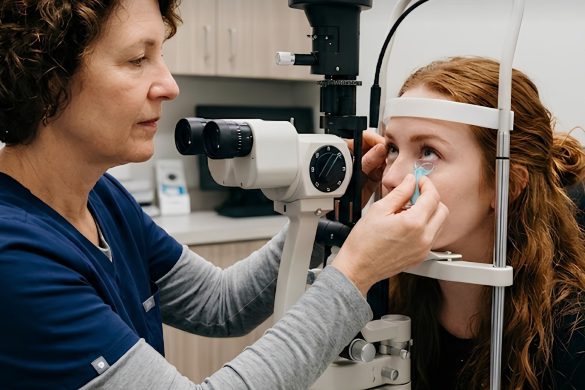
Numbing eye drops can make the pain from a corneal abrasion almost immediately disappear. If you visit a hospital after scratching your cornea, a doctor might administer some of these drops during an examination.
While they can be amazing for instantly relieving your pain, they’re not typically prescribed for use at home anymore. Using them repeatedly can damage the cornea, delay its healing, and mask symptoms that let you know an injury is getting worse.
If you happen to have some old numbing drops lying around at home, don’t use them.
What about redness-relief eye drops?
These drops aren’t designed to treat a scratched cornea. Sure, they might make your eye look less red, but that doesn’t mean they’re helping the injury.
What Should I Do If I Think I Have a Scratched Cornea?
- Stop rubbing your eye. That’ll just make things worse.
- Remove your contact lens. If you’re wearing a contact, take it out and don’t put in another until your eye has fully healed. You’ll want to use your glasses until then.
- Rinse your eye. Use clean water or saline solution to flush out any dust or debris that might still be in your eye.
- Use artificial tears. These can help lubricate and soothe the eye as it heals. Use them when you feel like you need them, but not any more than is directed on the bottle.
- See an eye doctor if symptoms are severe or don’t improve. Go straight to an eye clinic or hospital if you have severe pain, light sensitivity, or an injury from a chemical or high-speed object.
FAQs About Eye Drops for Scratched Cornea
Can I wear contacts with a scratched cornea?
No, it’s best to wear your glasses until you’re sure the cornea is entirely healed.
How long does a scratched cornea take to heal?
Most corneal abrasions heal in one to three days. Bigger or deeper scratches can take longer and might need follow-up care.
Should I see a doctor for a scratched cornea?
Seek medical attention if you have persistent pain, vision changes, severe light sensitivity, worsening redness, discharge, or symptoms that don’t improve in 24 hours. Seek urgent care or go to the emergency room if your eye was injured by chemicals or a high-speed object.
Is surgery needed for a scratched cornea?
Most likely not. But in very rare and severe cases, when the abrasion won’t heal on its own, an operation called a superficial keratectomy may be performed.