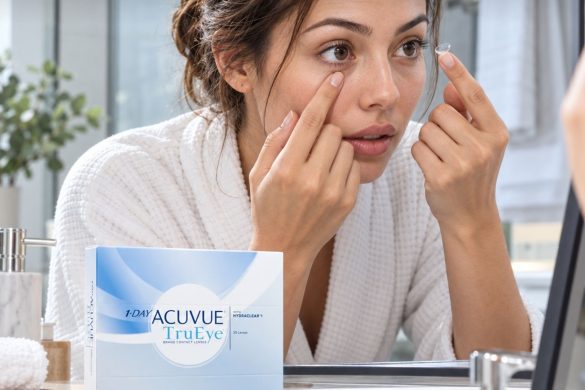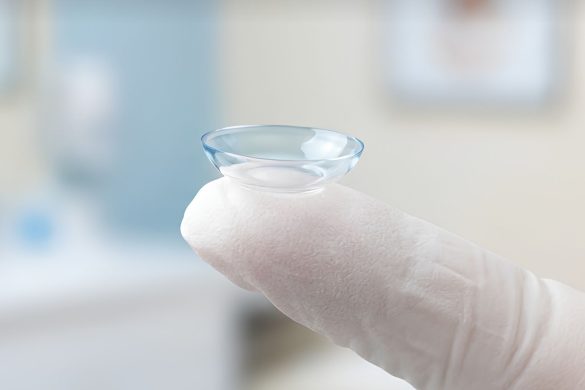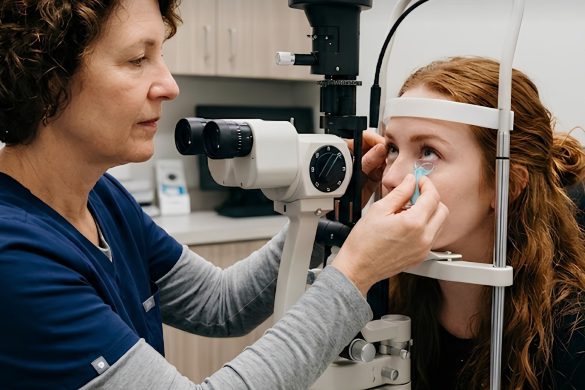
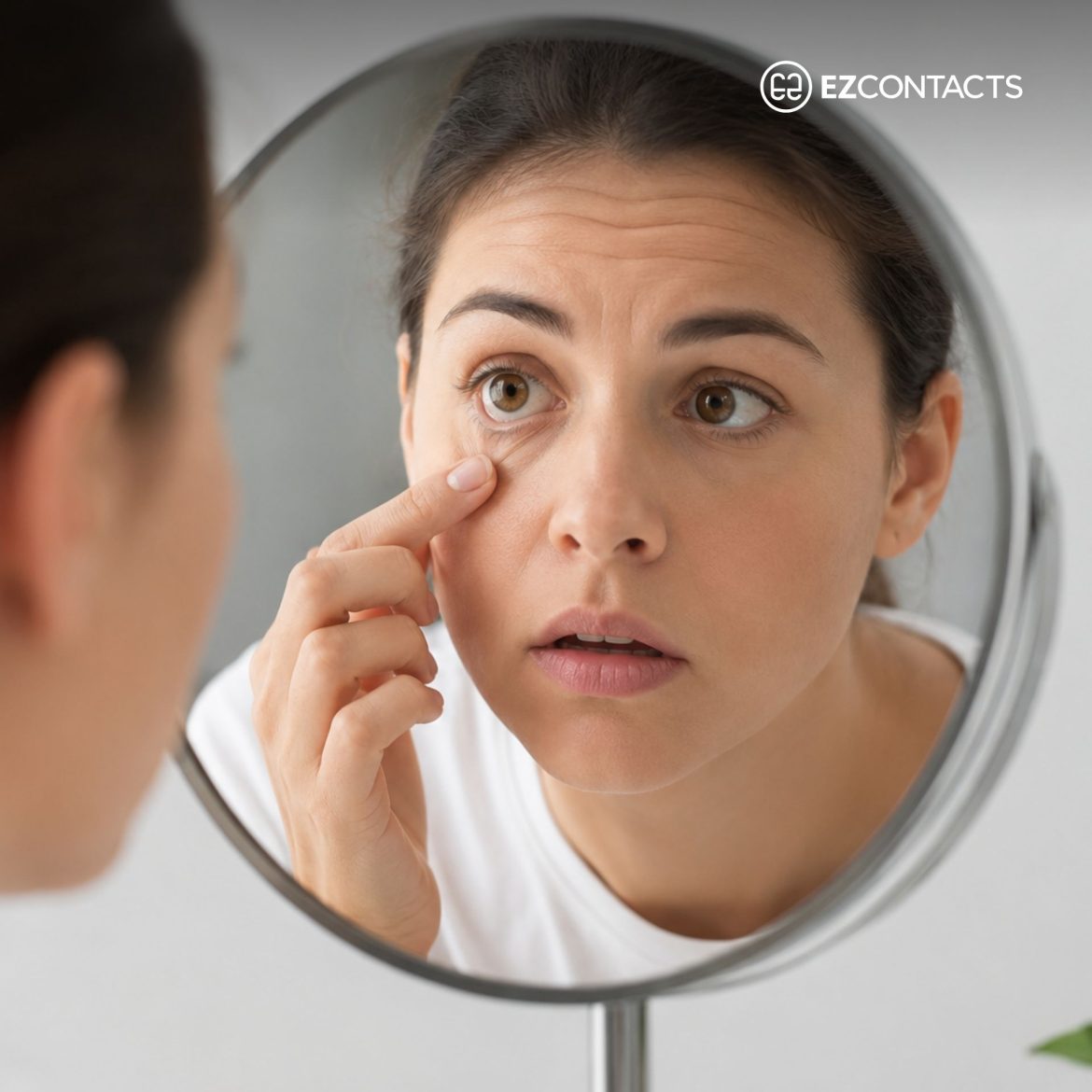
If you’re reading this and feel like you have a contact lens ‘stuck’ in your eye, try not to panic.
There are many reasons why a contact may feel ‘stuck,’ and in most cases, it can safely be removed with the right approach.
I’m going to talk you through what to do when you find yourself with a contact lens stuck in eye. I’ll also discuss why contacts sometimes become difficult to remove.
At-a-Glance Summary
A contact lens can feel stuck if it gets too dehydrated or folds up underneath your upper eyelid. This guide explains how to remove a contact lens stuck in eye, why it happens, and when you ought to see a doctor.
Can a Contact Get Stuck Behind Your Eye?
The most important myth to bust here is that a contact lens can somehow disappear behind your eyeball. It can’t… It’s an anatomical impossibility.
Your eyeball and eyelids are connected by a thin membrane called the conjunctiva, which forms a closed-off seal. If a contact slips off the cornea, it can get folded up underneath the upper eyelid, but it can’t get any farther than that.
Why Won’t My Contact Lens Come Out?
If you’re new to contact lenses, there’s a chance it’s not stuck at all; you may just need a little more practice removing it. Read our beginner’s guide to removing and inserting contacts to make sure you’re using the right technique.
If you’re confident you’re doing everything right and it’s still not coming out, these are the most likely reasons.
Your contact lens has dried out
Soft contact lenses depend on water. Most contacts are made up of between 38% and 75% water. When your eyes are dry, a patch can form in the layer of tears between the contact and your eye. If you have dry eye syndrome, this can happen in less than 10 seconds without blinking.
Without that layer of tears, the contact presses more tightly against the eye. At the same time, the edges of the lens start to dry up and grip the cornea. This creates a vacuum effect that can make it feel like the contact is glued on.
You rubbed your eye
If your contact starts to itch or bother your eye, your first instinct is likely to rub your eye. Eye rubbing isn’t a good habit whether you wear contacts or not; in some cases, it can even lead to a condition called keratoconus. But rubbing your eye when you’re wearing a soft contact lens can make it crumple and fold.
It can then become tucked out of sight beneath the upper eyelid, in the tissue pocket known as the superior fornix. So this should be the first place you check if it seems like you’ve “lost” a contact in your eye.
But remember, it’s physically impossible for a contact to go any farther behind the eye.
You slept in your contacts
Blinking keeps a contact lens lubricated by constantly keeping your tears moving underneath. When you’re asleep, this circulation of tears almost stops. The cornea stops receiving as much oxygen, and the contact can dry out, causing the vacuum effect we already talked about.
The CDC reports that more than half of contact users have admitted to sleeping in them. It’s not advised to do this unless you’ve been prescribed extended-wear lenses and given the go-ahead by your doctor to sleep in them.
What To Do If You Have a Contact Lens Stuck In Eye
1. Wash your hands
Before touching your eye, wash your hands thoroughly with soap and water and dry them with a lint-free towel.
2. Don’t keep pulling at a dried-out lens
If the lens won’t move, don’t keep pinching and pulling it. You could scratch your cornea.
3. Rehydrate the lens
Put a few drops of contact lens rewetting drops or artificial tears into your eye; you can find these drops on EZContacts. Make sure they’re supposed to be used with contact lenses. Wait 30 to 60 seconds so the liquid can get to work underneath the lens.

4. Blink a few times
Blinking helps spread tears or drops underneath the lens. If the contact has dried onto your eye, this is often enough to loosen it.
5. Massage the lens gently
With your eye closed, gently massage your eyelid with a clean fingertip. This can help break any suction holding the lens in place.
If you think the lens is under your upper eyelid, look down and gently massage downward toward the center of your eye. The aim is to push the lens back onto the cornea where you can remove it.
6. Remove it normally
Once the lens starts moving freely again, remove it using your usual technique.
Even if it’s a reusable lens, it’s best to throw it away in case of damage.
7. Know when to stop
If you’ve tried everything or your eye starts to cause you significant pain, don’t risk it. This is the time to contact an optometrist or ophthalmologist.
What NOT To Do
❌ Don’t pull on a dry lens. Lubricate your eye first.
❌ Don’t use tweezers or other tools.
❌ Don’t use your fingernails. Use the pad of your fingers instead.
❌ Don’t rinse your eye with tap water. This can introduce microorganisms that could cause infection.
❌ Don’t use saliva to lubricate the lens. Saliva contains bacteria that can harm your eyes.
❌ Don’t keep rubbing your eye hoping the lens will move. This can irritate or scratch the cornea.
Should I See an Eye Doctor?
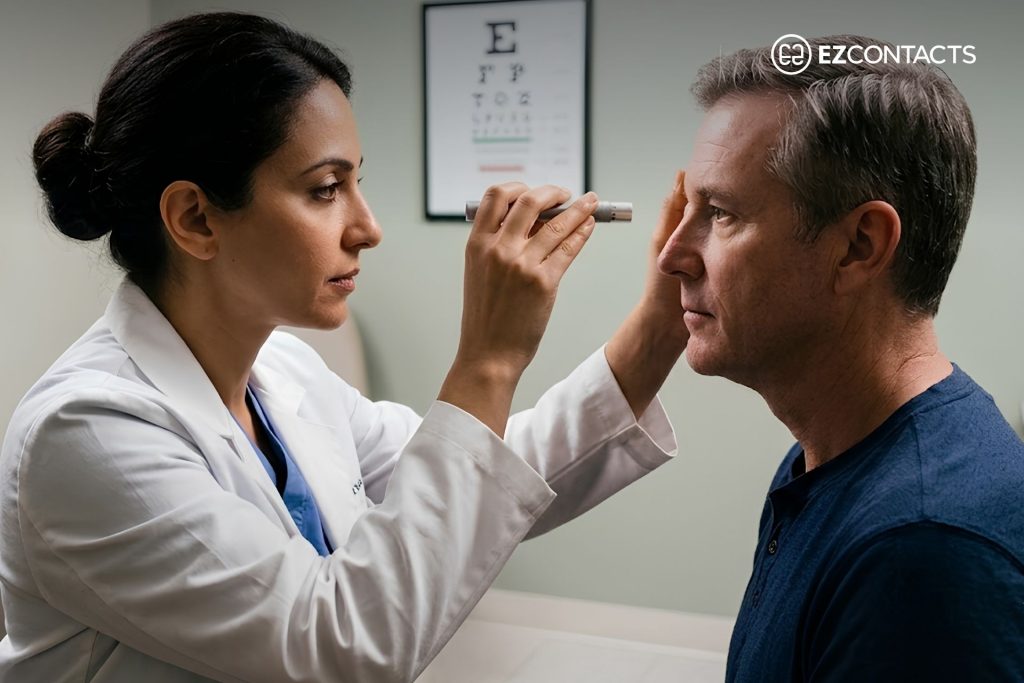
If you experience any of these symptoms, stop what you’re doing and seek medical attention:
- Your eye becomes increasingly or significantly painful
- Your vision gets more blurry
- You become very sensitive to light
- You develop significant redness
- There’s discharge from your eye
- The contact lens has been stuck in your eye for a long time
Essentially, you want to be careful if you start to experience significant changes to your vision or comfort. This could mean you have a corneal abrasion or an infection that needs treatment from a doctor.
TL;DR
- Do you feel like you have a contact lens stuck in eye? Don’t panic; there are ways to remove it. It’s also important to note that a contact lens can’t end up behind your eyeball.
- If you can see your contact but can’t move it, it’s probably because it’s dry. Rewetting drops or preservative-free artificial tears should be used to loosen up the lens.
- Sometimes contacts get folded underneath the upper eyelid. Massaging your closed eyelid in a downward motion can move the contact back onto the cornea where you can remove it.
- If you start to experience pain, blurry vision, or persistent redness, promptly seek medical care.
- If you’ve tried everything and still can’t get it out, a doctor can easily remove a contact lens stuck in eye for you.