Have you just gotten an eye exam and been told you have 20/25 vision? You may be confused about what exactly that means.
You probably know that 20/20 vision is the ‘average.’ But where does 20/25 fit on that scale? And more importantly, does it mean you need glasses?
Let’s get to the bottom of it!
Measuring Visual Acuity
Before we dive into what 20/25 means, let’s discuss how eye doctors measure visual acuity.
Visual acuity is the clarity or sharpness of vision, and specifically, your ability to distinguish fine details at a standardized distance.
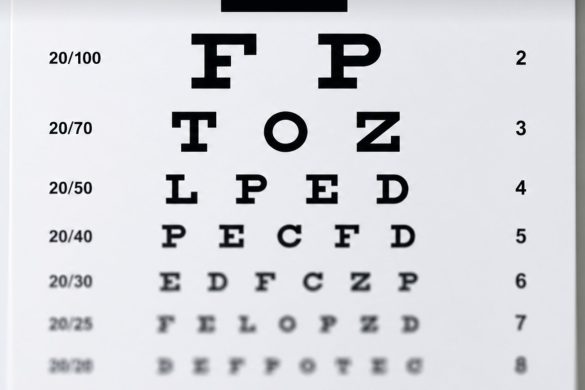
It’s measured using a ‘Snellen chart’ (you might recognize it as the chart with the big ‘E’ on top).
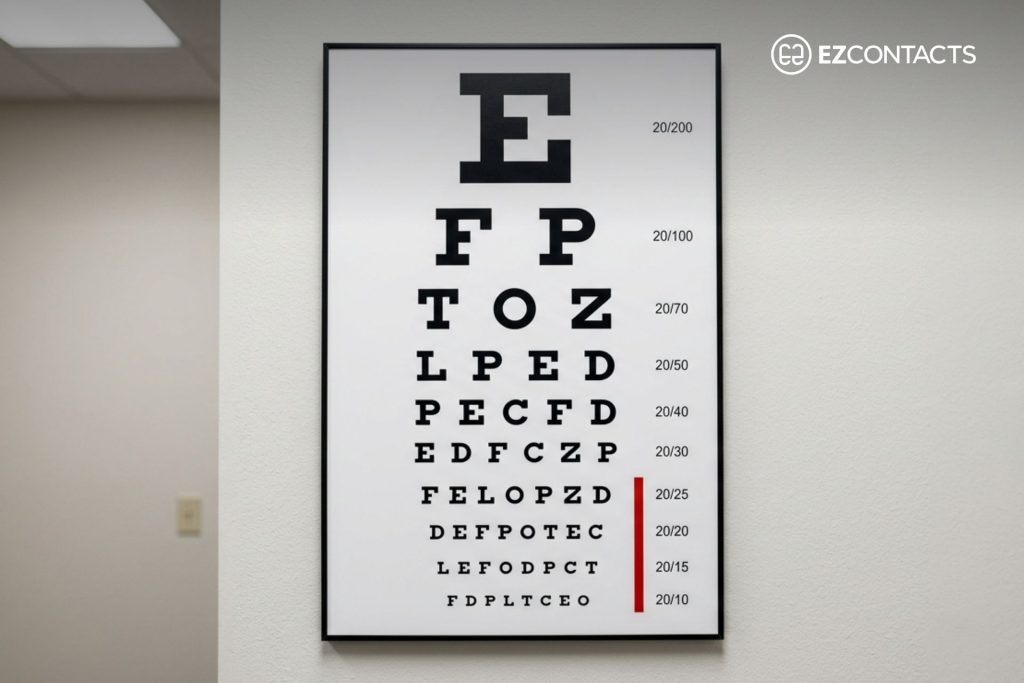
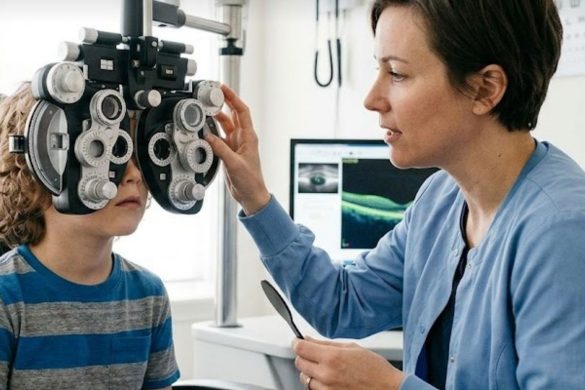
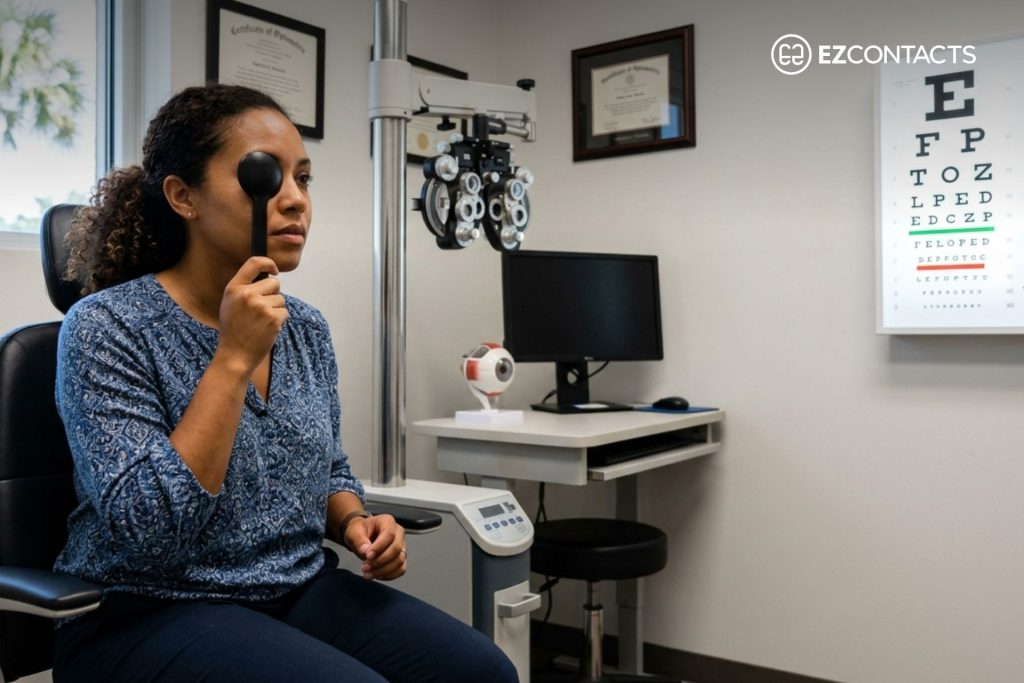
The eye doctor will have you stand or sit 20 feet away from the Snellen chart. Then, you’ll cover one eye and work your way down the eye chart. You’ll then do the same thing with the other. Finally, you’ll do both eyes together.
What Does 20/25 Mean?
Now, let’s get into what 20/25 means exactly.
The First Number: 20
The first number represents the distance from the Snellen chart. Since eye exams are given at a distance of 20 feet, this number is always 20.
Someone with average 20/20 vision can read up to line 8 of the Snellen chart without squinting at a distance of 20 feet.
The Second Number: 25
Now, let’s get into what that 25 represents.
20/25 vision means you see at 20 feet what a person with standard 20/20 vision sees at 25 feet.
To put it another way, you need to be five feet closer to an object to see it with the same clarity as someone with 20/20 vision.
Overall, it’s a very minor refractive error; it’s just out of the normal range of vision. You may notice slight bluriness with this refractive error.
What does it mean to have 20/25 vision in one eye?
It’s very common for people to have different prescriptions in each eye. So, your doctor could tell you that you have 20/20 vision in one eye and 20/25 vision in the other.
Generally, someone with 20/25 vision in both eyes has worse eyesight than someone with 20/20 vision in one eye and 20/25 in the other.
Questions About 20/25 Vision
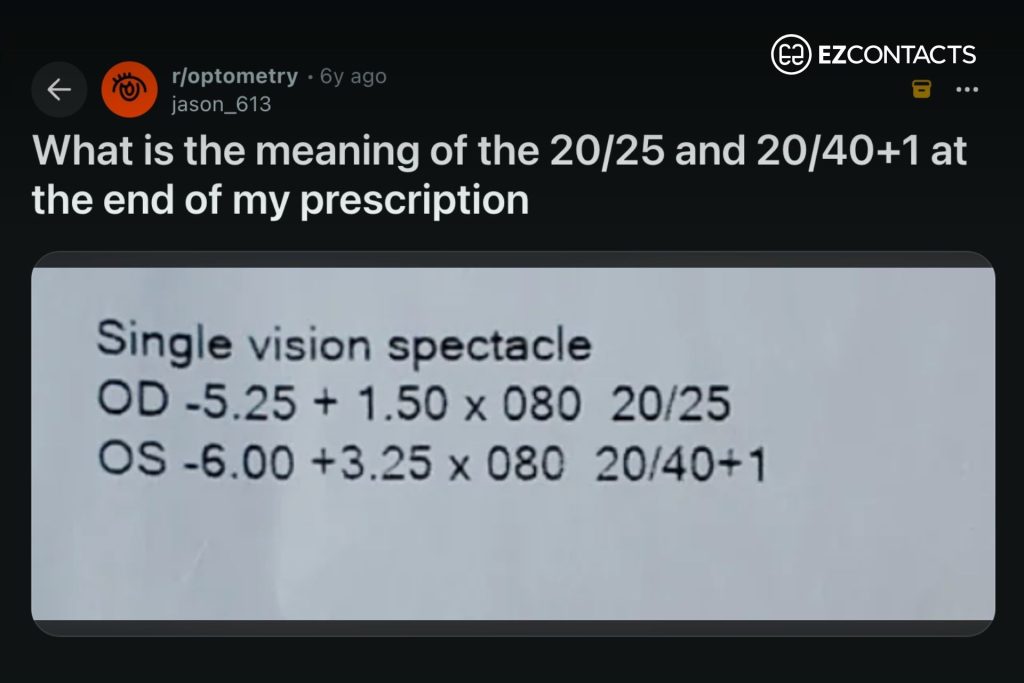
Many people have taken to Reddit with their questions about 20/25 vision. One Redditor was confused when they saw those numbers on their prescription. They wrote:
“What is the meaning of the 20/25 and 20/40+1 at the end of my prescription.”
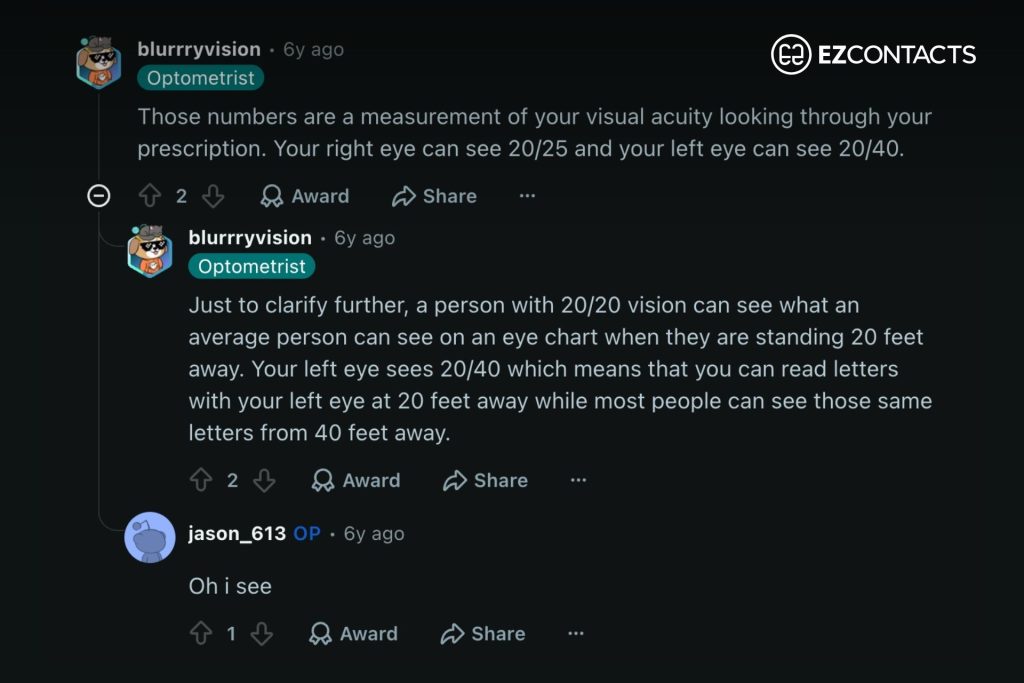
Another Redditor explained:
“Those numbers are a measurement of your visual acuity looking through your prescription. Your right eye can see 20/25 and your left eye can see 20/40.”
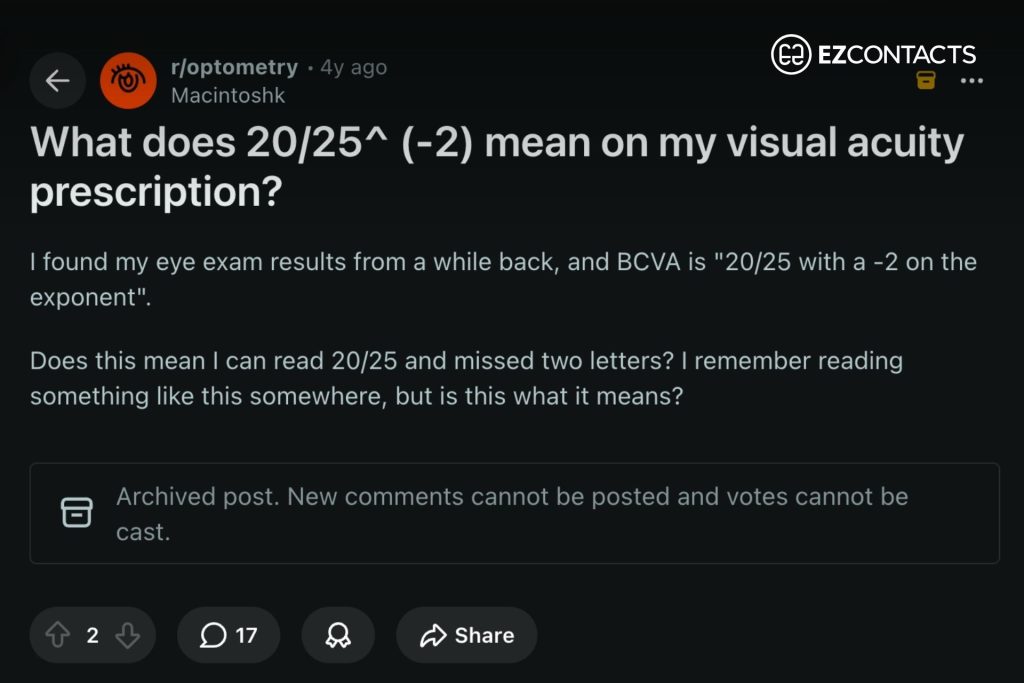
In another thread, another Redditor asked:
“I found my eye exam results from a while back, and BCVA is ’20/25 with a -2 on the exponent’.
Does this mean I can read 20/25 and missed two letters? I remember reading something like this somewhere, but is this what it means?”
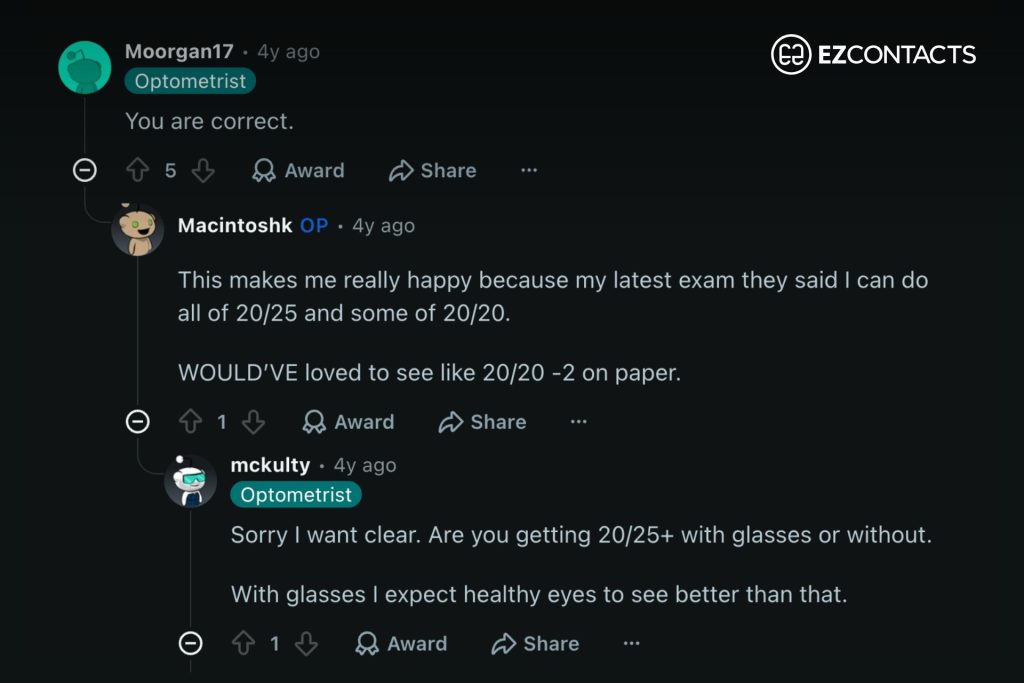
Someone else said they were right. However, they were surprised to hear the Redditor was getting 20/25 vision with glasses. The OP then explained they had amblyopia (lazy eye), so their vision couldn’t be fully corrected.
How To Fix 20/25 Vision
Overall, 20/25 is a small refractive error. In most states, you’ll be able to get an unrestricted driving license with this prescription.
With 20/25 vision, you might experience minor blur when trying to read distance street signs, which could be more noticeable at night or in rainy conditions.
Still, you don’t want to have to deal with any blurriness! Luckily, there are ways to correct your vision to 20/20.
So, how can you ‘fix’ your vision? There are a few simple ways, including eyeglasses and contact lenses.
Eyeglasses
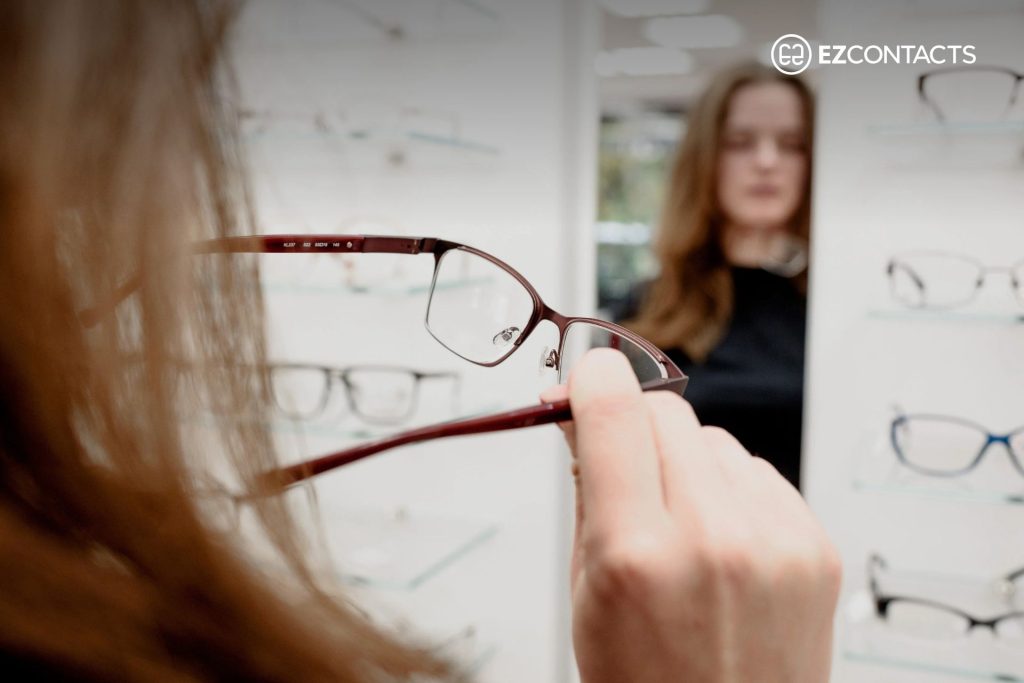
Eyeglasses are among the easiest ways to correct 20/25 vision. Since 20/25 is a small refractive error, you’ll typically need low-prescription lenses, usually in the -0.25 to -0.75 range.
After you do your exam, your eye doctor will give you your glasses prescription. You can then use your prescription to buy glasses at online retailers.
Contact lenses
Contact lenses can also be used for your 20/25 vision. A contact lens exam is slightly different than a glasses exam, and your prescription may also be slightly different.
If you’re getting contact lenses, your eye doctor will typically prescribe a specific brand. Just like with glasses, you can then use the prescription to shop at online retailers.
Comparing Different Visual Acuities
To help you understand the different visual acuities, let’s compare some of the different options on the Snellen chart.
20/200
Those with 20/200 vision must be 20 feet away to see what a person with normal vision sees at 200 feet. This level of visual impairment is classified as legal blindness in the U.S. if it can’t be corrected with glasses or contact lenses.
20/70
20/70 vision means that at 20 feet, you see details that a person with 20/20 vision sees at 70 feet. This indicates moderate visual impairment. Often, for someone with this level of vision, street signs or TV screens will look blurry.
20/40
With 20/40 vision, you must be 20 feet away to see what a person with 20/20 vision sees at 40 feet. This is considered to be a mild impairment, and it’s often the standard for unrestricted driving in the U.S.
20/20
20/20 vision is the ‘average.’ However, it doesn’t mean you have perfect vision. It means you can see what a person with standard vision should see at 20 feet.
20/15 and 20/10
The two top options on the Snellen chart are 20/15 and 20/10 vision. If you have 20/15 vision, you can see a line in the eye chart at 20 feet that the average person can only see when they are 15 feet away.
And if you have 20/10 vision, you guessed it: you can see at 20 feet what the average person can only see if they’re 10 feet away. 20/10 vision is very rare.
20/25 Vision FAQs
Is 20/25 vision good or bad?
20/25 vision is slightly below average and comes with slight blurriness. Luckily, you can improve your vision with eyeglasses and sunglasses.
Is 20/25 vision farsighted or nearsighted?
20/25 vision is considered mild nearsightedness.
Is 20/25 better or worse than 20/20?
20/25 vision is slightly worse than 20/20 vision. You’ll need to be five feet closer to an object to see it clearly than someone with 20/20 vision.
Can you be a pilot with 20/25 vision?
Yes, you typically can! FAA regulations require pilots to have 20/20 vision. However, you can wear contact lenses or glasses to correct your vision. So, with 20/25 vision, you’ll need to wear glasses or contact lenses.
Can 20/25 vision be improved?
20/25 vision can be improved with eyeglasses or contact lenses.
TL;DR
- Doctors measure visual clarity with the Snellen chart. They’ll have you stand or sit 20 feet from the chart. You’ll cover one eye and read the letters down the chart. Then, you’ll do the same thing with the other eye. After that, you’ll do both eyes.
- 20/25 vision means that you see at 20 feet what a person with standard 20/20 vision sees at 25 feet. You’ll need to be five feet closer to see it with the same clarity.
- Generally, 20/25 is considered to be a small nearsighted refractive error. Still, though, it’s helpful to correct it with eyeglasses or contact lenses.
- In most states, you’ll be able to get an unrestricted driving license with 20/25 vision. You can also be a pilot with 20/25 vision; you’ll just need to correct it to 20/20 vision with glasses or contacts.
- 20/25 vision can generally be improved with eyeglasses or contact lenses.