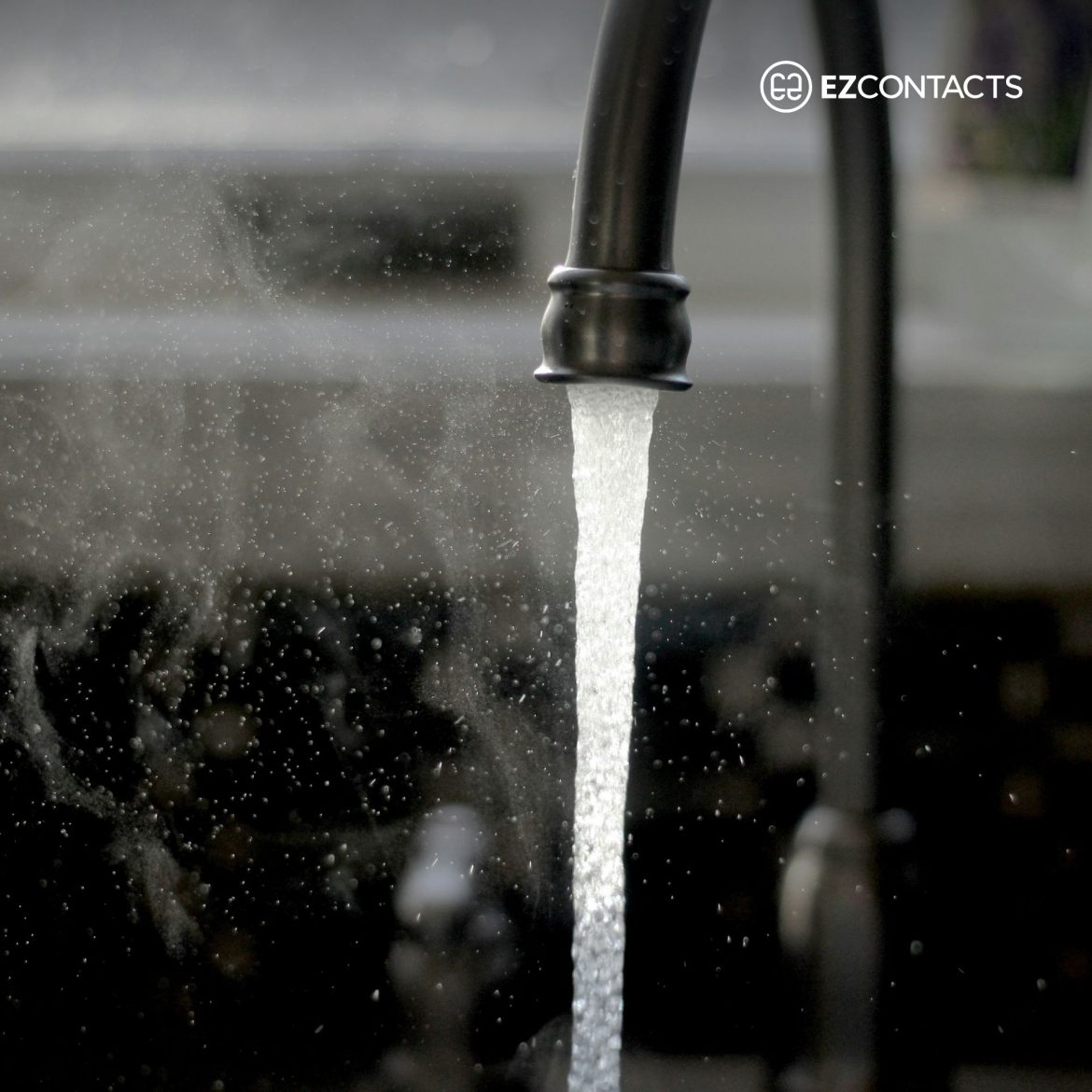
Eye experts agree: it’s not a good idea to put your contact lenses in tap water, or even bottled or distilled water. Instead, use the contact lens solution recommended by your eye doctor.
Let’s go into why this is.
At-a-Glance Summary
This article goes through why you shouldn’t put contacts in water. It answers questions about putting contacts in water, and it details why contact lens solution is the safest way to clean contacts.
Why Shouldn’t You Put Contacts in Water?
The CDC lists several reasons why putting contacts in water isn’t a good idea:
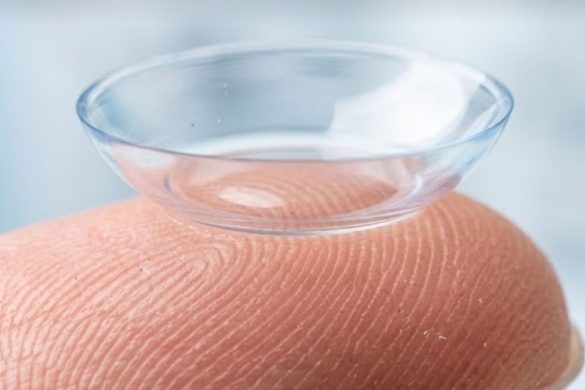
- Water negatively affects the lenses. It can cause warping or shape changes, such as the lens swelling. In turn, the lens could stick to your eye (ouch!), or even scratch the cornea, leaving you more vulnerable to infections.
- Using plain water also increases the risk of infection by introducing germs.
- This is sometimes confusing, because tap water is safe to drink. It does still contain germs, just ones that aren’t typically problematic if you drink them. However, an amoeba in tap water called Acanthamoeba can cause a serious eye infection, acanthamoeba keratitis. Not only is this infection tough to treat, but in some cases, it can cause blindness.
Can you use saliva or hydrogen peroxide instead?
No, that isn’t a good idea either. Saliva is teeming with bacteria that isn’t harmful in your mouth, but could cause an infection in your eyes.
As for hydrogen peroxide, it is an ingredient in some contact lens solutions, but it’s not a substitute for lens solution. Hydrogen peroxide has to be neutralized, or turned into oxygen and water, before it can be safely used on contact lenses. Using unneutralized hydrogen peroxide can lead to irritation, redness, and even permanent eye damage.
What About Swimming and Showering?
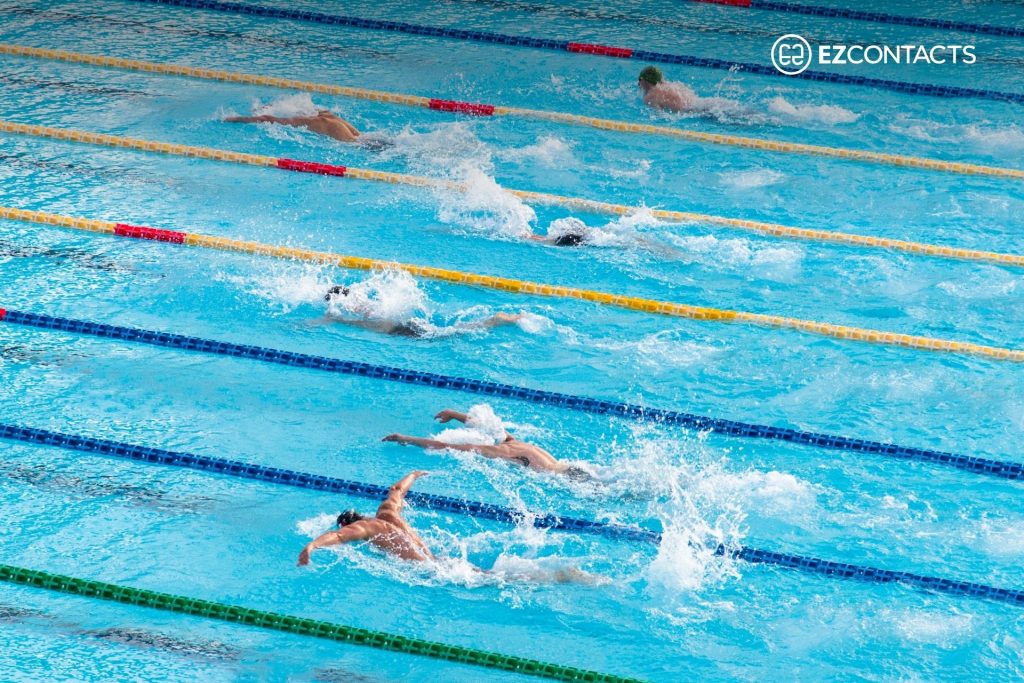
Be sure to remove your contacts before swimming or showering. Even the chlorine in pool water can’t kill Acanthamoeba, and you don’t want to risk getting water on your contacts.
If you struggle to see while swimming, ask your doctor about prescription goggles instead.
What To Do if You Run Out of Contact Solution
Hey, we’ve all been there. You’re ready to take out your lenses, and then you remember…you never did buy a new bottle. What should you do?
Your first thought may be to try to make your own solution. However, homemade solutions aren’t a good idea, and you could risk exposing your eyes to germs.
Many people have taken to the internet to ask about DIY options. On Reddit, there have been numerous threads asking about recipes for home saline solution over the years. Redditors’ answers are almost always the same: don’t risk it.
So, what should you do if you run out of solution? The best option is really to buy more contact lens solution.
You can head to a nearby store and grab a bottle. Or, you can order your solution online. You’ll find a variety of contact lens solutions on EZContacts, and they’ll typically get to you quickly.
If you’re traveling and forgot contact solution, you can also check at gas stations and hotel/airport gift shops. You wouldn’t be the first person to forget to pack contact care items!
In the future, always keep a few extra bottles of contact lens solution and a backup lens case on hand in case you run out or forget your usual supplies.
Tips for Cleaning Contact Lenses
If your contact lenses feel gritty or dirty, they likely have a buildup of proteins from your eyes’ tear film. There are several potential causes:
- Soft hydrogel lenses are the most prone to this issue due to their high water content, so if this happens often, you might consider switching to silicone hydrogel or rigid gas-permeable lenses.
- You may also not have rubbed and cleaned the lenses as thoroughly as necessary.
- Did you leave your contact lenses in a little longer than you should? In addition to increasing the risk of infection, this can also contribute to the buildup.
- Dry eyes also increase the tendency for protein buildup. So if you suffer from dry eyes, you may want to try lubricating drops.
- Some people have tear film chemistry with more protein or a different pH level, and this can increase the risk of buildup as well. If it’s a persistent problem and other solutions haven’t worked, you may want to consider daily lenses instead.
Alternatives To Reusable Contact Lenses
If you struggle with taking care of reusable contacts, you’re not alone. Many people like the look of contact lenses better than eyeglasses, or they prefer the functionality of wearing contacts for activities like sports. However, cleaning them can be a hassle, especially if you’re very busy or tend to forget things (like reordering that contact lens solution).
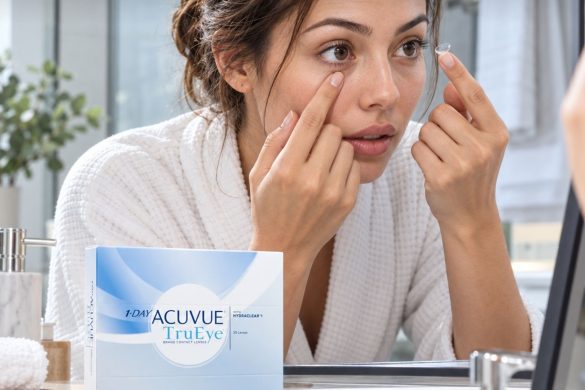
If you find that you struggle to properly care for your contacts, you might talk to your eye doctor about switching to daily disposable lenses. You’ll wear them once, then throw them away, so there’s no need to worry about lens cases and solutions.
However, you do still need to remember to reorder your contacts, so set a reminder (or three) on your calendar. It’s also a good idea to keep a pair of eyeglasses handy just in case you do forget.
FAQs
If I’ve run out of solution, can I just keep wearing my contacts a little longer?
Unfortunately, leaving your contacts in longer than recommended is another way to increase your risk of infection, as well as redness, irritation, and even corneal ulcers. The two best options are to find some contact lens solution or to throw out your contacts early and start using a new pair the next day.
What if your eyes are dry when you wear contacts?
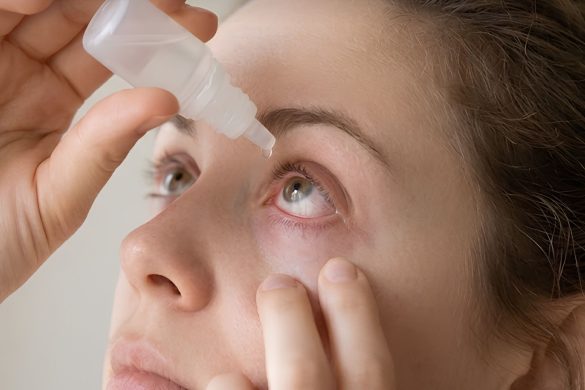
You can use rewetting drops while wearing contacts, but this is only a temporary solution for dryness. Don’t attempt to use eye drops in place of contact lens solution, as they can’t properly clean or disinfect your lenses.
Can I still use a contact lens that’s been in water?
No, it’s best to throw that contact lens away. Water contains germs that can stick to soft contact lenses and potentially cause eye infections.
TL;DR
- It’s not a good idea to put your contact lenses in water, clean them with saliva, or use a homemade saline solution.
- Doing so increases the risk of eye infections, injury, and even possible loss of vision.
- Contact lens solution is the best and safest way to clean your contacts. Be sure to stock up on solution so you always have a few bottles on hand.
- You can also consider switching to daily contact lenses. With these contacts, you’ll wear them once and then throw them away, so you won’t have to worry about cleaning them.