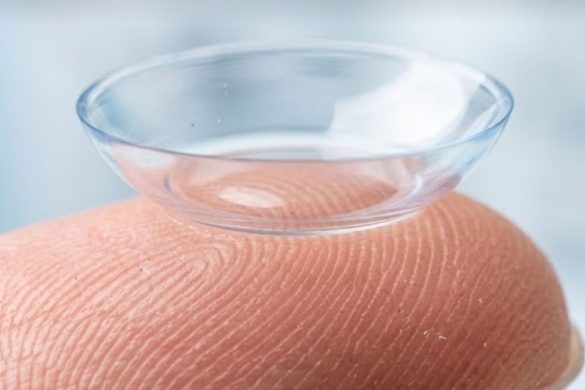

Contacts are tiny lenses that rest against the eye to correct blurry vision. In essence, they work very similarly to glasses, changing the way light bends before it reaches the retina.
Because contact lenses sit on your eye’s surface, rather than in front of your eyes like glasses, they can offer advantages too.
Contacts can give you a wider field of view. For certain eye conditions, they can even correct vision issues to a better standard than glasses.
But how do contacts work exactly?
At a Glance
- Contact lenses correct vision by bending and redirecting light so that it focuses properly on the retina at the back of the eye.
- Different prescription powers and lens designs are used to treat different refractive errors. These include nearsightedness, farsightedness, astigmatism, and presbyopia.
- Standard soft lenses are made from hydrogels or silicone hydrogels, while specialty contacts sometimes use firmer plastics or hybrid materials.
- Specialty lenses like RGPs, sclerals, and Ortho-K lenses offer solutions for irregular corneas or specialized vision correction needs.
How Do Contacts Work?
To understand how contacts work, it helps to start by understanding what’s actually going on when you look at something.
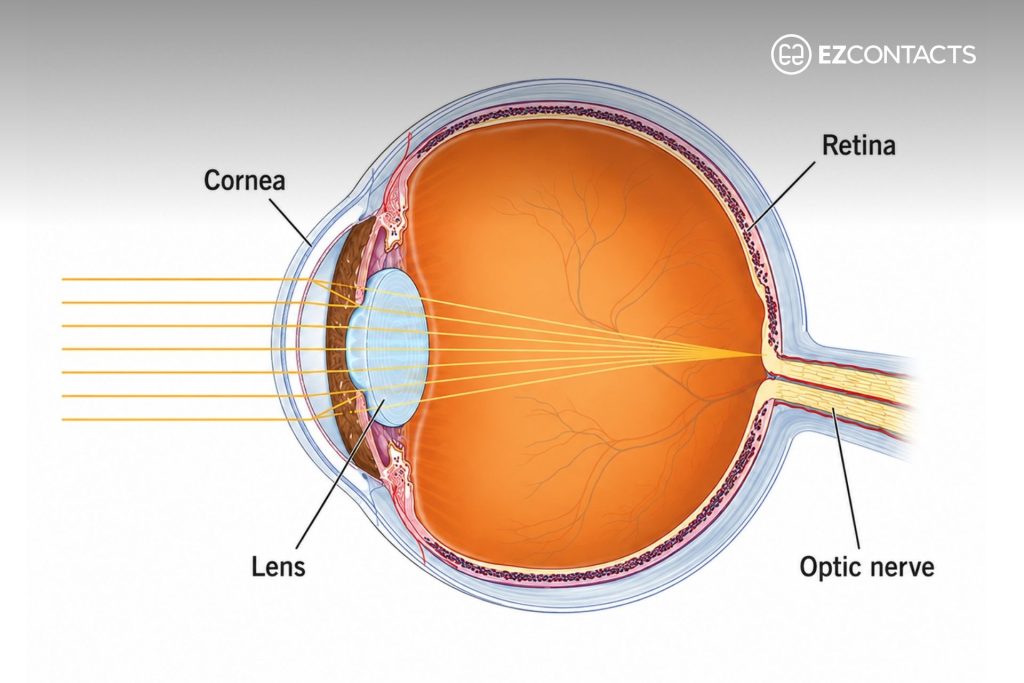
Light reflected from an object enters your eye through the cornea, which is the clear dome at the front of the eye. The cornea bends the light. Then, the natural lens inside your eye bends it further so it can focus on the retina at the back of the eye.
The retina then turns the light into electrical signals that travel through the optic nerve to the brain, where they’re interpreted as an image.
This is how everything is supposed to work, anyway.
But eyes don’t always bend light in quite the right way. If the light focuses in front of or behind the retina, the image can look blurry. This is called a refractive error, and it’s what contacts are designed to fix.
When you put on a contact lens, you’re introducing an additional curved surface in front of the cornea. The prescription of the lens is designed to bend incoming light in the specific way needed for your eyes.
This is the basic idea behind every contact lens. But the exact way it works depends on the type of vision problem you’re correcting and the type of contact lens.
How Contacts Change the Path of Light To Correct Vision
With the exception of Ortho-K lenses (which we’ll talk about later), contact lenses don’t change the shape of your eye to correct refractive errors. Instead, they alter the path of light before that light reaches the cornea.
The exact direction and amount the lens bends light depends on the vision problem it’s correcting. Some of the most common conditions that contact lenses can correct include:
Myopia/nearsightedness
If you have myopia (nearsightedness), distant objects look blurry. This is because your eye focuses light in front of the retina instead of directly on it. This can happen when the eyeball is too long, or the eye’s focusing power is too strong.
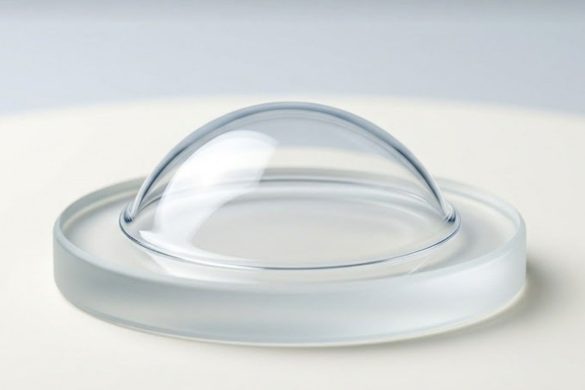
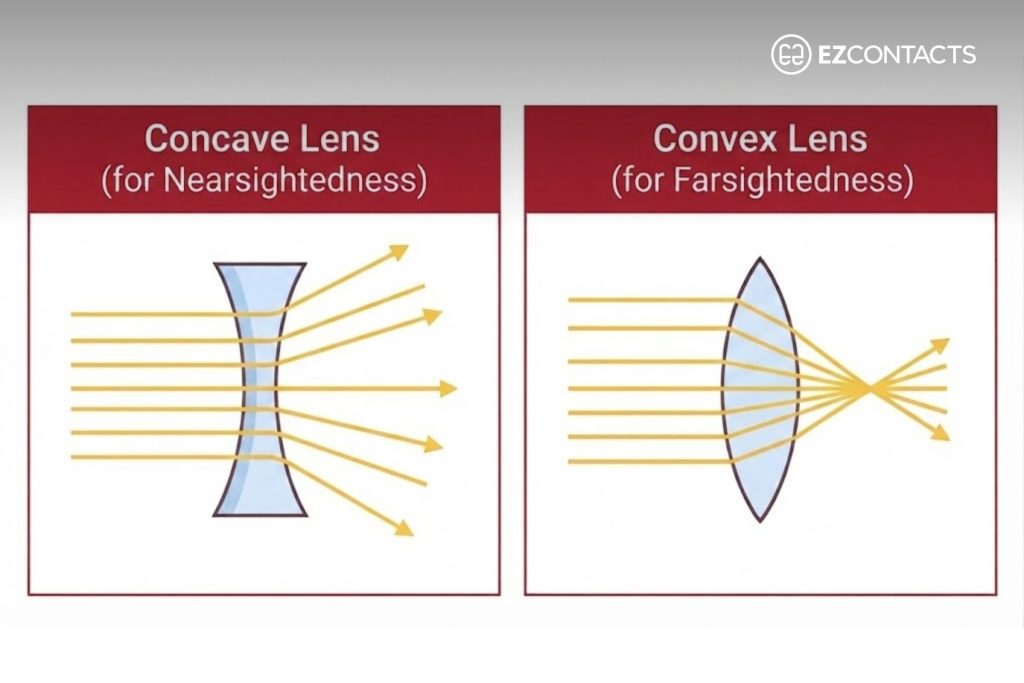
To correct myopia, a concave lens is used. This is a lens that’s thinner in the middle and curves inward like a tiny bowl, spreading the incoming light before it enters the eye. This moves the focal point farther back, so your eye can focus the light onto the retina like it’s supposed to.
Hyperopia/farsightedness
When a person has hyperopia (farsightedness), the opposite of myopia happens. The eye focuses incoming light behind the retina instead of directly on it. This can make nearby objects look blurry.
A convex lens, which is thicker in the middle and curves outward, gives the incoming light some extra bending power before it enters the eye. This brings the focal point forward so it lands on the retina instead of behind it.
Astigmatism
Astigmatism happens when the cornea or the eye’s lens has an irregular shape. This causes light to focus at multiple points instead of one clear focal point on the retina.
Toric contacts are designed to correct this by having different optical powers in different sections across the lens.
The design also keeps the lens in the right orientation on the eye for those powers to work properly.
Presbyopia
Presbyopia is different from the other refractive errors. It happens as the eye’s natural lens becomes less flexible with age, meaning it’s harder to focus on something close up.
Multifocal contacts correct this by having different optical powers across the lens. Different sections help with distance, intermediate, and near vision.
Some newer lenses use extended-depth-of-focus (EDOF) designs so the power changes gradually across the lens, instead of having distinct zones.
Specialty Contact Lenses
Not every eye can be corrected with a standard soft contact lens. Some people require specialty lenses to provide the best vision correction.
Some of the most common specialty contact lenses include:
RGP lenses
Rigid gas permeable (RGP) lenses are made from a firm material that holds its shape on the eye. This creates a smooth surface over the cornea, compensating for conditions that create an irregular cornea.
Hybrid lenses
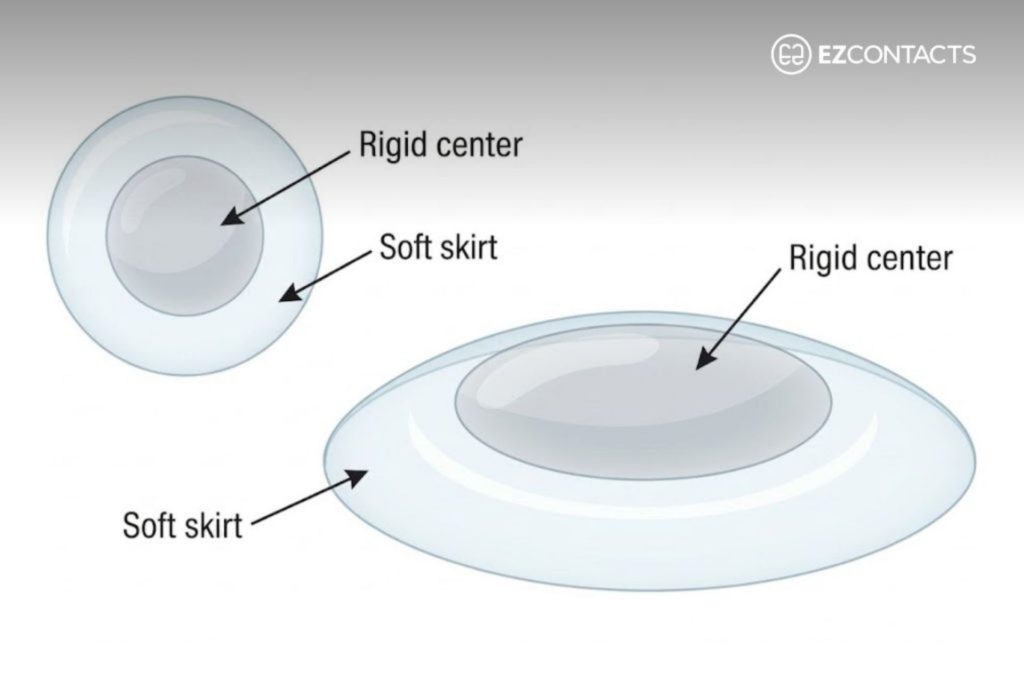
Hybrid lenses combine an RGP center with a soft outer skirt. The rigid center is what does the correcting, while the soft part is what actually touches the eye. Some people find them more comfortable than traditional rigid lenses. They can be used to treat some cases of keratoconus and irregular astigmatism.
Scleral lenses
Scleral lenses are larger than regular contacts and vault completely over the cornea instead of resting against it. The outer section of the lens sits on the white part of the eye, called the sclera.
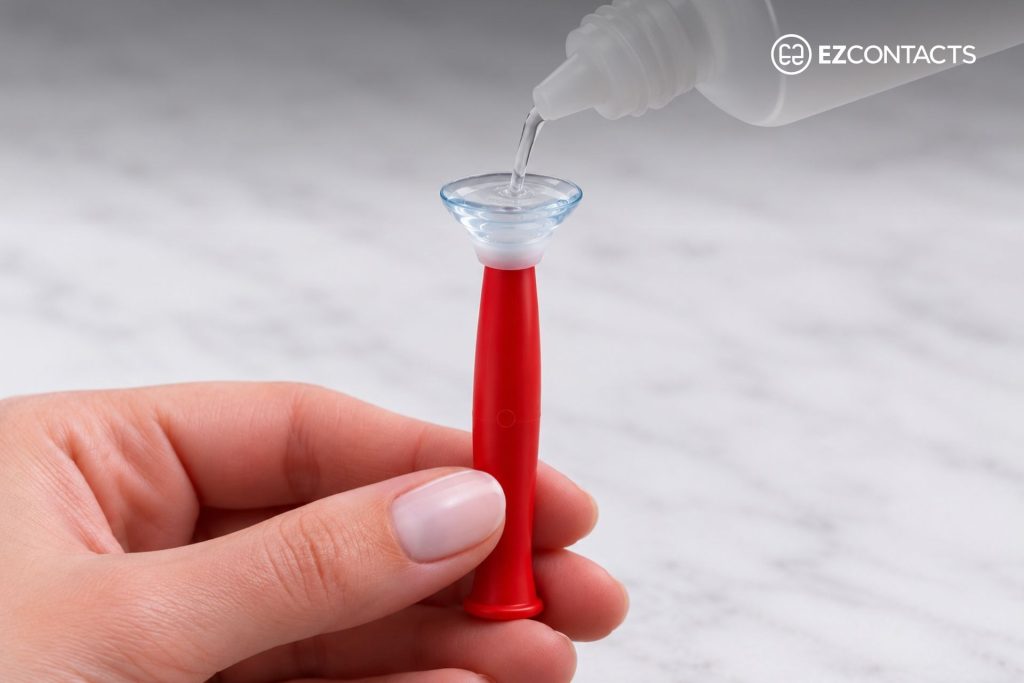
Before a person inserts a scleral lens, they fill it with sterile saline. That liquid between the cornea and the lens is what’s used to create a smooth surface over the eye.
They can be tricky to get used to in the beginning, but they are particularly effective at correcting vision for people with more complex corneal irregularities.
Ortho-K lenses
Ortho-K lenses are a bit special. They don’t work in the same way as other contacts. Instead of wearing them during the day, you wear them at night when they gently reshape the cornea. When you remove them in the morning, the new shape of the cornea lets you see clearly for the duration of the day.
But it’s important to know that the changes to the cornea are not permanent. You have to keep wearing the lenses as prescribed to maintain the corneal shape and the resulting vision correction.
FAQs About Contact Lenses
What are contact lenses made from?
Different contacts use different materials, but most share the same basic properties. Soft contact lenses are usually made from water-loving plastics called hydrogels or silicone hydrogels.
Silicone hydrogel is a more modern material and lets more oxygen pass through to your cornea, keeping the eye healthy.
Specialty lenses, on the other hand, use firmer plastics or a mix/hybrid of firm and soft plastics. For example, RGP stands for “rigid gas permeable.” These are lenses made from durable plastic polymers combined with silicone and fluoropolymers that still allow oxygen to pass through.
What stops contact lenses from falling out of your eye?
Contact lenses sit on the thin layer of tears covering your cornea, called the tear film. When you put a contact lens in, the liquid between the lens and your cornea provides a small amount of suction. It’s sort of like how two plastic plates can get stuck together if they’re a bit wet. This gentle suction is primarily what keeps lenses in place.
Can contact lenses ever get stuck?
If you’re new to contacts, this can be an understandable concern. But it’s really nothing to worry about. Contacts do use a small amount of suction to stay in place, but it’s easy to break this gentle suction when it’s time to remove your lenses. You just slide the lens slightly off the center of the cornea to break the seal, and it lifts right off.
As for the old myth about contacts getting lost behind your eye, you definitely don’t need to worry about that either. A clear membrane called the conjunctiva forms a total barrier and makes it impossible for a contact lens to slip back there.