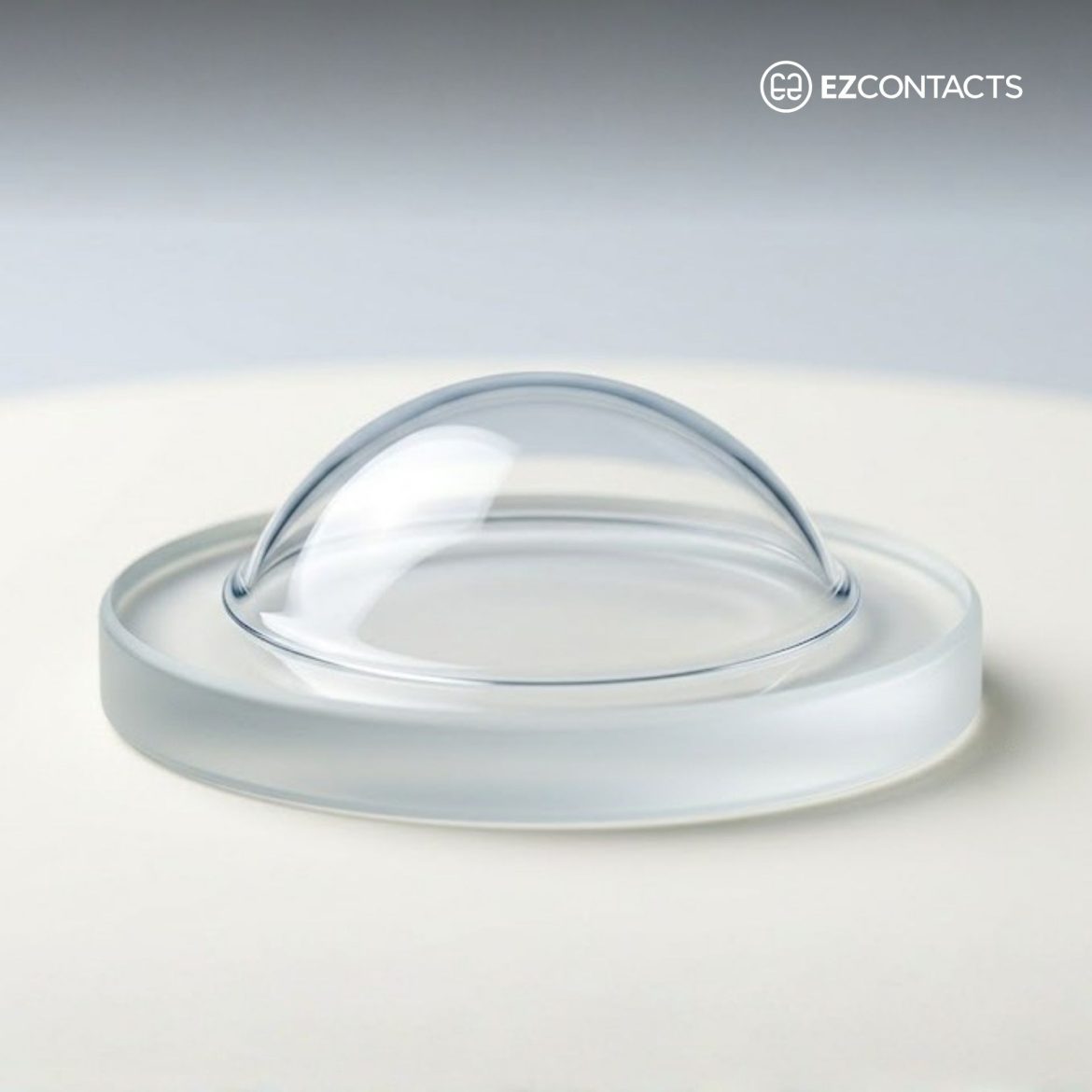
Thinking about trying scleral contacts? For people who can’t get clear, comfortable vision with regular glasses or contact lenses, scleral lenses can be a game-changer.
Scleral lenses are custom-made to create a fluid-filled cushion over the cornea. This design helps to correct vision while keeping your eye comfortably hydrated.
If you’re thinking of trying scleral contacts, here’s what to know about these lenses.
At a Glance
Scleral contact lenses are custom-made rigid gas-permeable lenses. They’re often prescribed for keratoconus, severe dry eye, and other complex eye conditions. This guide explains how they work, what conditions they’re for, and how to get fitted for a pair.
What Are Scleral Contacts?
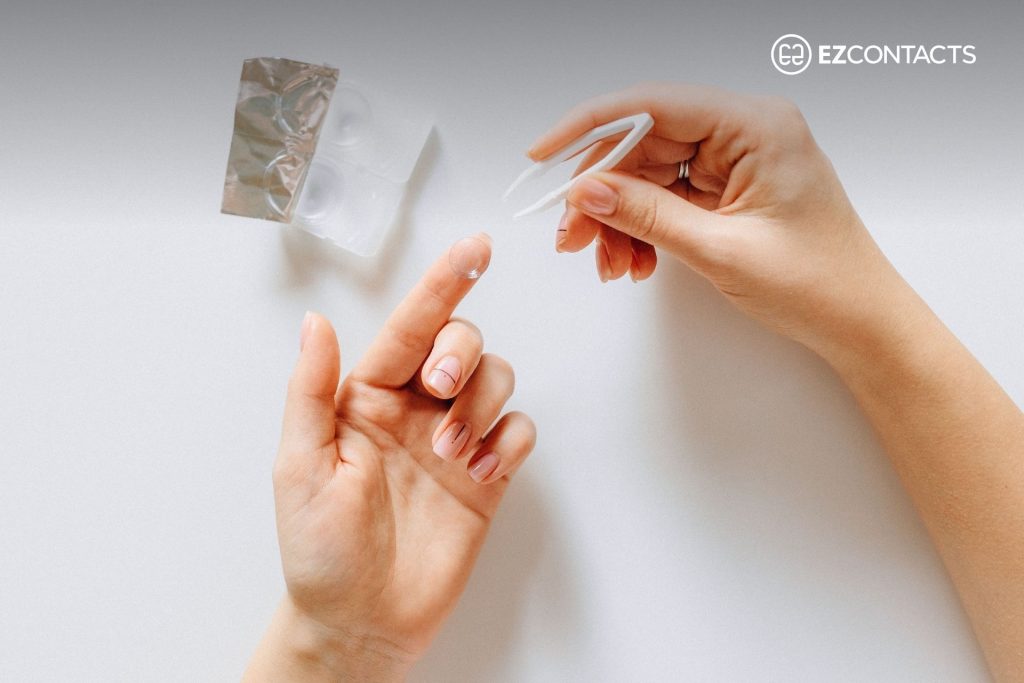
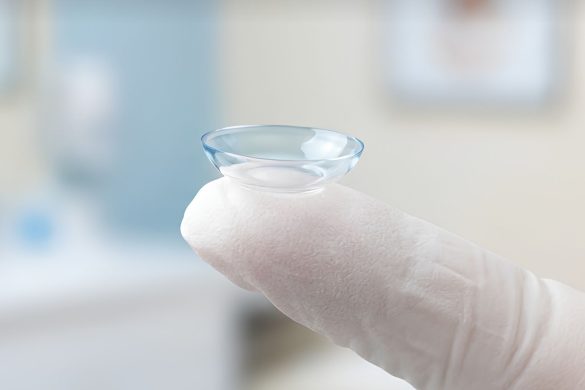
Scleral contact lenses are a type of rigid gas permeable (RGP) contact lens. But they don’t sit on top of the cornea like conventional lenses. Instead, the edges rest on the sclera; that’s the white part of the eye.
Scleral lenses are also larger in diameter, and they’re shaped in a way so that they can vault over the eye. This means there’s a gap between the cornea and the lens. This gap can then be filled with a sterile, preservative-free saline before the lens is inserted.
The job of the saline is to fill in the tiny bumps and irregularities on the cornea, so it can create a smooth surface for light to pass through before it reaches the retina. Because the lens vaults over the cornea instead of touching it, it can also protect the surface of the eye and keep it hydrated throughout the day.
What Are Scleral Contact Lenses Used For?
Scleral lenses can help with a number of conditions, including:
- Keratoconus
- Pellucid marginal degeneration
- Severe dry eye disease
- Corneal scarring
- Irregular astigmatism
- Complications following LASIK or corneal transplant surgery
- Sjögren’s syndrome
Research says that 84% of scleral lenses are prescribed for conditions affecting the shape of the cornea, including keratoconus, corneal scarring, and irregular astigmatism. Around 10% of scleral lenses are prescribed for ocular surface diseases, like dry eye.
How Do I Get Scleral Contact Lenses?
Unlike regular contact lenses, scleral lenses aren’t something you can simply order online using an existing prescription. Each pair is custom-made to fit the unique shape of your eyes.
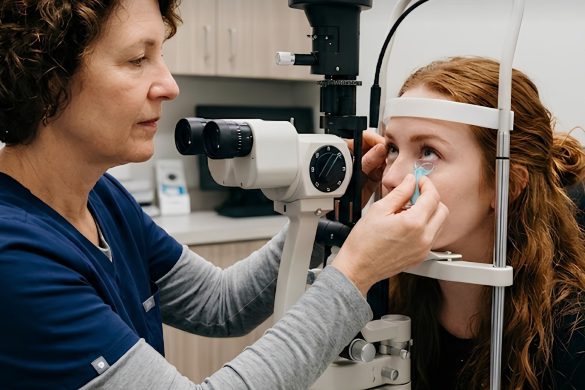
First, you need a comprehensive eye exam where your optometrist or ophthalmologist can measure the shape of your cornea and the white of your eye (the sclera). Depending on your needs, they may use imaging techniques, such as corneal topography or scleral profilometry, to map the shape of your eye and create a properly fitting lens.
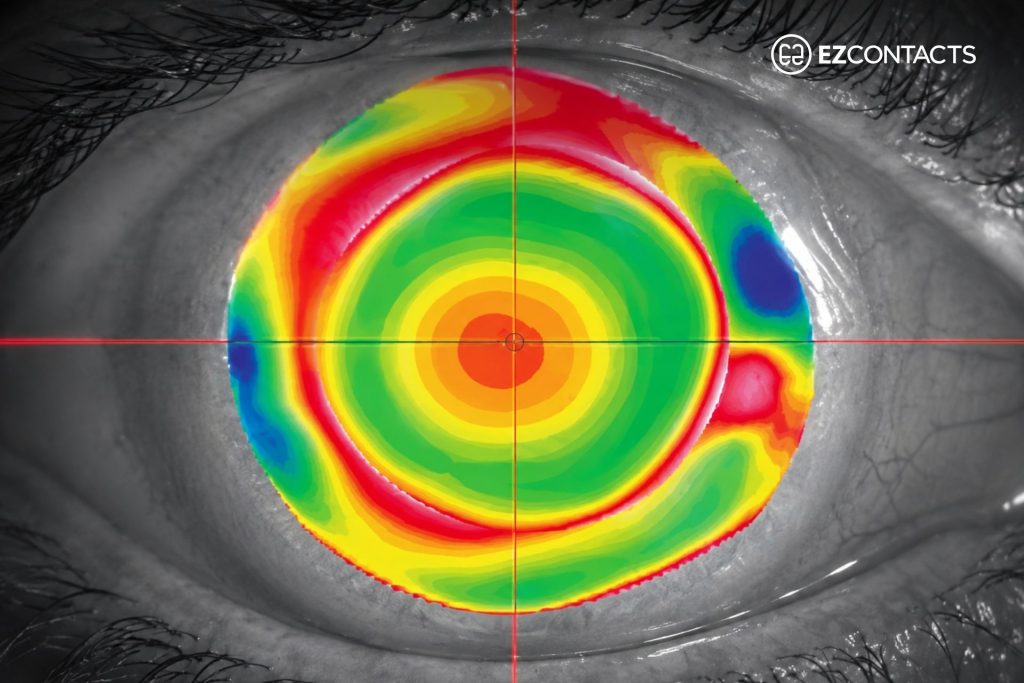
Next, you’ll try on one or more trial lenses. This is to make sure the lens completely vaults over the cornea and is comfortable to wear. Once the measurements have been finalized, they’re sent to the manufacturer, where your lenses are custom-made.
Your doctor will teach you how to insert and care for your new lenses. It’s also common to need a follow-up appointment to fine-tune the fit.
How Do You Insert Scleral Contact Lenses?
There’s no sugarcoating it… Scleral lenses take some getting used to, and the first few attempts can feel awkward.
But as long as you’re using the correct technique, you’ll eventually get the routine down. Your doctor will also typically give you a demonstration of how to do it at home.
Putting scleral lenses in
- Wash and dry your hands thoroughly.
- Place the lens on your finger or the insertion tool your optometrist has recommended. This tool is called a “plunger,” and some find them very helpful for both insertion and removal.
- Fill the lens right up to the brim with preservative-free saline. You don’t want to leave any space for air bubbles, as this can blur your vision.
- Next, lean forward so you’re looking directly down toward the countertop. Some people find it helps to place a flat mirror on the surface that they can focus on. The most important thing is not to let any saline spill before it reaches your eye.
- Hold both eyelids wide open and place the lens on your eye.
- Blink a few times and check that your vision is clear. If you notice bubbles or the lens doesn’t feel right, remove it, refill it with fresh saline, and try again.
![Tool to insert and remove scleral ;]lenses](https://www.ezcontacts.com/blog/wp-content/uploads/2026/08/scleral-contact-lenses-plunger-1024x683.jpg)
Taking scleral lenses out
- Wash and dry your hands.
- Most people use a small suction tool called a plunger to remove the lens. But you can also use your fingers.
- If you’re using a plunger, place it near the lower edge of the lens (not the middle) and gently break the seal before lifting the lens away.
- If you’re using your fingers, pinch the lens gently between your thumb and index finger to break the seal, then lift it away. Don’t squeeze too hard, as this can damage the lens.
Caring for scleral lenses
- Clean your lenses every time you take them out using the solution recommended by your optometrist.
- Never use water from the faucet on your lenses or the storage case.
- Replace your storage case regularly and follow the care instructions provided by your optometrist.
Are Scleral Contacts Right for Me?
If you think scleral lenses could help you, the first step is to book an appointment with an optometrist or ophthalmologist who fits them. Not every practice offers scleral lenses, so you may need a referral to a specialist clinic.
After examining your eyes, they’ll let you know if you’re a suitable candidate. Scleral lenses aren’t usually the first type of contact lens people try. Instead, they’re often recommended when glasses or standard contact lenses can’t provide the vision or comfort you need.
But if you have a condition that can benefit from scleral lenses, they can make a big difference in both vision and comfort. They’re certainly worth discussing with your eye doctor. And if scleral lenses don’t work for you, there are still plenty of other options, including regular eyeglasses and contact lenses.
FAQs
What conditions are scleral contact lenses for?
Scleral contact lenses are used to treat complex eye conditions like keratoconus, severe dry eye disease, corneal scarring, irregular astigmatism, and complications from eye surgery.
Do scleral contact lenses stop oxygen from getting to the eye?
No. Modern scleral lenses are made from oxygen-permeable materials. This means oxygen can pass through the lens and reach the cornea to keep it healthy the whole time you’re wearing them.
Why are my scleral lenses fogging up?
Up to a third of scleral lens wearers experience “midday fogging” at some point. This just means you need to remove, clean, and re-insert the lens.
There’s no sure way to completely stop fogging from happening, but better lens hygiene, switching filling solution, or having the lens refitted can help. Talk to your eye doctor if midday fogging becomes a common issue.
Are scleral contact lenses comfortable?
The majority of patients find scleral lenses comfortable. Different studies have found that 78% to 88% of those who go from other forms of vision correction to scleral lenses found them more comfortable and better for their vision.
This is because the lens doesn’t touch the cornea like other lenses, and it’s filled with fluid that keeps the eye hydrated.
TL;DR
- Scleral contact lenses are custom-made rigid gas permeable lenses.
- They can’t simply be ordered off the internet, since they need to be individually fitted by an optometrist or ophthalmologist and custom-manufactured for the wearer.
- They’re prescribed for people with conditions that can’t be corrected with glasses or regular contact lenses.
- The lenses are unique since they rest on the white part of the eye (not the cornea) and must be filled with a preservative-free saline solution before insertion.
- Getting used to the process of inserting scleral lenses is certainly trickier than standard lenses. But once you’ve learned the routine, the majority of people find they provide better vision and are even more comfortable than their old lenses.