
Oakley Plantaris sunglasses have that distinctive look: large, upturned lenses that give a “bug-eye” effect, plus a detachable nose cone that adds a touch of “bug-eyed bird.”
While the look may not fit everyone’s personal aesthetic, the line has a fervent following, especially among runners, hikers, and other outdoor enthusiasts. Others may enjoy the eye-catching style or sleek profile.
Keep reading to find out what you should know about Oakley Plantaris before you buy.
At a Glance
- Oakley Plantaris sunglasses feature wraparound lenses and a distinctive, removable nose cone.
- Fans like the lightweight design, low visible light transmission, and ventilation that reduces fogging.
- Plantaris comes in multiple color and lens options, including some polarized versions for high-glare situations (water sports, snow sports, driving).
- Plantaris SQ has a squared lens instead of a rounded one.
Key Facts: Oakley Plantaris
| Key Fact | Details |
| Model | Oakley OO9437 PLANTARIS 0OO9437 |
| Frame Shape | Oval (Square for the SQ version) |
| Fit | High Bridge Fit |
| Frame Material | O-Matter synthetic frame compound |
| Lens Size | 63 mm |
| Lens Options | Standard, polarized, gradient, and prescription-compatible lenses |
| UV Protection | 100% UVA/UVB protection |
| Ideal Face Shapes | Square for the original, oval and round for SQ |
Best Use Cases for Oakley Plantaris
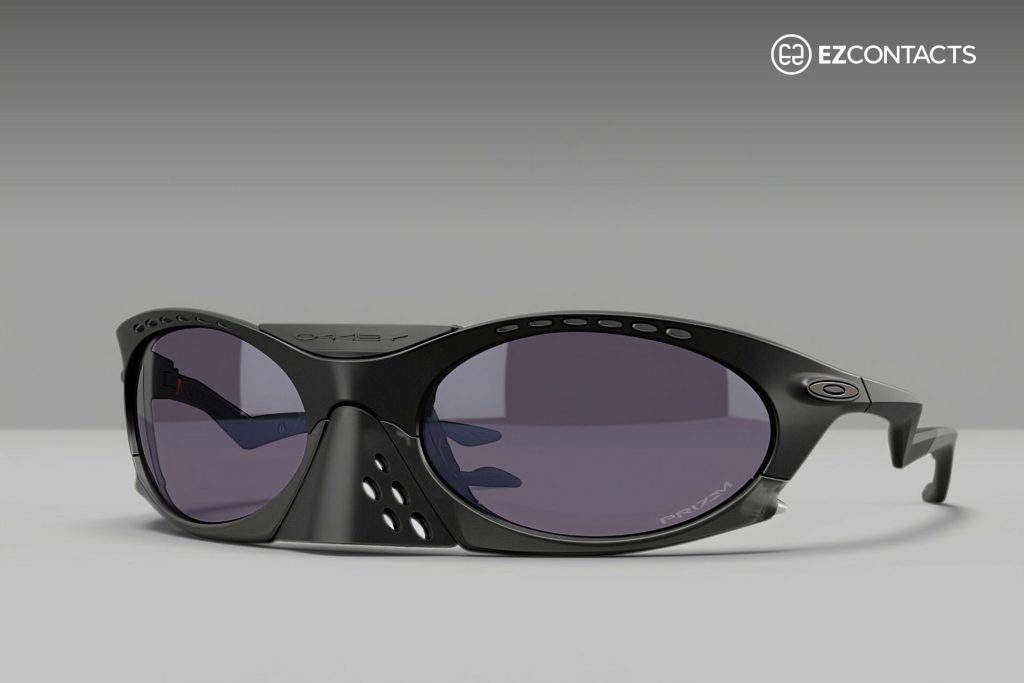
Real Oakleys are great for outdoor adventures or exercise, including water and winter sports. Wraparound lenses offer extra coverage on the side, which is nice for running, hiking, or other outdoor activities. The frog-leg split temples come with an adjustable core and silicone tips to reduce slipping during exercise. I also like the non-slip nose pads because they stay in place better when exposed to sweat or moisture.
Several Redditors preferred Plantaris for running because they are lightweight and the lenses don’t fog up.
Visible light transmission (VLT), which affects how much light gets through your lenses, varies depending on which lens you choose, but most are between 12% (Prizm Deep Water Polarized) and 17% (Prizm Grey). We’ll discuss lens options a little later.
What’s Up With That Nose Cone?
Does it serve a purpose? Aside from adding ventilation, it’s meant to block additional UV rays, wind, and trail debris.
But in reality, most people remove the nose cone. You should be wearing sunscreen on your nose anyway, and many don’t see any benefits of the nose cone. One Plantaris owner even said that it’s only useful when “you’re trying to avoid being scanned by CCTV.”

Another owner in that thread complained that the nose cone left tan lines on their nose.

While some people in the thread liked the nose cone because it’s reminiscent of Oakley’s now-discontinued Romeo X-Metal design, most buyers agreed it was just something to remove before wearing. At the same time, many Plantaris owners felt that the bridge was very wide and comfortable without the nose cone.
Aesthetics were the biggest driver of buyers abandoning the nose cone, with one user pointing out that the cone looked like “the first version of a superhero costume in an origin story.”
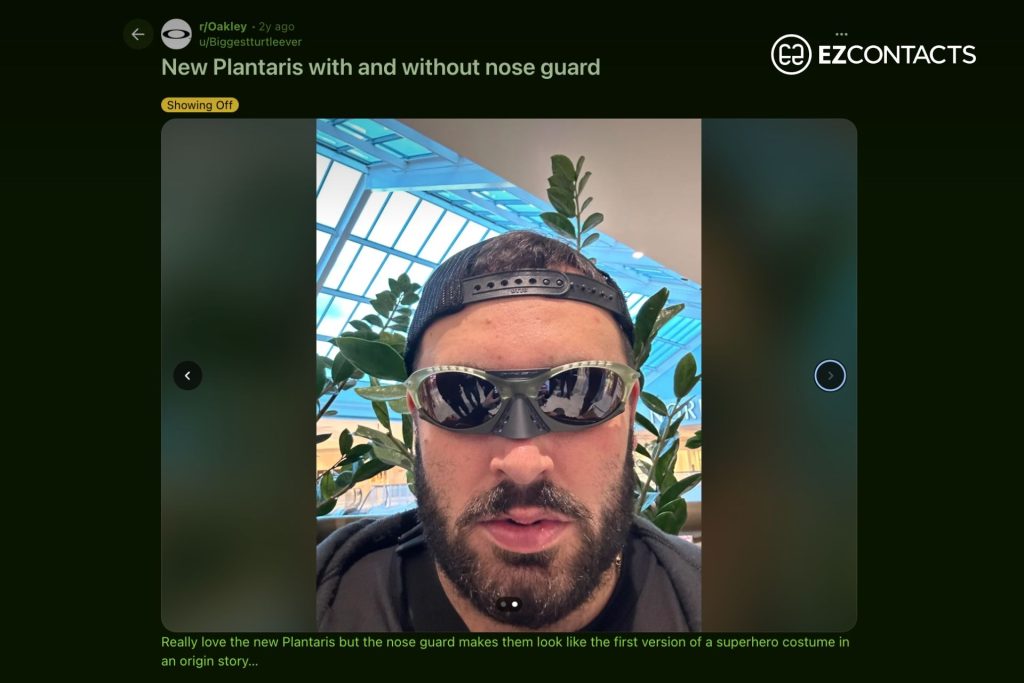
Oakley fans in another thread echoed the sentiment about the superhero look:


Color and Lens Options
Oakley Plantaris Original
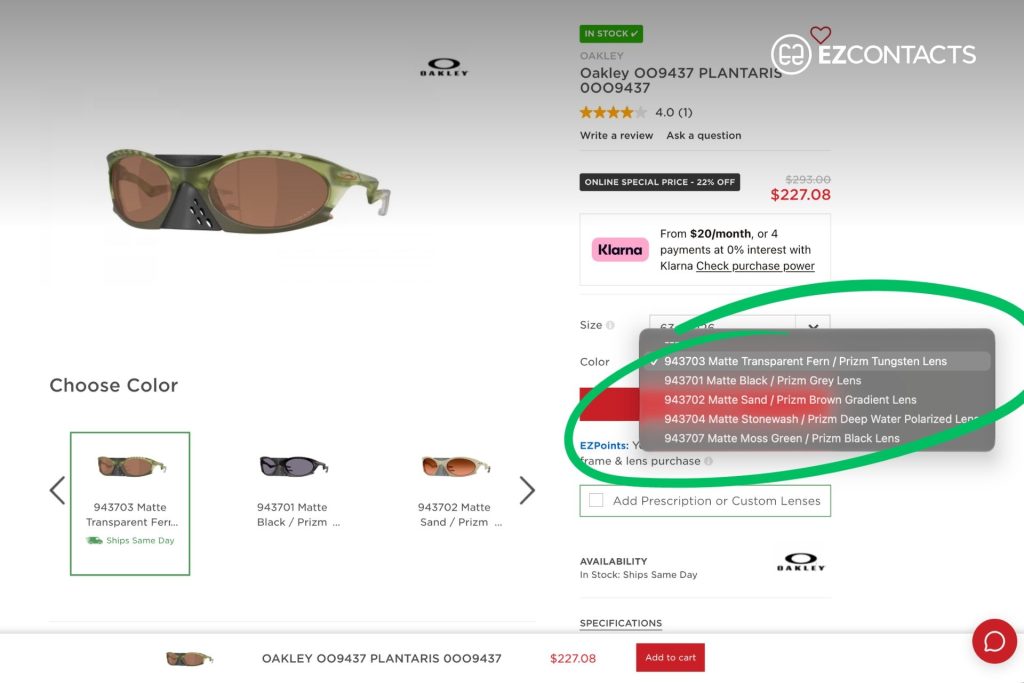
The Oakley Plantaris Original comes in multiple color and lens options:
- Matte Transparent Fern/Prizm Tungsten
- Matte Black/Prizm Grey
- Matte Sand/Prizm Brown Gradient
- Matte Stonewash/Prizm Deep Water Polarized
- Matte Moss Green/Prizm Black
- Silver/Prizm Sapphire
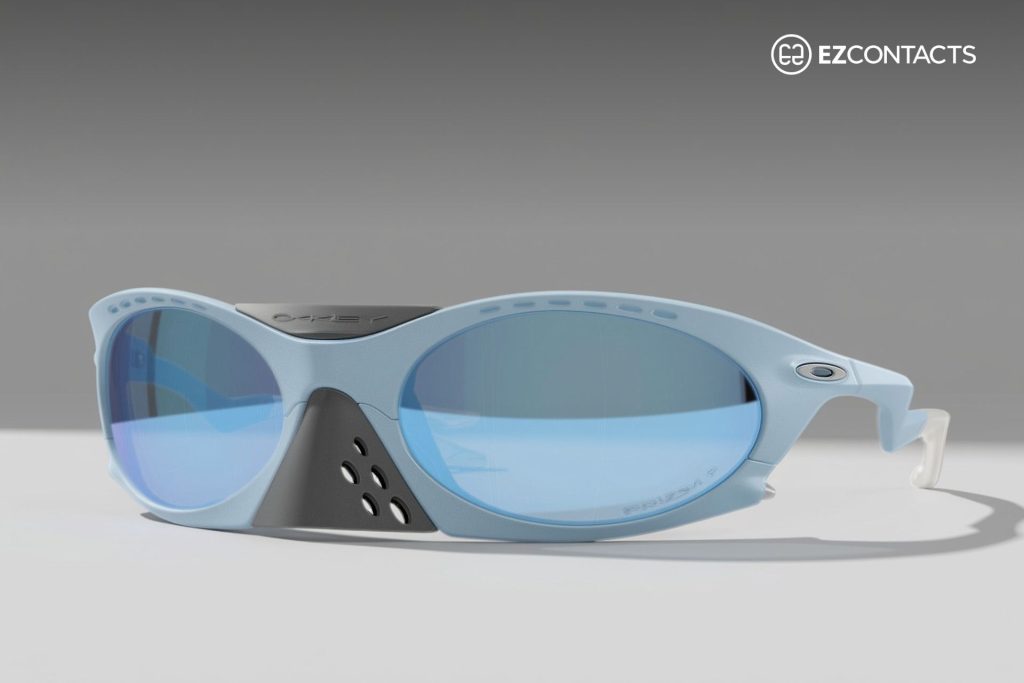
The Deep Water Polarized lens is a great option if you spend a lot of time on the water. Polarized lenses cut horizontal glare, so they’re great for boating/water sports, snow sports, and even driving. This option also has a low VLT of 12%, so it’s good in full sun (but won’t transition well to indoor wear).
However, many Redditors love the warm color of the Prizm Tungsten, especially on very bright days. It has a VLT of 14% and is known for high contrast.
Oakley Plantaris SQ
The Plantaris SQ stands for Square, referring to the hard angles of the lenses, which differ from the more bug-eyed oval lenses of the original. Round and oval face shapes may do well with the SQ version, while square faces could benefit from the original version.
Once you’ve decided on shape, you’ll need to pick a color. Right now, there are two options available for the Oakley Plantaris SQ sunglasses: Matte Sepia with Prizm 24K Polarized Lenses, and Aubergine with Prizm Black Polarized Lenses.
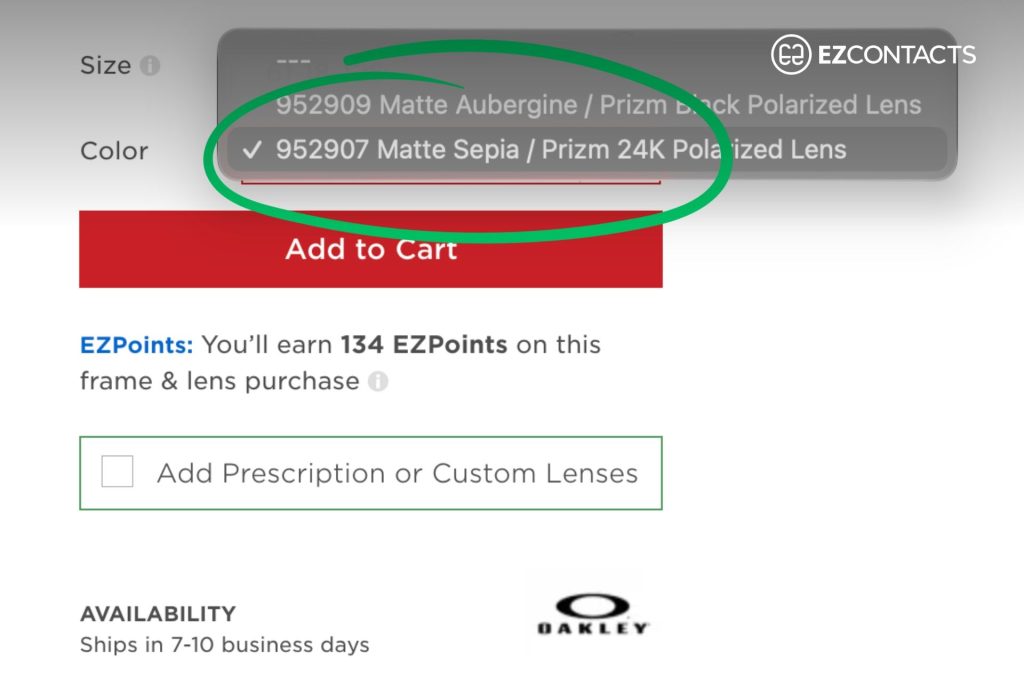
Both are polarized and have a VLT rating of 11%, meaning they let in less light than the average sunglasses (around 15% VLT).
The Prizm Black lenses have a base lens color of Grey while the Prizm 24K have a base color of Bronze/Amber. The color perception of the Prizm Black is considered to be more natural, while the Prizm 24K is warmer and has higher contrast.
Both work well for bright sun conditions, but Prizm Black is generally preferred for natural colors. Prizm 24K is preferred for better depth perception.
FAQs
Are the Oakley Plantaris sunglasses prescription-capable?
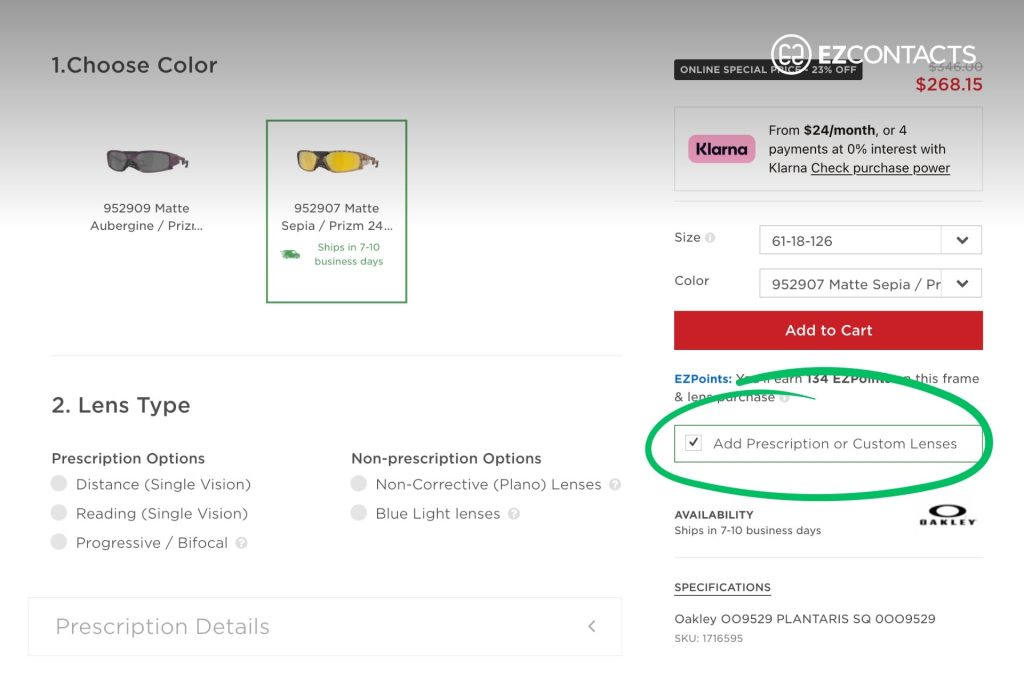
Yes, you can add a prescription to either the original or the SQ version. Just check the box for “Add prescription or custom lenses,” then you’ll be prompted to enter your prescription.
Is there any way to get these at a lower price?
EZContacts frequently runs sales on sunglasses, including the Oakley Plantaris. Currently, the SQ is on sale for $268.15 (regular price $346). The original is also on sale for $227.08 (regularly $293.00). Sale prices are subject to change, so now is a good time to buy if you’re interested.
There may be a few other options to reduce cost, depending on your situation. If you need prescription sunglasses, some vision insurance plans may cover these; submit a reimbursement form to your insurer if you buy them online. Or, you may be able to seek reimbursement from your FSA/HSA account. I recommend checking on the details of your plan to be certain of what it covers before you place an order.