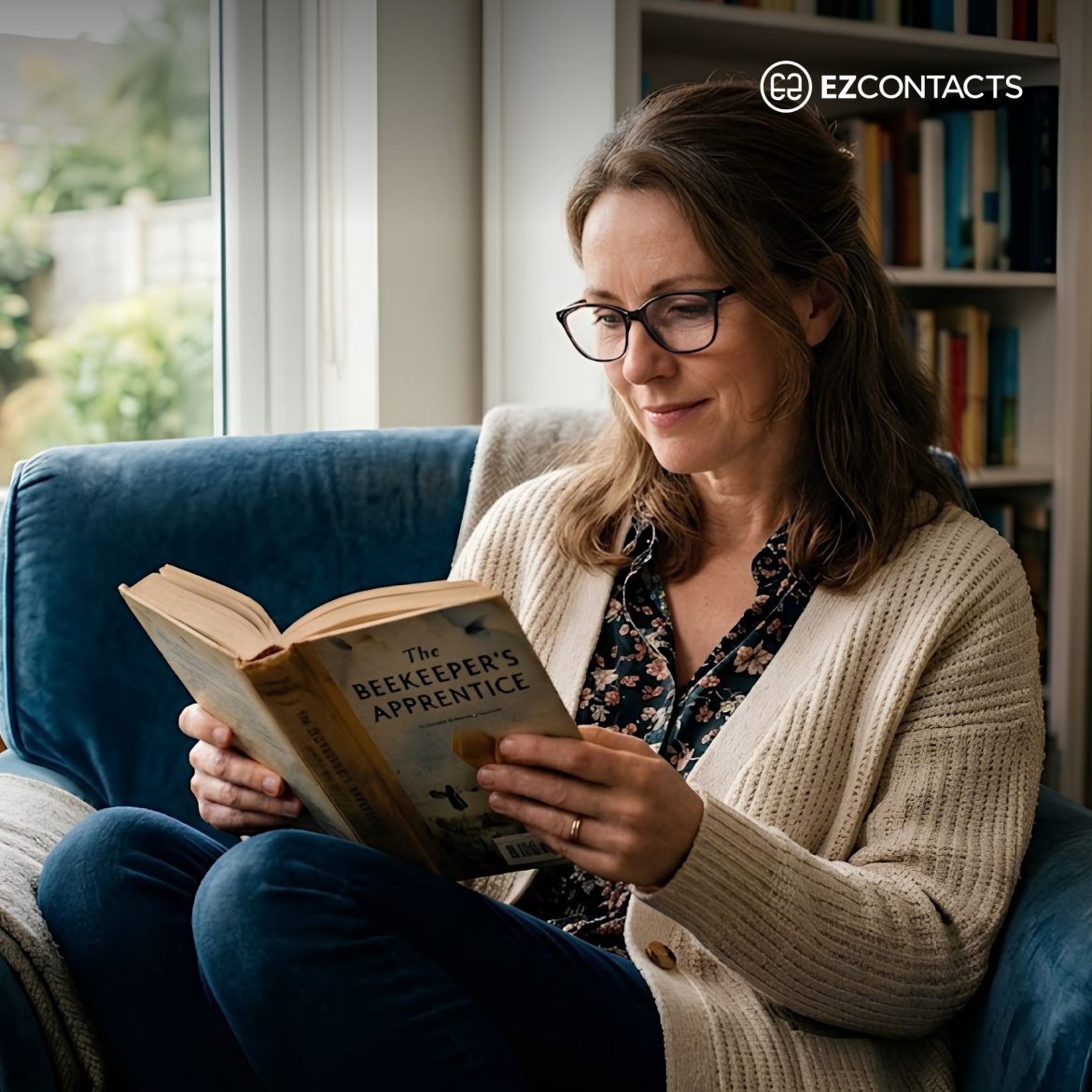
Have you started noticing that small print or text is looking blurry? This could be a sign that you need reading glasses.
But don’t start shopping just yet. There are a few types to choose from, and they don’t all give you the same range of vision.
Let’s look at all the options you have for reading glasses so you can know which might suit you best.
At a Glance
- Reading glasses help correct presbyopia, which is an age-related loss of near vision that typically begins after 40 or 45.
- Single-vision readers have a single, uniform prescription.
- Bifocal glasses combine distance vision in the top half of the lens and near vision in the bottom half.
- Progressive lenses provide the wearer with a smooth transition between distance, intermediate, and near vision without any visible lines or zones on the lens.
- Computer glasses are calibrated for intermediate distances, specifically the distance between you and a screen.
- Prescription readers can correct for astigmatism and different prescriptions in each eye, making them better for long reading sessions than over-the-counter readers.
What Are Reading Glasses?
Reading glasses are designed to make it easier to see things up close. They’re very commonly used to correct presbyopia, which is an age-related condition that makes it harder to focus on nearby objects. Usually, presbyopia becomes noticeable after age 40 or 45.
Over-the-counter reading glasses are available in different strengths and can work if presbyopia is your only vision problem. They have the same power in both eyes, so they can’t account for differences between your eyes.
Prescription reading glasses, on the other hand, can be made exactly to your individual needs.
What Are the Different Types of Reading Glasses?
There are several ways to correct presbyopia with glasses. The primary differences are how many distances the lenses correct and where the correction is placed on the lenses.
Single-vision reading glasses
Single-vision reading glasses have one prescription throughout the whole lens. They’re designed just for near vision, and for activities like reading, using your phone, or other close-up work.
These are what over-the-counter readers are. They’re available in different strengths, and they have a + sign in front of the number. The plus number tells you the focusing power in diopters. For example, a +2.00 lens has twice the added power of a +1.00 lens.
But over-the-counter reading glasses are usually only available in +0.25 diopter increments, starting at +1.00 and going up to +3.50 or +4.00. So not everyone will be able to buy readers off the shelf that do a good job of correcting their vision, especially if they don’t have the same prescription in both eyes.
That’s when you may need prescription reading glasses, which are made to the precise power needed for each eye.
Bifocal reading glasses
Bifocals have two prescriptions in one lens. The top section provides distance vision, and the bottom is for near vision. This is so you can look through the lower part to read and then the upper part to see something farther away.
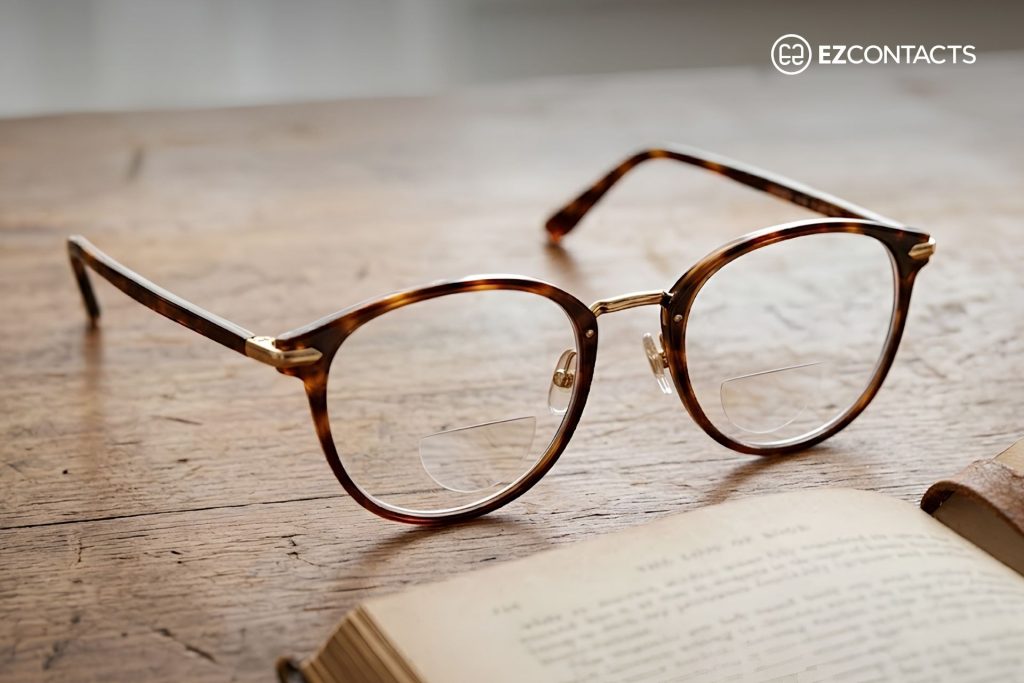
Traditional bifocals have a visible line separating the two areas or a separate zone for near vision on the lens. They also don’t have a section for intermediate vision. So you might not be able to clearly see things like a computer screen unless it’s very close to you.
Traditional bifocals are less common now because of these limitations. When people say “bifocal glasses” today, they’re often really talking about progressive glasses.
Progressive reading glasses
Progressive lenses provide the wearer with distance, intermediate, and near vision without a visible line in the lens like with traditional bifocals. The prescription gradually changes as you move down the lens.
The upper part is used for distance, the middle for intermediate vision, and the lower part for close-up work.
Computer glasses
Computer glasses are designed to help you focus on the intermediate distance between you and your computer screen.
The American Academy of Ophthalmology recommends you keep your screen about 25 inches away, or roughly arm’s length. This is farther than you’d typically hold your phone or your book, and it’s why standard reading glasses don’t always work so well for computer screens.
Computer glasses can be single-vision lenses set for your screen distance or a multifocal design that includes other distances.
Reading Glasses Types Comparison
Here’s a quick look at how the main options differ so you can decide which are most likely to be the right fit for you:
| Type | Best for | Vision zones | Pros | Cons |
| Single vision | Reading and close-up work | Near | A wide area for close-up vision | Doesn’t correct distance vision |
| Bifocal | Switching between near and distance | Near + distance | Two vision powers in one lens | No middle zone, and has a visible line on lens |
| Progressive | Switching between several distances | Distance, middle, + near | Multiple distances without a visible line | It takes some people time to adjust to the lenses |
| Computer glasses | Computer and desk work | Middle | Designed specifically for screen distance | Not intended for general distance vision |
Prescription vs. Over-the-Counter Readers
Over-the-counter (OTC) readers, sometimes called “cheaters,” are budget-friendly pairs of glasses found in most drugstores. They use standard magnification powers and apply the exact same strength to both of the lenses.
The benefits are that they’re cheap, and they’re convenient for quick tasks like reading a menu or checking a text. They can also be handy if you’re traveling and forgot to bring your prescription reading glasses with you.
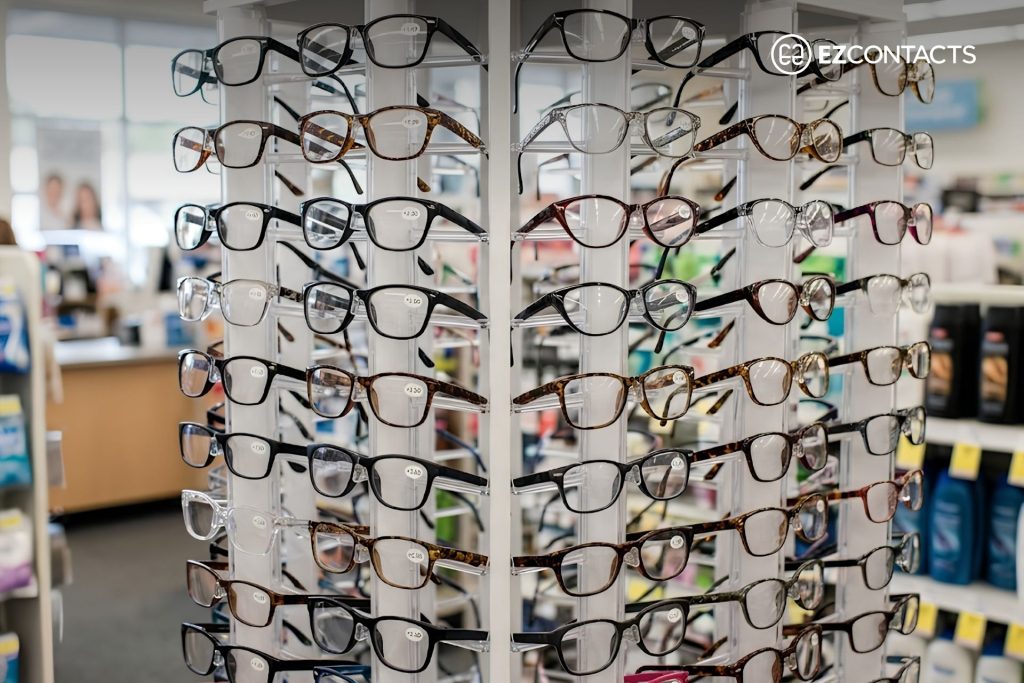
But the problem is that they assume both of your eyes have identical vision needs. However, many people have different prescriptions in each eye. Because of that, you could have one eye that is not given the correct magnification.
Along with this, OTC readers can’t correct astigmatism, and they’re not personalized to match the distance between your pupils. Incorrect prescriptions have the potential to cause eye strain, fatigue, or headaches if you wear them for long periods.
Prescription reading glasses are custom-built from an eye doctor’s prescription. Prescription readers require an eye exam and can be a larger upfront investment. But they’re far better suited for hours of continuous reading, office work, or for anyone who has a different prescription in each eye (many people).
FAQs About Reading Glasses
What’s the difference between reading glasses and computer glasses?
Reading glasses have lenses that are set for close-up tasks like looking at your phone or reading a book. Computer glasses are set for the greater distance between you and a computer screen.
Can reading glasses correct astigmatism?
Standard over-the-counter reading glasses can’t correct astigmatism. Prescription lenses can include the cylinder and axis correction needed for astigmatism.
Can I wear reading glasses all day?
You can wear reading glasses for several hours, but standard single-vision readers only provide near correction. If you need correction for several distances throughout the day, bifocals or progressive lenses might be the better choice.
Ready to shop for a new pair of readers? Check out all the reading glasses available on EZContacts.