When were sunglasses invented exactly? The answer is more complicated than you may think!
Sunglasses have a fascinating history. In this guide, we’ll explore how they evolved over time into the shades we have today.
At a Glance
- Are you wondering, when were sunglasses invented? The history of sunglasses goes back thousands of years.
- Indigenous peoples of the Arctic made snow goggles from bone, ivory, wood, and antler. They used them to protect their eyes from sunlight reflected off snow and ice.
- Smoky quartz eyewear in China was used to reduce bright light and glare. Centuries later, tinted glass in Europe did the same.
- In 1913, William Crookes found that cerium glass could block UV and infrared light. It was a key milestone in sunglasses history.
- Sam Foster brought cheap sunglasses to the mass market in 1929, selling them for just 10 cents a pair in Atlantic City.
- Today’s sunglasses are still evolving, with new lens technologies being added.
Early Arctic Snow Goggles

Thousands of years ago, peoples of the Arctic developed a solution to one of the biggest problems of their environment: snow blindness.
The Inuit and other Indigenous Arctic peoples carved pieces of bone, wood, ivory, antler, and other materials available to them to fit over their face. They then cut one or more narrow horizontal slits through them.
The tiny slits reduced glare from the snow and ice that could ordinarily cause snow blindness. They might not look like any sunglasses you own, but they’re still glasses, and they’re still for the sun.
In fact, anthropologist Ann Fienup-Riordan tried on a pair of Yupik snow goggles after retinal surgery. She found they helped her see better. The narrow slit acted somewhat like a pinhole camera, focusing the light. A tribal member in Toksook Bay, Alaska, even calls them “Yupik prescription sunglasses.”
Did Emperor Nero Really Wear Emerald Sunglasses?
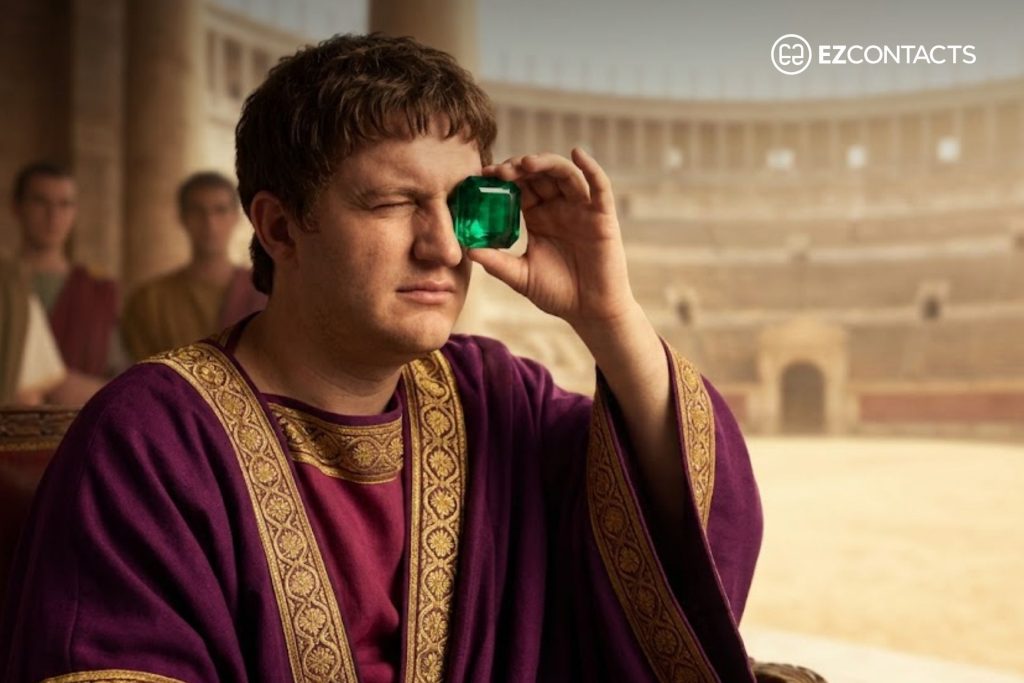
There’s a famous story about Roman Emperor Nero watching gladiatorial contests through polished emeralds during his rule (AD 54 to AD 68).
But historians are in debate about this. We don’t really know if Nero was using the stones as sunglasses. Perhaps Nero used emeralds as a vision-correcting lens or as a green filter to reduce glare from the sun. But nobody is too sure.
Smoky Quartz in Song Dynasty China
During the Song Dynasty (AD 960 to 1279), Chinese people are recorded as looking through flat pieces of smoky quartz.
By the 15th century, the material had been incorporated into spectacle frames. Known as Ai Tai, which means “dark clouds covering the Sun,” they were also sometimes used for ceremonies.
Some accounts describe court judges wearing Ai Tai to conceal their facial expressions. This way, people in the courtroom wouldn’t be able to read their reactions.
James Ayscough and Tinted Lenses
By the 18th century, Europeans were experimenting with tinted glass lenses.
English optician James Ayscough is often described as an early sunglasses inventor. This perhaps gives him a little more credit than is due, though. Around 1752, he experimented with blue- and green-tinted lenses. But that’s because he thought they would help with certain vision problems.
He wasn’t trying to solve the problem of sun glare or to create the sunglasses we buy today.
Venetian Gondolier Glasses

Venice’s gondoliers, who row gondolas on the canals, started wearing green-tinted Goldoni glasses. The name came from playwright Carlo Goldoni, who helped popularize the glasses.
Sunlight bouncing off the water can be intensely dazzling, so sunglasses were a welcome tool to these canal workers. Goldoni glasses are one of the oldest examples of eyewear that closely resembles the sunglasses we know today.
We Finally Got UV-Blocking Sunglasses
Tinted glasses make things darker, but they don’t necessarily protect the eyes from ultraviolet radiation.
But in 1913, British chemist and physicist William Crookes developed a lightly tinted glass containing the metal cerium. Crookes’ cerium lenses blocked 100% of UV radiation and 90% of infrared radiation.
The discovery was an unintended byproduct of Crookes’ research into how to protect glass workers from cataracts, which were happening due to the increased exposure to radiation.
Cerium is still used today (among other materials) to make UV-absorbing glass. It’s used in everything from sunglasses to vehicle windows.
Crookes’ breakthrough is an important moment in history. Now we had eyewear that could simultaneously prevent glare from the sun and protect our eyes from UV radiation.
Sam Foster Made Sunglasses Affordable
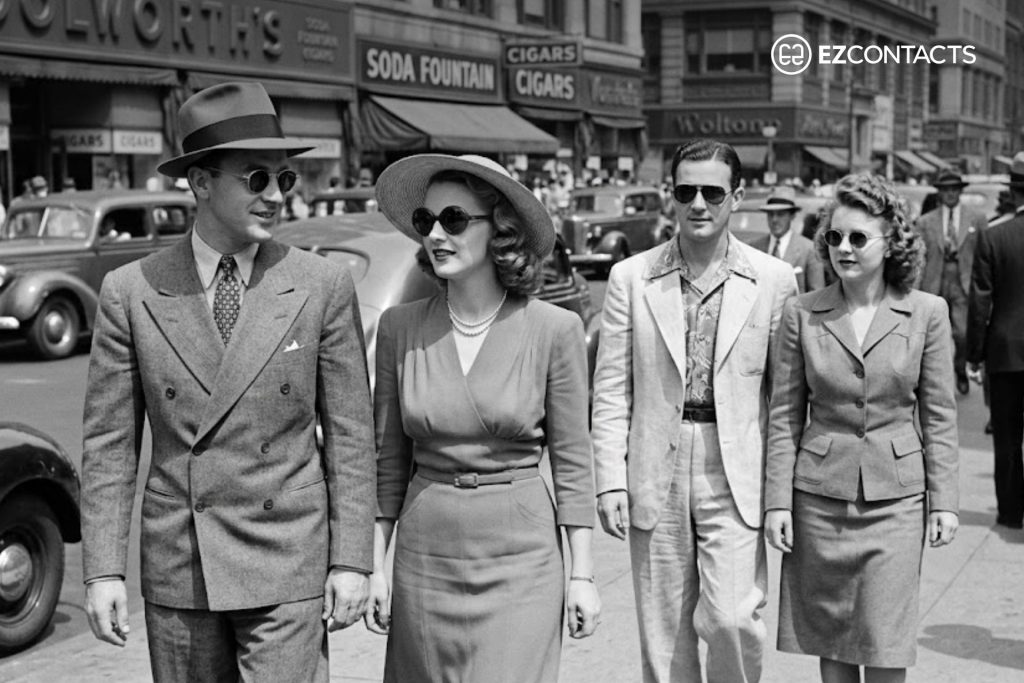
1929 was another big milestone in the history of sunglasses.
Sam Foster, who was already working in the manufacturing business, saw an opportunity to turn sunglasses into something ordinary people would actually buy and wear. He began mass-producing inexpensive sunglasses and selling them at the Woolworths store on the Atlantic City boardwalk.
Want to know the price? They were around 10 cents a pair, or just under $2 in today’s money.
The low price likely helped turn sunglasses into a mass-market accessory. Before then, it was considered a little unusual for the average person to wear them.
Foster’s timing was perfect. Hollywood stars had also started wearing sunglasses around this time, in part to protect their eyes from bright studio lighting. Sunglasses finally represented the things they do today: glamour, celebrity, and an air of mystery.
By 1937, Americans were buying an astonishing 20 million pairs of sunglasses in a year. Life magazine reported that only about 25% of people were using them for eye protection. The rest, it seems, just liked the look.
A Bright Future for Sunglasses
Fast forward to today, and sunglasses are still evolving. Advanced lens coatings and technologies can help protect your eyes. A huge range of styles makes it easy to find a pair that suits your look.
From oversized frames to small, minimalist styles, there’s more variety than ever. It’s pretty impressive to see how far sunglasses have come, and the future looks just as bright.
Ready to find your next pair? Explore the sunglasses available at EZContacts.
FAQs About the Invention of Sunglasses
When were aviator glasses invented?
Bausch + Lomb manufactured the first Ray-Ban aviator goggles for military pilots in 1936. The goggles were designed to protect pilots’ eyes from intense sunlight and glare at high altitudes. The Ray-Ban Aviator was then introduced to the public in 1937. Even today, the aviator shape is one of the most popular sunglasses styles.
When were polarized sunglasses invented?
Edwin H. Land started developing polarizing technology in the 1930s. His 1935 patent describes an improved “sun-glass” designed to reduce both direct and diffuse glare.
While regular sunglasses only reduce the light passing through the lenses, polarized glasses are different. They can block light that bounces off the surfaces around you, without just darkening what you see. This makes them especially useful for reducing glare reflected off water, roads, and snow.