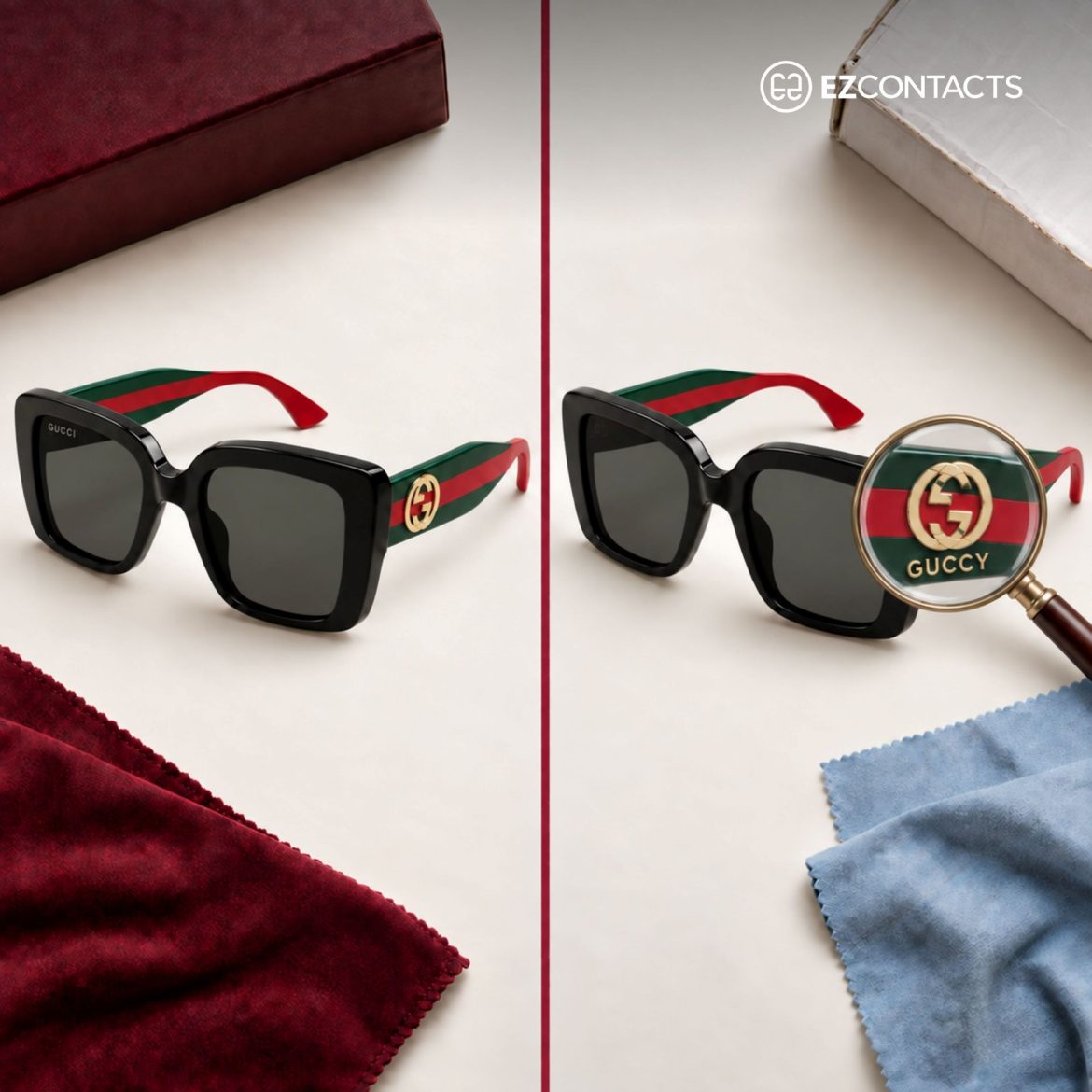
New research finds that the majority of US designer sunglasses owners have bought sunglasses they suspect or are certain are counterfeit. Amazon and eBay are the most common places respondents have bought fakes. Consumers should be most wary of Ray-Ban, Gucci, and Cartier sunglasses as they are the most commonly-bought fakes.
Can you trust your sunglasses are the real deal? High-status brand names attract premium price tags of hundreds or even thousands of dollars. With 40% of consumers in the USA owning at least one pair of designer sunglasses, there’s a big market for counterfeits bubbling under the surface.
Fake designer sunglasses are finding their way into shopping carts on Amazon, eBay, and other marketplaces, whether consumers mean to buy them or not. Our research found that 55% of owners of designer sunglasses in the US have bought a pair of sunglasses that they suspect or know are counterfeit.
We set out to find just how widespread counterfeit sunglasses are. We surveyed a panel of 1,000 US-based designer sunglass owners to find out:
- The places consumers are buying fakes, with Amazon leading the pack.
- Which brands are most commonly copied (watch out for Ray-Bans!)
- If shoppers can tell the difference between fakes and the real thing.
Sunglasses season doesn’t stop with summer. From hitting the ski slopes to driving in the glare of the low winter sun, it’s time to ask if you can trust your sunglasses to protect your eyes all year round.
Key Findings
- 55% of designer sunglass owners have bought sunglasses they know or suspect are counterfeit.
- 42% of counterfeit sunglass owners believed they were genuine when they bought them.
- Amazon (19%) and eBay (18%) are the most common places counterfeit owners believe they’ve bought fake sunglasses, followed by flea markets and Facebook Marketplace (17% each), and TikTok Shop (14%).
- Ray-Ban, Gucci, and Cartier are the most commonly bought counterfeit sunglasses brands.
- Only 16% of counterfeit sunglass owners feel extremely confident their sunglasses have full UV protection, yet just 17% see eye protection as their biggest counterfeit concern.
- Just 19% of designer sunglass owners are extremely confident they could spot counterfeit sunglasses.
- Price is the biggest red flag for fake sunglasses, with ‘too low’ prices raising alarm bells for 62% of designer sunglass owners.
The Scale of the Scam
Not everyone who buys fake designer sunglasses knows what they’re getting. While many people intentionally choose to wear counterfeits, others only find out they’ve been duped after buying. Many consumers may never know for sure.
So how concerned are designer sunglass owners about buying counterfeit sunglasses, how many have actually been caught out, and what makes people knowingly choose to buy a fake?
The story behind counterfeit designer sunglasses is more complicated than just being a scam.
Our research found that 55% of designer sunglasses wearers have bought, or suspect they’ve bought, counterfeit designer sunglasses. Only 16% knew they were counterfeit when they bought them, while 23% learned the truth later on. 17% suspect they have bought a fake, but haven’t confirmed it.
This shows two very different sides to the counterfeit sunglass market: those who know they’re buying a fake pair, and others who believe they’re spending their money on genuine designer sunglasses. Whatever decision consumers make, it should always be a choice, not a scam.
There’s also a lot of uncertainty around authenticity. Only 29% are completely confident they’ve never bought a fake. 17% say they don’t think they’ve bought a fake, but haven’t confirmed it. Clearly, buying designer sunglasses doesn’t always come with confidence that you’re getting the real thing.
The most common reason people buy counterfeit sunglasses is simply that they like the design (57%). However, there are lots of other reasons people buy counterfeits. 42% believed they were genuine at the time, meaning a significant proportion of counterfeit sunglass owners were tricked.
Price is also a big reason people buy counterfeits, with 25% saying the real designer sunglasses were too expensive. Designer brands can be pricey, so it’s no surprise that some shoppers look for cheaper alternatives: whether that’s by buying fakes or shopping around for legitimate discounts online.
In reality, authenticity just isn’t that important for a lot of people. 18% of counterfeit sunglass owners said brand names don’t matter to them, and 17% thought other people wouldn’t notice if they wore fakes. 19% didn’t care if the sunglasses were genuine or not. Counterfeit sunglasses are clearly a choice for many.
Buying counterfeit sunglasses may come from a place of indifference for many, but there are others who clearly would rather know what they were buying.
With counterfeit sunglasses being so common, it’s not surprising that 46% of designer sunglass owners are somewhat or very concerned about buying counterfeit sunglasses.
Nobody wants to feel lied to or stolen from. With nearly half of consumers worried about buying fakes, it’s important for consumers to know who they can trust.
Where to Find the Biggest Fakes
While counterfeits are being bought for a variety of reasons, which brands are most at risk of imitation? And where are consumers buying these?
This question was asked to respondents who have bought counterfeit sunglasses. Consumers could choose multiple options.
Fake sunglasses can be found in many places, but Amazon tops the list. One in five counterfeit sunglasses owners have bought fake sunglasses from Amazon (19%), ahead of eBay (18%), flea markets (17%), Facebook Marketplace (17%), and TikTok Shop (14%).
As one of the most recognizable online marketplaces in the US, consumers may feel confident they can trust Amazon to sell only legitimate sunglasses brands. While Amazon says that products sold on its platform must be authentic, our findings make it clear that fake sunglasses are still finding their way onto Amazon.
Anyone can sell on marketplaces like Amazon, which can make trusting sellers challenging. Check seller reviews and always read the product information carefully. If you have bought a pair of counterfeits, report the seller so others may not make the same mistake.
But the problem with fake sunglasses isn’t limited to online sellers. 61% of consumers have bought counterfeit sunglasses from an online marketplace or store, while 63% have bought a pair offline. 10% bought fakes while travelling.
Worryingly, 6% believe they’ve bought fake sunglasses directly from the official website of a brand. While it’s really unlikely any big brands would intentionally sell counterfeit sunglasses themselves, fake websites can be hard to spot. These may show up as advertisements when you search for your favorite brand. So make sure you double-check the website is official before buying anything.
Even when it’s obvious, or the seller is honest about sunglasses being fakes, it’s still worth doing your research. Are you confident they’re good enough quality not to break? And are they actually safe for your eyes?
The most commonly bought counterfeit sunglasses are:
- Ray-Ban (26%)
- Gucci (23%)
- Cartier (19%)
- Burberry (18%)
- Chanel (16%)
- Balenciaga (15%)
- Oakley (15%)
- Dior (15%)
- Dolce & Gabbana (11%)
- Louis Vuitton (11%)
- Versace (10%)
- Prada (8%)
- Bottega Veneta (7%)
- Tom Ford (7%)
- Fendi (5%)
Different brands are at risk of counterfeiting. Ray-Bans and Gucci sunglasses are the most commonly bought counterfeits, with a quarter of respondents owning a pair. These brands are well-esteemed, highly recognizable, and have a range of different styles that are popular.
Popular counterfeits aren’t limited to luxury brands with the biggest price points, but also include performance-based brands built for sport, such as Oakley. Counterfeit supply seems to match market demand. The most commonly counterfeited sunglasses are similar to the US industry leaders, with EssilorLuxottica reported as holding nearly 28% of the US eyewear market in 2024.
Our data finds that 67% of respondents own one or more pairs of sunglasses by brands owned or licensed by EssilorLuxottica (including Ray-Ban, Oakley, Burberry, Prada, and Chanel). The popularity of these top-selling brands makes them obvious targets for counterfeiters looking to capitalize on what consumers want.
Respondents named more than 25 different brands that they owned a counterfeit pair of sunglasses from, with many people owning fake sunglasses from multiple brands.
The Health Risks
This question was asked to respondents who have bought counterfeit sunglasses.
Owners of counterfeit sunglasses are worryingly unsure of their sunglasses’ safety. Only 16% feel extremely confident their sunglasses have UV protection. This means that more than half aren’t confident their counterfeit sunglasses are protecting their eyes properly.
Sunglasses without adequate UV protection can actually be worse for eyes than wearing none at all, as they make your pupils dilate, letting in more harmful UV rays.
Buying counterfeit sunglasses can be a gamble, as UV protection isn’t guaranteed to be included. If you’re actually buying a knockoff pair that only looks like the real thing, UV protection may not match the original.
When buying sunglasses, look for “UV400” or “100% UV Protection” labels. Don’t judge protection by how dark the lenses are. Buying from a reputable seller also means consumers can trust that advertised UV protection claims are accurate.
When asked what their top concern would be if they found out their sunglasses were counterfeit, respondents were most worried about feeling like they’d been scammed (26%). This was closely followed by worrying they’d wasted their money (25%).
21% said their top concern would be that the quality is poor. Fake sunglasses don’t necessarily meet the high standards expected of trusted brands like Oakley or Cartier.
Only 17% said that their top concern would be that counterfeit sunglasses won’t protect their eyes. While it’s completely understandable to feel scammed or ripped off, eye safety should never be compromised when buying sunglasses. This combination of low confidence in UV protection and consumers caring more about wasting money could be a recipe for disaster.
How to Spot a Fake
While a significant proportion of designer sunglass owners have spotted fakes, some counterfeits are so convincing that it may be hard to know for sure. Just 19% said they are extremely confident they could spot counterfeit sunglasses.
There’s no clear-cut way to spot fake sunglasses, and the signs will vary between brands and even within different pairs of sunglasses. If you are concerned about the authenticity of your sunglasses, start with some basic questions:
- Is the seller well-known?
- Do they have reviews to read or past customers you can ask?
- Does the price seem too good to be true?
The biggest red flag when spotting fakes is price: ‘too low’ prices raise alarm bells for 62% of designer sunglass owners. Some top brands cost hundreds of dollars, so any slight price reduction can be attractive to price-conscious consumers.
Low prices don’t necessarily mean sunglasses are fake. For example, EZContacts sells only authentic sunglasses, glasses, and contact lenses, and many options are available at discounted prices. If a price seems too good to be true when buying sunglasses, look at both the price and the seller. If the seller seems like a scammer, it’s best to just walk away.
Consumers are also suspicious of poorly made products (54%) and mistakes on packaging and logos (53%). Top brands are very proud of their branding, with each having consistent hallmarks to look for. Logos and markings should be consistent and never blurry or off-center. Every detail matters with premium sunglasses. Cheap materials or poorly working parts should be viewed with suspicion.
Some bad counterfeits are easy to spot, with misspelled logos and obviously ‘wrong’ features. But convincing counterfeits can be harder to identify, with sellers doing everything they can to try and make consumers trust them enough to spend their money.
43% said they would be suspicious of counterfeits if they bought from an unfamiliar seller. If you aren’t sure if a supplier is legit, start by checking online reviews or asking on trustworthy sunglasses forums. Frequent reports of fakes are a clear red flag. No reviews at all can also be suspicious.
The good news is that there are a lot of savvy sunglasses shoppers out there. 45% always check if sellers are reputable before buying sunglasses online. A few simple checks you can make include:
- Reading reviews
- Watching out for unrealistic low prices
- Checking for customer support and transparent returns policies
- Making sure payments are secure
While it’s great that so many consumers check the legitimacy of online sellers, the same caution should be taken when buying offline. Market stalls or other small offline sellers can be hard to verify. It may also be hard to get help if something goes wrong.
However, there’s a worrying gap between the number of consumers checking up on sellers and those who check whether their sunglasses offer UV protection. Sunglasses don't just need to look good. Their most important job is protecting the eyes. Fake or authentic, that protection should always be the top priority.
Methodology
EZContacts surveyed a panel of 1,000 US-based consumers who own a pair of designer sunglasses. The panel was surveyed in August 2026. Data has been rounded to the nearest full number where necessary.
Publications and individuals are welcome to use research findings, graphics, and data, citing EZContacts as the author and linking back to this article.