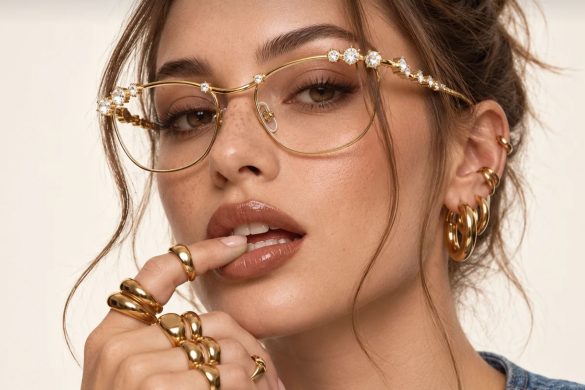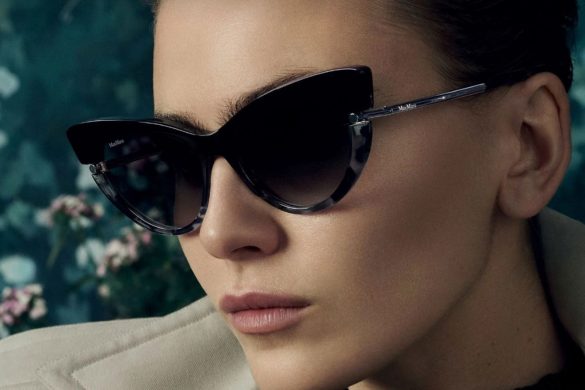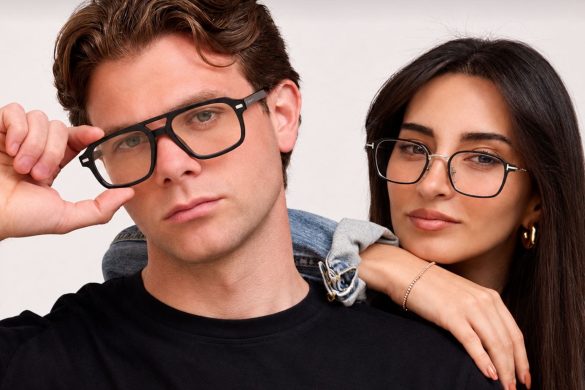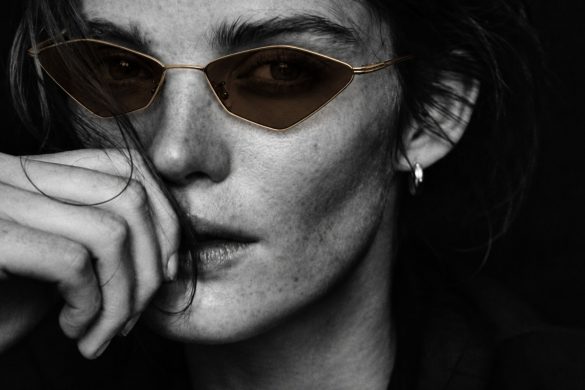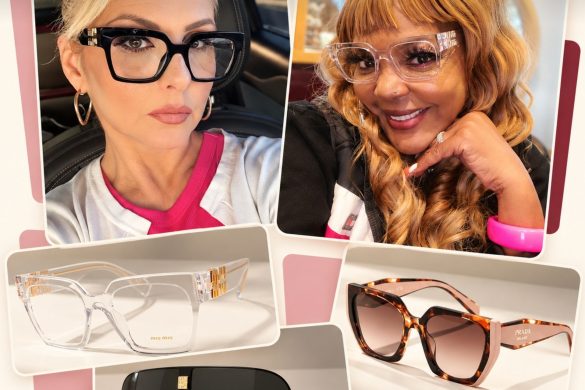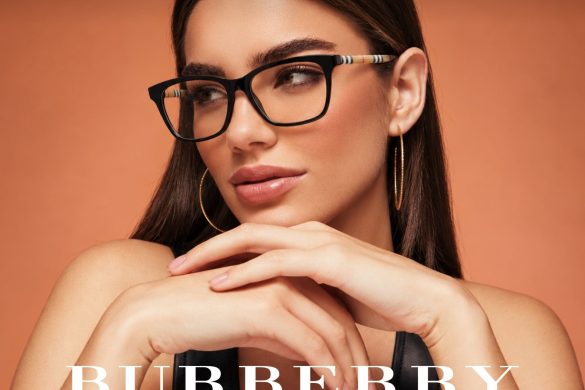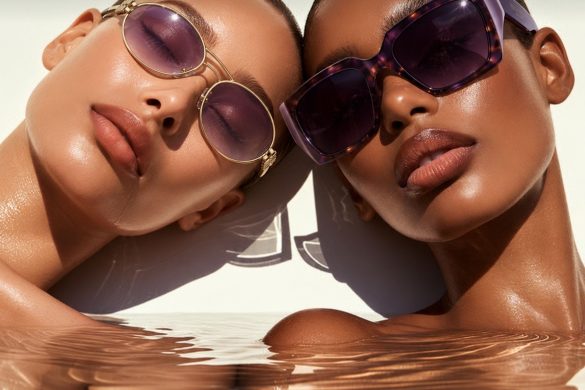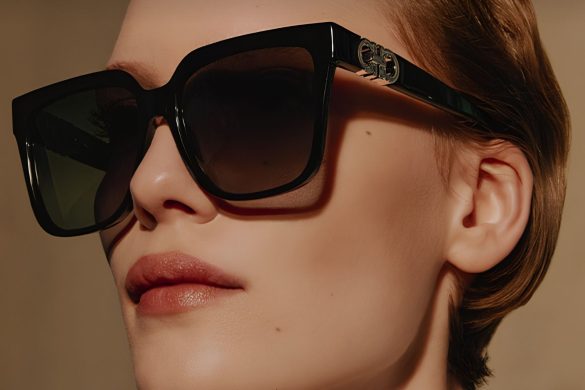
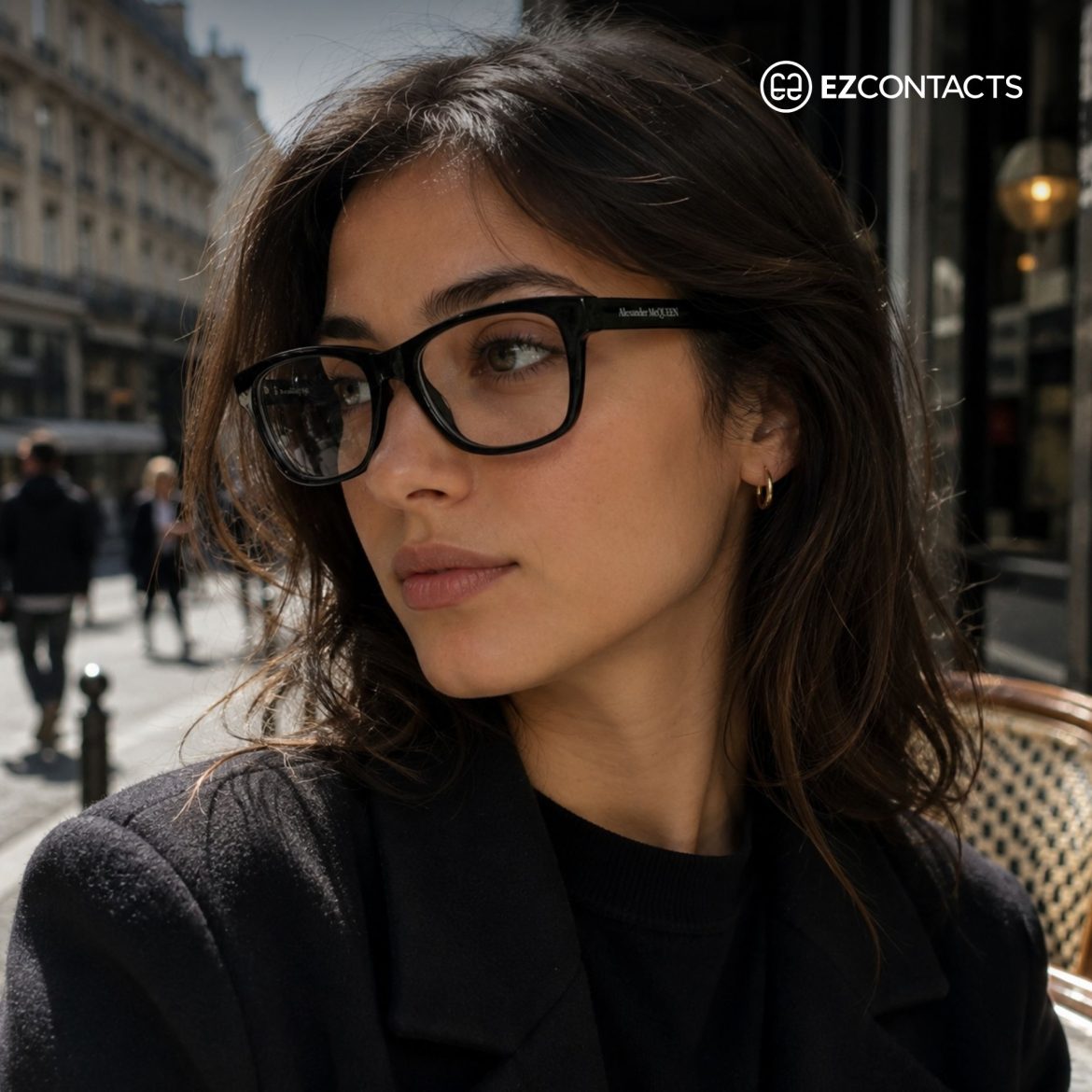
Chunky glasses have established themselves as more than a passing fashion trend.
Thick acetate frames have been embraced by celebrities, designers, and fashion editors for decades. Today, they’re everywhere, from classic black rectangles to oversized transparent frames!
But the frames don’t work the same way on every face. Unlike thinner frames, chunky glasses carry a lot more visual weight. They create stronger lines and can change the way facial proportions are perceived. That’s why a pair can look striking on one person but overwhelming on another.
Here’s how to tell whether chunky glasses are right for your face shape and which styles work best.
At-a-Glance Summary
This article discusses how chunky glasses became popular, and it goes through options to try for different face shapes. It also includes recommendations for chunky glasses and sunglasses.
Why Did Chunky Glasses Become So Popular?
Before the 1960s, glasses were often designed to be small and unobtrusive, to blend into the wearer’s appearance rather than standing out. This began to change when style icons like Audrey Hepburn and Jackie Kennedy started wearing oversized and thick-framed eyewear as accessories instead of functional tools.
Over the following decades, thick frames became associated with artists, musicians, and creative professionals. For some, glasses evolved into a defining part of their personal style and identity.
Today, chunky frames have become mainstream again after the tiny eyewear trend we saw in the late ’90s and early 2000s. Their enduring popularity probably comes down to something very simple: they’re made to be noticed.
Perhaps no one embodied this philosophy more than Iris Apfel, the late fashion designer and businesswoman who famously referred to herself as an “accidental icon.”
When asked how statement glasses became part of her trademark, she said that people made them that way:
“I’ve always been fascinated by spectacles… if I’m going to wear glasses, I’m going to wear GLASSES… At that time, nobody was wearing large glasses and everyone just sort of looked at me as if I had two heads. They used to ask me, ‘Why do you wear them so large?’ and I got bored with listening to all that so one day I said, ‘The bigger to see you,’ and that shut them up. But people always associated me with them… I never branded myself, people have branded me.“
The Science Behind Why Chunky Glasses Work
The special thing about chunky glasses is something designers call visual weight.
Because the frames are so thick, your eyes are drawn toward the frame before the facial features behind it. This changes the perception of the proportions of your face in ways that thinner frames just can’t.
You can almost think of chunky glasses like contouring for your face… but with eyewear instead of makeup.
A chunky rectangular frame makes a round face look longer, while a round frame softens the strong jawline of a square face. Oversized frames that cover more of the face make a long face look shorter.
This is why face shape plays an important role when choosing chunky glasses. The right frame shape can complement your features.
Chunky Glasses for Different Face Shapes
Now, we’ll look at chunky frames for different face shapes, along with some different options for glasses and sunglasses to try.
Round Faces
Round faces tend to have similar width and length, with softer curves and fuller cheeks. This is probably the easiest face shape to pair with chunky glasses.
The thick frame introduces stronger horizontal and vertical lines that break up facial roundness. Rectangular and square shapes create the greatest contrast, making the face look more structured.
If you have a round face, look for:
- Thick rectangular frames
- Chunky square frames
- Flat-top styles
- Bold browline designs
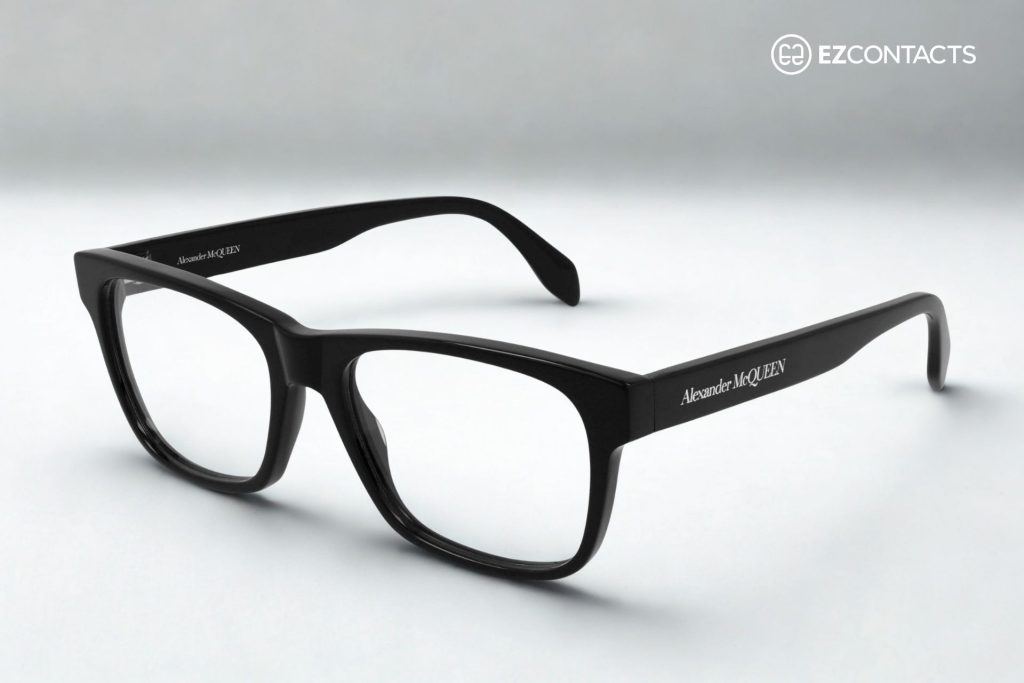
These Alexander McQueen AM03070 glasses are a good example of chunky glasses for a round face. Their sharp, rectangular frames would provide great contrast.
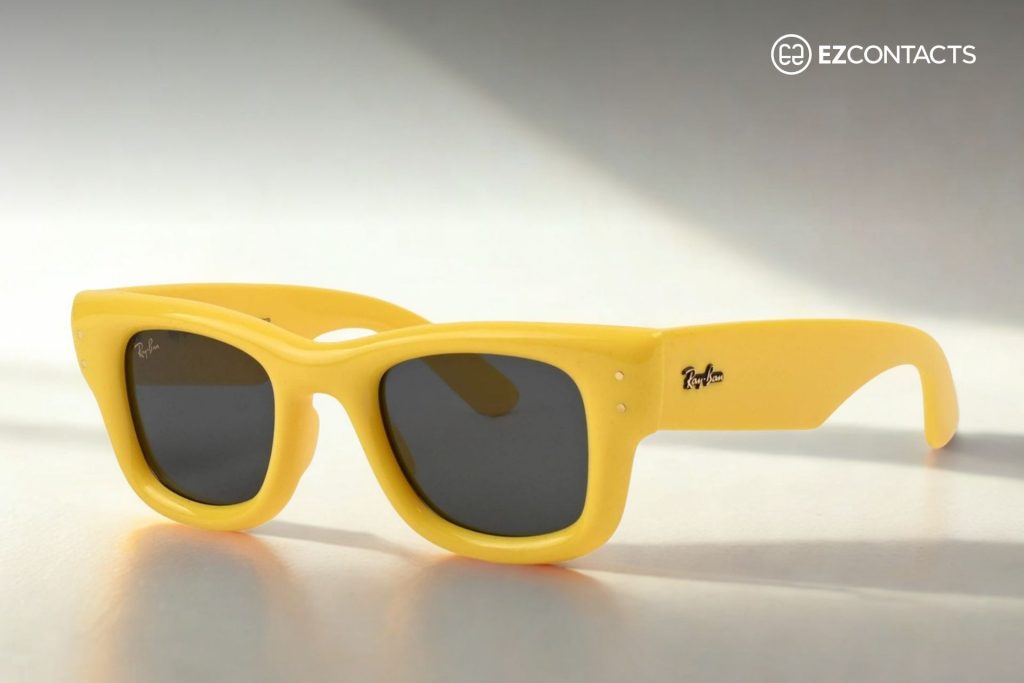
For sunglasses, these Puffers are a fun thick Wayfarer option. The Puffers are the first eyewear design created by A$AP Rocky after he became Ray-Ban’s inaugural Creative Director. They reimagine the Wayfarer design we all know with “puffy” acetate.
Square Faces
Square faces already have strong features, like a broad forehead and a defined jawline. Instead of competing with those angular features, it’s best to pair square faces with chunky, rounded glasses.
The thickness of the frames balances a strong face, while the curved shape of the lenses softens sharper features.
Look for:
- Chunky round frames
- Thick oval frames
- Rounded cat-eye styles
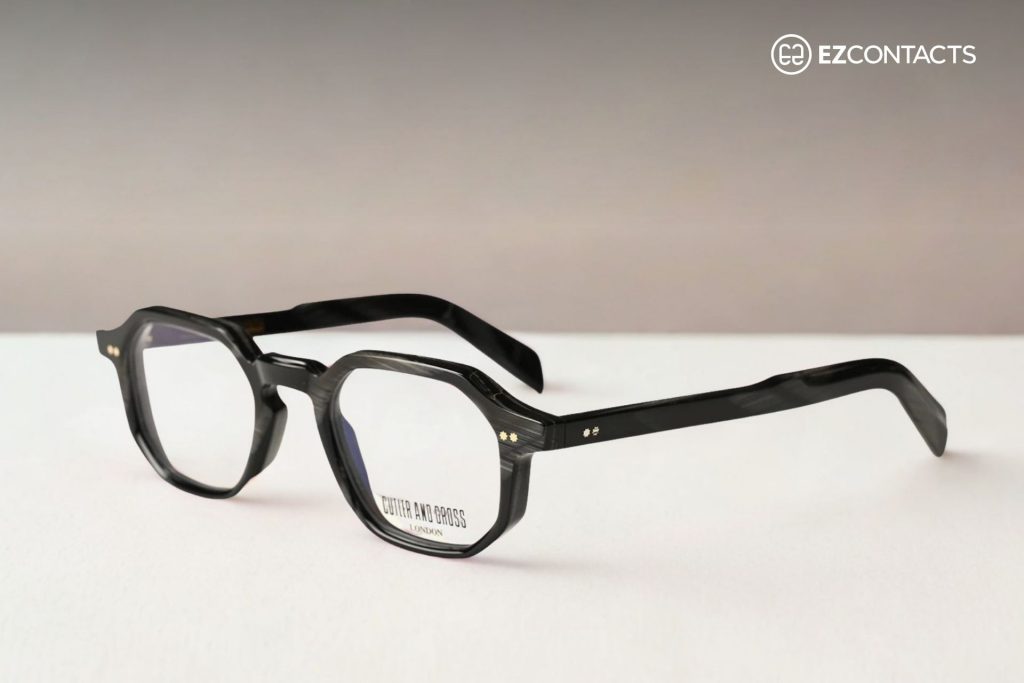
These Cutler And Gross CGOPGR1148 glasses are a good option. The rounded silhouette will help soften an angular face.
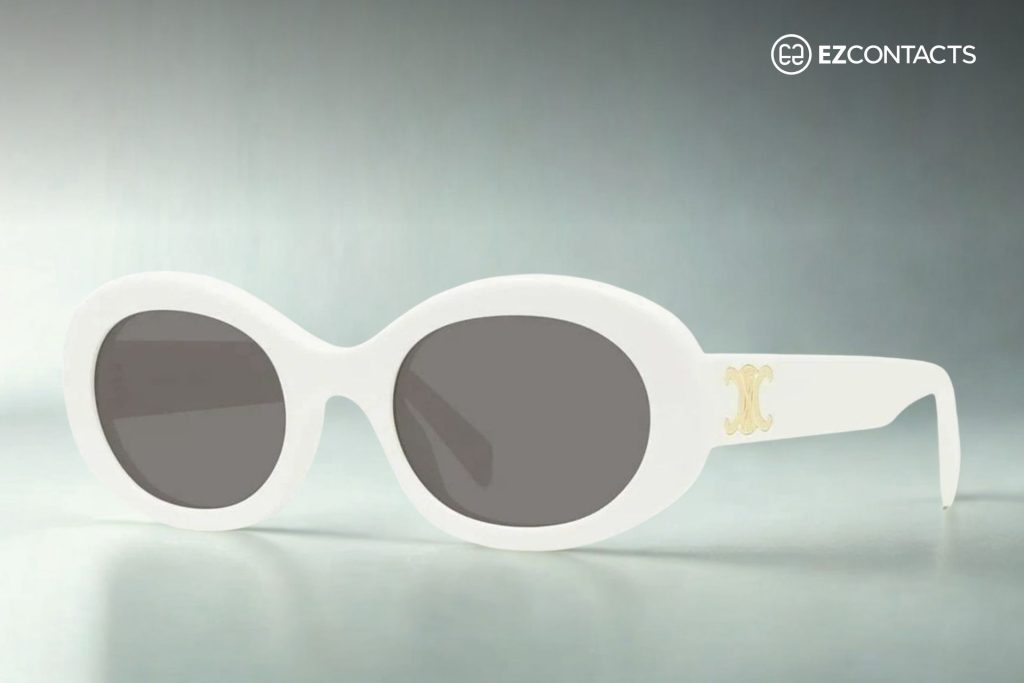
For sunglasses, try this Celine Triomphe pair, which has a touch of Old Hollywood glamor. Released as part of Celine’s Triomphe collection, the design takes inspiration from vintage French fashion. This helps give it that timeless look.
Oval Faces
Oval faces don’t have any one feature that stands out more than another. The forehead, cheekbones, and jawline are all in proportion, and the face is slightly longer than it is wide. Almost any chunky frame shape can work on an oval face.
The only thing you may want to avoid is a frame that’s much narrower than your face or unusually tall, since they can throw those proportions off.
Look for:
- Oversized squares
- Large round frames
- Thick wayfarers
- Geometric shapes
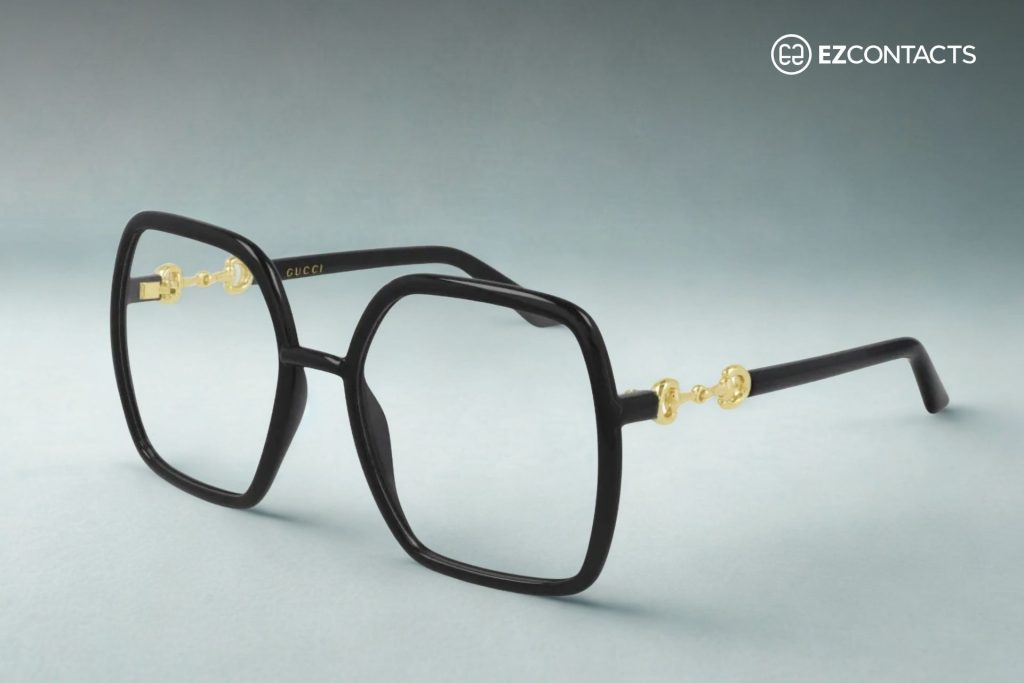
The Gucci GG0890O Glasses are a fun oversized square pair that are sure to get you compliments! These glasses are big and bold; they’re made to stand out.
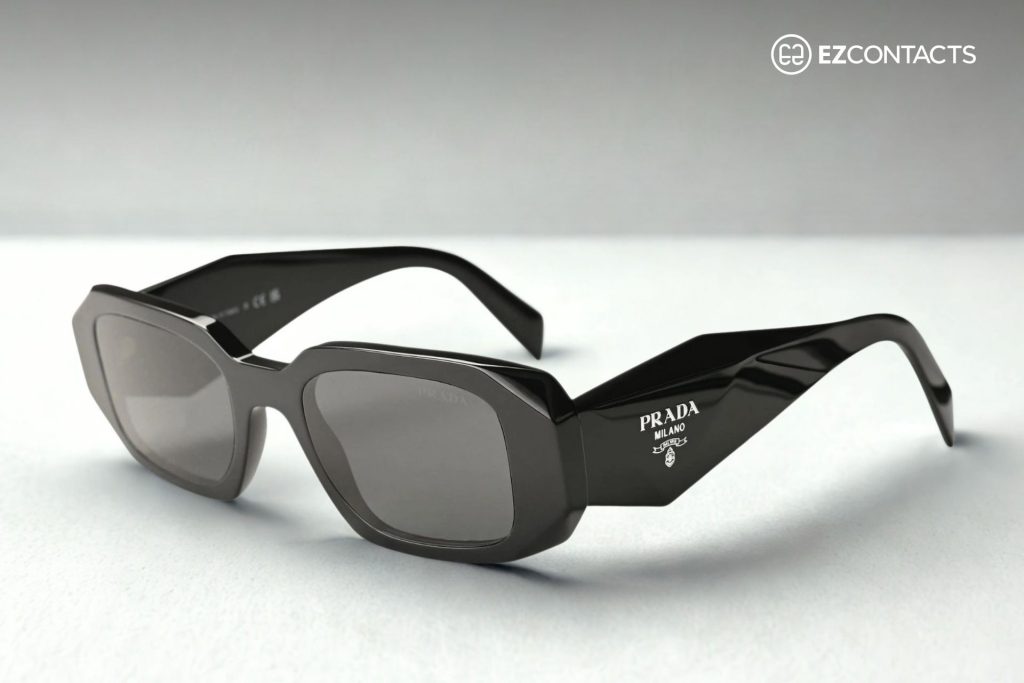
The Prada PR 17WS quickly became one of the brand’s signature sunglasses after they were spotted on celebrities like Hailey Bieber and Rihanna. They were inspired by Prada’s ’90s fashion collections.
Long or Oblong Faces
Long faces benefit from glasses that reduce the appearance of facial length. Chunky frames do this well because they take up more vertical space on the face.
Frames with larger lenses and a thicker browline cover more of the face, breaking up the length and creating the impression of a wider face.
Look for:
- Oversized square frames
- Chunky aviators
- Thick browline frames
- Deep rectangular styles
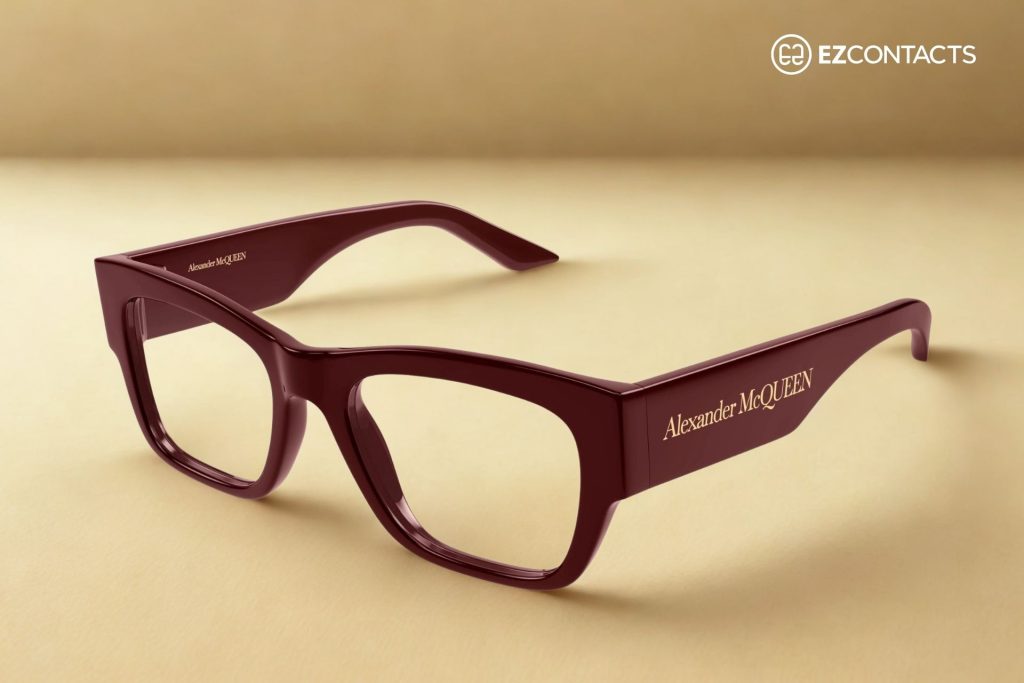
The Alexander McQueen AM0436O Glasses are a good thick square option. Their angular shape helps add more horizontal structure to long faces.
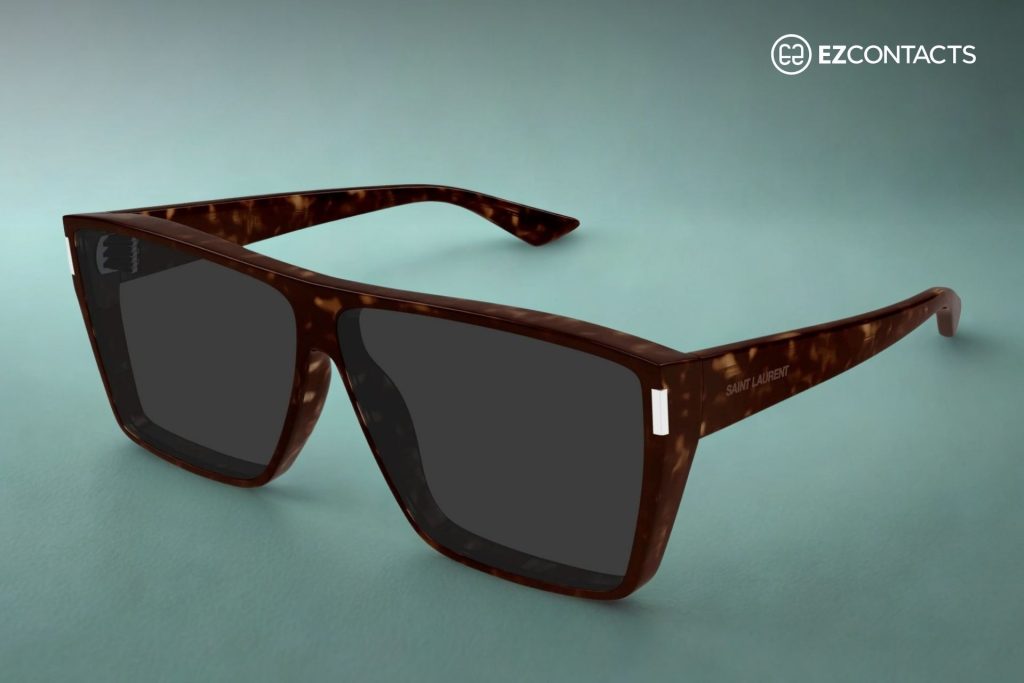
These Saint Laurent sunglasses combine a chunky rectangular frame with a flat-top browline. They’re available in Havana, classic black, and earthy brown.
FAQs
Are big chunky glasses still in?
Yes, chunky glasses are popular. They make a strong statement and can easily elevate an outfit. Many celebrities have been spotted in chunky frames, including Gigi Hadid, Rihanna, and Hailey Bieber.
How do you wear chunky glasses?
Chunky glasses make a statement by themselves, and so they often work well with understated, minimalist outfits. For instance, you could pair chunky black glasses with a white button-down shirt. Or, chunky tortoise frames could work with a neutral sweater.
Try to also match your accessories to your glasses. For example, if your glasses have gold accents, pair them with gold jewelry.
TL;DR
- Chunky glasses change the way your face looks by adding visual weight and creating stronger lines than thin frames.
- These glasses have become trendy in recent years, with many celebrities seen in them.
- Round faces suit chunky rectangular, square, and flat-top frames, while square faces look best in rounded, oval, and cat-eye styles.
- Oval faces can wear almost any chunky frame shape, making them the most versatile face shape for bold eyewear.
- Long or oblong faces benefit from oversized frames that add width and reduce the appearance of facial length.