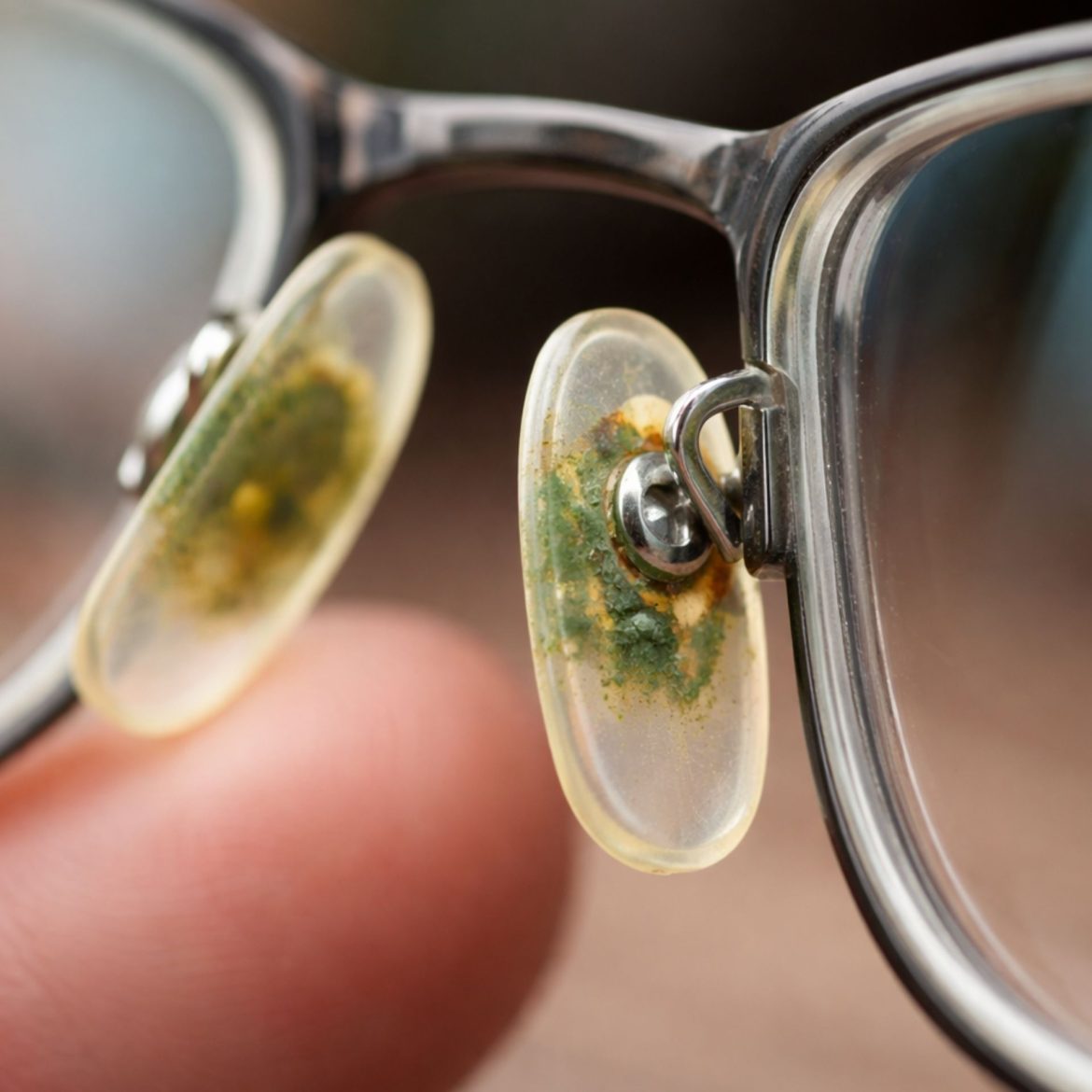
Have you noticed some weird green stuff on your glasses? Don’t freak out! There’s an explanation for this.
Why do glasses get green gunk? It’s a common, frequently asked question, but the answer might surprise you.
It’s not slime or mold, that’s the good news. And it is preventable. All it takes is a little bit of insider knowledge to keep your glasses looking new for longer.
What Exactly Is the Green Stuff?
Keep calm, the green gunk on your glasses isn’t some strange organism that’s going to make its way to your body! It often happens to people with glasses and tends to appear on the nose pads and near the temples.
The green stuff is caused by the oxidation of copper in the metal parts of your frame. Many metal frames are made from a metal alloy that often consists of copper and nickel.
When copper is exposed to the natural oils on your skin, it can oxidize. Without getting too scientific, it’s a chemical process that results in the formation of a greenish color in the metal.
So, why do glasses get green gunk? It’s a simple chemical reaction that isn’t about dirt or gross growth on your specs (you can breathe a sigh of relief)!
You can often see this type of corrosion on older glasses that have been worn for a few years. Fun fact: This is also why the Statue of Liberty is green, because the copper material oxidized!
Is the Green Stuff Dangerous to Health?
You’ll feel even more relieved to learn that the green gunk isn’t dangerous (for the most part), since it’s not mold or some strange organism growing across your glasses.
However, it can contain some bacteria that’s not always great for the skin. This is especially true if you have delicate, sensitive skin. But you can keep your glasses clean by wiping them frequently.
The green, icky stuff can degrade your glasses, affecting their fit and longevity. And they might look kind of gross, which isn’t a plus for your self-confidence.
Which Glasses Are More Likely to Turn Green
Glasses made with cheap alloy frames are most likely to be affected by oxidation, which could make them turn green.
Glasses made from higher-end metals like titanium, stainless steel, and beryllium are far less likely to turn green.
How to Keep Your Glasses Clean

Glasses with green gunk are not irremediable. In fact, before you throw them out, try cleaning them at home. It’s a lot cheaper.
Start by cleaning them with a microfiber cloth and a mild soapy water solution. Another choice is using alcohol wipes to clean the nose pad area. The bonus is that the wipes will sanitize your glasses.
You can also try scrubbing the glasses with a toothbrush; preferably not the one you’re currently using! Dip your brush in a soapy water solution, and then gently scrub the gunky areas.
There are also some homemade remedies to try, such as soaking your glasses in a water/vinegar solution. Or, add a baking soda/water paste onto the green area.
Switch Out Your Nosepads
After all that cleaning, if you still can’t remove the green gunk, then it may be time to replace the nosepads. You can order new nosepads online and replace them at home. Or, you could take your glasses to a local eyewear shop and have an optician replace them.
These Ray-Ban Clubmasters are an example of glasses that feature metal nosepads but acetate temples. Because of that, only the nose pad area is at risk of oxidation.
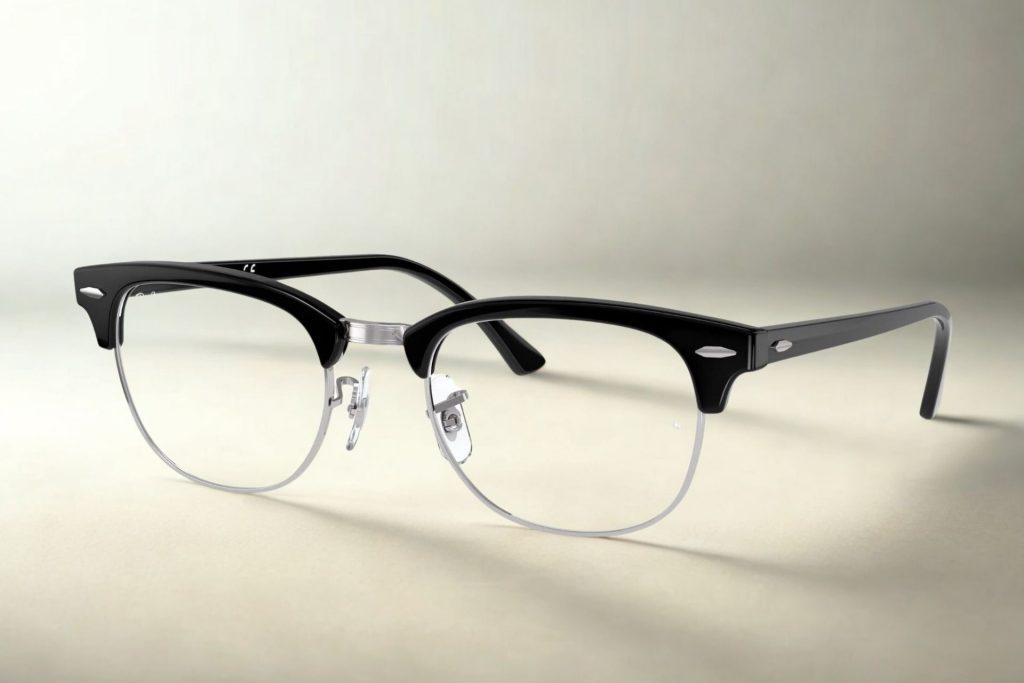
There are different types of nose pads, including silicone, titanium, and plastic, so make sure that you know which one is best for your glasses.
If your glasses are super-cheap, all this hassle might not be worth it. It might make more sense to just buy a new pair. However, if your glasses are expensive or have sentimental value, try replacing only the affected green nose pads.
Prevent the Green Gunk
Prevention can save you a lot of headaches in the long run! If you manage to get rid of the green stuff, or if you’ve decided to replace your glasses, you should clean them regularly. It could stop the oxidation process by removing the sweat and oils from your nose pads and frame before they affect the metal (leading to green gunk).
Wash your glasses regularly with a mild soap solution or use alcohol wipes. At least twice a week is a good way to prevent greasy buildup. If you run or work out regularly, you may need to wipe them down every day or two because of the sweat buildup.
When you’re not wearing your glasses, keep them stored in a dry and well-ventilated place.
Choosing Other Nosepads
If you’re shopping for new glasses, you could opt for a model without metal nose pads or a metal frame. Acetate is a great option that is also easy to keep clean.
You could also choose a stainless steel material or glasses with titanium nose pads, as these materials won’t oxidize and turn green. However, they may be more expensive than acetate and plastic glasses.
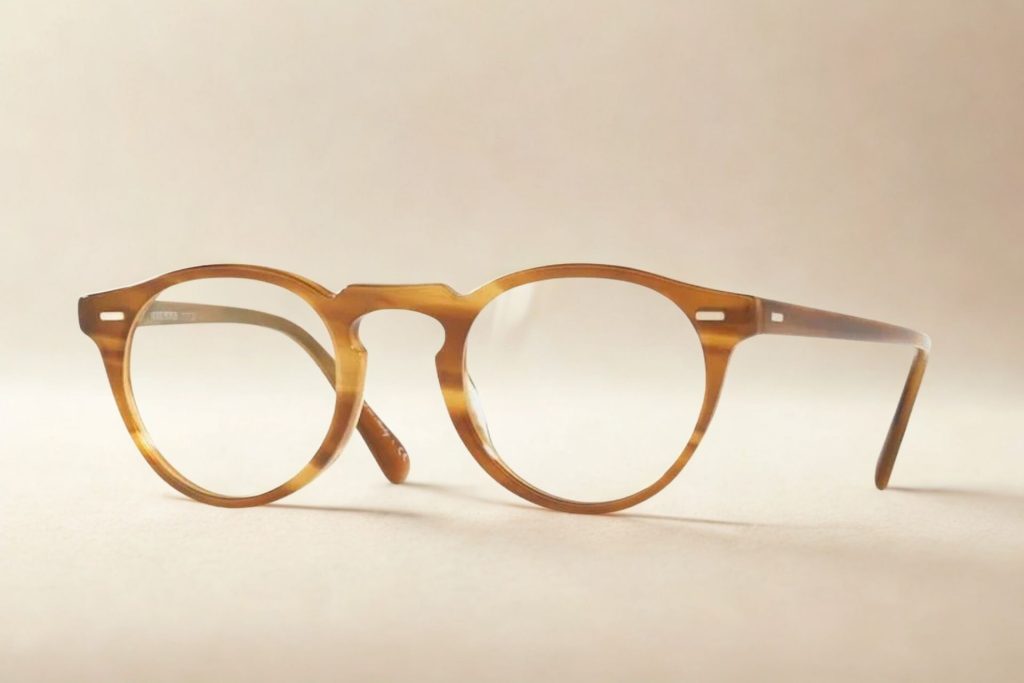
Some popular unisex glasses with plastic frames include these Oliver Peoples classics. They feature comfortable (non-metal) nose pads that are easy to keep clean.
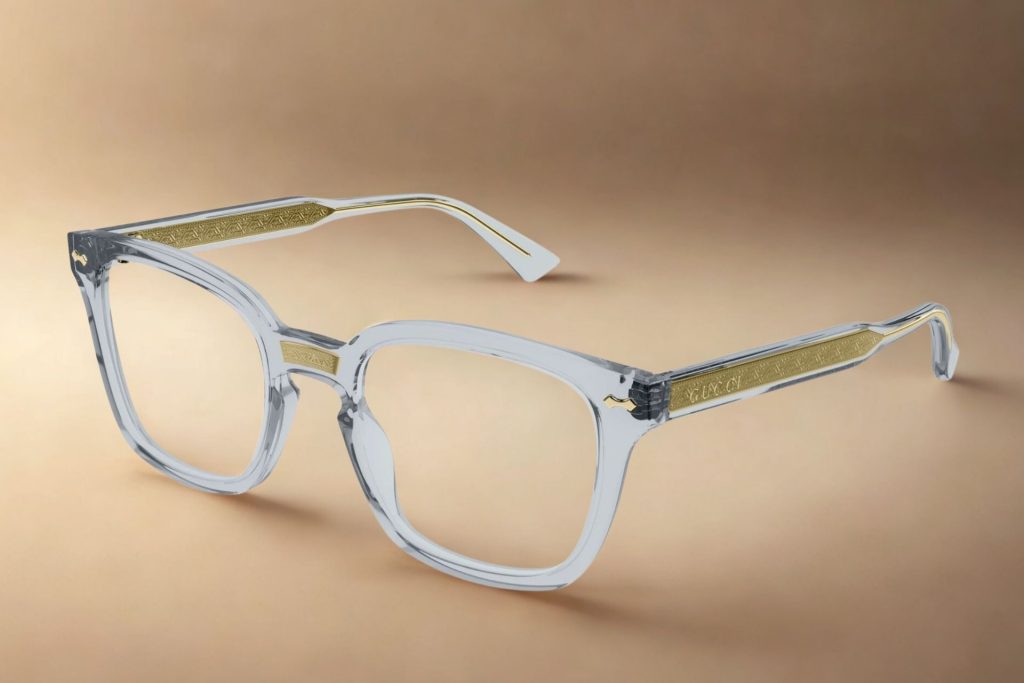
These Gucci gray frames are another example of how flexible acetate designs are; they can come in a range of colors and even vary in transparency. Plus, some, like these Gucci specs, feature detailed accents, making them more unique.
TL;DR
If you’ve been wondering, why do glasses get green gunk, now you know it’s not mold, but the copper in the metal parts oxidizing.
- It’s caused by a natural chemical reaction, but excessive oils and sweat can speed up the process.
- You can try getting the gunk off with an alcohol wipe or a microfiber cloth and some mild soapy water.
- The process can be avoided by keeping your glasses clean and wiping them down frequently.
- Alternatively, you can either replace the nose pads or buy new glasses.
- Acetate frames with non-metal nosepads are easy to maintain and can still look stylish.