
Are you looking at your prescription and wondering what the number labeled “Axis” means? You’re not alone. It’s something that confuses a lot of people, especially if they’re new to contacts or glasses.
So, what is axis on an eye prescription? The good news is that it’s actually pretty easy to understand.
Once you know what axis means, it becomes much easier to read your prescription and get the right lenses for your eyes.
What Is ‘Axis’ on an Eye Prescription?
Axis is a number between 1 and 180 that describes the orientation of astigmatism in your eye. You’ll only see a number in the axis column of your prescription if you have astigmatism.
In simpler terms, the axis value tells you where the correction needs to be placed on your lens so you can see clearly. It does not tell you how strong your prescription is, only the direction of the correction needed for your astigmatism.
Take a look at this example of a prescription for a person with astigmatism:
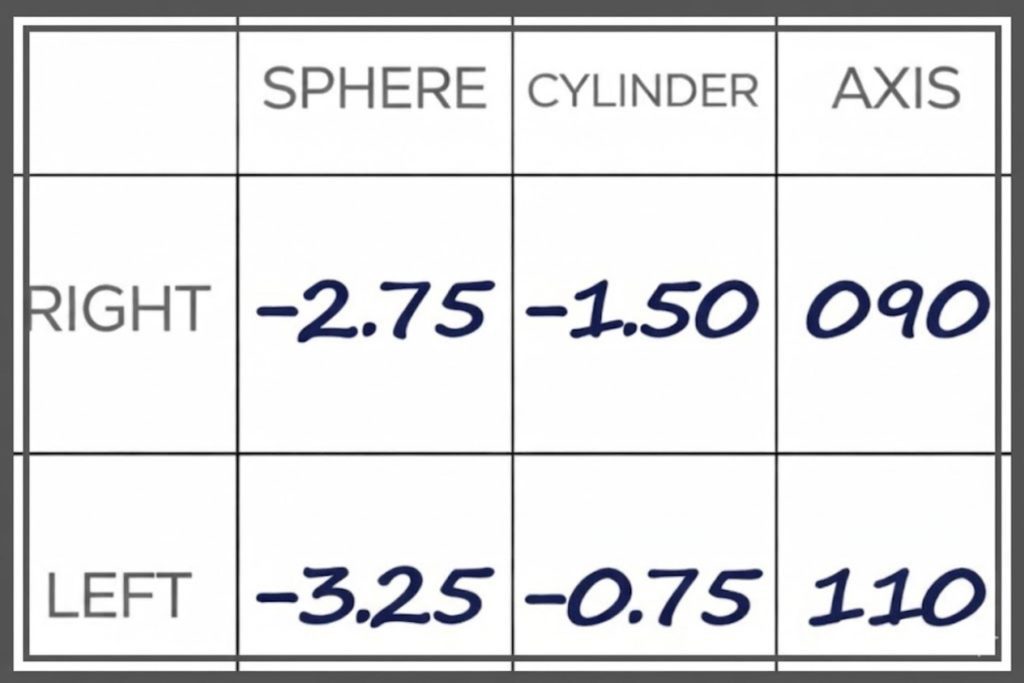
If you don’t have astigmatism, the axis field (along with the cylinder field) will typically be left blank. Or, you might see notations like “SPH” (sphere) or “DS” (diopter sphere). This indicates that the correction in your eyes is purely spherical.
A person without astigmatism might get a prescription that looks something like this:
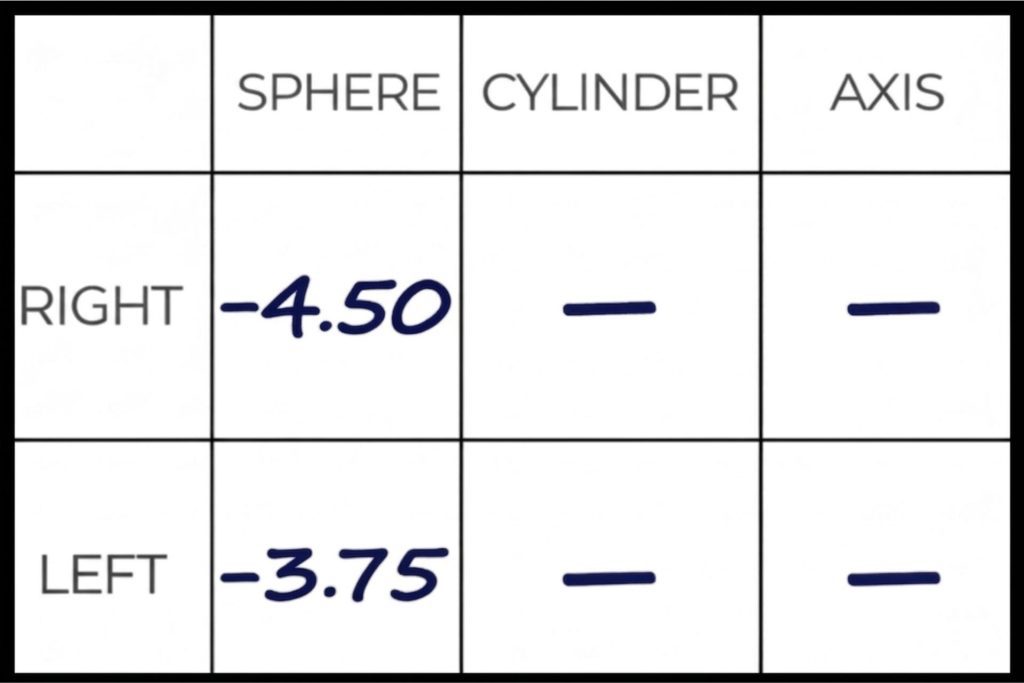
A prescription without numbers in the cylinder and axis fields would mean your eyes are perfectly spherical. That would indicate you only need correction for nearsightedness or farsightedness, not treatment for astigmatism.
Why Axis Matters
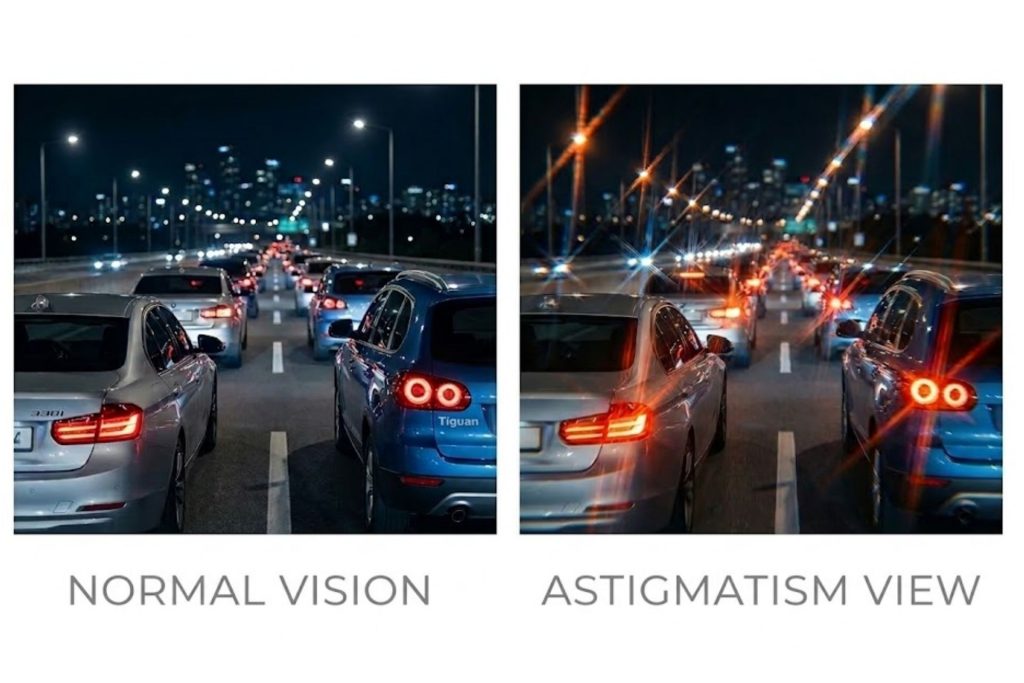
If you have astigmatism, it means your eye isn’t perfectly round. Instead of being shaped like a smooth sphere, it’s more football-shaped. This causes light to focus incorrectly, leading to blurry or distorted vision.
The axis value helps correct that by aligning the lens with the angle of your eye. Without the correct axis, even if the rest of your prescription is accurate, your vision would not be properly corrected by your glasses or contacts.
How Axis Works With Cyl
Axis doesn’t work on its own. It’s always on your prescription alongside another value called “CYL,” which is an abbreviation for “cylinder.”
- CYL: Measures the strength of your astigmatism
- Axis: Shows the direction of that correction
Astigmatism means light does not focus evenly on the eye, so it needs a correction at a specific angle. CYL tells the lens manufacturer how much correction is needed, while axis tells them where to place that correction so it lines up properly.
Both the axis and the CYL values must match your prescription exactly to correct your vision properly. If the axis is off, even by a little bit, the correction may not sit in the right position, which can affect how clearly you see.
What Do Axis Numbers Look Like?
Axis values range from 1 to 180. The numbers represent angles, like degrees on a circle, and tell you how the correction is positioned on your lens.
Here are a few examples:
- Axis 90 means the correction is vertical
- Axis 180 means the correction is horizontal
- Axis 45 or 135 means the correction is at an angle
Remember, these numbers do not represent the strength of your prescription. They simply show orientation, helping the lens line up with the exact angle your eye needs for clear vision.
What Happens if the Axis Is Wrong?
If the axis is even slightly off, you may notice:
- Blurry or distorted vision
- Eye strain
- Headaches
- Difficulty focusing
This is why it’s important to use the exact axis listed on your prescription when ordering contacts or glasses.
Axis in Contact Lenses vs. Glasses
Axis is used in both glasses and contact lens prescriptions, but it works a bit differently.
With glasses, the lens sits in a fixed position in front of your eye. Once it’s aligned correctly in the frame, the axis stays stable and doesn’t move throughout the day.
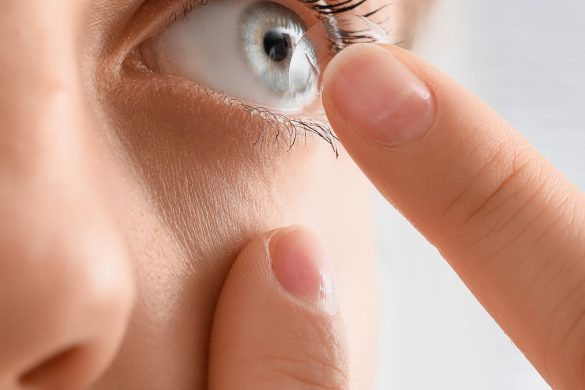
With contact lenses, the lens sits directly on the eye. It can shift slightly when you blink or look in different directions throughout the day. This is especially the case with toric lenses (used for astigmatism). Because of this, the lenses are designed with features to help them rotate into the correct position and stay that way during wear.
If a contact lens doesn’t align correctly, the axis can shift out of place. When that happens, your vision may become blurry or fluctuate during wear time. If you notice this, try blinking a few times to settle the lens.
If the issue persists, remove the lens. For extended-wear contacts, rinse them with contact solution and try reinserting them. Or, if you use daily contacts, throw them away and insert a fresh pair. Ongoing problems may mean the fit isn’t right, so it’s best to check in with your eye care professional.
Understanding Your Prescription

Getting familiar with your prescription makes it easier to order the right lenses and avoid mistakes.
- Look for the CYL value first. If it’s there, the axis will be listed next to it.
- Axis will always be a number between 1 and 180.
- Make sure you enter the exact value when ordering lenses, since even a small error can mean your vision won’t be properly corrected.
- Double-check the axis matches the correct eye (left vs right) when entering your details.
If you’re not sure how to read or input your prescription, it’s always best to confirm the details with your eye care provider before placing an order.
Contact Lenses for Astigmatism
For astigmatism, you need a specific type of contact lenses called “toric lenses.” When your eye care professional gives you your prescription, it won’t only include a series of numbers for SPH, CYL, and Axis. They will also prescribe a specific brand of lens and type that fits your eyes properly.
This is because contact lenses aren’t one-size-fits-all. Different brands have slightly different shapes and materials. In fact, your doctor may prescribe you a few different products before you both settle on the one that gives you the best results and is the most comfortable.
TL;DR
- Axis is a number between 1 and 180 that tells you your required astigmatism correction.
- It works along with CYL to correct how light enters your eye.
- You’ll only see an axis value on your prescription if you have astigmatism.
- Even small differences in the axis value can affect your vision, so make sure you get lenses with the correct value according to your prescription.
- Toric lenses are specially designed to keep the correct axis alignment in your eye, so you must use this type of lens if you have astigmatism.