
Are you struggling with an uncooperative contact lens? Maybe the lens feels uncomfortable, keeps sliding around, or even pops right back out.
The reason might be a very simple one: you’ve got your contact inside out.
This is a surprisingly common experience among contact users. It’s also something that is very simple to fix… once you know what to look for.
Find out how to tell if your contact is inside out with some easy tricks!
What Does It Mean When a Contact Lens Is Inside Out?
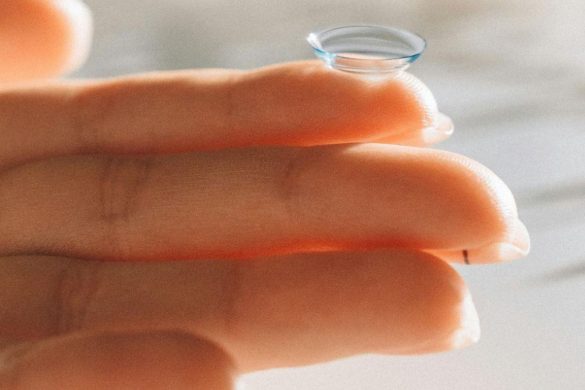
Soft contact lenses are designed to sit on the surface of your eye in a very specific shape. When positioned correctly, they form a smooth bowl that rests naturally on the cornea. But if the lens has flipped over and turned inside out, the edges will now curve inward instead of outward.
An inside-out contact lens can still go in your eye, but it usually won’t feel right. It will likely move around too much, feel scratchy, or cause blurry vision.
Why Contact Lenses Turn Inside Out
Modern contacts are very thin and flexible. This makes them comfortable to wear, but it also makes it easy for them to flip inside out when you’re cleaning or storing them.
Common reasons contact lenses turn inside out include:
- Removing lenses in a rush: Sometimes lenses can flip as you pinch them out of your eye.
- Cleaning and rinsing: As you clean your contacts, the pressure from rubbing the lenses between your fingers can cause them to invert.
- Storage in a case: It’s possible for some lenses to fold or flip as they sit in solution overnight.
- Dry lenses: If contacts are left out of solution too long and dry out, they can lose their shape and flip more easily.
How to Tell if Your Contact Is Inside Out
There are a few tricks for making sure contacts are always the right way around before you put them in. Each of these methods only takes a few seconds.
The “taco test”
This is probably the most well-known method.
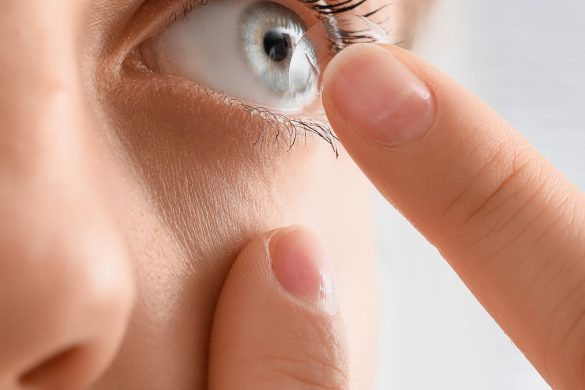
You use your thumb and forefinger to gently pinch the sides together.
If the lens forms a hard-shell taco shape, you’ve got your contact lens the right way around. If the edges flare outwards or curl away from each other, the lens is inside out.
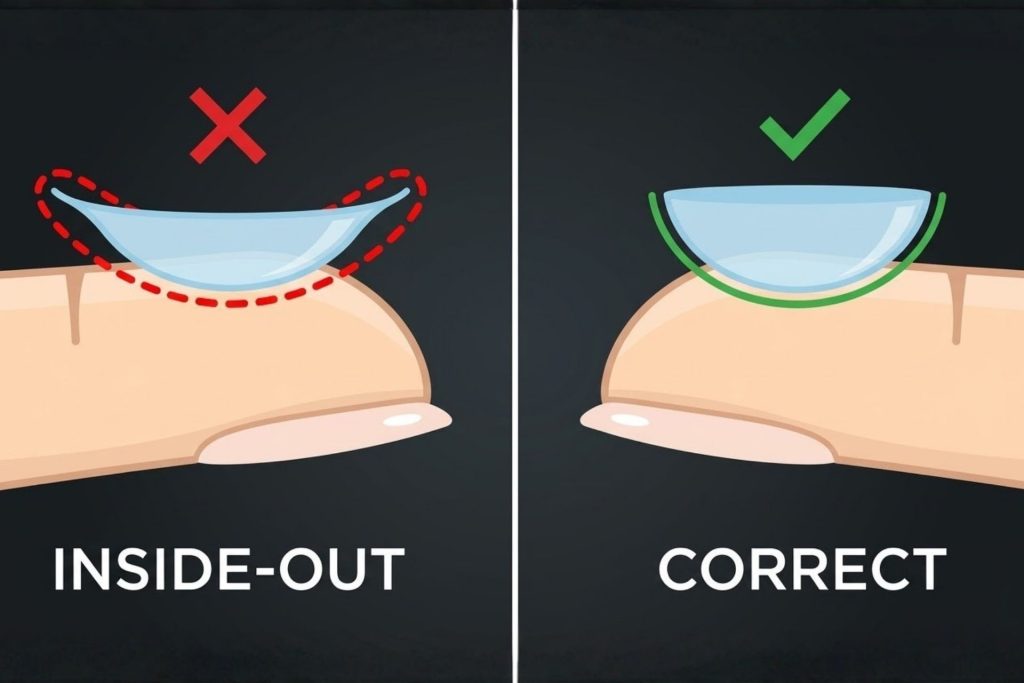
The bowl shape test
Another quick way to check is to simply look at the lens from the side.
A lens that is the right way around will look like a smooth bowl with edges that curve upward evenly. If you see the edges flare outward like a plate or saucer, it’s inside out.
The number test
Some contact lenses have small numbers or letters printed near the edge. If they’re present, look at the lens from the side with the numbers.
When the lens is facing the right way, you’ll be able to read those numbers normally. If you’ve got the lens inside out, then the numbers will be backwards.
But remember, not all contacts have these numbers printed on the side, although it can be very helpful if they do.
What Happens if You Accidentally Wear Contacts Inside Out?
Putting a contact lens in backwards won’t usually cause any major problems or damage to your eyes. But most people do notice straight away that something feels off.
Common signs you’ve got a lens inside out:
- It feels uncomfortable or scratchy
- The lens moves around more than usual
- Your vision appears slightly blurry
- The lens falls out easily
If you notice any of these symptoms, take the bothersome lens out straight away. Do the “taco test” or one of the other methods we talked about earlier to confirm if your lens was indeed inside out. Then, make sure to rinse it with contact solution before you put it back in the right way.
Tips for Handling Contact Lenses
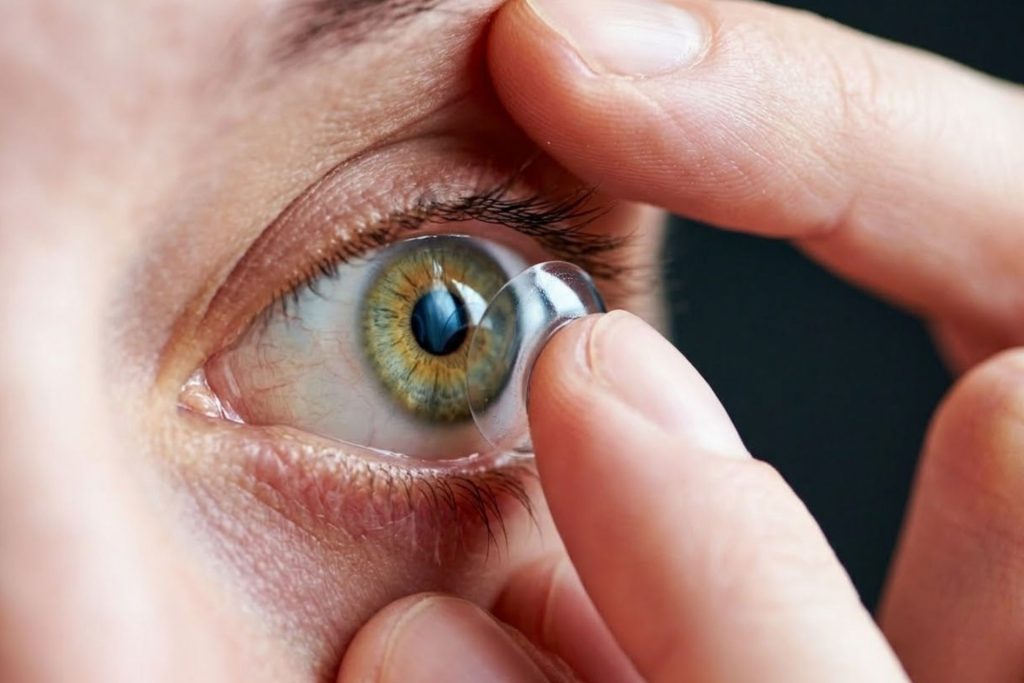
Getting used to contacts takes time and a little practice. But some simple habits make the process easier.
- Always check the lens before inserting: A quick check to make sure you’re putting your lenses in the right way will save you a lot of bother. It helps to do this with good lighting.
- Wash and dry your hands: Always insert and remove lenses with clean, dry hands. This minimizes the risk of contamination and irritation.
- Keep lenses clean: Make sure to rinse your lenses with contact solution before inserting. A little solution to lubricate the lenses can also make it a more comfortable experience when you put the lens in your eye.
- Keep a consistent routine: Many people follow a specific routine for inserting and removing lenses. Always starting with the same eye (right or left) can be helpful to avoid mix-ups like forgetting which side you just put a lens in.
TL;DR
- You can tell if your contact is inside out if the edges curve outwards instead of forming a smooth bowl shape.
- The easiest way to know is by doing the “taco test.” Gently squeeze the lens and check that it folds like a hard-shell taco, without the edges flaring outward.
- Wearing a lens inside out can cause some discomfort, movement of the lens, or blurry vision.
- Remove the lens, check it, rinse it with solution, flip it, and reinsert it if it feels wrong.