
When you’re on the ski slopes, you’ll probably notice that experienced skiers and snowboarders always use snow goggles. They know how important it is to protect their eyes from intense glare, wind, and reflected UV light.
But what about situations where you want similar protection, and don’t want to wear bulky snow goggles when you go hiking or run errands around town?
This is where glacier glasses come in. They’re designed for conditions where regular sunglasses just aren’t enough.
What Are Glacier Glasses?
Glacier glasses are a type of high-protection sunglasses made for extremely bright environments. They’re often used on mountains, in snowy terrain, or even on glaciers.
The glasses are commonly used for activities like mountaineering, skiing, and high-altitude hiking. What sets them apart is their design.
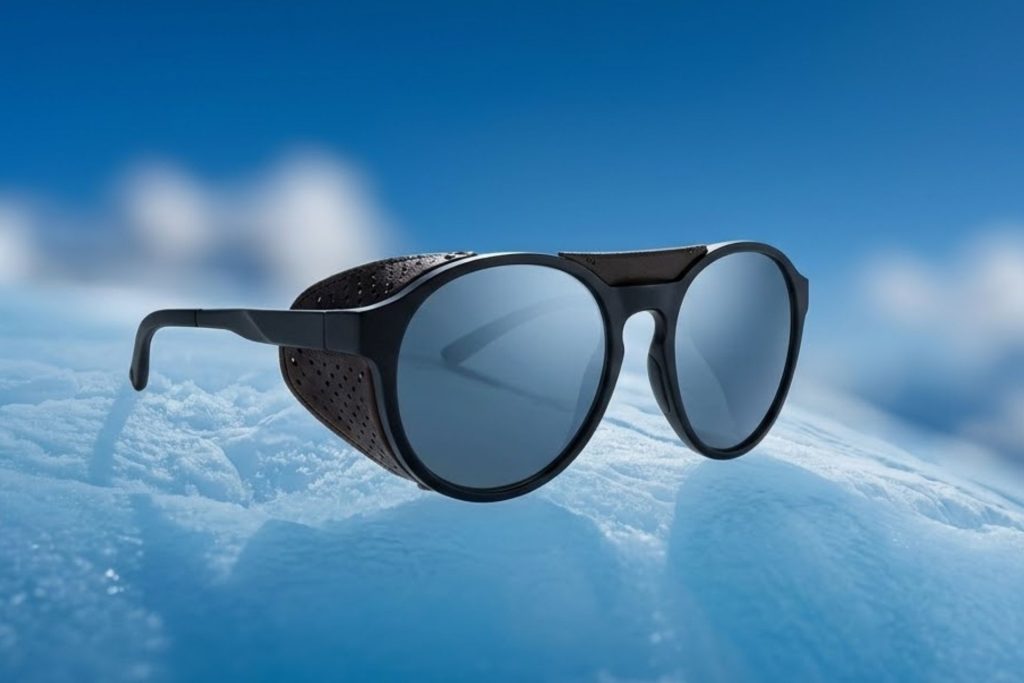
Most glacier glasses use wraparound frames that sit close to the face, with removable or fixed side shields that stop light from entering from the sides. This means they can block not only direct sunlight, but also light from the side or light reflected off snow or rocks.
They also use very dark lenses, often category 4, to reduce intense brightness. On top of that, they provide full UV protection to guard against the higher levels of radiation present at altitude.
Why Regular Sunglasses Aren’t Enough
Regular sunglasses work well for everyday conditions, but they’re not typically built for environments where light is more intense or unpredictable.
In snowy or high-altitude environments, sunlight doesn’t just come from above. Snow and ice can reflect a lot of light from the ground. Rocks and slopes can scatter light from multiple directions. This means your eyes are exposed from the sides, below, and straight ahead all at once.
Standard sunglasses allow light in around the edges, so they just aren’t effective enough for some environments. UV exposure becomes stronger as you gain elevation, too, so your eyes are dealing with extra radiation on top of the more intense brightness.
Not only will regular sunglasses let this radiation in around the sides, but they may not have the same UV protection strength as glacier glasses.
Key Features of Glacier Glasses
Glacier glasses have several design elements that make them better suited to extreme light conditions.
Side shields
One of the most noticeable features is the addition of side shields. These panels sit along the sides of the frames. They block light from entering at an angle, preventing glare and reflected light from reaching your eyes. This is especially useful in open, reflective environments like snowfields or rocky terrain.
High UV protection
Glacier glasses are built to provide full UV protection, often rated UV400. This means they block nearly all harmful UVA and UVB rays. This level of protection matters more at higher altitudes, where the atmosphere is thinner and allows more radiation to reach your eyes.
Dark lenses (category 4)
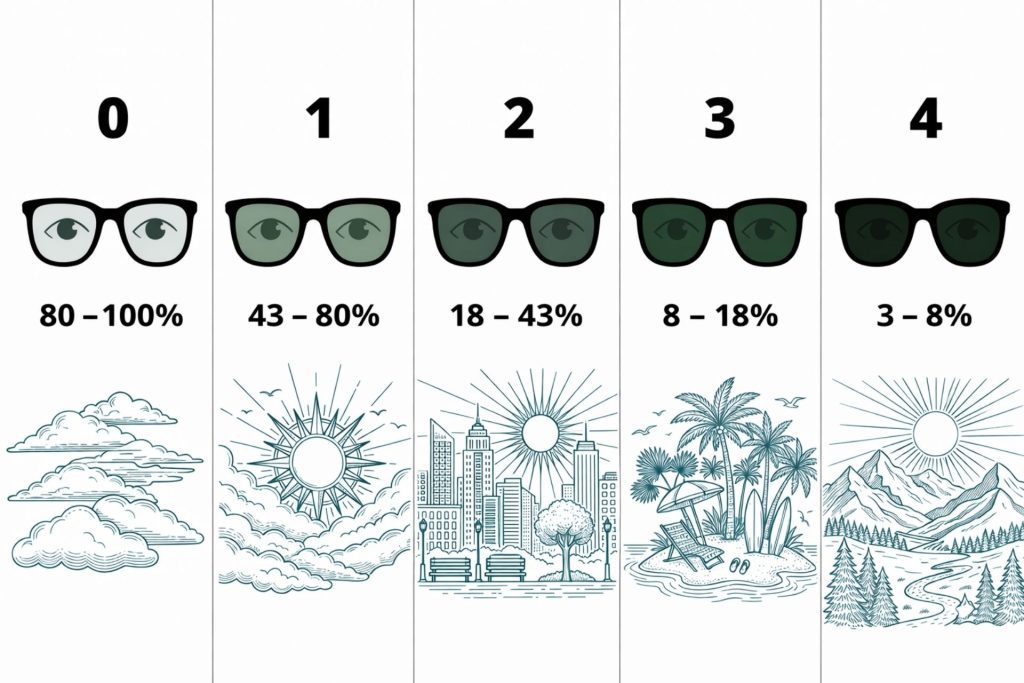
There are five categories for sun lenses, ranging from 0 to 4. These categories define lens darkness based on visible light transmission (VLT), which is the percentage of light that passes through the lens. Lower categories allow more light in, while higher categories block more light and appear darker.
Most standard sunglasses fall into Category 2 or 3. Glacier glasses often use Category 4 lenses, meaning they use the darkest tint available.
These lenses are designed for extremely bright conditions and can significantly reduce glare, especially in environments that reflect a lot of light, like snow and ice.
Category 4 lenses only allow about 3–8% of light through. For that reason, they shouldn’t be worn while driving.
Secure fit
A secure fit helps keep the glasses in place during movement. This becomes important when you’re hiking, skiing, or climbing.
Many designs include wraparound frames, rubber nose pads and grips, along with optional straps to keep the glasses in place.
Who Should Use Glacier Glasses?
Glacier glasses are useful for anyone spending time in bright, reflective environments, including:
- Mountaineers and climbers
- Skiers and snowboarders
- High-altitude hikers
- Travelers visiting snowy or icy regions who are not used to extremely bright environments
Glacier glasses can also be helpful for people who have eyes that are more sensitive to bright light.
Can You Use Glacier Glasses Every Day?
Glacier glasses are designed primarily for protection, with style and convenience coming second. However, that’s not to say there aren’t attractive glacier glasses out there (keep reading for some stylish options)!
Overall, though, these sunglasses aren’t always ideal for everyday use. The lenses are often just too dark for day-to-day conditions. And as mentioned, if the glasses use Category 4 lenses, they’re also not suitable for driving.
Features like side shields and wraparound frames block light from entering at the edges. This is great for protecting your eyes, but it can also reduce your peripheral vision. In normal lighting conditions, the combination of very dark lenses and limited peripheral vision can feel restrictive rather than helpful.
So for daily wear, standard sunglasses are usually the better option.
Top Glacier Glasses Picks
I’ve picked out some of my favorite glacier glasses that offer strong protection from the elements as well as comfort and durability. They also happen to look great!
Julbo Vermont Classic
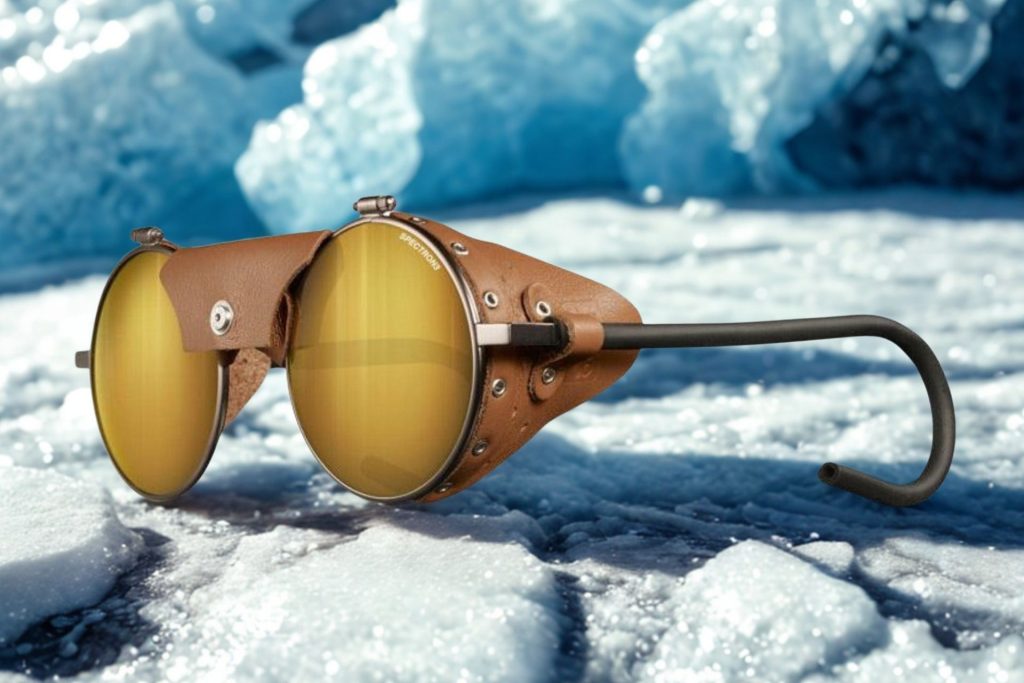
The Julbo Vermont Classic sunglasses are the definitive, traditional mountaineering glasses that have remained a staple for climbers for decades. They feature round mineral glass lenses and soft leather side shields, which provide a total seal against peripheral light and wind.
The 360-degree adjustable ear hooks give you a custom, secure fit that won’t budge, whether you’re wearing a climbing helmet or a beanie. The Spectron lenses provide the high-altitude category protection needed for intense glacial glare.
Oakley CLIFDEN OO9440
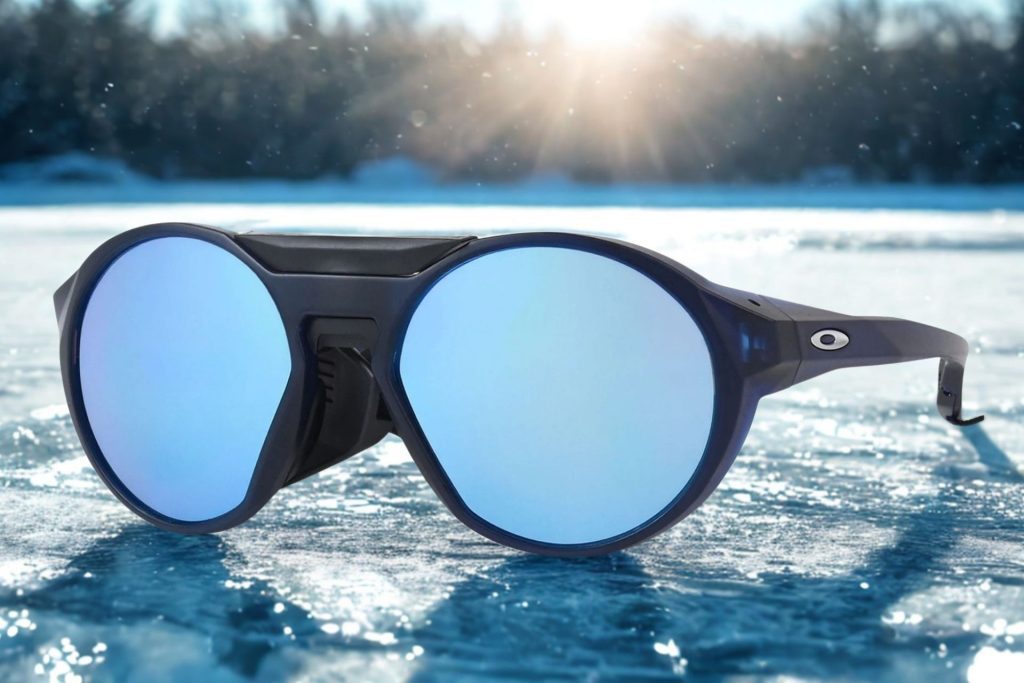
The Oakley CLIFDEN OO9440 offer a modern take on classic-style glacier glasses, with removable side shields, a bridge blocker, and a wraparound frame for full coverage. They also feature Prizm™ lens technology, Unobtainium® nose pads for grip, and an integrated leash for added security on the slopes.
On EZContacts, they’re available in a range of different frame and lens colors, including polarized lenses. They’re also prescription-ready.
Under Armour UA Glacial
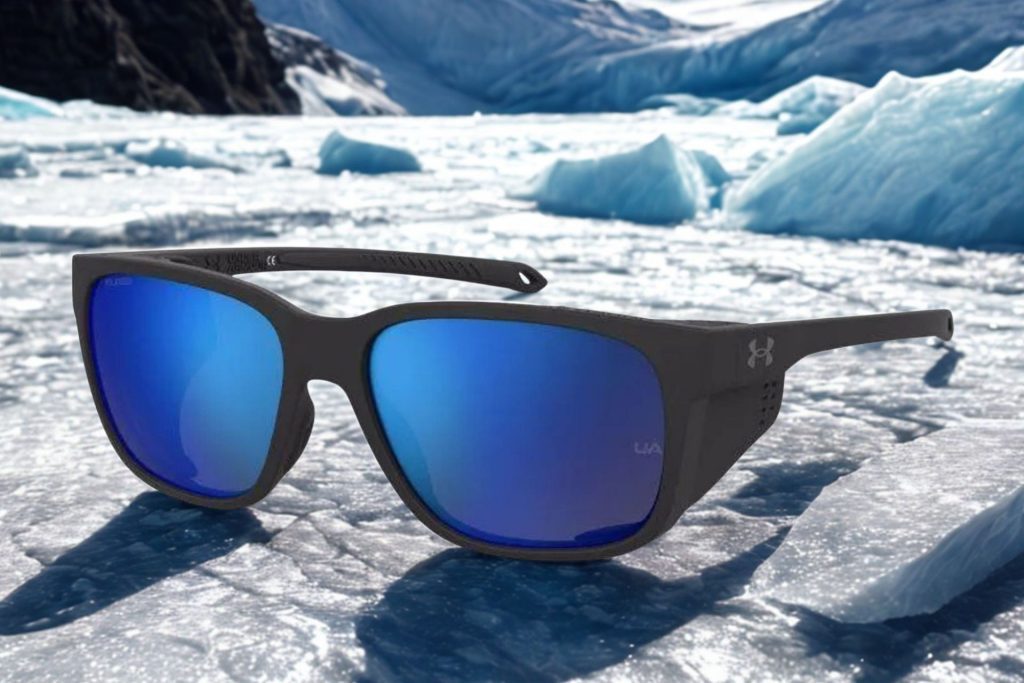
These sport-focused glacier glasses have a wraparound frame and rubberized non-slip temples so they don’t move around even during intense activities. The frame is lightweight with an auto-lock hinge and features vented side shields. The lenses use water- and smudge-resistant coatings, and they are designed to thrive in high-glare environments.
Smith Pursuit
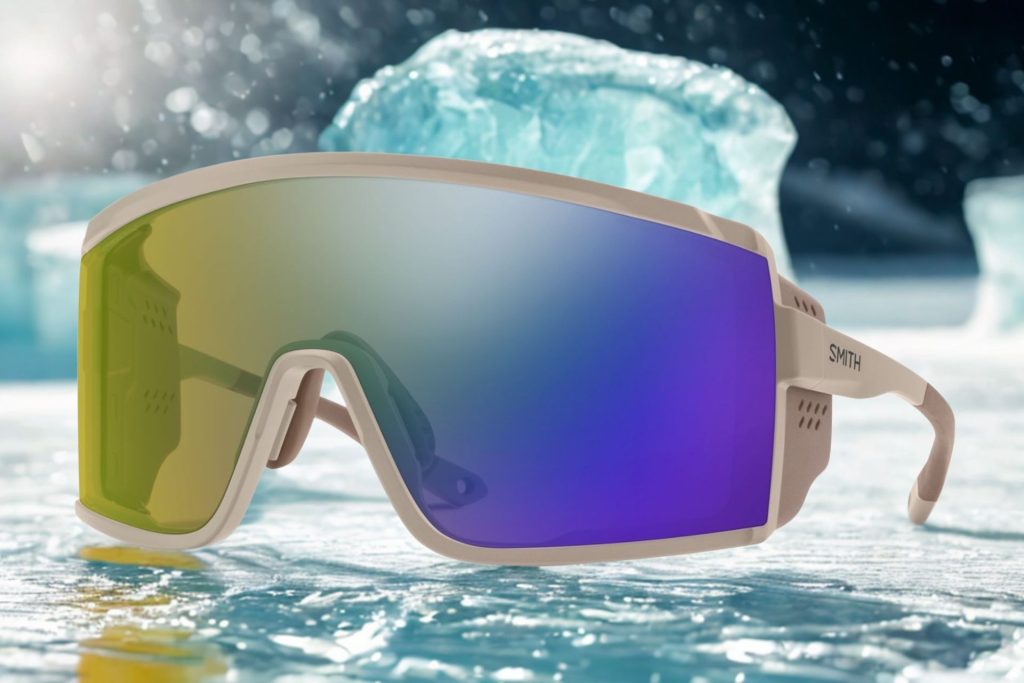
The Smith Pursuit bridges the gap between high-performance sunglasses and snow goggles. They use ChromaPop™ Glacier Photochromic lens technology, which automatically darkens or lightens based on shifting light conditions.
The frames are built with magnetic, removable side shields and even include a detachable nose guard to prevent sunburn during long days on the snow. With a wraparound fit and Megol nose pads that grip even better when you sweat, they always stay perfectly in place.
TL;DR
- Glacier glasses are designed for very bright, high-glare environments. They use wraparound frames and side shields for more coverage than regular sunglasses.
- Category 4 lenses help protect your eyes and reduce intense glare from snow and ice.
- They are best for activities like skiing, snowboarding, hiking, and mountaineering.
- Glacier glasses are not generally suitable for everyday wear or driving due to their dark tint and protective features.
- Some of our top picks for glacier glasses include Julbo Vermont Classic, Oakley CLIFDEN OO9440, Under Armour UA Glacial, and Smith Pursuit.