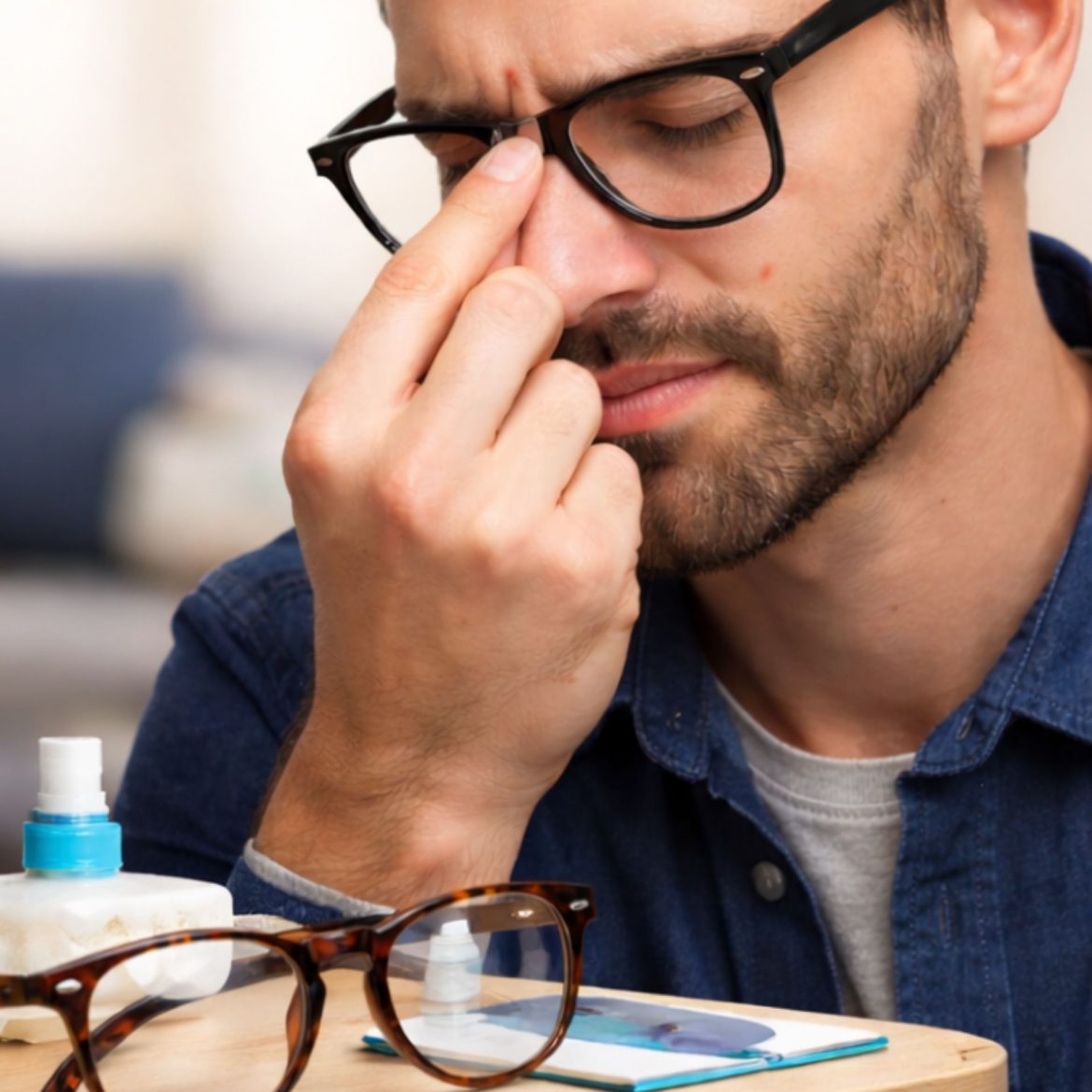
To begin, let’s go through some of the most common causes of nose pain from glasses:
Glasses that are too tight
Much like clothes, our glasses must also fit us properly. Nose pads that are too tight or too wide will naturally hurt as much as wearing shoes that are a size too small or too big.
Weight of the frames
The weight of frames and lenses must also be considered. Heavy frames and thick lenses can end up pressing too hard on the nose. And let me tell you, after a full day of wear, you’ll feel it.
Friction and sliding
Constant sliding and friction (which could be due to oily skin or the weight of glasses) can also cause discomfort. Having something rub against your skin repeatedly can cause redness and irritation. Think of it like wearing a Band-Aid in the same spot for days. Not fun.
Allergies
Glasses are made from varying materials, but nickel is commonly used as an alloy in manufacturing frames, bridges, and hinges. This can lead to rashes, itching, or skin irritation. If you’ve ever had a reaction to certain jewelry, you know what I mean.
Dirt and oil
Nose pads can accumulate sweat, oil, and bacteria. Dirty nose pads can lead to redness and acne. Gross, I know, but it happens!
Unbalanced frames
Lastly, when frames aren’t properly balanced on your face, trouble follows. Frames not adjusted properly to your face shape can lead to red marks on your nose, cheeks, or even behind the ears.
Is It Normal for Glasses to Leave Red Marks?
Light red marks that fade within 10 to 20 minutes and don’t cause any soreness are common, particularly with new glasses.
However, if your glasses are causing deep dents on your nose, pain, constant discomfort, or skin irritation, something is off.
When to worry about nose pain from glasses
The body talks in its own way; it’s our job to listen.
Warning signs include:
Persistent soreness
Broken skin or blisters
Severe indentations
Allergic reactions
Headaches
A hard, painless bump (acanthoma fissuratum)
Should you experience any of these symptoms, reach out to an eye care professional to determine the best course of action.
What Real People Say Helped
Naturally, the internet also has its fair share of assistance to offer.
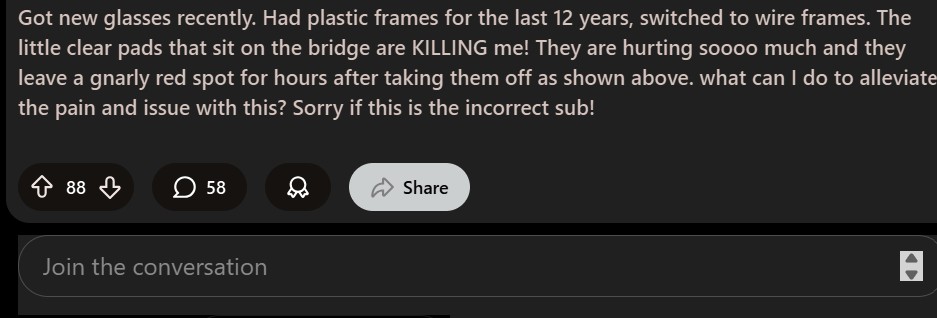
When a Reddit user shared that her new glasses were hurting her nose, the community came together to pitch in their own thoughts.
The original poster, nymphymixtwo, wrote:
“Got new glasses recently. Had plastic frames for the last 12 years, switched to wire frames. The little clear pads that sit on the bridge are KILLING me! They are hurting soooo much and they leave a gnarly red spot for hours after taking them off… what can I do to alleviate the pain and issue with this?“
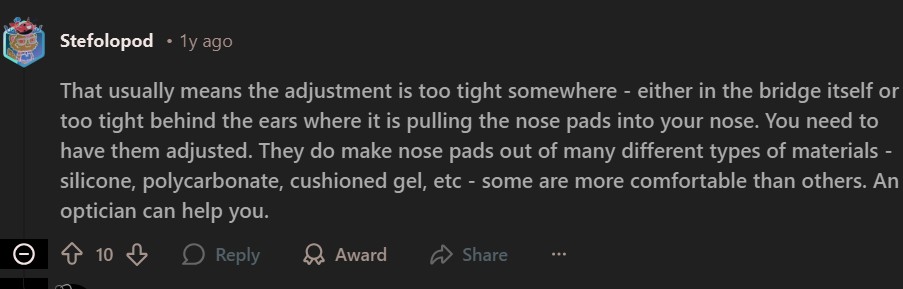
Many Redditors told the OP that she should get them adjusted. One Redditor wrote:
“That usually means the adjustment is too tight somewhere – either in the bridge itself or too tight behind the ears where it is pulling the nose pads into your nose. You need to have them adjusted. They do make nose pads out of many different types of materials – silicone, polycarbonate, cushioned gel, etc – some are more comfortable than others. An optician can help you.”
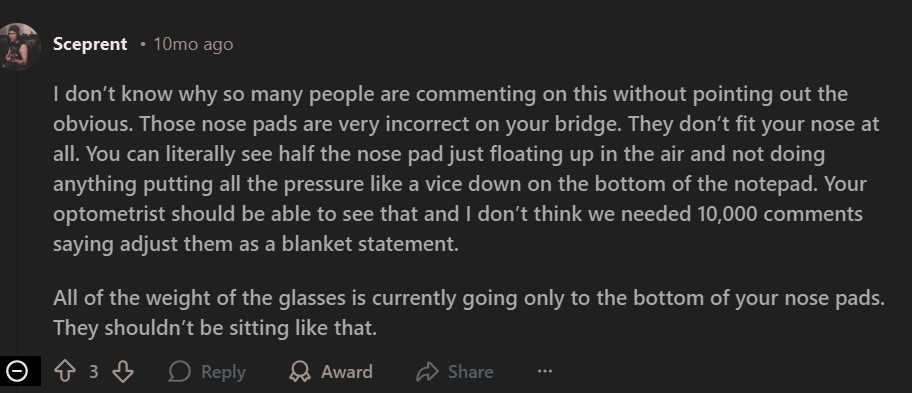
Another Redditor called out an issue with the nose pads:
“I don’t know why so many people are commenting on this without pointing out the obvious. Those nose pads are very incorrect on your bridge. They don’t fit your nose at all. You can literally see half the nose pad just floating up in the air and not doing anything putting all the pressure like a vice down on the bottom of the notepad. Your optometrist should be able to see that and I don’t think we needed 10,000 comments saying adjust them as a blanket statement.
All of the weight of the glasses is currently going only to the bottom of your nose pads. They shouldn’t be sitting like that.”
Overall, most Redditors agreed that there was something off in the OP’s glasses, and she needed to get them looked at. Let’s dive into how to fix glasses that are hurting your nose!
How to Fix Glasses That Hurt Your Nose
Visit an optician: As the Reddit community said, visit an optician for an adjustment. Even an optician would disagree if asked, “Is it normal for glasses to hurt the nose?”
Try silicone nose pads: Switching to silicone nose pads, which distribute pressure evenly across your nose bridge, could be a solution. They conform to the shape of your face.
Tighten temple arms: Tightening temple arms to ensure a comfortable and secure fit is also an option. This is a remedy for glasses that typically slide off or sit wobbly on your face.
Clean nose pads regularly: Cleaning nose pads regularly is important. Wiping them clean with a microfiber cloth helps ensure no grime builds up on the pads.
Try nose pad covers: Gel pad covers also provide more comfort. They act as a cushioned, high-friction barrier between the hard frame of the glasses and the delicate skin on the bridge of the nose.
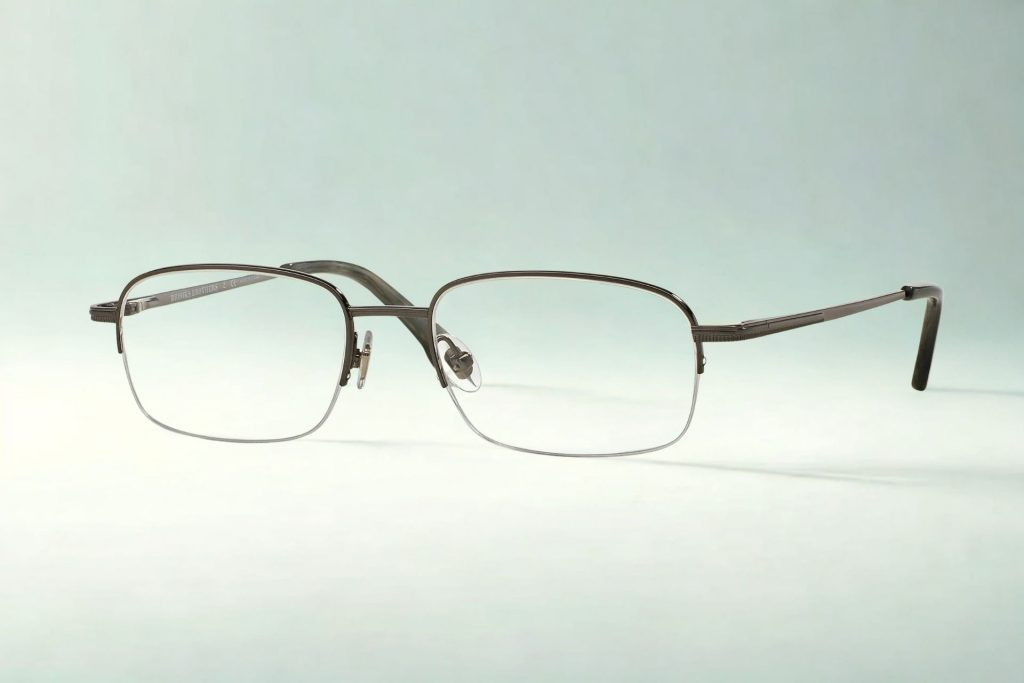
Try lighter frames and lenses: For those like me with a high-prescription, high-index lenses are a good choice as they’re thinner and lighter. Also, consider trying out lighter frames, such as ones made from titanium. Here’s an example of a light titanium frame:
Brooks Brothers BB 487T Glasses
When It’s Time For New Frames
If adjustments don’t cut it, the frame shapes may not suit your bridge.
Low bridge fit glasses are specially designed for people with lower nose bridges, wider faces, and higher cheekbones. If the bridge of your nose sits at or below your pupils, you likely need a low bridge fit.
If not that, then onto nose pads. Adjustable ones offer customizable comfort, superior fit, and stability via metal arms. They are ideal for lower or wider bridges and active wear.
You could also try molded acetate nose pads. These types of nose pads aren’t typically adjustable, but they do provide better weight distribution and require less maintenance.
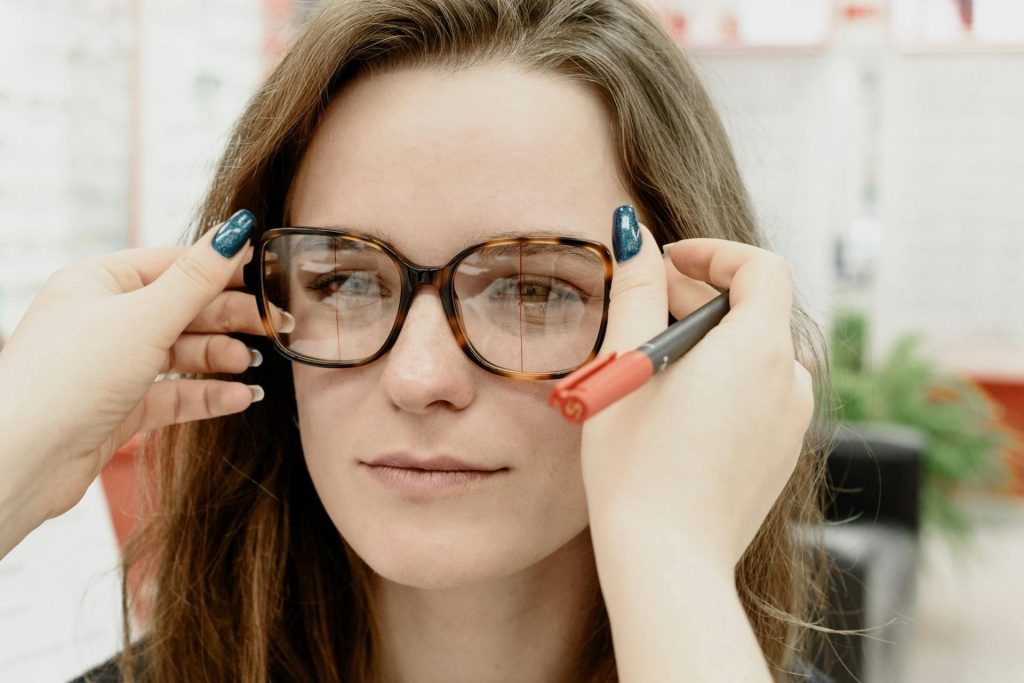
When selecting frames, it’s a good idea to look for frames that reach the edge of your face, aligning with the width of your temples. This helps create a proportional, comfortable fit. A good rule of thumb is to allow no more than one finger’s width between the temple arm and your face.
Woman Gets Fitted for Glasses
So, is it normal for glasses to hurt your nose? Considering the long-term wear, no, your glasses shouldn’t continuously hurt your nose. Style shouldn’t compromise comfort. It shouldn’t be one or the other, but both.
TL;DR
Are you asking, is it normal for glasses to hurt your nose? Mild red marks that fade within 10–20 minutes are normal. However, persistent pain, deep dents, or skin irritation are signs that your glasses do not fit properly.
The most common cause of nose pain is a poor fit, including nose pads that are too tight, too loose, or unevenly adjusted.
Heavy frames and thick lenses can place excessive pressure on your nose, especially after long hours of wear.
Sliding glasses create friction that leads to redness, irritation, and discomfort, often worsened by oily skin or unbalanced frames.
Allergic reactions to frame materials like nickel can cause itching, rashes, and skin sensitivity on the nose bridge.
Dirty nose pads can trap oil, sweat, and bacteria, which may lead to acne, irritation, and skin inflammation.
Warning signs that require attention include persistent soreness, broken skin, severe indentations, headaches, or a hard, painless bump on the nose.
Visiting an optician for adjustments is often the fastest fix. Small changes to nose pads, temple arms, or frame alignment can greatly improve comfort.
Switching to silicone nose pads, gel covers, or lighter materials like titanium can reduce pressure and improve wearability.
High-index lenses are thinner and lighter, making them ideal for people with strong prescriptions who want less pressure on the nose.
If adjustments do not help, you may need new frames designed for your face shape, such as low-bridge fit glasses or frames with adjustable nose pads.
Glasses should never cause ongoing pain. Comfort and style should always work together, not against each other.
I’m a writer and editor with a passion for writing about frames, lenses, and all things eyewear. I have a Bachelor’s degree in Computer Science. My work has appeared in major local news outlets, Tropical House Garden Magazine, Postize, Longmont Leader, and Introvert, Dear. I’ve also served as News Editor for Greenbot and contributed to nonprofit initiatives such as Verité. Outside of work, you’ll likely find me creating art and café-hopping.