The average American adult spends seven hours a day looking at screens, whether they’re scrolling social media, playing mobile games, or texting their friends.
For many people, this amount of screen time is more compulsive than purposeful: cell phone and social media addiction is affecting more adults than ever. Despite the noted links between increased screen time and decreased mental health, millions of adults can’t break their digital habits.
To discover the extent of control our phone screens have on our lives, EZContacts conducted a study of 1,000 U.S. adults, analyzing daily phone use and social media habits. The results indicate that even though we know that phones have the potential to mentally, physically, and socially harm us, many of us feel incapable of putting the phone down.
Key Takeaways
- 20% of Americans’ phone screen time exceeds 8 hours a day, including 6% exceeding 15+ hours a day, which rises to 10% among Gen Zers.
- 91% check their phone immediately after waking up, including 36% who go straight to social media and 27% who check text messages first.
- 62% can’t go more than 30 minutes without checking their phone, and 8% check every 1–5 minutes.
- 77% scroll before bedtime, yet 24% say it makes it harder to fall asleep.
- 26% end up canceling plans after getting “lost” in the scroll, and 22% say a partner has been upset by their phone use.
- 78% report physical or eye-related issues from smartphone use — 40% report eye strain, 28% neck pain, 27% headaches, and 26% dry eyes linked to screen use.
- One in four young adults experiences comparison pressure from social media, and 20% of Gen Z feel mentally exhausted by their feeds.
- Three in five (60%) support a U.S. law banning social media for children under 16.
Always On: How Much Time Americans Spend on Their Phones
Everyone has been in this situation: you go to scroll on your phone for a couple of minutes, and next thing you know, those couple of minutes have turned into an hour. This familiar anecdote exists for a reason. Smartphones and the social media apps on them are naturally addictive.
An aesthetically pleasing Instagram post, a relatable TikTok, or a funny YouTube video all have the same effect: a dopamine rush that we constantly chase for not only minutes at a time, but for hours.
Spending hours on a phone isn’t just a one-time experience among our respondents. Most of them (26%) spend an average of three to four hours on their phone every day. The rest reported:
- Five to six hours of daily phone time (20%).
- Seven to eight hours of daily phone time (13%).
- More than eight hours on their phone (20%).
- More than 15 hours of daily phone time (6%).
However, not every generation reported high amounts of screen time. While Gen Z reported the highest amount of screen time, with over 10% clocking in over 15 hours of phone usage, a majority of baby boomers reported on the lower end of the spectrum.
Nearly a third of baby boomers (32%) reported only one to two hours of phone time. This discrepancy indicates that younger minds and generations feel the need to stay online and connected with their peers.
The Reflex to Scroll: Automatic Phone Habits
When it comes to phones, most people don’t even consciously realize how big a role screens play in their lives. Even with our phones off, we may experience “phantom phone signals,” thinking our phone vibrated with a notification, and causing us to look at our phones even though we know the phone is off. These signals and habits only occur when checking our phones becomes so ingrained that it turns into muscle memory.
For most of our respondents, checking their phones was second nature. From the moment they woke up, nine out of 10 Americans report checking their phone, and only 10% report not.
What they checked on their phone varied. For most respondents (36%), checking their phone in the morning involved scrolling through social media. For others (28%), it involved reading through missed text messages.
Even after the morning, checking our phones is a consistent pastime. An overwhelming 62% of Americans reported they can’t go more than 30 minutes without checking their phone when they’re trying to focus. Some (21%) even reported needing to check their phone every 15 minutes during focus time, and 15% needed to check their phone every 6-10 minutes.
For many people, this constant impulse isn’t just psychological; it can even seem physical at times, too. A majority of the respondents (38%) experienced phantom phone signals at some point. With this kind of mental background noise in the background of the majority of Americans’ minds, it’s no wonder high concentration can seem like a lofty goal.
The Emotional Cost of the Feed
Sometimes it is not just smartphones that can cause unhealthy scrolling habits, but social media itself. Because social media involves a constant feed of content designed to please you, it can be easy to feel anxious about “missing out” if you’re not scrolling.
The content on social media can also cause an emotional toll that many people don’t expect when they first download the social media app. Among all participants, we found a wide range of emotional reactions due to exposure to social media use, both positive and negative.
While social media does have the potential to cause negative responses, a majority of respondents still see it in a positive light. Over half (51%) feel relaxed or entertained while scrolling through social media. Likewise, 49% said they felt curious or interested while scrolling, and 26% felt inspired.
Up to 12% reported feeling anxious or stressed, and another 11% even reported feeling irritated or annoyed while scrolling. After experiencing all these emotions, it’s natural to feel spent out, which is why 11% reported feeling mentally drained by their feed.
We also noticed a generational divide in how people felt about social media. Out of all the generations, Generation Z was the most likely (20%) to feel emotionally exhausted from social media. They, in addition to millennials, were also most likely to compare themselves with others they see on social media (25%). This constant comparison can cause feelings of inadequacy and even increase the risk of developing mental health conditions like anxiety and depression.
The Physical Toll of Constant Scrolling
Our emotions aren’t the only things that social media and phone usage can affect. Eventually, our bodies can start feeling the effects. After all, our bodies need to stay in motion. Constantly staring at a screen can lead to worsened eye health, poor sleep habits, and even conditions like “tech neck,” where the muscles of the neck and shoulders become chronically tense. We found these conditions and more among respondents.
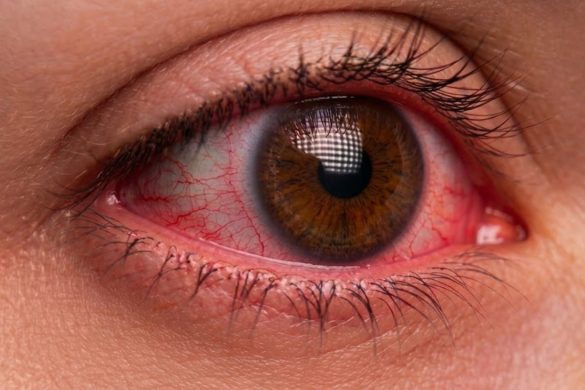
Out of any physical conditions often associated with phone usage, eye strain was the most common experience among respondents (40%). Likewise, 28% experienced blurred vision, and 26% reported dry eyes. Even 14% reported that they noticed their vision or eye comfort had slightly worsened over time, and 8% said that it had significantly worsened over time, requiring an updated prescription for eyeglasses or contact lenses.
Beyond impacts to our eyes, screens also have the potential to affect the rest of our bodies. Over a quarter (28%) of respondents reported neck pain, also known as “tech neck,” because of their phone. Because of the blue light that smartphones emit, 24% reported having trouble falling asleep if they scrolled on their phones in bed.
It was also relatively common for study participants to risk bodily injury while actively using their phones: 21% have tripped or stumbled, and 23% have walked into a person or object while using their phone. Because of these distractions, it can be easy to risk a broken bone or even cause an accident on the street.
Out of all the respondents, over 78% said they experienced some physical or eye-related issues because of their smartphone usage. For the majority of Americans, it turns out smartphones are catching up to our bodies, whether we like it or not.
When Screens Spill Into Real Life
The primary reason why people invest in smartphones and social media is simply to stay connected. No matter what reasons we have to put the phone down, we often stay around for the camaraderie it brings, or simply to stay involved with the people involved in our “real” lives. Despite this, we found that social media and smartphones also had the potential to cause disconnection in our social lives.
Among the study’s participants, over a quarter (26%) had to cancel in-person plans because they wanted to keep scrolling. To these participants, it didn’t matter if connecting in person was on the docket; being connected online took precedence.
We also found that phones had the potential to cause conflict in romantic relationships. Up to 48% reported they’ve caused relationship strain, with 22% saying a partner had gotten upset that they were distracted by their phone. In many relationships, being present is one way to show you care about someone. However, if your phone is interfering with that goal, it may be easy for your partner to feel neglected.
For other study participants, their relationships were more affected by their actual social media activity. For instance, 18% said their partner had asked to see their social media activity, including their DMs and likes.
In response, nearly just as many respondents felt defensive about this request — 13% said they felt uncomfortable when their partner asked them for this. As a result, phones can easily start a conflict and have the potential to end relationships.
Despite the negative potential phones have in our relationships, many study participants didn’t want to give them up, and felt they would rather deal with the consequences surrounding their phones. In fact, 22% said staying at home with their phone felt easier than going out to socialize.
Still, many respondents realized that while they may be willing to personally struggle with the consequences of their phones, they don’t want to pass on the same consequences to the next generation. A majority (60%) of respondents supported a U.S. law banning social media for children under 16. Many people are already familiar with the damaging effects phones can have on developing minds, especially if they have personally experienced it.
Always Reachable: Presence, Anxiety, and Life Lived Half-Online
Because of the many adverse effects phones can have on our health, many people are making it a goal to truly disconnect during their free time. According to a 2023 Deloitte survey, eight out of 10 Americans are actively trying to limit their screen time. However, we found in our study that many people are struggling to successfully do so, and ultimately end up divided between being on their phone or thinking about using it.
When asked how their phones play a part in their free time, 32% of Americans said they tried to be present in their free time, but still ended up on their phone a majority of the time. Meanwhile, 31% said they were usually on their phone during their free time.
Both of these statistics indicate that a majority of Americans are either partially or fully immersed in their phones. In contrast, only 6% said they were entirely disconnected from their phones during their free time.
And even when people successfully distance themselves from their phones due to external factors (such as lack of service or phone screen limitations), we found a wide range of mixed emotions among Americans, such as:
- Feeling distracted because they’re wondering what they’re missing on their phone (24%).
- Feeling a strong urge to check their phone (21%).
- Feeling anxious or uneasy (19%).
- Feeling unbothered (43%).
Out of all the emotions, feeling unbothered was the most common by far, meaning people may feel completely unchanged when external factors take the choice of their phone away from them.
This may be because many of our participants perceived that they had a life outside of their phones. Over half (51%) said the people in their “real” life knew them best in comparison to those they only interacted with on social media. In comparison, only 15% of people felt closest to those they met online. So even when disconnecting with our phones may feel like a struggle, we may end up being closer to those around us in the end.
How To Live in a Screen-First World But See It Clearly
Whether we want to admit it or not, this study indicates that our lives orbit around our phones. From the moment we wake up in the morning to the second we fall asleep at night, phones are around us. Because of this, many Americans face physical symptoms, from eye discomfort and sleep disruption to emotional and social symptoms like anxiety and isolating ourselves from our social networks.
However, our screens haven’t consumed us altogether. Our data indicates that many people can feel completely normal when they successfully cut screens out of their lives, and it may be possible to heal from some of the physical conditions by practicing healthy screen habits and taking care of their eyes. With these changes, along with being mindful of how we scroll, we can adapt to a new normal that can benefit us for the better.
Methodology
The data provided in this article came from a survey given to a representative sample of U.S. adults. This study asked questions about daily phone and social media usage, scrolling behaviors, emotional responses, physical and eye-related effects, sleeping habits, and relationship troubles. All the responses are self-reported and exploratory, and percentages may total more than 100% due to rounding and questions that allowed respondents to select multiple responses.
About EZContacts
EZContacts is an online eyewear provider that sells prescription contacts, eyeglasses, sunglasses, and protective eye care products. With EZContacts, you can help protect your eyes while scrolling through social media — no matter how you use it.
Fair Use Statement
You may use the data and information provided in this article for non-commercial purposes only. If you decide to share it, provide a proper attribution to EZContacts with a link.