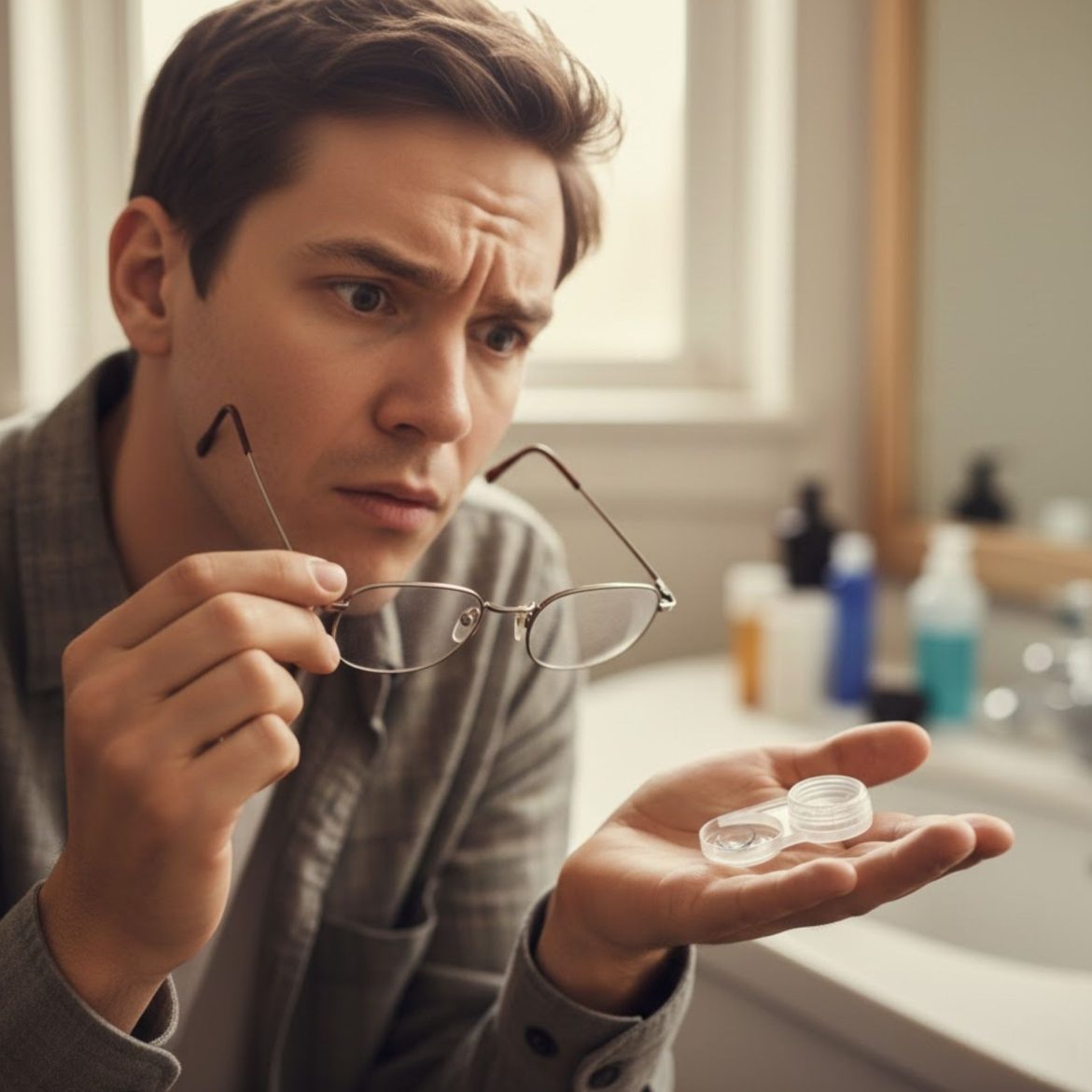
Are contact prescriptions the same as glasses prescriptions? You might think so; it seems logical. After all, they’re both for your eyes, right?
But hold up. Contact lens prescriptions and glasses prescriptions aren’t the same. Let’s get into why that’s the case and what you need to know about these different prescriptions.
Are Contact Prescriptions the Same as Glasses Prescriptions?
Contact lens prescriptions and glasses prescriptions have some similarities, but they’re not the same.
They’re both used to correct the refractive errors that are stopping you from seeing clearly. A refractive error is a common vision problem where the eye’s shape doesn’t bend light correctly, which causes blurry vision. Common refractive errors include:
Presbyopia (age-related hardening of the eye’s lens)
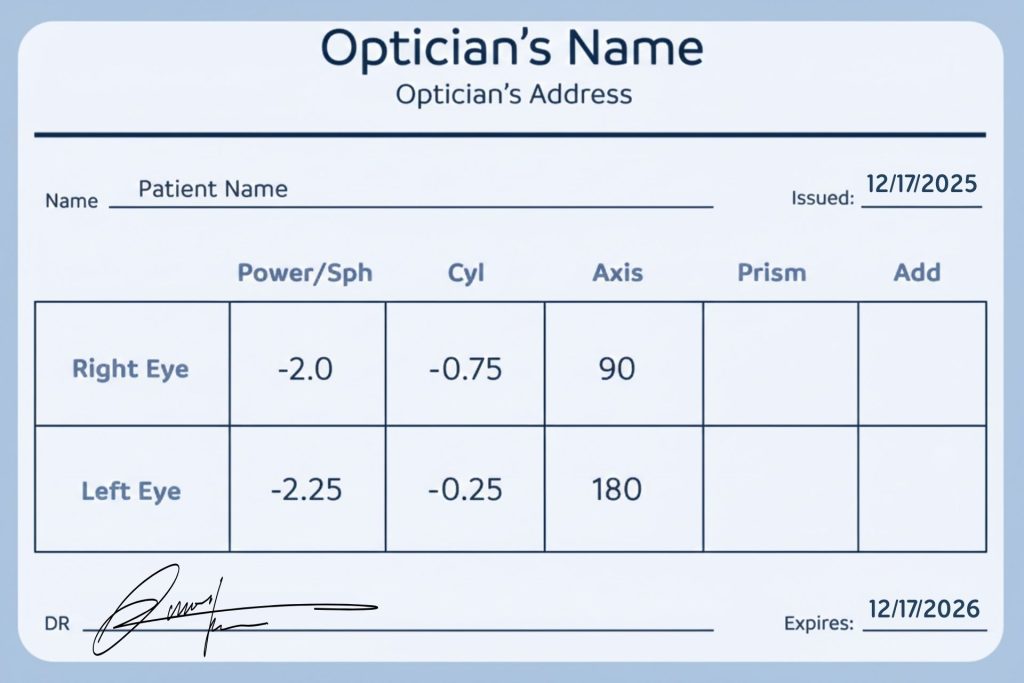
Depending on the degree of your refractive error, the prescription for your glasses and contacts could be very different. Here’s an example of a glasses prescription:
Glasses Prescription Example
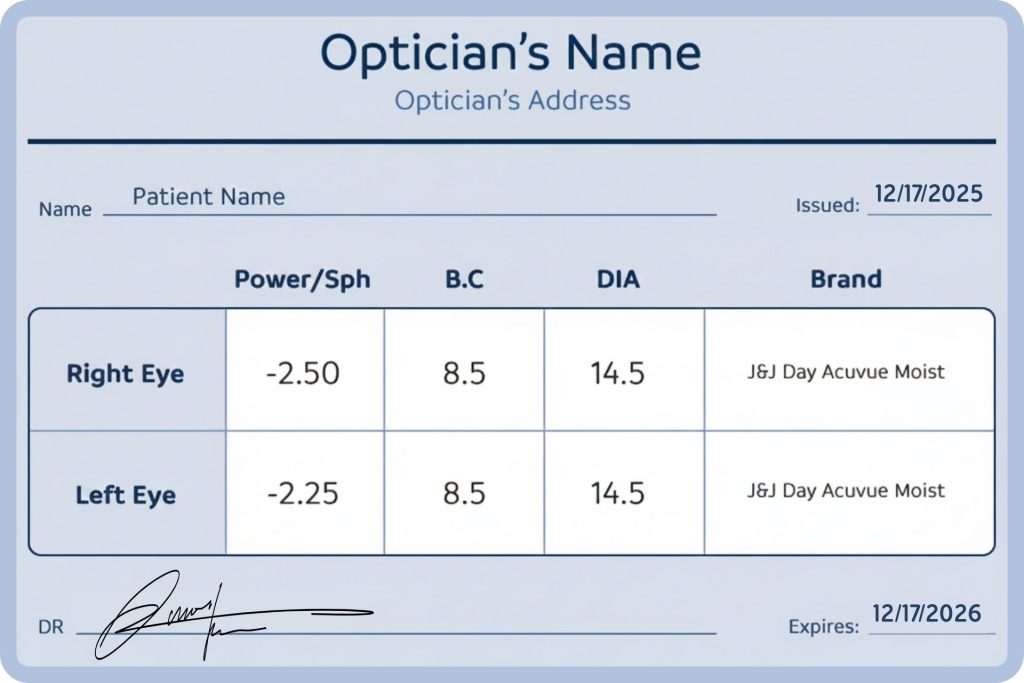
Here’s an example of a contact lens prescription:
Contact Lens Prescription Example
As you can see, there are quite a few differences in the contact lens and glasses prescriptions. We’ll get into what all those abbreviations mean shortly.
The Differences Between Contact and Glasses Prescriptions
The main reason why glasses and contact lens prescriptions are different is because of the way they sit on the eyes.
Contacts sit right on the eyes, while glasses are about 12 millimeters from the eyes. This number may sound small, but it makes a big difference.
Since contacts sit right on your eyes, they have more specifications in their prescription than glasses. This includes:
Lens Diameter: This is the total width of the lens, measured from edge to edge. The typical diameter range for rigid gas permeable (RGP) contacts is 8.5 to 9.5 millimeters. The typical range for soft contacts is 13.5 to 14.5 millimeters.
Base Curve: This measures the curvature of the lens, and it’s determined by the shape of your cornea.
Lens Brand: Your contact lens prescription will typically include a brand of lenses. This is because each brand has a specific degree of oxygen permeability (breathability).
Expiration Date: Contact and glasses prescriptions typically have different expiration dates. Contact prescriptions are usually good for one year. Then, you’ll need to see your eye doctor for a checkup before you can buy new contacts. Glasses prescriptions are typically good for two years.
Can You Convert a Glasses Prescription to a Contact Prescription?
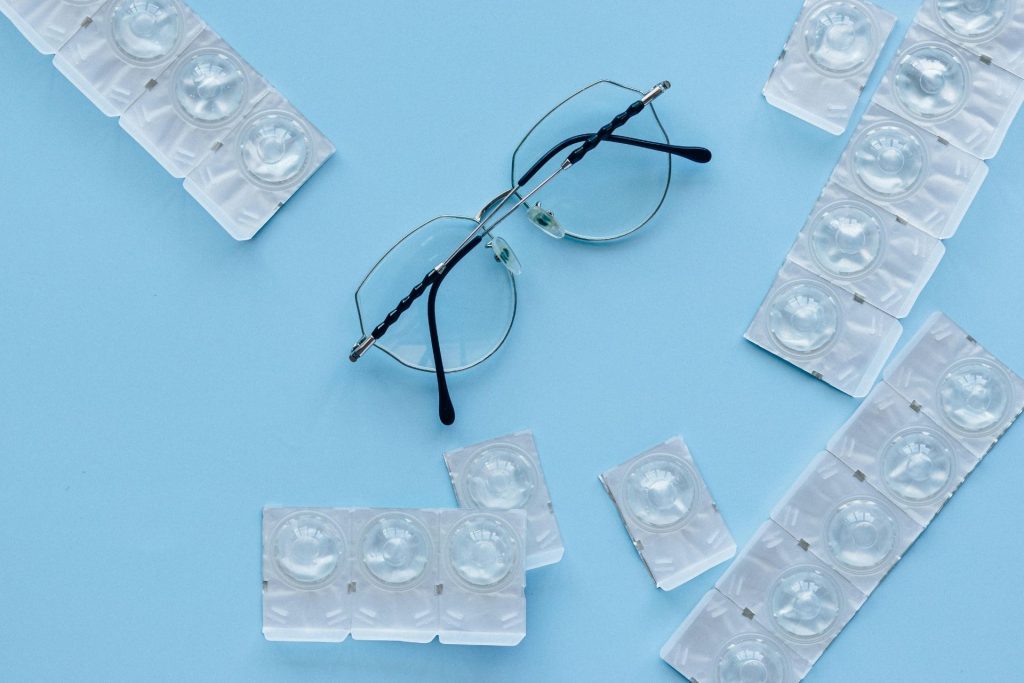
Contact Lenses and Glasses on Table
No, you can’t. You might see charts online that say they’ll do this conversion, but they may not be accurate.
This can be a problem because having the wrong prescription can lead to a variety of symptoms. This includes dizziness, eye strain, and headaches. It can also lead to discomfort, blurry vision, and an increased risk of infection. Even being off by a millimeter or two can cause issues.
If you want to switch from glasses to contacts, or vice versa, see your eye doctor. They’ll do an eye exam and give you a new prescription. They can also answer any of your questions about switching eyewear.
Can anyone get a contact lens prescription?
Contact lenses can work for the majority of people. However, some eye conditions make contact lenses uncomfortable or unsafe. This includes severe dry eye, chronic allergies, irregularly-shaped corneas, and blepharitis (eyelid inflammation).
Your eye doctor will be able to examine your eyes and let you know if contacts will work for you.
What Do the Abbreviations Mean on Prescriptions
As you can see from the examples above, contact and glasses prescriptions both have numerous abbreviations. To help you better understand your prescription, here’s what these abbreviations mean:
Term
Abbreviation
Definition
Oculus Dexter
OD
Latin term for right eye
Oculus Sinister
OS
Latin term for left eye
Oculus Uterque
OU
Latin term for both eyes
Sphere/Power
SPH/PWR
The lens power needed to fix your vision, measured in diopters. This will be a number with either a plus or a minus sign in front of it.
Minus sign
–
Indicates nearsightedness
Plus sign
+
Indicates farsightedness
Cylinder
CYL
Included on astigmatic prescriptions. Indicates the lens power needed to correct astigmatism.
Axis
Axis
Included on astigmatic prescriptions. Shows the orientation and location of the astigmatism in your eyes. Measured in degrees between 0 and 180.
Addition
ADD
Included on multifocal, bifocal, and progressive prescriptions. Indicates the additional magnifying power needed in the lower part of the lens.
Pupillary Distance
PD
Included on glasses prescriptions. Refers to the distance between the centers of the pupils in the eyes.
Prism
Prism
Used in glasses prescriptions for some people who have double vision.
Base Curve
BC
Included on contact lens prescriptions. Indicates the curve of the lens’s back surface.
Diameter
DIA
Included on contact lens prescriptions. Specifies the size of the contact lens.
Contacts vs. Glasses: Real User Experiences
Now that you know all about glasses and contact prescriptions, your next question is probably, how do you choose between these two types of eyewear?
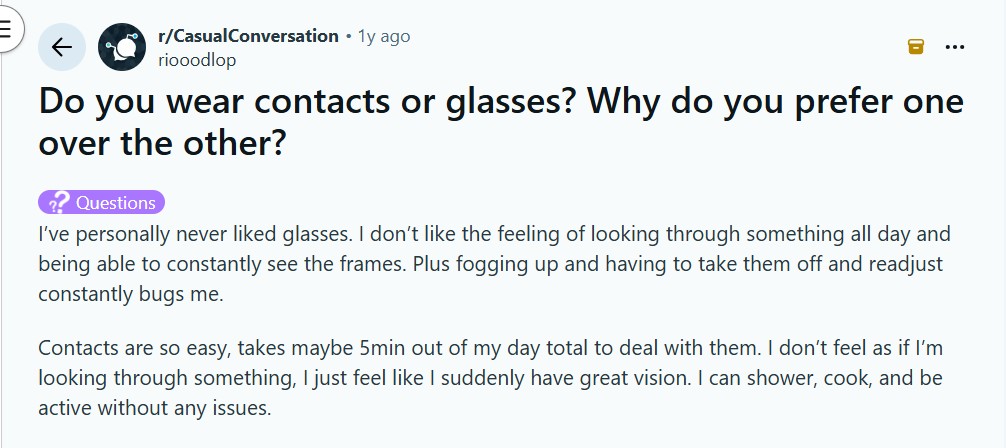
Over on Reddit, many users have asked for advice about choosing contacts or glasses. One thread, titled “Do you wear contacts or glasses? Why do you prefer one over the other,” features over 100 responses. The original poster, riooodlop, wrote:
“Do you wear contacts or glasses? Why do you prefer one over the other?
I’ve personally never liked glasses. I don’t like the feeling of looking through something all day and being able to constantly see the frames. Plus fogging up and having to take them off and readjust constantly bugs me.
Contacts are so easy, takes maybe 5min out of my day total to deal with them. I don’t feel as if I’m looking through something, I just feel like I suddenly have great vision. I can shower, cook, and be active without any issues.”
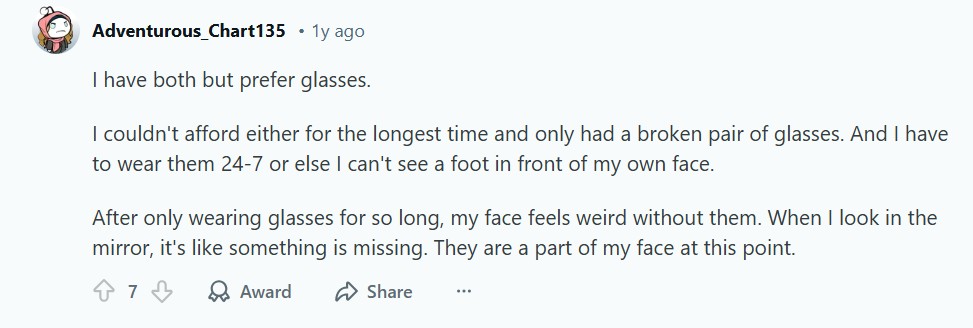
A Redditor named Adventurous_Chart135 said they prefer glasses:
“I have both but prefer glasses.
I couldn’t afford either for the longest time and only had a broken pair of glasses. And I have to wear them 24-7 or else I can’t see a foot in front of my own face.
After only wearing glasses for so long, my face feels weird without them. When I look in the mirror, it’s like something is missing. They are a part of my face at this point.”
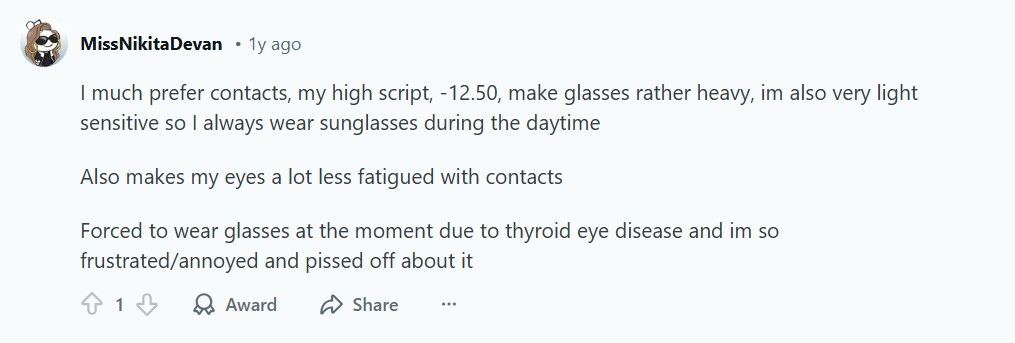
However, another Redditor named MissNikitaDevan said contacts work better for her:
“I much prefer contacts, my high script, -12.50, make glasses rather heavy, im also very light sensitive so I always wear sunglasses during the daytime
Also makes my eyes a lot less fatigued with contacts
Forced to wear glasses at the moment due to thyroid eye disease and im so frustrated/annoyed and pissed off about it.”
As you can see, there’s a pretty even split between people who prefer contacts vs. glasses. It all comes down to personal preference.
The Pros and Cons of Glasses vs Contacts
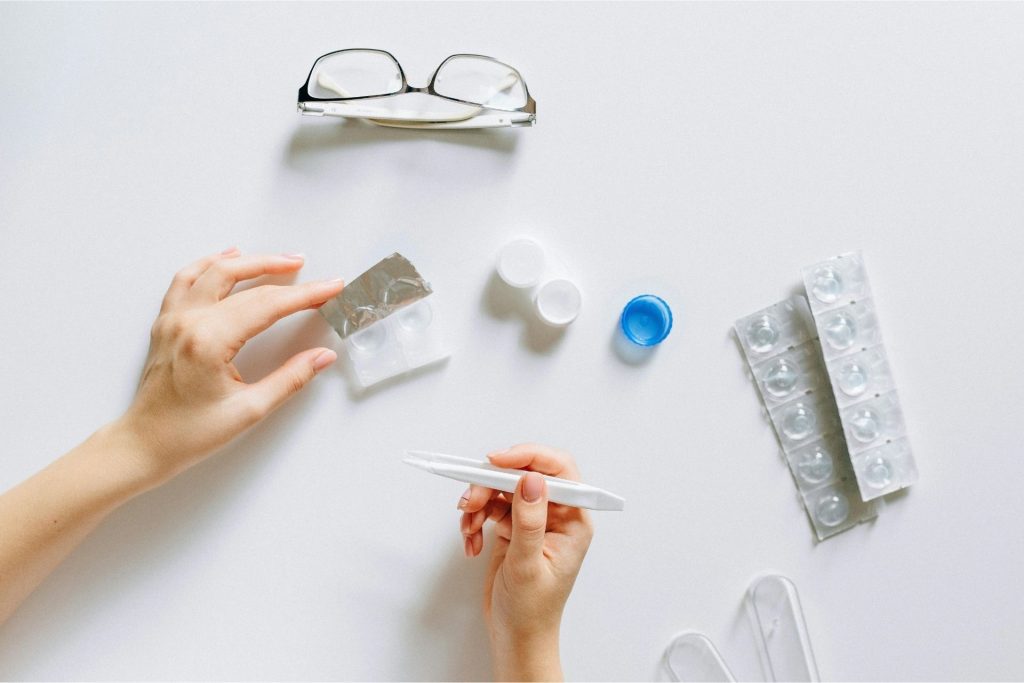
Person Holding Contacts and Tweezers
Still unsure about whether you should go for contacts or glasses? To help you with your decision, let’s go through some of the top pros and cons.
Contact Lenses
Pros
They’re designed to conform to the natural curvature of your eye. They give you a full field of vision without frames getting in the way.
They give you more freedom of movement, making them a good choice for those who live an active lifestyle.
They’re versatile; there are many different types available, including daily, weekly, and monthly options.
You can express yourself and change up your appearance by wearing colored contacts.
They’re not affected by weather conditions like humidity, rain, or snow. You won’t have to worry about contacts fogging up as you do with glasses.
Cons
It can take time to get used to putting them in and taking them out. It can feel intimidating at first.
It can be tricky to take care of contacts, particularly if you’re using weekly or monthly contacts that need to be stored in a certain way. Improper care of contacts can potentially lead to eye infections.
They have to be replaced more frequently than glasses, which can potentially make them more expensive.
They can potentially cause dry eyes or discomfort, especially in long-term wear.
Contacts are delicate and require more gentle handling than glasses; otherwise, they may tear.
Glasses
Pros
Glasses are very convenient; it’s easy to put them on and take them off.
They offer protection from dust and wind. Some will also protect from UV rays.
You can choose from a wide variety of frames and pick glasses that fit your unique style.
They’re non-invasive; there’s no contact with your eyeballs, which avoids issues like infection that can come from contact lenses.
They can be cheaper than contacts since they don’t have to be replaced as frequently.
Cons
They can be inconvenient, particularly while exercising or playing sports. They could fog up or slip off.
They can sometimes block peripheral vision, restricting your view.
Some pairs can feel heavy or uncomfortable, and they could leave marks on your nose.
The lenses can reflect your eyes or other objects behind you, which could be distracting to people you’re conversing with.
They require maintenance, including frequent cleaning. They can also potentially get lost or broken.
Can You Order Contact Lenses and Glasses Online?
Using Computer
Once you get your new prescription from your optometrist, you can easily order new contact lenses or glasses online. EZContacts makes this simple; after you create an account, you can upload your prescription and have it ready to go anytime you want to order new eyewear.
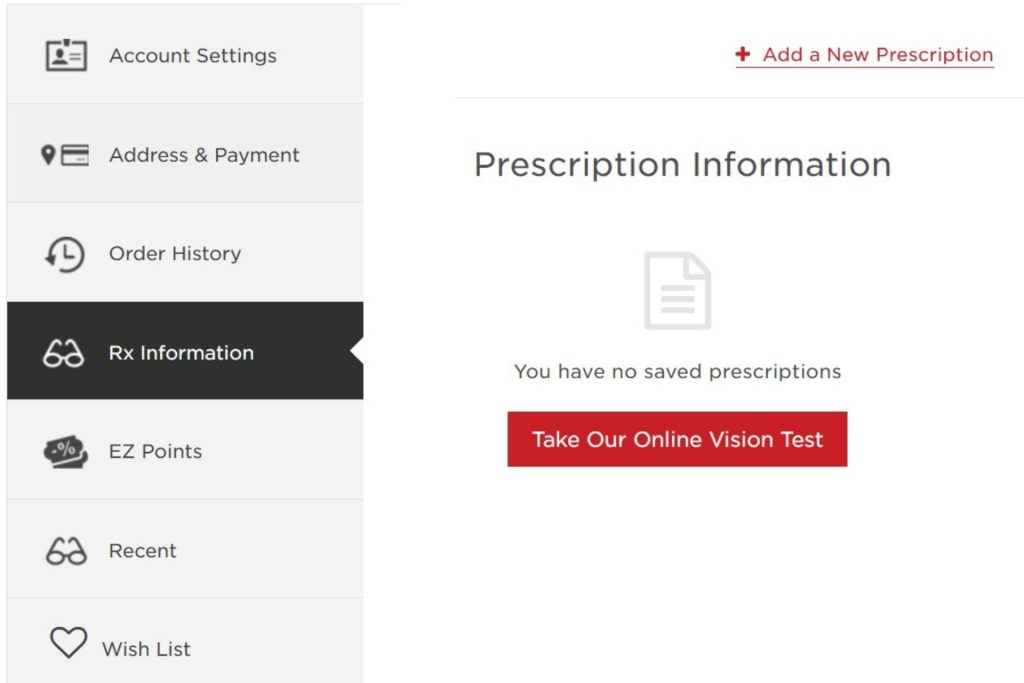
Uploading your contact lens or glasses prescription is easy. On your EZContacts account, click on Rx Information. Then, click ‘Add a New Prescription.’
Prescription Information on EZContacts
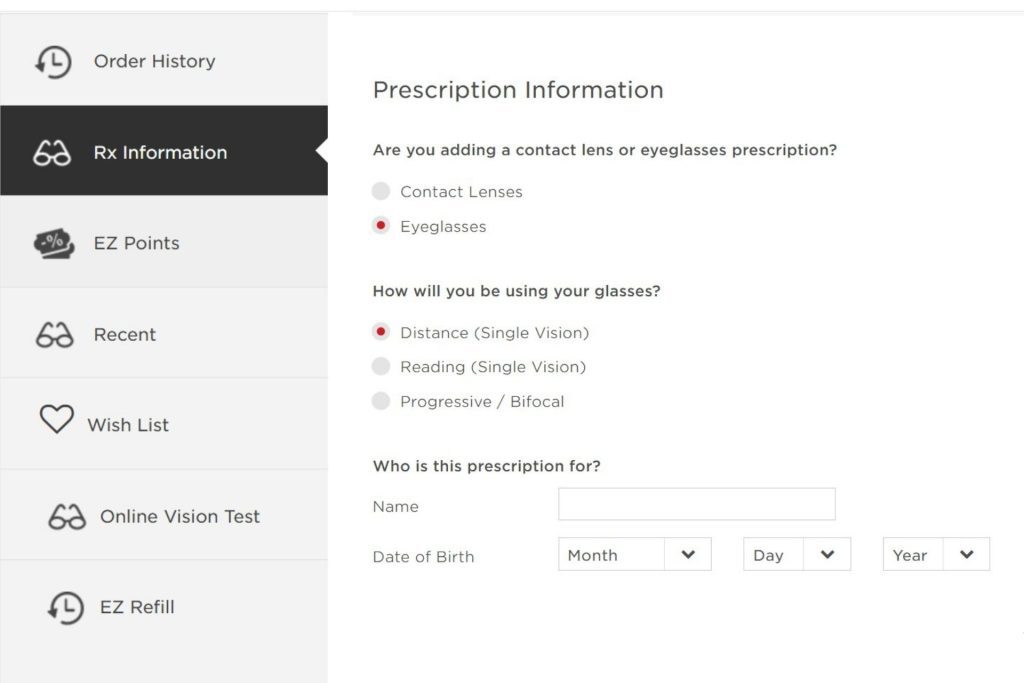
On the prescription page, you can manually enter your prescription. Make sure to double-check that all the numbers match what’s on your written prescription.
Prescription Information on EZContacts
You can also upload a prescription scan:
Uploading Prescription on EZContacts
Once your prescription is uploaded, you can begin shopping for the contacts and glasses that fit your lifestyle and fashion sense.
TL;DR
Contact and glasses prescriptions aren’t the same. While both treat refractive errors, they do so in different ways.
The main reason these two prescriptions are different is that glasses sit about 12 millimeters from the eyes, while contacts sit right on the eyes.
Contacts and glasses’ prescriptions include a few different features. Contact prescriptions include lens diameter, base curve, lens brand, and expiration date.
You can’t convert a contact prescription to a glasses prescription, or vice versa. If you want to switch eyewear devices, schedule an eye exam. Your eye doctor will give you a new prescription.
Many people struggle to choose between glasses and contacts. Both offer different pros and cons.
Some of the pros of contacts include more freedom of movement, a specific fit, and versatility. Some of the cons are potential dryness and irritation, difficulty taking them in and out, and potential cost.
Some of the pros of glasses are convenience, trying out different styles, and the fact that they can be cheaper than contacts. Some of the cons include potential obstructed vision, inconvenience while playing sports, and some pairs feeling heavy or uncomfortable.
If you’re ready to buy new contacts or glasses, you can easily upload your prescription to EZContacts.
I’m a Florida-based lifestyle and content creator who writes about the latest in eyewear, from smart lenses to sustainable frames. I have a Bachelor’s degree from Fairleigh Dickinson University and a Master’s Degree from the University of Edinburgh. I’ve previously worked for Gemini Literary Magazine, Featured, Brainfall, Shareably, and The Feed. When I’m not writing, you’ll find me exploring museums, hiking new trails, or soaking up the sun at the beach (always with great sunglasses, of course).