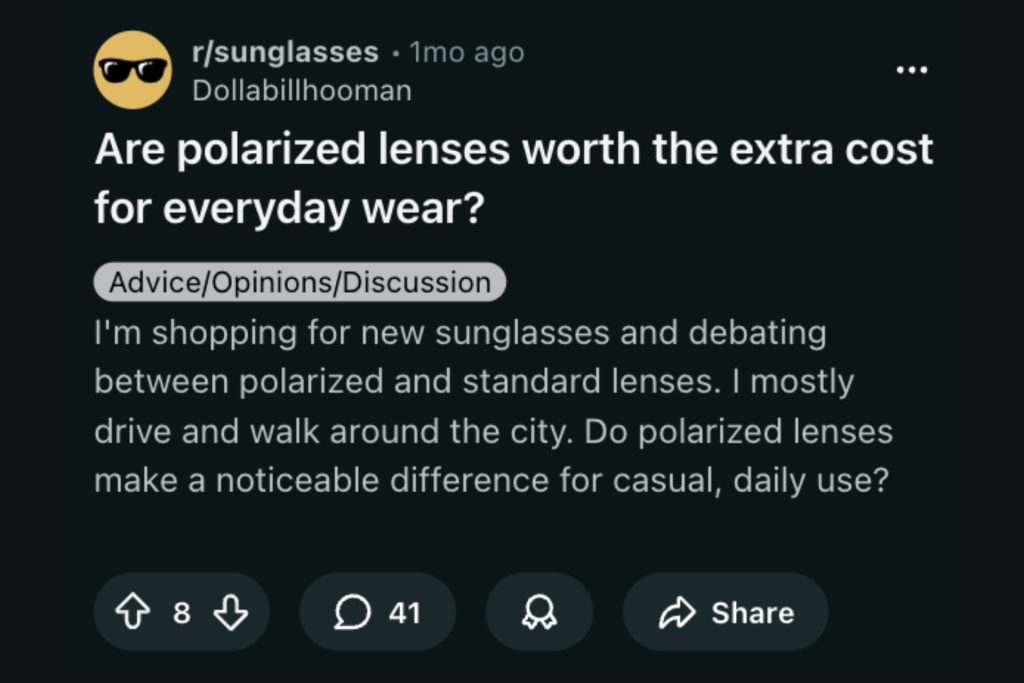
Over on Reddit, I came across an interesting thread about polarized lenses. Original Poster (OP) Dollabillhooman was choosing between sunglasses, and he wondered if he should get a pair with polarized or standard lenses:
“I’m shopping for new sunglasses and debating between polarized and standard lenses. I mostly drive and walk around the city. Do polarized lenses make a noticeable difference for casual, daily use?”
The responses were quite considered, with users chiming in with their thoughts backed by actual experience.
Fightclubdevil was quick to say yes. He said:
“Yes, especially for driving and fishing. But for everything else too.
Once you go polarized, it’s hard to go back.”
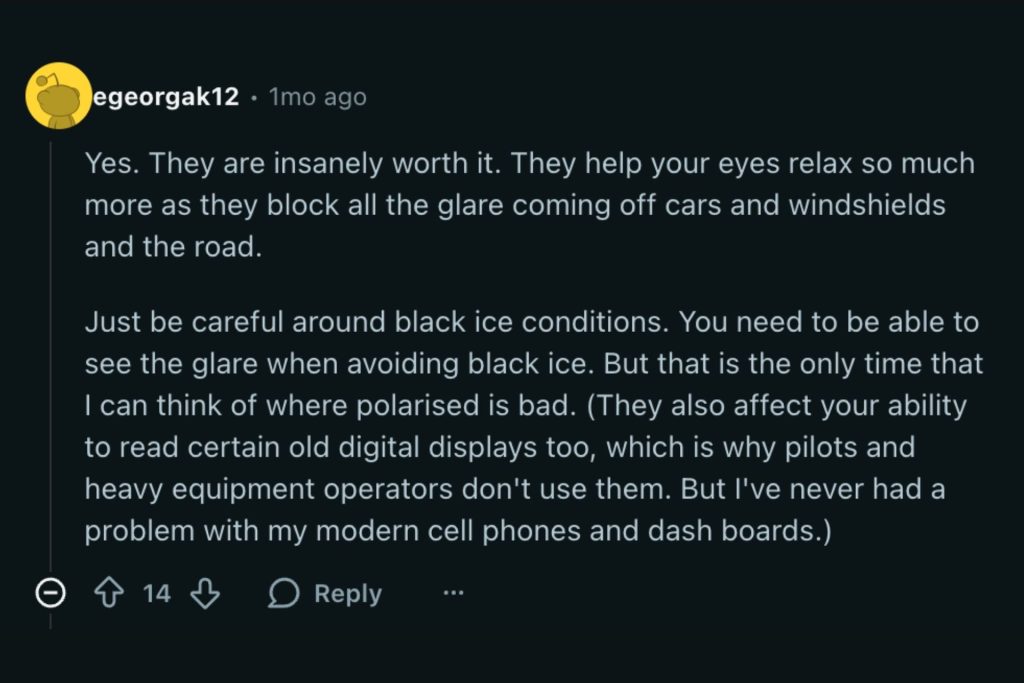
User egeorgak12 agreed but gave a few warnings about when polarized lenses don’t work so well. He said:
“Yes. They are insanely worth it. They help your eyes relax so much more as they block all the glare coming off cars and windshields and the road.
Just be careful around black ice conditions. You need to be able to see the glare when avoiding black ice. But that is the only time I can think of when polarized is bad. (They also affect your ability to read certain old digital displays too, which is why pilots and heavy equipment operators don’t use them. But I’ve never had a problem with my modern cell phones and dashboards.”
Black ice is a thin, transparent layer of ice that coats roads. It blends in with the dark pavement, making it hard to detect.
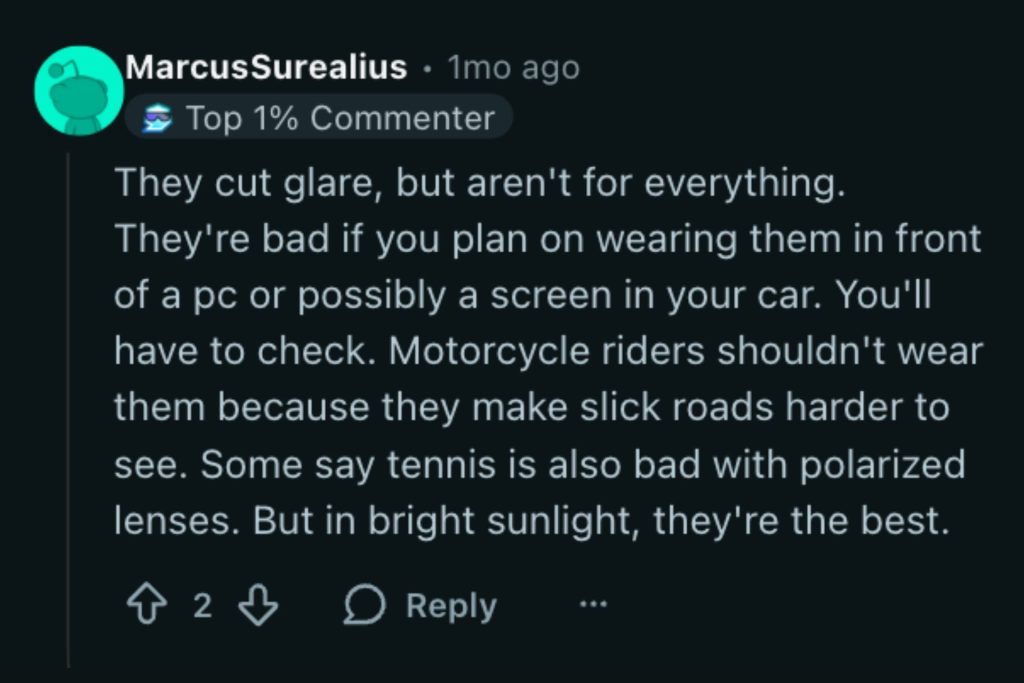
MarcusSurealius seconded the icy road warning when wearing polarized sunglasses. According to him:
“They cut glare, but aren’t for everything. They’re bad if you plan on wearing them in front of a pc or possibly a screen in your car. You’ll have to check. Motorcycle riders shouldn’t wear them because they make slick roads harder to see. Some say tennis is also bad with polarized lenses. But in bright sunlight, they’re the best.“
Dry-Mousse-6172 told of his not-so-ideal experience when using polarized lenses with an old Lexus’ polarized screen. He only saw black!
“My old lexus’s screen is polarized so when I back up it’s completely blank unless I tilt my head or take my glasses off. That’s my biggest problem. The new ones I don’t think do that cuz they’re not as stupid and polarizing in the exact perpendicular direction as sunglasses.”
These users raise interesting points that definitely should be considered when picking out your sunglasses. What’s more is that these experiences are backed by science!
The Science Behind Polarized Lenses
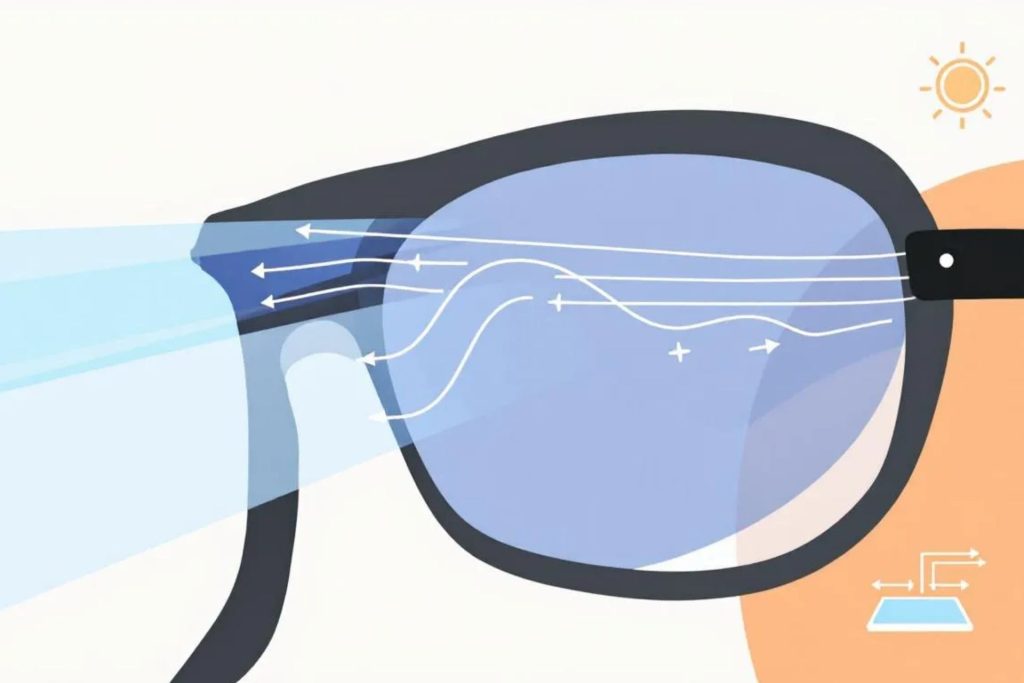
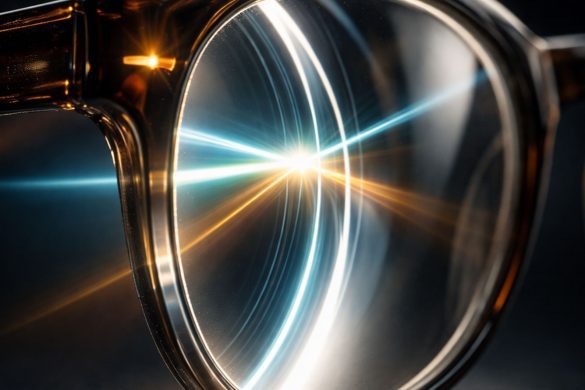
Cartoon Rendition of Sun Rays Being Filtered by Sunglasses
Polarized lenses are designed to block horizontal light. As a result, the light reflecting off smooth surfaces is reduced. With less glare, you see what’s ahead more clearly. Plus, your eyes don’t get strained as much.
How Polarization Works
Polarized lenses feature a filter that acts like tiny blinds. These ‘blinds’ allow in vertical light and block horizontal light. Horizontal light is what primarily causes glare.
This filter is achieved by applying a chemical treatment to the lenses. With this treatment, molecules align in such a way that they allow only vertical light to pass through. The selective filtering reduces harsh glare from light reflecting off flat surfaces, like roads, water, or snow.
Imagine, for example, a bright sunny day on the beach. With light reflecting off water, it might be nearly impossible to see the sea. With polarized sunglasses, you can block the glare and see the ocean’s blue without squinting and straining your eyes.
Why Reduce Glare?
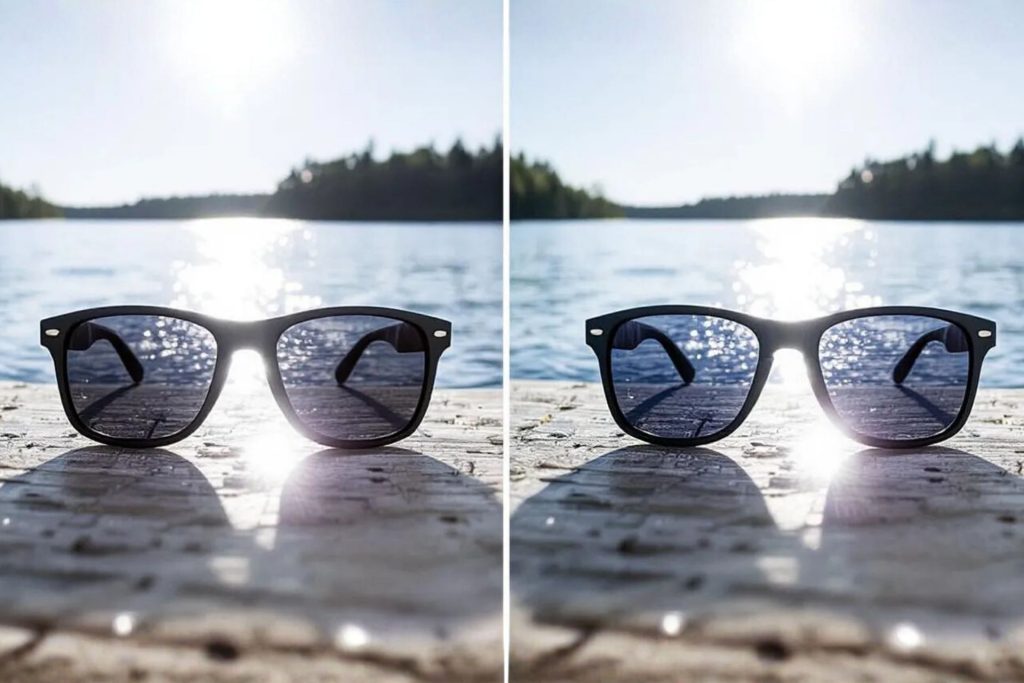
Views From Standard vs. Polarized Sunglasses
Glare adds stress to your eyes when you’re out and about on a bright sunny day. Your eyes work harder just to see what’s ahead clearly. Likewise, you might feel some discomfort from the light reflecting off your eyes. Your eyes tire out more easily.
An additional benefit here is that you can actually see colors more clearly. Instead of an outdoor view that’s washed out by sunlight, the brightness is reduced, and colors pop. The greens are more striking. The blues of the sky and sea become distinct. The scenery appears more vibrant.
This improved view is particularly helpful for boating and fishing enthusiasts, athletes, and drivers. You perform better when you can see clearly and distinctly what’s in front of you.
Situations Where Polarized Sunglasses Aren’t Ideal
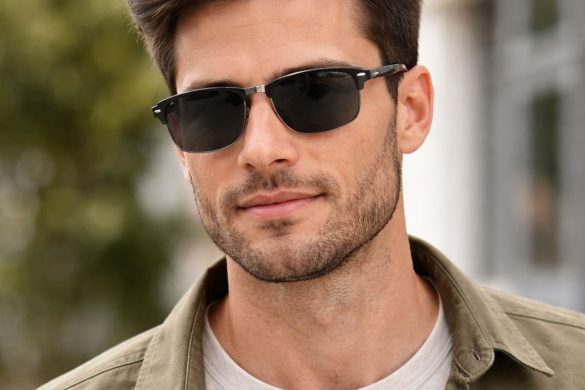
Man Wearing Sunglasses and Using a Laptop
While polarized lenses are generally beneficial, there are conditions where they might be more bane than boon.
Using Old Digital Screens
Older, less advanced digital screens have polarizing filters to improve picture quality. This clashes with the filters of polarized lenses. So, if you look at these screens through your polarized sunglasses, all you might see is a black or distorted screen. You will need to change the screen’s orientation to remove the clash.
This typically happens with older tablets, desktops, and smartphones. One of the Redditors earlier shared experiencing this when using his polarized Lexus screen. This is something to be wary of, especially if you rely on your screens for navigation.
You won’t encounter this as much with newer screen technology. Modern smartphones often come with circular polarization, which doesn’t clash with polarized lenses in the same way. Likewise, newer screens may use different backlighting technology, which helps reduce the clash.
Low Light and Night Driving
Polarized sunglasses are designed to reduce light intensity. However, situations like low light and night driving actually benefit from having ample lighting. Wearing polarized lenses might worsen visibility and compromise your safety.
Specific Activities and Environments
As one of the Redditors said, using polarized sunglasses might be detrimental to safety when driving on icy roads. In cases like this, reflected light works as an alert. It tells you how to best maneuver through the environment.
So, take your environment and activities into consideration when choosing sunglasses.
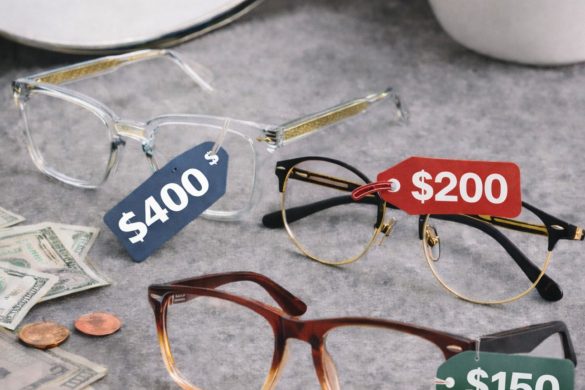
Are Polarized Lenses Worth the Extra Cost?
Investing in polarized sunglasses can be worthwhile, especially if you frequently engage in activities in bright, reflective environments. The primary benefit of polarized lenses is glare reduction. You can see more clearly with them and enjoy the vibrant colors of your surroundings.
They are particularly useful for activities like driving, boating, and outdoor sports where glare can be a major issue. However, also consider when polarized lenses aren’t ideal, such as when using some digital screens or driving in low-light conditions.
These sunglasses may cost a bit more, but if you spend most of your time outside, they’re worth it. You’re giving your eyes some protection.
Just make sure you’re buying quality polarized sunglasses to guarantee coverage and protection. If you’re buying in person, you can test the sunglasses by doing an LCD screen test.
To perform an LCD screen test, hold up the sunglasses to your phone’s screen. Rotate the sunglasses by 90 degrees while looking through them. At some point during your rotation, the phone screen should appear black or distorted. This is a sign you’re looking at quality polarized sunglasses.
It can be harder to test for polarization when buying online. Some sunglasses manufacturers have certification labels or a ‘P’ marking on the lenses; make sure to look for those when you’re buying your sunglasses.
The best bet is to buy your sunglasses from reputable stores that only sell authentic eyewear, such as EZContacts. At EZContacts, you can filter for polarization while you’re searching for sunglasses. This makes it easy to ensure you’re buying high-quality polarized eyewear.
TL;DR
A Reddit conversation asked if polarized lenses are worth the extra cost. Many said yes, but with some warnings on when polarized sunglasses don’t work as well.
Polarization reduces glare by filtering out horizontal light.
Polarized lenses benefit those who spend a lot of time outside by allowing them to see more clearly. Colors pop. You also experience less strain on your eyes.
You might run into problems when using polarized sunglasses with old digital screens and while doing activities in low-light/nighttime conditions.
Polarized lenses are worth it if you spend a lot of time outdoors in the sun.
Make sure you get quality polarized sunglasses. When shopping in person, do a simple LCD screen test. When shopping online, look for the P mark on lenses or certification labels. Better yet, shop only at trustworthy online stores.
I cover eyewear news, emerging trends, and industry developments. I have a Bachelor’s degree in Economics, and I’ve worked for Yapak Travel Online, Great Lakes Family Magazine, Echoes Magazine, and R & G Publication. I’m a PADI Master Scuba Diver, and when I’m not writing, you’ll typically find me below the sea.