


Did you know that before there was a ‘mic drop,’ there was the ‘monocle drop?’
A monocle drop is a way for the wearer to express surprise or disdain. It’s said to be a practiced gesture that only the elite can pull off! Fascinating, no?!
The monocle is a lens that rests along the upper cheekbone, held in place by the muscles around the eye. You might associate it with villains like Sherlock Holmes’ archenemy Professor Moriarty or Mr. Monopoly (yes, in my opinion, Mr. Monopoly is a villain). Or, maybe you imagine genteel aristocrats in tuxedos.
Monocles have a fascinating history overall. Are you looking to buy a monocle? Read this first before you buy your eyewear!
The Origin Story of Monocle Glasses
There is no precise data on when the monocle originated exactly. There are theories, though.
Eyeglasses were invented in the 13th century. These weren’t the eyeglasses that we know today. Back then, glasses were lenses that were framed in small paddles. The paddles were connected via a rivet. And then the whole contraption sat on your nose.
You can imagine that having this on your nose was a balancing act. You could tighten the rivets so they clip onto your nose bridge more securely. Even then, it was uncomfortable.
Enter monocles. This single lens eyewear presented a more portable option that’s also a step up in terms of fashion.
Another origin story theory places monocles in the 1720s, when antiquarian Phillip von Stosch needed lenses for looking at the details of his precious antiques. There is not much information regarding this origin story. But at the very least, historians gave Stosch some credit for making monocles fashionable.
The Monocle Comes of Age
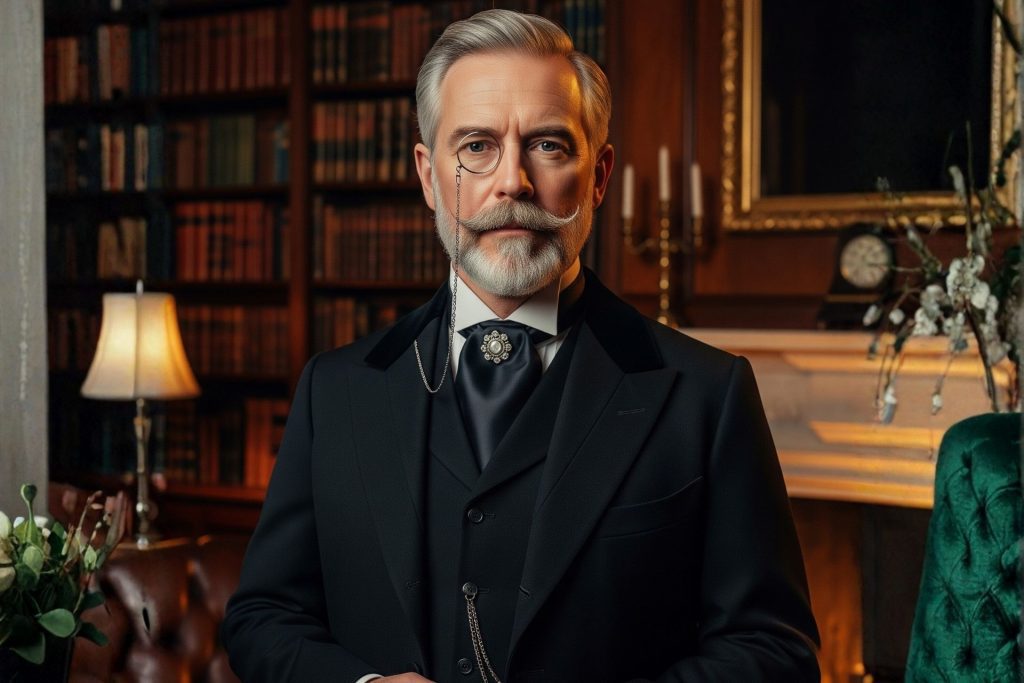
By the 19th and 20th centuries, monocle glasses became a symbol of wealth, intelligence, and prestige. They were particularly popular among European gentlemen and intellectuals, mainly as fashion eyewear.
And no, they weren’t just worn by fictional villains. Real people wore them, too!
Some of the more popular monocle-wearing historical figures include:
- Otto von Bismarck: Founder and first chancellor of the German Empire.
- Karl Marx: German philosopher, writer, and socialist.
- Alfred Lord Tennyson: British Poet Laureate.
- Joseph Chamberlain: British politician and statesman.
- Woodrow Wilson: 28th President of the United States.
- Sir Patrick Moore: British astronomer and TV presenter.
- Erich Maria Remarque: German author of the anti-war novel All Quiet on the Western Front.
And some real-life villains wore them as well:
- Walter von Reichenau: Nazi field marshal and commander.
- Walter Model: Nazi field marshal.
Not Just For Gentlemen of Means
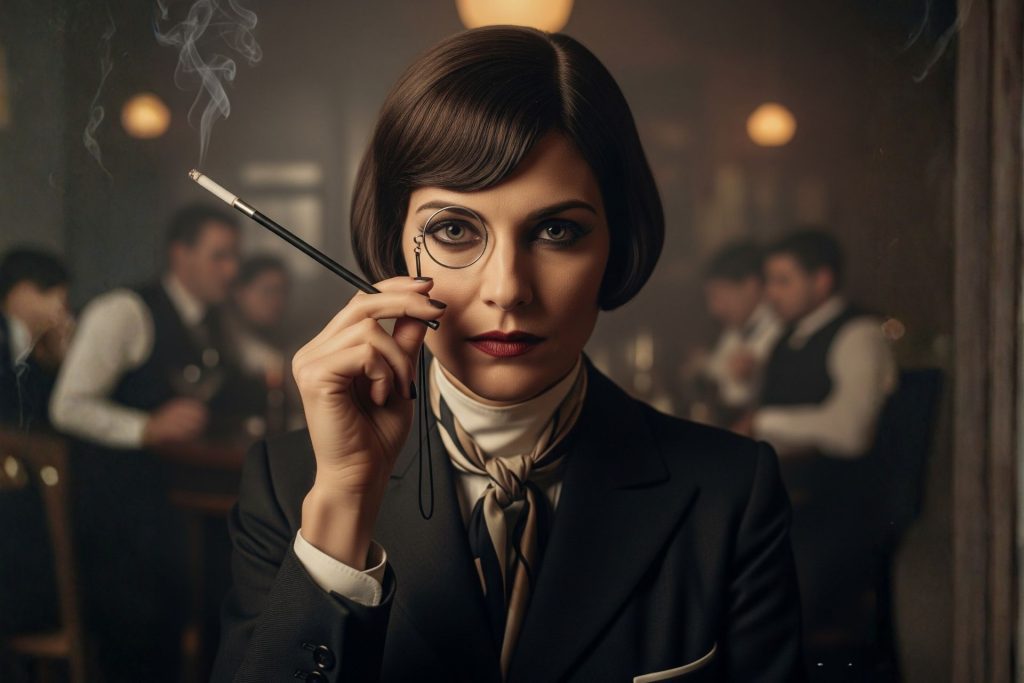
Interestingly, monocle glasses also became a fashion statement for rebellious women. This trend started in 1898 and was even headlined in an old London rag, The Penny Illustrated Paper and Illustrated Times. The newspaper claimed that it was “the latest fashion among pretty girls in London.”
It took several decades before the monocle really took off as a fashion eyewear for women who wanted to break from societal norms of the early 20th century.
In an article titled Monocles of Modernity, assistant professor Marius Hentea described how the monocle-wearing trend grew at two all-women’s colleges, Smith and Vassar. In 1913, this trend “scared” officials into banning monocles from private girls’ high schools in Washington, D.C.
Taking a cue from the increasing use of monocle glasses as a signal of empowerment and individuality, lesbians of the 1920s also began wearing monocles while sporting cigarettes and short hair.
A Symbol of Status and Style
More than anything, monocles were symbols of status and style. They weren’t necessarily worn as corrective eyewear. For men, it was fashionable and a sign of prestige. For women, it was a statement of individuality and rebellion.
Monocle glasses featured gold, silver, or tortoiseshell rims; very similar to modern frames. They were distinguished through stylish engravings and, of course, the wearer’s specific prescription.
As exemplified by the ‘monocle drop,’ the mere act of wearing a monocle was said to be an art that spoke volumes about the wearer.
The Monocle Decline
At some point, Hollywood got in on the monocle trend, with actor Jack Benny famously parodying monocle wearers by pretending to struggle with his eyepiece. While chronologically, this wasn’t the first marker of the monocle’s decline, the comedic takedown of imagined sophistication couldn’t have come out at a better time.
It was after World War II, and eyeglasses were becoming more accessible. Likewise, hard contact lenses hit the market, giving people more eyewear options.
People naturally turned to more effective and affordable eyewear choices. Thus, this made monocles a remnant of the past, left behind by advancements in eyewear design and technology, as well as changing tastes.
Modern Resurgence

While monocle glasses would pop up every now and then in Halloween costumes and a fashion feature or two, it didn’t hit revival level until 2010.
Hipster culture was in full force at that time. For his spring 2010 collection, fashion legend Martin Margiela came out with a monocle/magnifying glass that was intended as wearable art. Eyewear brand Warby Parker got in on the game, too, and they came out with a tortoiseshell monocle they named Colonel Mustard.
And so monocle glasses were worn again, finally, by hip trendsetters, aspiring musicians, and models. You could see them in trendy restaurants and cafes. Even The New York Times celebrated the monocle’s return.

This resurgence was short-lived, though, because…. Well, where are monocle glasses now in 2025? As a contact lens and eyeglasses wearer, I’d be interested to see the monocle back in use. An upgraded version, maybe, with a smart lens and all!
TL;DR
- There are several theories about the origin of monocle glasses. Antiquarian Phillip von Stosch’s need for specialized eyewear in 1720 is a popular theory.
- Monocles were widely used in the 19th and 20th centuries as signifiers of status and intelligence for men, as well as rebellion and individuality for women.
- Their use declined after World War II when more practical eyewear became easily available.
- Martin Margiela’s Spring 2010 collection and Warby Parker’s Colonel Mustard monocle are modern versions of the monocle.
- EZContacts doesn’t sell monocles. If you’re looking to buy one, there are a few online eyewear retailers that sell them. You can also try visiting a local optician.

