
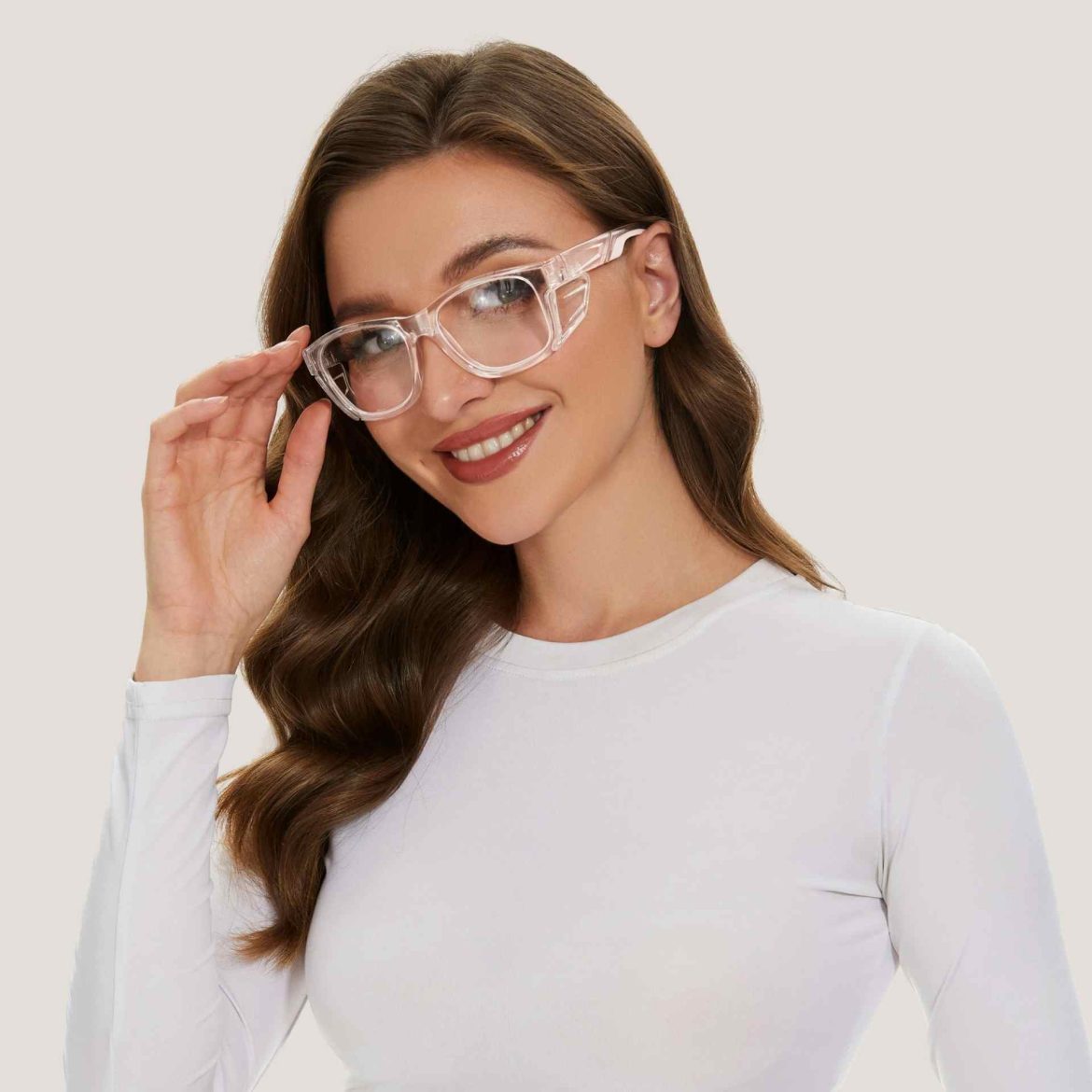

How about glasses made from the same material used in space helmets and bulletproof glass? Pretty cool, right?
Polycarbonate was initially developed in the 1950s for electrical insulation and aircraft cockpits. In the 1960s, it was used in the helmets worn by Apollo 11’s crew. It became bulletproof in the ’80s, sandwiched between layers of glass.
Soon, the eyewear industry saw the potential to turn this super-tough material into “super” lenses. Now, I’m here to answer your most pressing questions about polycarbonate eyeglasses!
Are Polycarbonate Eyeglasses Safe?
Yep, polycarbonate eyeglasses are safe. Maybe even safer than traditional glass or plastic lenses!
That’s thanks to their superior impact resistance, which is one reason they’re so often used in kids’ glasses, sports eyewear, and safety goggles.
Of course, don’t mistake durability for indestructibility. Polycarbonate glasses will still deform and scratch if handled carelessly. Make sure to give them the proper care they deserve!
How Does Polycarbonate Compare To Other Lens Materials?
Let’s take a look at how polycarbonate lenses compare to other commonly used lens materials:
- Glass: If you want clarity, glass lenses are IT! But then again, they’re usually on the heavier side. Plus, they are prone to shattering on impact. If you play sports or move around a lot, these aren’t for you.
- CR-39 Plastic: CR-39, short for Columbia Resin #39, gives you better impact resistance than glass lenses. They’re fantastic for everyday eyewear. Of course, they’re not as tough as polycarbonate lenses.
- High-Index Plastic: If you’ve got a strong vision correction prescription, this is the best plastic lens material for you. It’s thinner and lighter than CR-39, but the downside is that it does not have the same impact resistance as polycarbonate.
Are Polycarbonate Lenses Suitable for All Prescriptions?
Yep! Need high-power lenses? You can find polycarbonate ones! Polycarbonate is flexible and can be accurately shaped for a wide range of refractive errors. This includes astigmatism, farsightedness, and nearsightedness.
You’re limited when it comes to add-on lens coating, though. If you want tints or anti-reflective coating, you need to check with the manufacturer or retailer. These add-ons might not be available for your prescription.
What About UV Protection?
One amazing benefit of polycarbonate lenses is that UV protection is built in. This is an innate quality of the material; so yes, you can expect 100% UVA and UVB protection!
Of course, the quality of UV protection varies with the eyewear manufacturer. Some manufacturers may even offer enhanced UV protection coatings for their polycarbonate lenses. So, be sure to check on that, too!
Why Is Polycarbonate So Tough?
Polycarbonate is a type of thermoplastic polymer made of bisphenol A (BPA) and phosgene. Its molecules are dense, which adds to the material’s strength.
The raw materials go through polymerization, which results in polycarbonate resin. The resin is then melted and rolled into sheets and other shapes, a process called extrusion, before being cooled.
The result: one of the toughest materials for eyeglass lenses.
Do Polycarbonate Lenses Scratch Easily?

Unfortunately, that’s a yes, since polycarbonate is not scratch-resistant. The surface of these lenses is soft and prone to abrasion from sand, dust, and other abrasive materials.
Look for polycarbonate lenses with scratch-resistant coatings, which can improve the durability and longevity of your polycarbonate eyewear.
How Much Do Polycarbonate Eyeglasses Cost?
Polycarbonate lenses are generally more expensive than CR-39 plastic lenses and slightly cheaper than high-index plastic lenses. Your total cost depends on the frames, your prescription, and add-ons like anti-reflective or scratch-resistant coatings.
High-end frames come with higher price tags, but there are plenty of mid-range and budget-friendly options, too. With a bit of research, you’ll likely find glasses within your budget.
Are There Any Disadvantages to Polycarbonate Lenses?
The disadvantages of polycarbonate lenses are largely related to specific manufacturers and their formulations. These are rare cases, but of course, it’s helpful to be aware of them.
- Slight Yellow Tint: While older polycarbonate glasses may have a slight yellow tint, this is rare in newer lenses.
- Distortion Potential: On rare occasions, polycarbonate lenses for high-power prescriptions may exhibit slight distortion at the edges. This occurs only with improperly manufactured lenses.
How Do I Purchase Glasses With Polycarbonate Lenses?
Polycarbonate lenses are often offered as add-ons with an eyeglass purchase. For instance, at EZContacts.com, you can choose polycarbonate lenses under “Lens Options.”
Follow these easy steps to complete the process:
1. Choose your eyeglasses, including your preferred frame color or pattern.
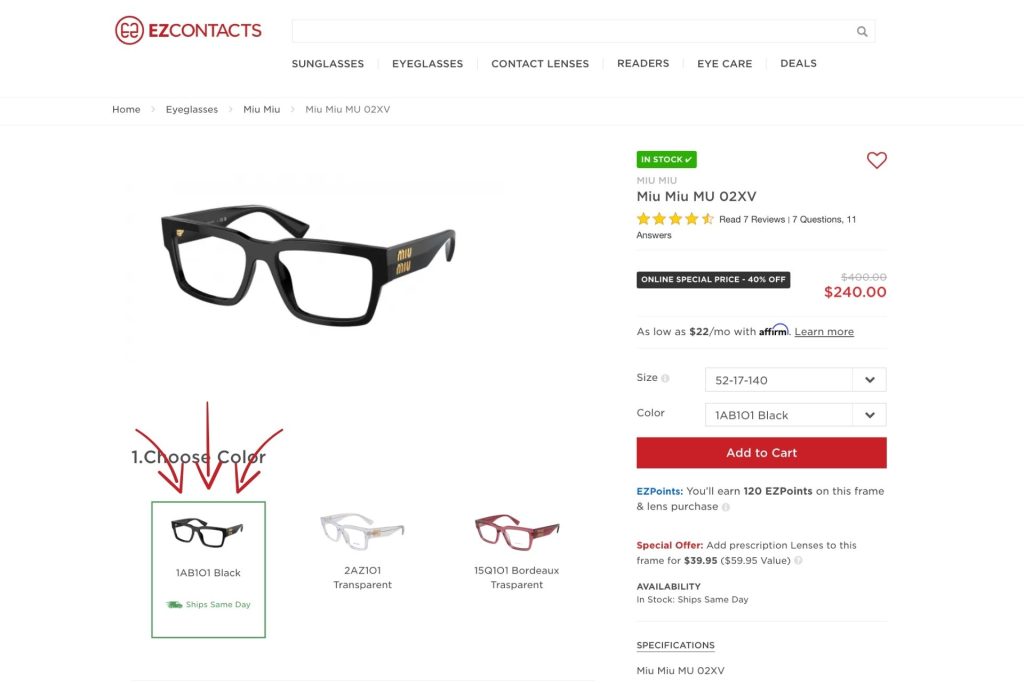
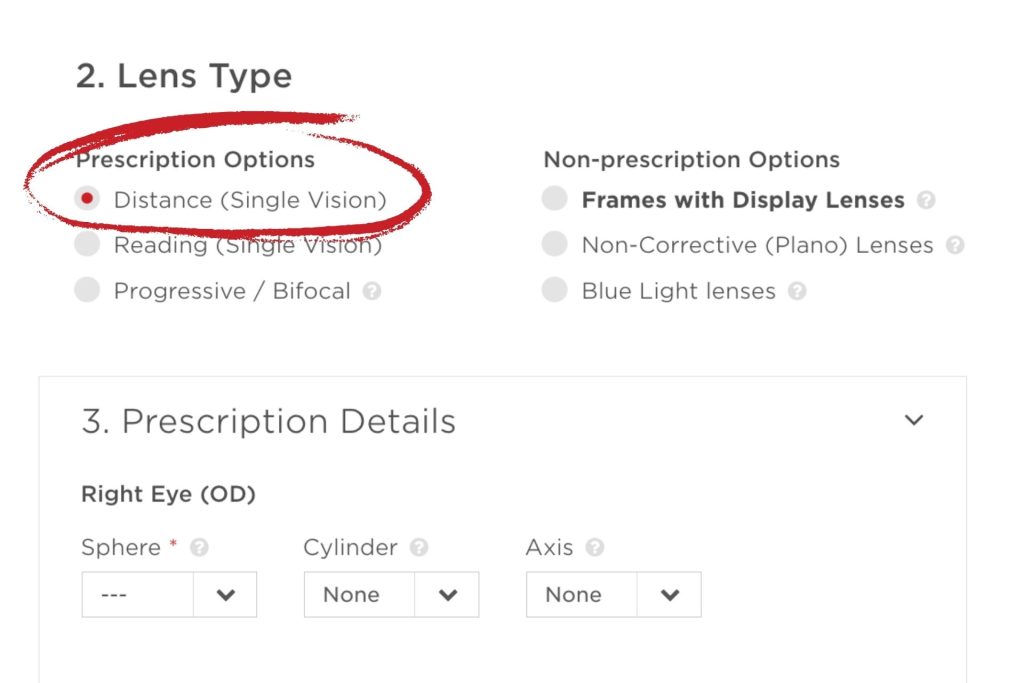
2. Select your lens type, based on the eye condition you’re trying to correct. Choose “Distance” for myopia or hyperopia, “Reading” for presbyopia, or “Progressive/Bifocal” for multiple vision corrections.
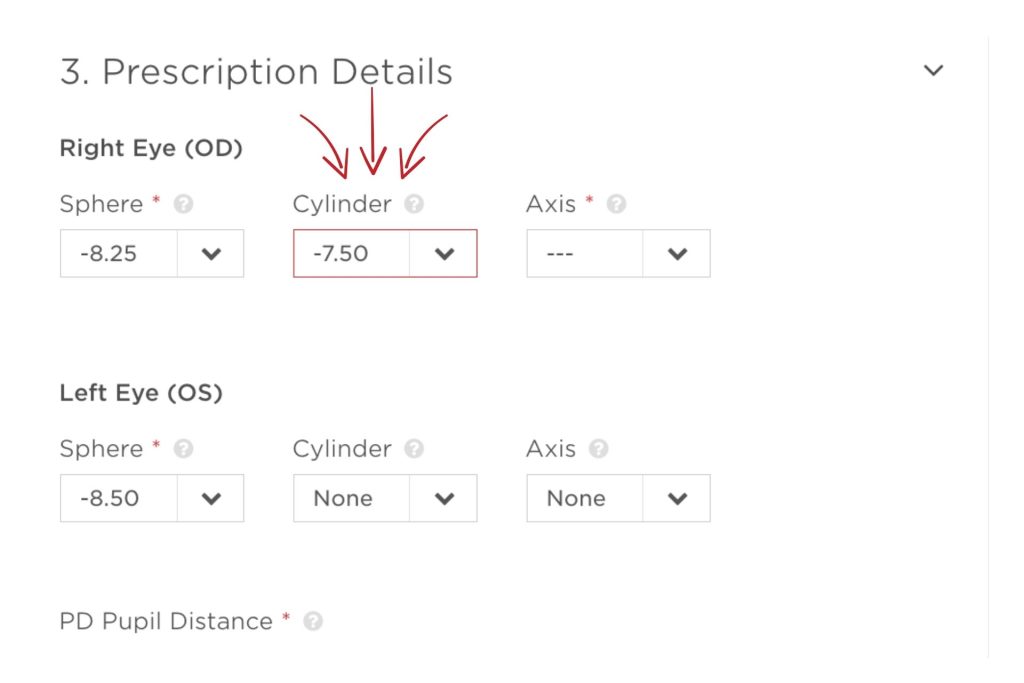
3. Next, enter your prescription details. The details should come from your eye doctor.
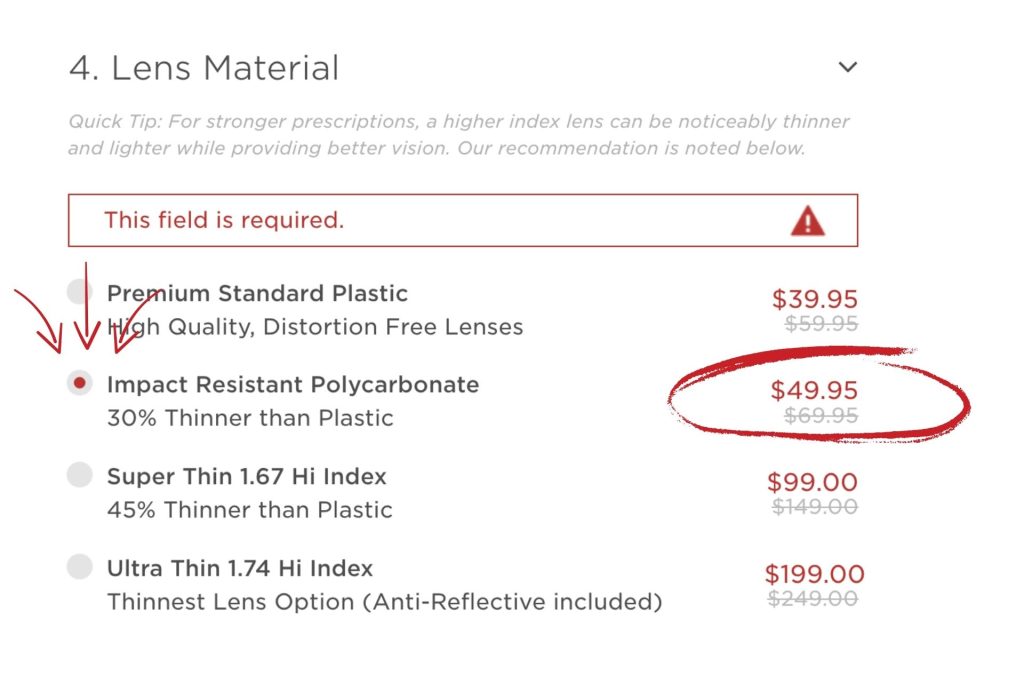
4. Choose the Lens Material. Select “Impact Resistant Polycarbonate” for an extra fee (currently $49.95).
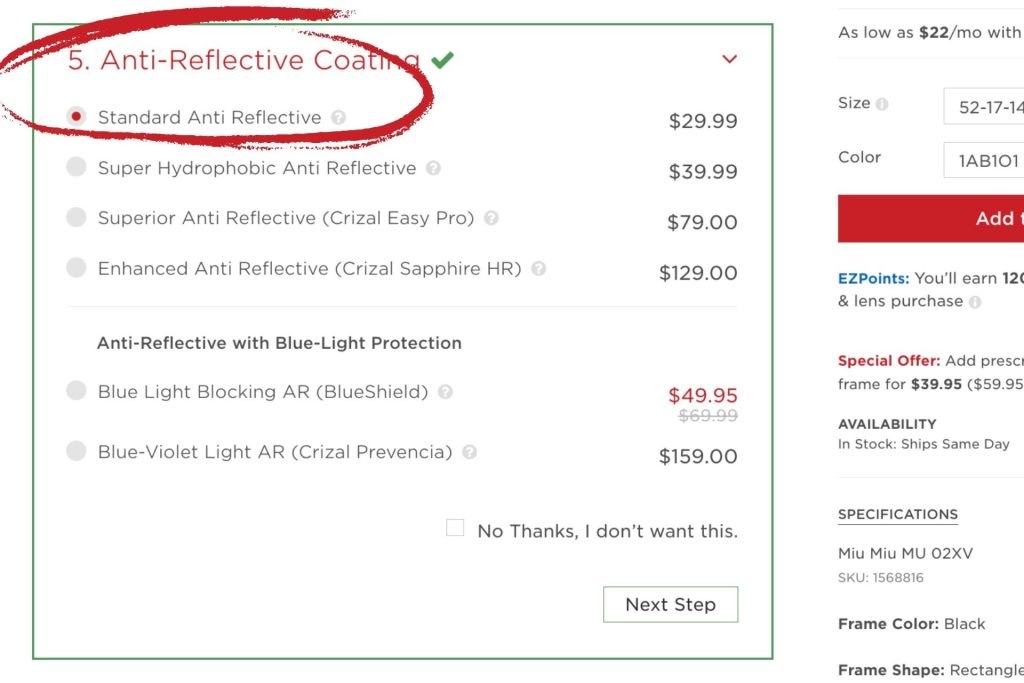
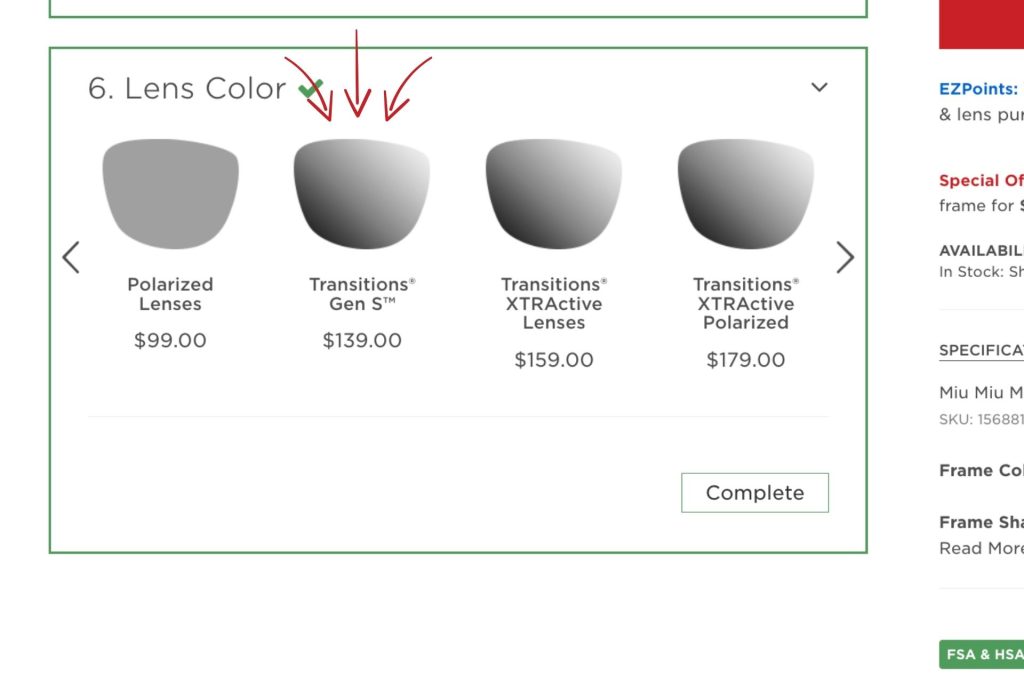
5. Finally, choose any other extras you’d like, such as “Anti-Reflective Coating” and “Lens Color.”
How Should I Care for My Polycarbonate Eyeglasses?
Care for your polycarbonate eyeglasses like you would glasses with less impact-resistant lenses. This will maintain the superior durability and longevity of your glasses. Here are a few things to remember:
Clean regularly using a microfiber cloth and lukewarm water. Avoid using abrasive materials, such as alcohol and regular cloths. If possible, use lens cleaning solutions and wipes designed explicitly for polycarbonate lenses.
Always place your glasses lens side up. Store them in padded cases or eyeglass holders, and keep them away from extreme temperatures. Extreme heat and cold might affect polycarbonate. So, it’s best to avoid these conditions.
Are Polycarbonate Lenses Used For Children’s Eyeglasses?

Polycarbonate lenses are among the best options for children’s eyewear. Children will be children; they run, jump, and trip over things. They’re more prone to accidents. There’s always a considerable risk of eyeglasses accidentally falling to the floor and shattering.
Polycarbonate glasses feature better impact protection. They’re also more lightweight, so your child feels more comfortable wearing them.
Are Polycarbonate Lenses Ideal for Sports Eye Protection?
Polycarbonate eyewear is the best option for athletes. You get superior impact protection, which is handy if there’s a fastball heading your direction. You also benefit from the built-in UV protection that these lenses offer. Go all out! Your polycarbonate glasses should be able to handle it.
TL;DR Summary
Initially developed in the 1950s for use in electrical insulation and aircraft canopies, polycarbonate became a staple of eyewear in the 1980s. It’s still a top pick for lenses today! Here’s what you need to know:
- Polycarbonate eyeglasses are safe, often safer than eyewear that uses traditional glass or plastic lenses.
- They’re available for all prescriptions, including astigmatism, nearsightedness, and farsightedness.
- Polycarbonate lenses are less expensive than high-index plastic lenses but cost more than CR-39 lenses.
- Glass offers the best clarity but is heavier and more fragile. High-index plastic is ideal for strong prescriptions but is less impact-resistant. CR-39 is a good everyday option; it’s just not as durable as polycarbonate.
- Polycarbonate glasses also provide built-in UV protection.
- One downside is that polycarbonate scratches more easily than glass, so protective coatings and proper care are essential.
Bottom Line: Polycarbonate lenses are now among the safest, most impact-resistant lens options, ideal for kids, athletes, and everyday wearers who value durability, UV protection, and affordability.

