

Buying glasses for yourself is easy. Once you know your vision correction needs, you browse the selection, find a pair you like, and buy them. But buying toddler glasses? That’s a whole new journey with a lot to consider.
Don’t worry! I’m here to cover everything you need to know to make it easier to choose the perfect eyewear for your child.
Understanding Your Child’s Vision Needs
The first step to buying toddler glasses is to understand your child’s needs. Start with a trip to your pediatric ophthalmologist or optometrist. A comprehensive eye exam will assess the type and degree of your child’s refractive error, and see if they are nearsighted (myopia), farsighted (hyperopia), or suffer from astigmatism.
Your doctor will also determine if there are any other issues, like strabismus (misaligned eyes) or amblyopia (lazy eye). Additionally, they will check for possible underlying conditions affecting your child’s vision. All of this will be considered in the prescription. Early intervention is key!
Determine Your Budget
Once you find out your child needs eyeglasses, eye care and eyewear become a regular part of the family budget. So be realistic when shopping for toddler glasses.
The average cost ranges from $49–$124, but before beginning your eyewear shopping, know what your insurance and FSA or HSA cover. Then, set an out-of-pocket budget, and stick with it.
Choosing the Right Frames
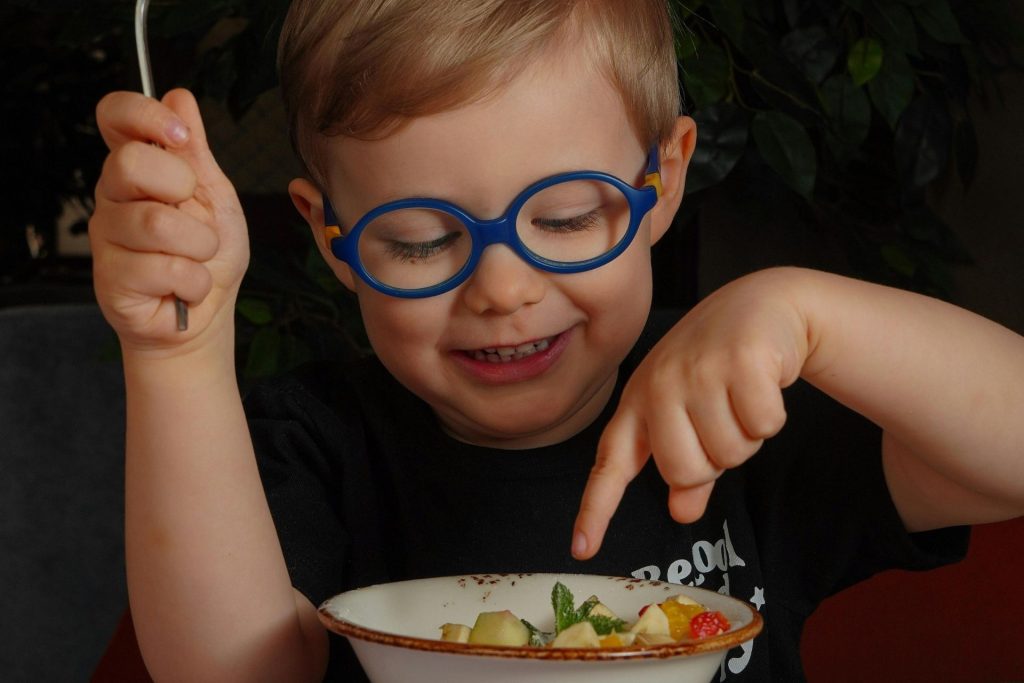
When choosing frames for your child, look beyond the aesthetics. Sure, your child’s glasses need to look good. But it’s best to narrow your selection to frames that are durable, flexible, and kid-friendly before making a final decision based on look and feel.
Material
Choose materials that are lightweight and flexible, such as plastic or acetate. These don’t break as easily. Plus, they’re not as fragile, just in case your child accidentally bumps into something or sits on their glasses.
Pro Tip: There are children’s glasses that look extra rigid. I recommend avoiding them. They can feel quite uncomfortable around your child’s temples and nose bridge.
Durability
Toddlers will be toddlers. Play is a part of life, and kids are prone to mishandling their glasses in pursuit of fun. So, it’s best to choose glasses with reinforced hinges and arms.
Sizing and Fit
Proper fit is super important in toddler glasses. The eyewear you choose should sit comfortably on your toddler’s face without slipping, feeling heavy, or causing pressure. Prioritize frames with adjustable nose pads and arms so you can adjust them when needed.
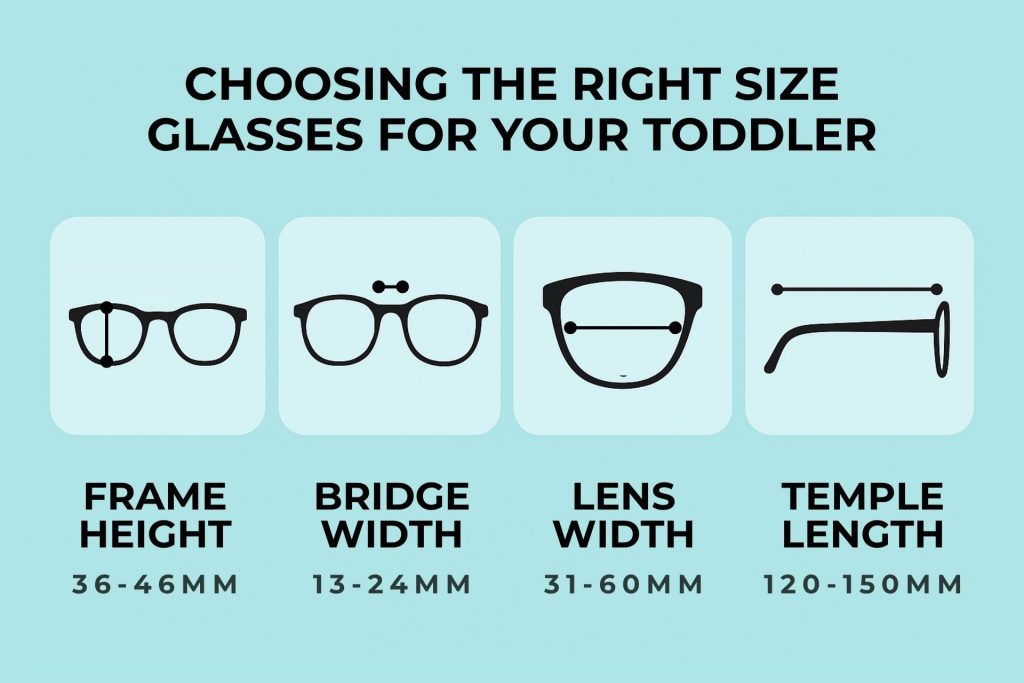
Arms hold the frames in place. They should fit snugly and feel comfortable. The arms shouldn’t be so long that they extend past the sides of the face. That’s a safety hazard while also looking aesthetically unappealing.
An optician can help you determine the appropriate eyewear size based on your child’s measurements. Note the four measurements in the image below, along with the typical size range expected for toddlers:
Style and Design
Finally, consider the look and feel. It’s important to see what appeals to your toddler. You’ll want them to feel proud to put their new glasses on!
Avoid frames with sharp edges. Also, skip glasses with small detachable parts that a child can potentially choke on.
While the decision on eyewear for your child ultimately depends on you, it’s always a good idea to ask for your child’s input. They will likely be more willing to wear their glasses if they get a say in choosing them.
Choosing the Right Lenses
Lens selection is as important as choosing children’s frames. Here are a few things to consider:
- Lens Material: Polycarbonate lenses are best for lenses of toddler glasses. These are durable and impact-resistant. They don’t shatter easily, in case your child accidentally falls or mishandles their eyeglasses.
- Lens Thickness: Stronger prescriptions typically come with thicker lenses. Thick lenses can feel heavy and uncomfortable. Consider thinner lenses, which may cost more but are often more comfortable and look better.
- UV Protection: Your child’s eyes need UV protection even on cloudy days. Choose lenses that offer 100% UV protection.
- Anti-Reflective Coating: This reduces the glare reflected off surfaces like water and snow. Getting lenses with anti-reflective coating is especially beneficial if your child is sensitive to light.
- Scratch Resistance: Toddlers aren’t always as careful with their things as we’d like them to be, so scratch-resistant lenses help!
Additional Accessories
There are eyewear accessories that can help you extend the life of your toddler’s glasses. They include the following:
- Straps: These are a great way to secure the eyewear of active toddlers. In case the glasses get bumped during play, they won’t go far!
- Case and Cleaning Cloth: As toddlers begin to do things for themselves, encourage them to watch, then even help you clean and store their eyewear. It’s the perfect way to teach them to care for their belongings.
Managing Your Child’s Eye Care Long-Term
Buying toddler glasses is a big step for any parent or guardian. You’re now responsible for another person’s eye care and eyewear, and that’s big!
Look to your eye doctor for help. Their recommendations will guide you on what you need to do, so schedule regular visits. Then, make sure you monitor your child’s vision correction needs.
In time, they might require stronger prescriptions, but they don’t know how to tell you about their symptoms yet. Teach your toddler to communicate with you if and when they begin to experience changes in how they see things.
Likewise, you’ll need to educate them on caring for their eyes. Something as simple as reading with the proper lighting and taking breaks from screen time can go a long way.
TL;DR Summary
- Understand Vision Needs: Schedule a comprehensive eye exam to determine your child’s prescription and check for conditions like amblyopia or strabismus.
- Set a Budget: Toddler glasses in our store range from $49–$124; factor in insurance, FSA, or HSA coverage.
- Pick the Right Frames: Prioritize comfort, durability, lightweight materials, and adjustable fit. Let your child have input when possible.
- Select the Right Lenses: Polycarbonate lenses with UV protection, scratch resistance, and optional anti-reflective coating are ideal.
- Use Accessories: Straps, cases, and cleaning cloths help protect glasses and teach responsibility.
- Manage Eye Care Long-Term: Schedule regular checkups and educate your child on caring for their eyes and glasses.
Bottom line: Choosing the right toddler glasses means balancing prescription accuracy, comfort, durability, and your child’s willingness to wear them.

