
Fogged-up glasses can be the worst thing! They ruin your view and may even compromise your safety. Anti-fog for glasses is sold as the solution for this, but is it really worth it? Let’s get into it!
Foggy Glasses Facts
Why do foggy glasses happen? Well, it’s all about condensation. When warm air meets a cold surface, you get water vapor that condenses into droplets. On any other surface, this is fine. But on your glasses? Clear vision turns into zero vision!
Typical scenarios:
- You’re cozying up with a book on a cool night, sweater and reading glasses on, and you take a sip of hot tea.
- You walk into an air-conditioned gym on a muggy day. You don’t have time to put in your contacts before your intense HIIT class!
- You go outside for a walk on a cool winter day.
- You walk out of a steamy shower and try to put on your glasses.

Anti-Fog for Glasses: Your Options
Anti-Fog Sprays and Wipes
Anti-fog sprays and cloth wipes are some of the most accessible and inexpensive options on the market. They’re also very straightforward to use. Before you put on your glasses, use the spray on the lenses. Then, wipe the spray off with a non-abrasive cloth. That’s it.
Do these sprays work? Most of the time. It depends on how intense the environment is and how thoroughly you sprayed and wiped. Additionally, the effectiveness is temporary. You will need to reapply after a few hours.
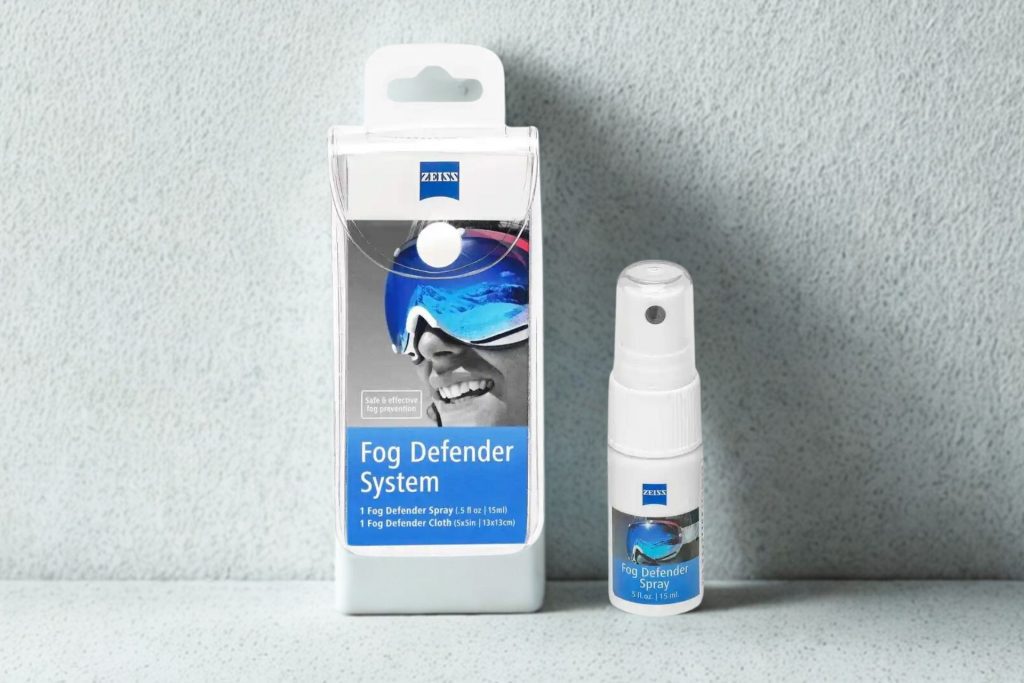
Take Zeiss Anti-Fog Defender System Spray, for instance. It’s a bestselling anti-fog spray made by Zeiss, a leading name in photography lenses. A pack includes their .5oz anti-fog spray and a 5X5 cloth. The anti-fog effect lasts for 72 hours, according to the label.
The spray is non-toxic and unscented. It uses Zeiss’ patented hydrophilic formulation that changes the behavior of water as it hits the lens surface, preventing fogging. It is designed to work on a variety of lenses, including standard glasses, eyewear with coated lenses and blue light blocking, and sunglasses, binoculars, camera lenses, and more.
Most of the verified EZContacts buyers love the spray! Debbie M. raves about it:
“Highly recommend this product!! This works great! My glasses don’t fog up when I wear a mask and go into a store to shop. I’ve told all my friends and family about it. Great purchase!! TY!!!!”
Anti-Fog Coatings
Many eyeglass and sunglass lenses are manufactured with an initial application of anti-fog coating. This isn’t permanent, though. With time, repeated exposure to the elements, and repeated cleaning, the coating wears off.
Anti-fog coatings on glasses generally work by creating a surface that attracts moisture and spreads this moisture thin, preventing fog formation.
The effectiveness of anti-fog coatings varies depending on the manufacturer and the environment you’re in. Some manufacturers use better and more durable coatings; others use thinner coatings that wear off faster. Likewise, extreme temperature changes or high humidity can prevent the anti-fog coating from working effectively.
How you care for your eyewear also affects how well its anti-fog coating works. Using abrasive materials, such as alcohol and tissue paper, will thin out the coating, and it wears off faster.
Anti-Fog Cloths
You can also find anti-fog cloths that are embedded with an anti-fog substance, typically a hydrophilic formulation that contains surfactants. Simply put, when applied, this substance reduces water tension on lens surfaces, thinning out the moisture and preventing it from forming fog.
These are microfiber cloths that you can reuse for six to 12 months. Kodak, for instance, has its Anti-Fog Lens Cloth, which can be reused up to 200 times. Like anti-fog sprays, the anti-fog effect only lasts for a few hours. After that, you’ll need to reapply.
DIY Anti-Fogging
And, of course, you can always DIY it. No, this does not mean wiping off your fogged-up glasses with whatever you have with you. There are homemade solutions and non-anti-fog products that do the trick, albeit temporarily.
You can mix water and soap. Thoroughly rub this solution on your lenses, then wash off with water. You can do the same with baby shampoo or toothpaste… an old diver’s trick when you forget your defogger.
This isn’t as reliable as actual anti-fog solutions, though. These substances aren’t made specifically for lenses. They may contain abrasive materials that degrade the quality of your lenses. You may be fixing your fogging situation now, but you’re also compromising the quality of your eyewear.
To Anti-fog or Not: The Pros and Cons
So, should you bother with anti-fog for glasses? Let’s look at the pros and cons.

Pros
Clear Vision
The top of the list is clear vision, of course! This is the whole point of using anti-fog for glasses. You want to be able to clearly see the world around you—without having to worry about your eyewear fogging up at an inopportune time.
Enhanced Safety
Fogging can come at any moment, even while driving or skiing down a mountain. Using anti-fog is a way to improve your safety.
Increased Comfort
It’s not fun to constantly remove and wipe off fog from your eyewear. A one-time defog can last for hours—that’s a better way to deal with foggy conditions.
Convenience
Anti-fog sprays and wipes, especially anti-fog cloths, are easy to carry around and use whenever necessary.
Cons
Cost
Temporary solutions, such as sprays and wipes, are relatively inexpensive. Lenses with anti-fog coating, however, are a bit more expensive than their non-treated counterparts. Price is something that you need to weigh when deciding on your anti-fog solution.
Temporary Effect
Reapplication is required for many commercially available anti-fog for glasses solutions. While brands like Zeiss claim 72 hours of effectiveness, it really depends on how their formulation works for you and your current environment.
High-quality anti-fog coating on glasses typically lasts for one to two years. You will need to have it reapplied by your optician once the coating wears out. Or, just switch to sprays or wipes.
Not Always Effective
The effectiveness of these solutions also varies, typically depending on environmental conditions and how well you applied the solutions.
Is it Worth It?
The answer here is really up to you. You have to consider your unique circumstances and needs.
Consider how often you experience fogging, your daily activities and work, and how much you want to invest in an anti-fog solution. This will help you decide if anti-fog for glasses is right for you!
TL;DR Summary
- Foggy glasses happen because of condensation. It can happen anytime, based on your environment and activity.
- There are several anti-fog solutions available, from the inexpensive anti-fog sprays and wipes to the more expensive anti-fog lens coating.
- There are advantages to anti-fog for glasses, including clear vision and improved safety.
- There are disadvantages too, including cost.
- Consider your unique circumstances to help you decide if anti-fog for glasses is right for you.