

Have you been bombarded by advertisements for blue light glasses? They’ll protect your eyes from all these evil digital screens, they say! They’ll help with your eye strain and sleep, they say!
Really now! Do blue light glasses actually work? Or is this all just a scam? Let’s get into it.
Understanding Blue Light
The main thing about blue light glasses is that they’re supposed to protect your eyes from harmful high-energy visible light (HEV) or blue light. This type of light is emitted by the sun and digital devices, such as computers, smartphones, and tablets.
Still, it should be noted that some blue light is necessary. It helps regulate your circadian rhythm or your sleep-wake cycle. Blue light turns bad if it’s too much, especially when you’re exposed to it at night when your body is supposed to be preparing for sleep.
What’s worse is that prolonged exposure to blue light can lead to dry eyes, blurred vision, and headaches. Some claim to also experience neck and shoulder pain. It’s been noted that the above symptoms are also symptoms of prolonged exposure to desk work in front of computer screens. So blue light may not be the sole culprit.
The Claims
One of the biggest contributors to blue light’s increasing impact is the amount of time most people spend staring at their screens. There’s no product to protect people from prolonged work, so eyewear manufacturers designed and actively marketed blue light glasses as a tool to mitigate the effects of long hours at the office or staring at smartphones. Bold claims included the following:
- Improved Sleep Quality: Blocking blue light at night has helped people build better bedtime routines and sleep patterns.
- Reduced Eye Strain: Filtering blue light is said to ease digital device-induced eye strain.
- Headache Relief: Some blue light lens manufacturers claim that their glasses can reduce or eliminate headaches caused by digital eye strain.
- Protection From Macular Degeneration: There are a handful of manufacturers who claim that their blue light glasses also protect against age-related macular degeneration, a serious eye condition.
What the Science Says
Scientific evidence does not support these claims. The majority of experts, including the American Academy of Ophthalmology and Mayo Clinic, see little benefit from blue light glasses.
Notably, in the Cochrane Database of Systematic Reviews (2023), the Blue-light Filtering Spectacle Lenses for Visual Performance, Sleep, and Macular Health in Adults was based on 17 randomized controlled trials. Findings include:
- Eye Strain: Little evidence was found to support claims that blue light filtering can reduce discomfort from your screen’s glare. It may work for some individuals. However, other factors may come into play, such as frequent breaks and proper lighting. Those may have a bigger role in preventing eye strain.
- Headaches: Again, there’s little evidence that supports blue light glasses as a means of protecting against digital screen-induced headaches. Several factors cause these types of headaches, and it takes more than a pair of glasses to cure them.
- Macular Degeneration: There is zero evidence to support blue light glasses as protective glasses against macular degeneration.
- Better Sleep: There’s little evidence of actual improvements in the sleep quality of the general adult population. A couple of studies point to possible benefits for people with bipolar disorder. Even this isn’t conclusive enough.
Scam or Science?
The negatives from overexposure to blue light are very real. It can disrupt your sleeping pattern and cause eye strain and fatigue.
Unfortunately, there is no substantial scientific evidence to back the claims of blue light glasses as the answer to the problem. Claims, such as sleep improvements and relief from headaches, have not yet been proven.
If you’re considering smart glasses, you might first want to look into simpler alternatives. You can make small changes to how and when you use your devices and improve your workspace lighting.
Additionally, it’s worth noting that the effectiveness of blue light glasses varies from person to person. Some might experience positive differences when using blue light-filtering glasses; others, not so much.
None of this proves blue light glasses are a scam. Perhaps “hype” is a better word. The biggest problem is that the push for these products has positioned the eyewear as if it’s the be-all, end-all solution when it’s not.
A balanced approach is best:
- Be aware of the disadvantages of blue light exposure.
- Make a few screen habit changes.
- Try out blue light glasses to see if these can help you.
Alternatives to Blue Light Glasses
There are alternatives to blue light glasses that do not require you to add another pair of glasses to your collection. These practices can help reduce the potential harmful effects of blue light:
- Limiting Screen Time: While this is easier said than done, it pays to be conscious of the amount of time you spend staring at digital screens. Try to reduce this, especially close to your bedtime.
- 20-20-20 Rule: Take breaks when using your screens. Every 20 minutes, look away and focus on an object 20 feet away for 20 seconds.
- Optimal Screen Settings: Most computers allow you to easily adjust the brightness and contrast of your display. You can also turn on your computer’s Night Mode, which automatically reduces blue light emission.
- Built-in Blue Light Filters: Many smartphones, tablets, computers, e-readers, and even some televisions come with built-in blue light filters. Use them if you want to cover all bases (science-backed or not). It won’t cost you extra!
- Lighting Improvements: Adjust your workspace’s lighting to reduce eye strain.
Want To Try Out Blue Light Glasses?
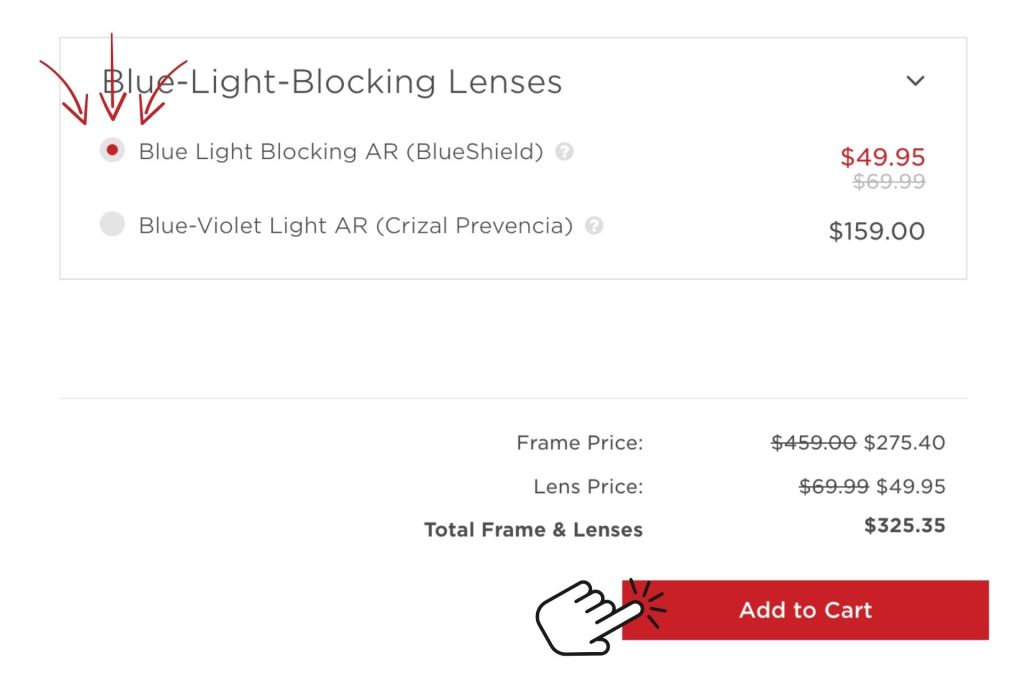
Think that you might benefit from blue light glasses? You can turn any eyeglasses in the EZContacts collection into blue light glasses!
Follow these easy steps:
1. Choose your eyeglasses, including your preferred frame color or pattern.
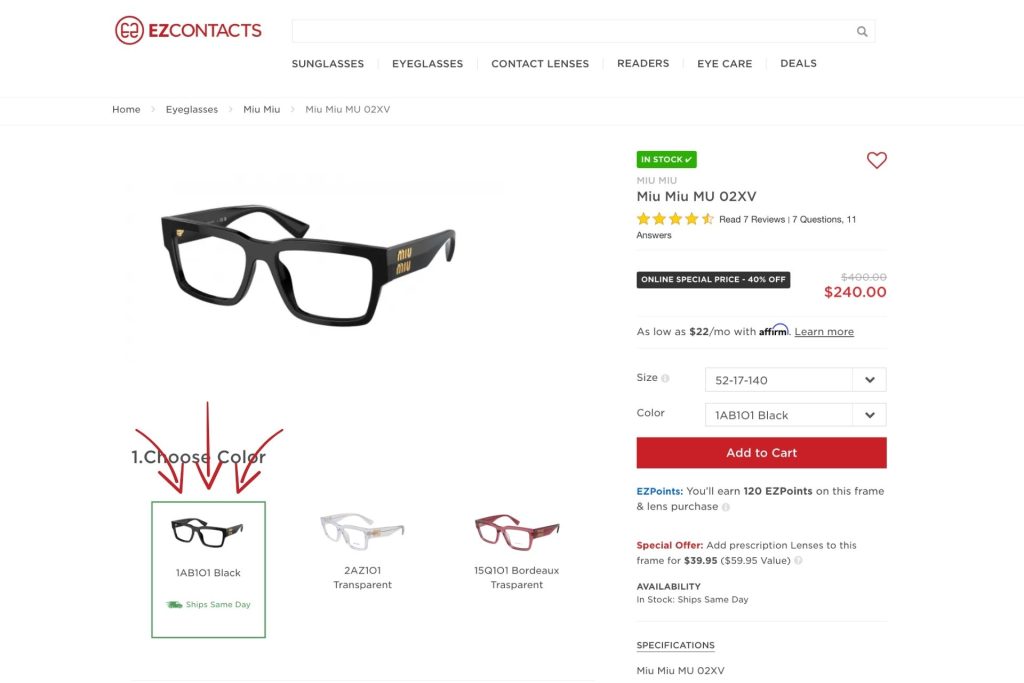
2. Under Lens Style, simply choose Blue Light lenses under your Non-Prescription Options.
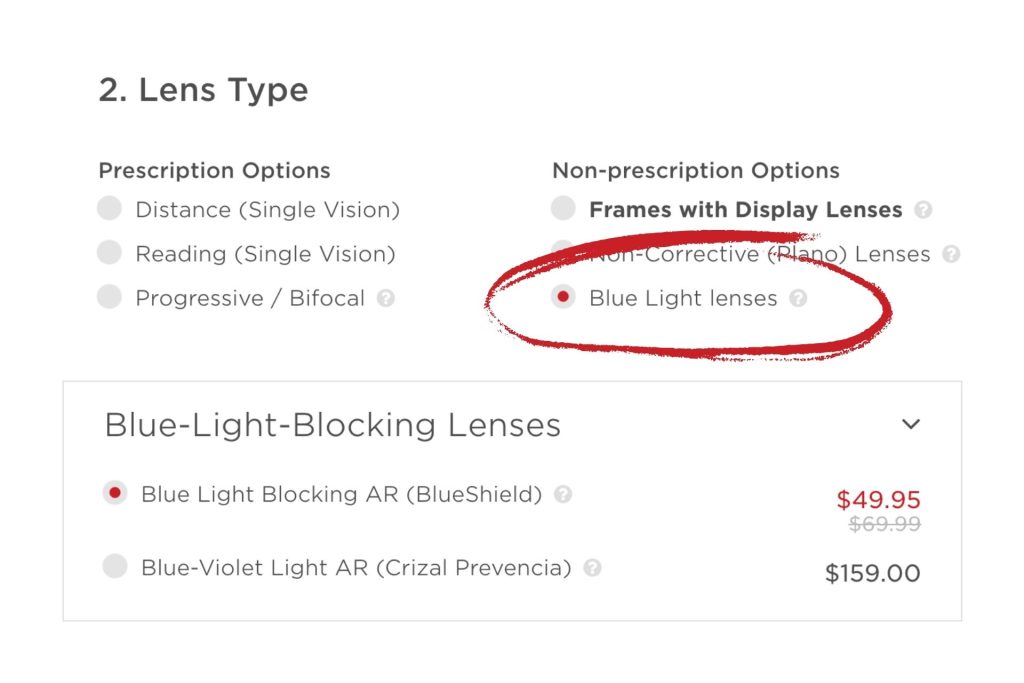
3. Note that there is a $49.95 fee for blue light lenses. Click Add to Cart!
TL;DR Summary
- Blue light glasses are heavily marketed, backed by claims that they reduce eyestrain and headaches caused by digital screen exposure, improve sleep, and protect against macular degeneration.
- Based on expert consensus, including official statements from the American Academy of Ophthalmology and Mayo Clinic, there is little scientific evidence to back up those claims.
- People sensitive to light and digital screens might benefit from using blue light glasses.
- If you’ve been using blue light glasses and see improvements in your sleep, there’s no compelling evidence that you should discontinue use. Enjoy the benefits.
- Alternatives to blue light glasses include limiting overall screen time, taking 20-second breaks away from digital devices, and improving the lighting in your space.
Bottom Line: At this point, most benefits of blue light glasses appear to be more marketing hype than science. However, some people do report positive effects, so if you’re curious, try them for yourself.

