


Transition contact lenses are an innovation in lens technology that took a long time to arrive. While eyeglasses have had transition tech for a while, contact lens wearers were forced to bring their shades in case it got too bright out.
Like the glasses, transition contacts are designed to adapt to changing light levels. If the sun’s glare gets in the way, the tint adjusts to give your eyes a break. The result? You get visual clarity without fussing over sunglasses or running for cover!
Unfortunately, transition lenses have been discontinued. While there are still limited supplies available, they’re going fast. Don’t despair, though. There are some good alternatives to try!
Let’s discuss transition lenses and go over some of the other options you can try once supplies are gone for good!
What Are Transition Contact Lenses?
Transition contact lenses are also known as photochromic contact lenses. Photochromic refers to the ability to change tint or color when exposed to ultraviolet (UV) rays.
This is possible by embedding specialized molecules (usually silver halide crystals) within the lenses. These molecules change structure when exposed to bright light, which darkens the tint of the lenses. The molecules go back to their original state in the absence of intense light.
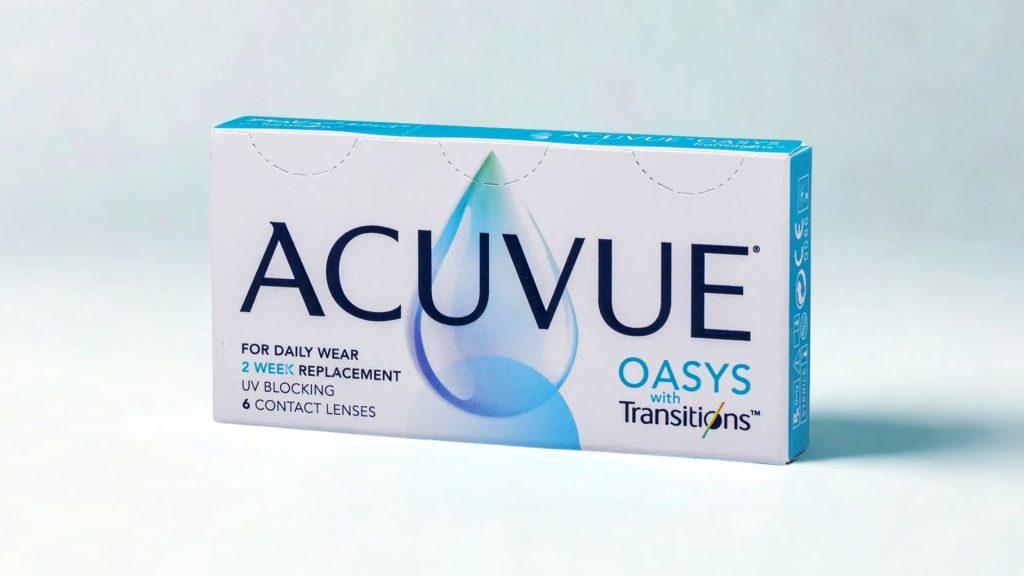
Johnson & Johnson developed this technology and said it took over a decade! It’s a fairly new invention, only approved by the U.S. FDA (Food and Drug Administration) in 2018. By March 2019, ACUVUE OASYS Contact Lenses with Transitions™ Light Intelligent Technology became available to the public.
Pros and Cons of Transition Contact Lenses
Of course, there are two sides to everything: pros and cons.
Pros
- Seamless Light Adaptation: Johnson & Johnson’s Transitions™ Light Intelligent Technology darkens lenses when exposed to UV rays within a minute. They return to their normal state within about 90 seconds when no longer exposed. This is especially useful when you’re always outdoors for work or leisure.
- Enhanced Comfort: Intense light can cause eyestrain. Transition lens technology saves you from this discomfort, which is especially beneficial for people who are extra sensitive to bright light.
- Superior UV Protection: With transition lens technology, you can look forward to protecting your eyes from harmful ultraviolet radiation. Yep, these days, sunglasses aren’t the only way to shield your eyes from the sun!
- Convenience: Transition lens technology offers an all-in-one experience. You get vision correction plus light protection in one piece of eyewear.
- Better Visual Clarity: With lenses that adjust to bright light, you reduce glare and visual distortions. You see better!
Cons
- Slower Transition Times: Transition contact lenses change tint more slowly than their transition eyeglass counterparts. This is because of the lens material and the smaller surface area of the contacts.
- Incomplete Darkening: At times, you may experience incomplete darkening. This is often noticeable inside a moving vehicle where there’s variable light exposure or when you’re exposed to artificial light sources.
- Cost: Transition contacts use specialized materials, which are generally more expensive than traditional contact lenses.
- Limited Availability: This is a major negative when it comes to transition contacts: only Johnson & Johnson’s ACUVUE brand has marketed transition lenses, and they’ve discontinued the product.
Transition Contact Lenses: Available Options
In a perfect world, the contact lens market would have quickly adopted Johnson & Johnson’s winning innovation in transition lens technology. By now, there would be more options, and contact lens wearers would be spoiled for choice.
But no, this isn’t what happened. Instead, Johnson & Johnson remained the only transition contact lens option on the market. Sadly, they eventually announced the end of this product. No one really knows why; it could have been material costs, demand, or advancements in other areas.
As of June 2024, the company has discontinued producing their transition lens line. You can still find transition contacts at some online eyewear retailers, but supplies are going fast.

Trying Transition Contact Lenses
Who knows what the industry will bring? There are still good reasons to try transition contact lenses:
- You’re always outside and don’t want to be bothered to bring sunglasses or alternative eyewear.
- You’re a water person, so you cannot wear sunglasses with your scuba mask or swim goggles.
- You lead an active lifestyle, always running around, indoors, outdoors, or anywhere there’s no time to switch eyewear.
There is a niche market for transition contact lenses; otherwise, a massive company like Johnson & Johnson wouldn’t have bothered to develop the technology. Maybe what’s missing is a big enough push to get more products like ACUVUE OASYS Contact Lenses with Transitions.
Let’s create the demand and tell the big contact lens brands that you want transition technology with your contact lenses!
Alternatives to Transition Contact Lenses
Since ACUVUE OASYS Contact Lenses With Transitions have been discontinued, you’re probably looking for a good alternative. I’m here to help with some other great options!
Note that these aren’t technically transition contact lenses. Johnson & Johnson owns that technology, and no other company has been able to develop something similar. I’m listing contact lenses that provide some of the key benefits of transition contacts, including UV protection and reduced light intensity.
Contacts That Offer Reduced Light Intensity and UV Protection

One of the main benefits of transition lenses is reduced light intensity. If the sun’s out and glaring at you, your contacts will darken. Your eyes won’t strain as much, even if you don’t have sunglasses on.
These contact lenses do the trick… somewhat. It’s not the whole shebang. You’ll probably still need to wear sunglasses when the sun’s high.
ACUVUE OASYS 1-Day Max
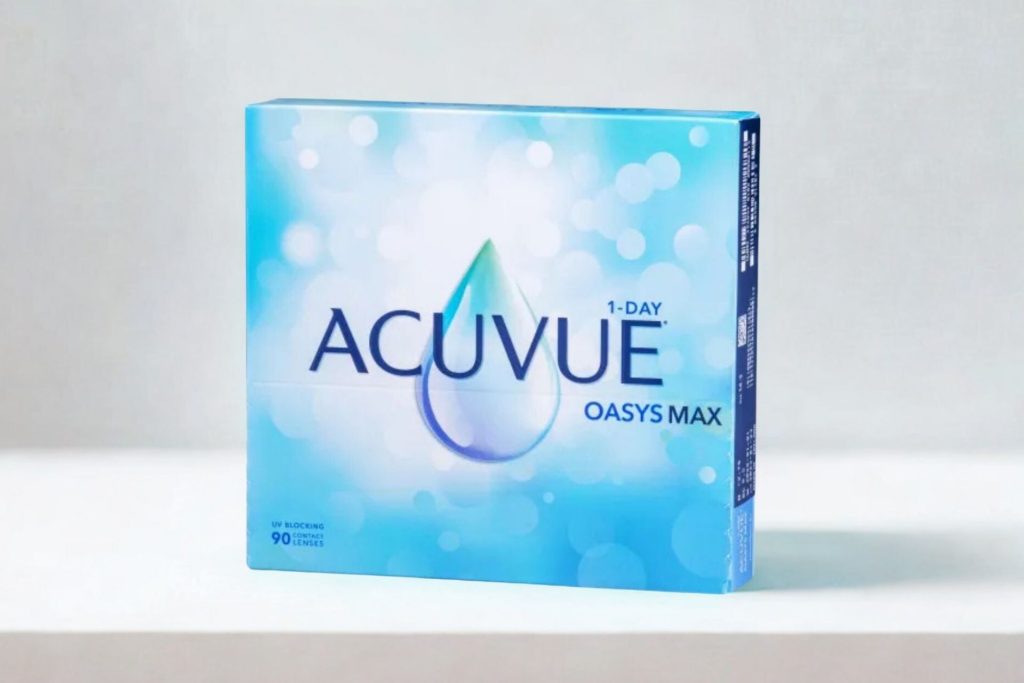
If you go to the ACUVUE OASYS with Transitions page on Johnson & Johnson’s website, you’ll see them offering ACUVUE OASYS 1-Day Max as an alternative to the discontinued transition lenses.
OASYS 1-Day Max contacts are daily lenses. They’re the latest additions to the OASYS family, and they feature advanced technology, such as ACUVUE’s TearStable™ Technology and OptiBlue™ Light Filter.
TearStable is all about moisture and comfort. OptiBlue technology lends you some protection from harmful blue-violet rays, which come from the sun and the light from your digital devices. These are short-wavelength light rays that can damage your retinas and mess with your sleep. These rays can also increase your risk of age-related macular degeneration (AMD).
Transition lenses offer this protection, too, up to a certain extent. OASYS 1-Day Max does a good job as a substitute.
Likewise, with Max 1-Day, you get Class 1 protection from UVA and UVB rays. This is the highest sun protection rating in the industry. (In fact, the whole ACUVUE OASYS line has a Class 1 UV Protection rating. You have options!)
It should also be noted that Max 1-Day is designed with a blue-green visibility tint. This is intended to make lens handling easier, especially for newbies. However, some users also like the light shade it provides. While it’s not like transition lenses, which adjust depending on light intensity, the unintentional sunlight cover is good to have.
You can find 1-Day Max for single vision, multifocal, and astigmatism.
Alcon Total30
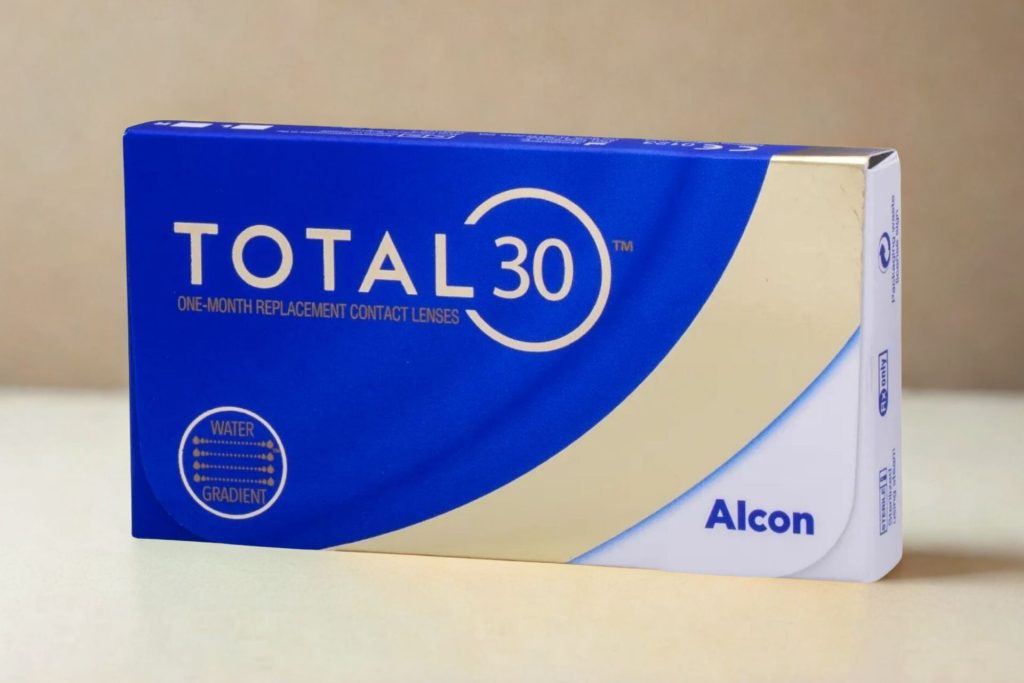
Alcon Total30 contact lenses are monthly disposable lenses touted as some of the most comfortable lenses on the market today. This is due to their Celligent® and Water Gradient technologies, which they say bring incredible comfort. The jury is still out on that one, as EZContacts users have mixed reviews.
However, they come out on top when it comes to UV Protection, as they have a Class 1 rating like Max 1-Day. So, as transition lens substitutes, they cover you when it comes to this feature.
These lenses are also slightly tinted with a blue-green hue for easier handling. Some of its users claim this gives their eyes some shade from the sun.
Clariti® 1 Day
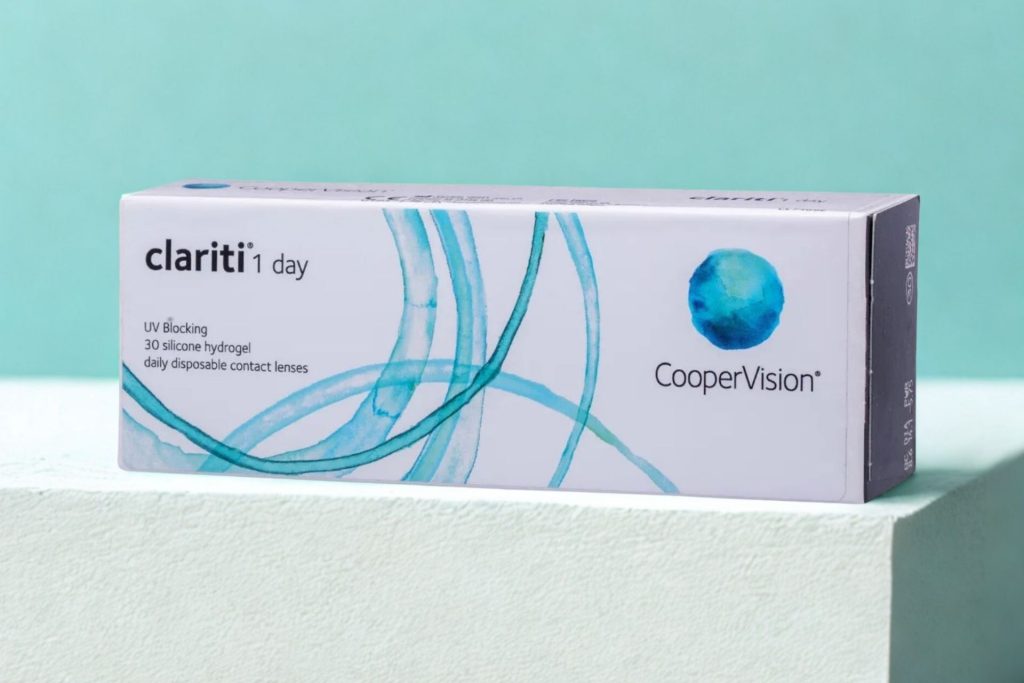
CooperVision positions Clariti 1 Day contact lenses as its entry-level contacts. According to the official product page, they cost just $1 per day and are easy to put in. You also get all-day comfort from these sustainable Net Plastic Neutral lenses.
Another plus is their UV protection feature. Clariti 1 Day contacts are Class 2-rated lenses, which means you get up to 95% UVB protection and around 50% UVA protection. While this does not compare to the Class 1 UV protection ratings of OASYS and Total30, as your more affordable transition lens substitute, it does help.
Your Essential Shield Against the Sun

Whether you are able to buy the last batches of ACUVUE OASYS Contact Lenses with Transitions or opt for any of its substitutes, it is important that you get complete coverage and protection.
Transition contacts and their substitutes do not really give you complete coverage. This is the disadvantage of all contact lenses. Contacts only cover your corneas. The rest of your eyes are left exposed to harmful UV rays.
So, even if your contacts are fully UV ray-proof and darken at the tiniest hint of glare, you still aren’t fully protected.
This is why it’s also essential to wear sunglasses. With or without transition lenses, you need sunglasses that provide 100% UV protection.
UV protection is non-negotiable. This is your way of guaranteeing that you are safe from long-term damage from sun exposure and its complications. You reduce your risk of developing cataracts, macular degeneration, and eye and eyelid cancers, among other eye conditions.
Look for sunglasses with the UV400 label. This denotes 100% UVA and UVB protection. You can find this on the packaging. Sometimes, manufacturers also place UV400 stickers on sunglass lenses.
Other nice-to-haves when it comes to sunglasses:
Photochromic lenses: These are transition lenses. They automatically adjust to light. They darken under the sun and lighten when you’re indoors. They also provide you with moderate glare reduction.
Polarized lenses: These lenses are shades that reduce glare effectively. They are priced a bit cheaper than photochromic lenses.
ACUVUE OASYS Contact Lenses with Transitions and their alternatives are great contact lenses. However, you want to make sure your UV protection is comprehensive. Don’t forget your sunglasses!
TL;DR
- Whether you get OASYS Transition Lenses or any of their alternatives, you still need UV400 sunglasses for complete UV protection.
- ACUVUE OASYS Contact Lenses with Transitions are photochromic contact lenses that adjust their tint with changing light.
- These were developed by Johnson & Johnson in 2019 but were discontinued by 2024. There are only a few boxes left.
- Transition lenses automatically darken or lighten, depending on light intensity, and they provide moderate glare reduction, on top of providing effective vision correction.
- No other lens manufacturers are offering the same features. However, you can find alternatives that provide reduced light intensity, UV protection, and some lens tinting.
- Alternatives include OASYS 1-Day Max, Alcon Total30, and Clariti 1 Day.

