


Single-vision lenses aren’t new technology, but for some users, they are a game-changer.
They correct vision for one specific distance (hence the name), either close-up or far away. In contrast, multifocal lenses correct vision for two or more distances at a time.
But the real question is, are single vision lenses right for you? Let’s dive in!
Who Are Single Vision Lenses Made For?

Believe it or not, single-vision lenses are the most prescribed type of glasses on the market. But they’re not ideal for everyone.
For example, glasses wearers over 40 often experience common age-related vision changes. The eye’s lens starts to lose flexibility, making it harder to focus on close-up objects. This is when multifocal and bifocal lenses often become a good option. These lenses can help those who need to correct both distance and close-up vision.
However, for wearers who just need to correct a vision problem at one distance, single vision lenses could be a good choice.
Vision Issues That Single Focal Lenses Help With

Many common vision issues are corrected by single focal lenses, making them widely accessible.
Myopia (nearsightedness)
Users with myopia may be able to see close-up objects but have trouble seeing things farther away. So you can scroll through your Instagram feed (no problem), but reading a faraway street sign is difficult.
Hyperopia (farsightedness)
Hyperopia affects how clearly you see objects up close. You may be able to read street signs, but you can’t make out the book in your hand very easily. Although in some extreme cases, it can also affect both near and far vision.
Presbyopia
This eye condition is similar to hyperopia, where you struggle to see close-up objects. Presbyopia is a natural sign of vision declining after the age of 40.
If you’ve always had great vision, but as time goes by, you find yourself squinting at the newspaper, it could be presbyopia.
The good news is that this is another condition that singular vision lenses can correct. If you struggle with reading or using your laptop, but don’t have trouble with distance vision, reading glasses could be a good option. You can even buy readers without a prescription, but it’s always wise to consult your doctor to better understand your vision.
However, if you have presbyopia and also have trouble with distance vision, you might want to go for multifocal or bifocal lenses. We’ll go more into what those are later in the article.

Astigmatism
This vision issue occurs when the cornea is misshapen. It doesn’t have to be as concerning as it sounds because single focal lenses can correct astigmatism.
Single Vision Lenses vs. Other Options
There are other popular lenses on the market for vision correction, but the strength and type of lens you need will depend on your condition and your doctor’s guidance.
Progressive Lenses
At first glance, this type of lens may appear to be no different from a single vision lens. What your naked eye can’t see, though, is the technology within the lens, which features multiple lens powers.
As the name reveals, progressive lenses are a combination of strengths. The result is that you can see better at multiple distances, including near, middle ground, and at a distance. That way, you don’t have to switch between readers and other lenses. They’re also subtle, so no one will be able to tell they’re progressive lenses.
Bifocal and Trifocal Lenses
There are also bifocal and trifocal lenses, which are similar to progressives. Bifocal lenses let you see near and far, which is ideal if you struggle to see at different distances. And you guessed it, trifocal lenses also correct vision problems where you struggle to see the middle ground.
But the catch is that these types of glasses have a line running through them between the different zones. This feature puts some people off, as it may be noticeable up close.
Are Single-Vision Lenses Expensive?
Because single vision lenses correct vision at one distance, they’re not as complex as other lenses. This can also make them more affordable. However, the final cost will depend on the frames you choose and any add-ons, such as a blue light filter or anti-reflective coating.
If you need vision correction at different distances, you may be unsure if you should buy multiple single-vision glasses or one pair of multifocal or bifocal glasses. There are pluses and minuses to both options.
Multifocals may be more expensive upfront. However, buying multiple single-vision glasses could end up being more expensive than just buying one pair of multifocals.
The plus side of buying different glasses is that you can try out different styles. You can also invest in the pair you wear more (or the pair you wear to work). Then, you can find an affordable, subtle pair for simple daily tasks or running errands.
How Do You Work Out the Best Option?
Self-diagnosing isn’t the best solution. It’s always best to get your eyes examined by a professional so you can better understand your needs and for peace of mind. Plus, you’ll also need a prescription to start buying your glasses.
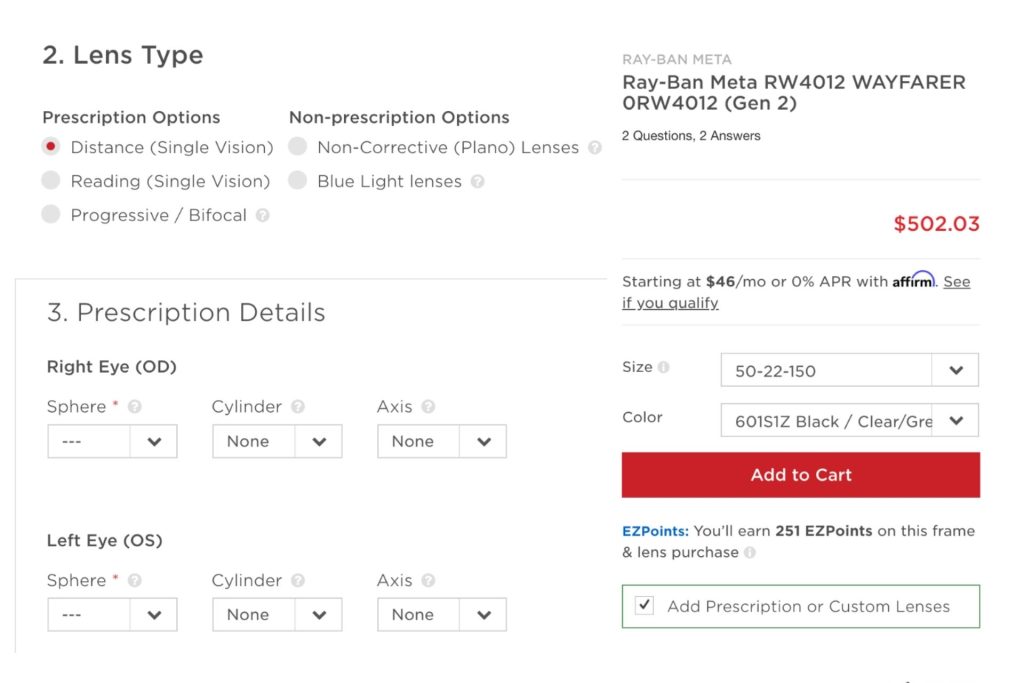
Once you know your prescription, EZContacts makes the process of ordering the right glasses easy. When you find a pair you love, you can select the type of lenses you need and input your details for Rx verification.
You can choose from a wide variety of frames, ranging from designer to affordable styles.
TL;DR
Single vision lenses are the most commonly bought glasses. They work by correcting a single vision issue.
- Single vision glasses are ideal for conditions such as near and farsightedness, where you only struggle to see at a certain distance.
- Some people need more complex lenses, such as multifocal lenses, to correct vision issues at multiple distances.
- Single vision lenses can be more affordable upfront, but if you need more comprehensive vision correction, then it might bring up the bill if you’re buying multiple types of glasses.
- The best thing to do is consult your doctor during an eye exam so you feel confident that you’re choosing the best glasses for your needs.

