
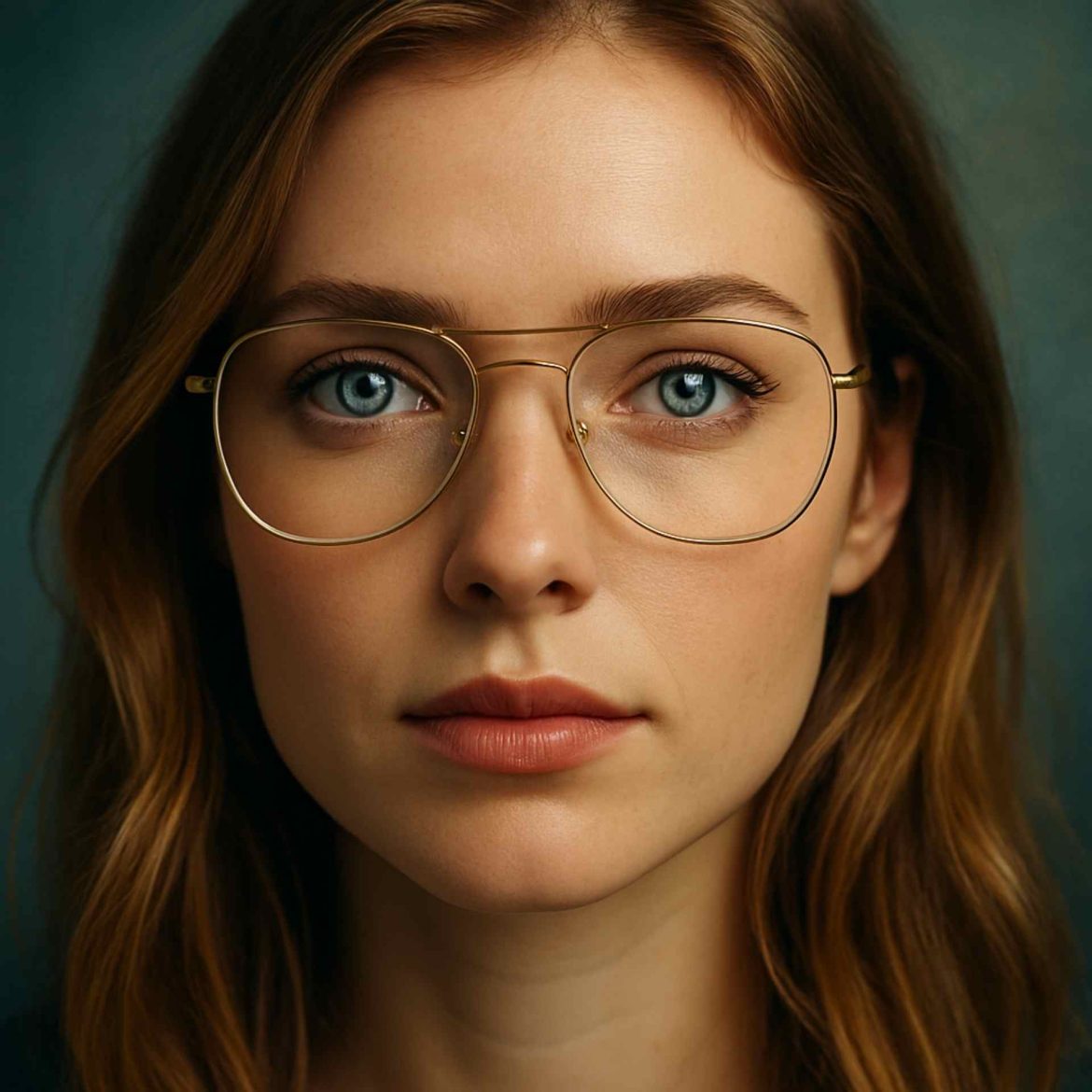

Most people choose frames based on price, shape, or how they fit their face. But there’s one surprisingly overlooked detail that can completely transform your look: your eye color.
Enter color theory! It’s the same fashion principle behind flattering clothing and makeup shades. Some hues naturally highlight your features, while others fall flat. And yes, the right eyeglass frames can make your eyes sparkle and stand out in all the right ways.
Let’s explore which frame colors will enhance your eye color!
Understanding Color Theory
Color theory, grounded in decades of research, offers guiding principles about how colors interact and influence perception.
1. Primary Colors
Primary colors are the foundation of all other colors:
- Red
- Blue
- Yellow
They can’t be made by mixing other colors. Every other hue is created by combining primary colors, but combining any of these three colors in their purest form creates a bold impact.
2. Secondary Colors
Secondary colors can be made by mixing two primary colors:
- Purple (Red + Blue)
- Green (Blue + Yellow)
- Orange (Red + Yellow)
They pair beautifully with primary tones. For instance, have you ever noticed how strikingly different colors, such as blue and orange, are eye-catching when combined? Think about how they’re used in marketing or sports team branding. That’s no accident; there’s real science behind this!
3. Tertiary Colors
Tertiary colors are created by mixing a primary color with a neighboring secondary color. Examples:
- Red-orange
- Yellow-green
- Blue-purple
These are the more nuanced in-between shades, such as teal, coral, or burgundy.
You’ll also want to pay attention to underlying hues in your eyes, skin tone, and hair color. Warm tones are those in the gold to red range, while cool tones are closer to the blue family.
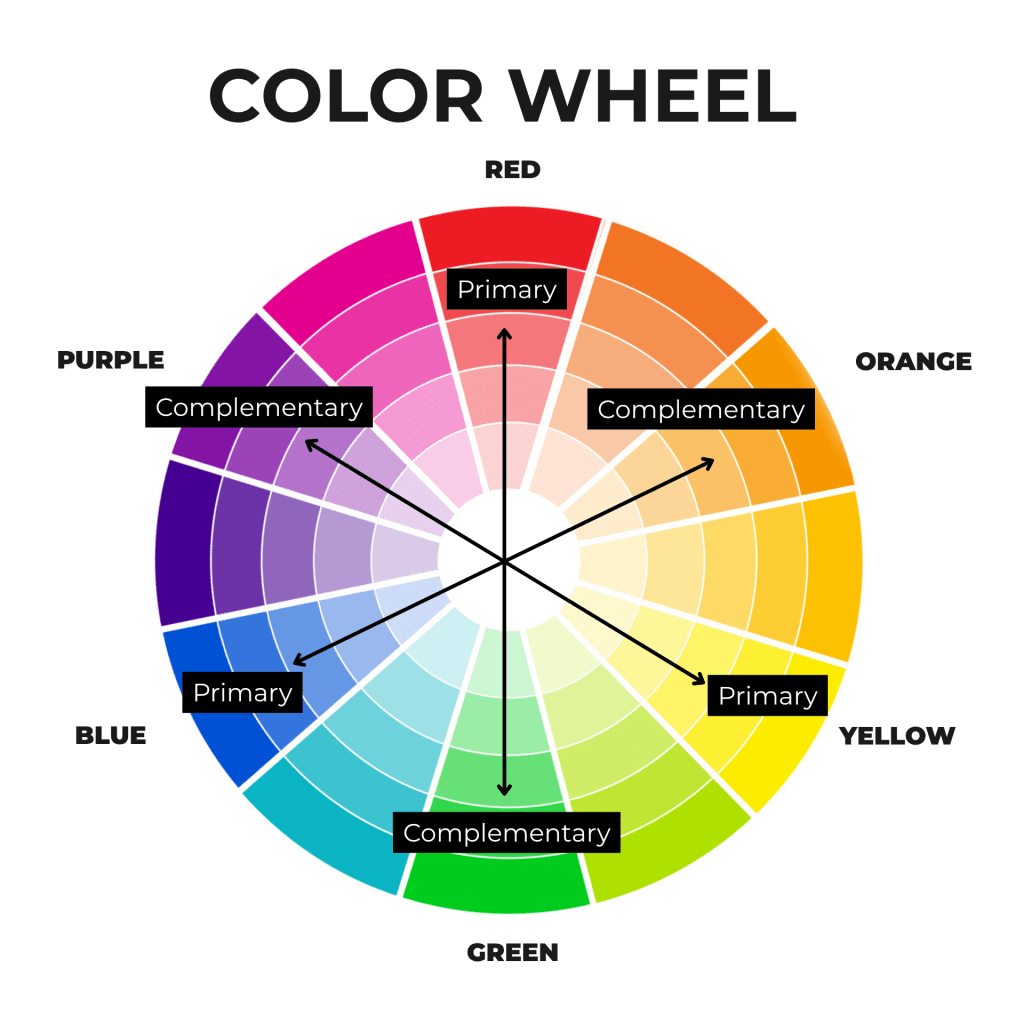
A color wheel, like the one below, helps you identify primary, secondary, tertiary, and complementary colors. Opposites create bold contrast, while neighboring hues (analogous colors) offer a more blended effect.
Applying Color Theory to Eyewear
As a self-confessed fashion addict, I can tell you I’ve delved deep into the world of style. From trends to color theory, I like to keep informed about what’s what.
When it comes to eyewear and fashion in general, the color wheel provides a visual shortcut to looking effortlessly put together or choosing colors that are more likely to draw attention to your features.
For example, look at the wheel, and find the hue closest to your eye color.
- Brown Eyes: You’ll be looking at hues in the orange family, including shades of brown. If you want your eyes to stand out, choose complementary shades on the opposite side of the color wheel, such as blues.
If you have a cool skin tone, neighboring hues like purple and teal can look fabulous. However, if your undertones are warm, you might want to focus on golds, coppers, and browns. - Blue Eyes: Shades in the blue range, from greys to deep navies, work well with your eye color. However, if you want to make your eyes pop, try colors in the orange range, opposite blue on the color wheel. These would include caramels and browns.
Experiment with cool tones, such as teals, pinks, and purples, or warm, golden tones. Want to be really daring? Warm reds contrast cool blues for visual impact, even if they’re not strict complements. - Green or Hazel Eyes: The interesting thing about green is that it encompasses both warm and cool shades, depending on whether a particular green was created with more yellow or blue.
Select shades similar to your eye color to play it safe. But let’s be honest, complementary red frames can be fun!
If you aren’t ready for the opposite side of the wheel, stick to neighboring shades of green that complement your skin, eye, and hair colors. If you have hazel eyes or flecks of brown, you’ll be leaning toward warmer hues. If your green leans more toward grey or blue, concentrate on cool colors.
I’ve already put these concepts to work! Now, let’s see how specific frames complement each eye color and which shades to skip. Hopefully, these examples will provide a clearer understanding of color theory and how it applies to eyewear.
Glasses To Show Off Warm Brown Eyes
Brown is a warm base color that works well with most other hues. Brown eyes can range from golden to deep chocolate brown, and there are lots of eyeglass frames to enhance your warm, rich tones.
Let’s start with an easy win: brown frames look great with brown eyes! Take a look below to see what I mean:
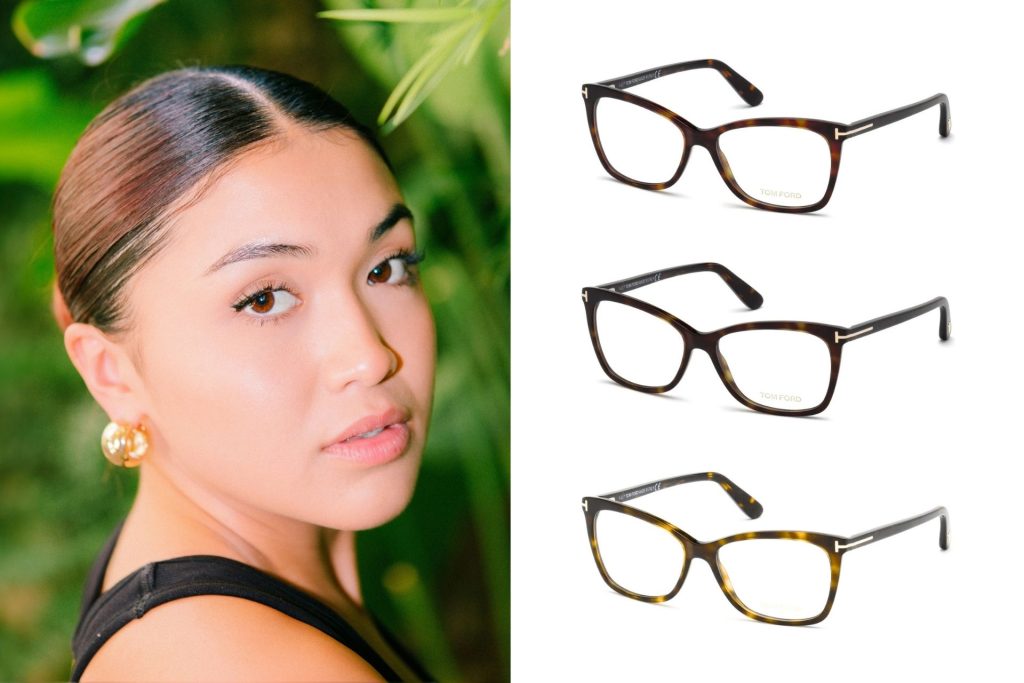
If you want to add a pop of color with a warm tone, orange frames can do the trick. Plus, that combination looks fantastic with dark hair!
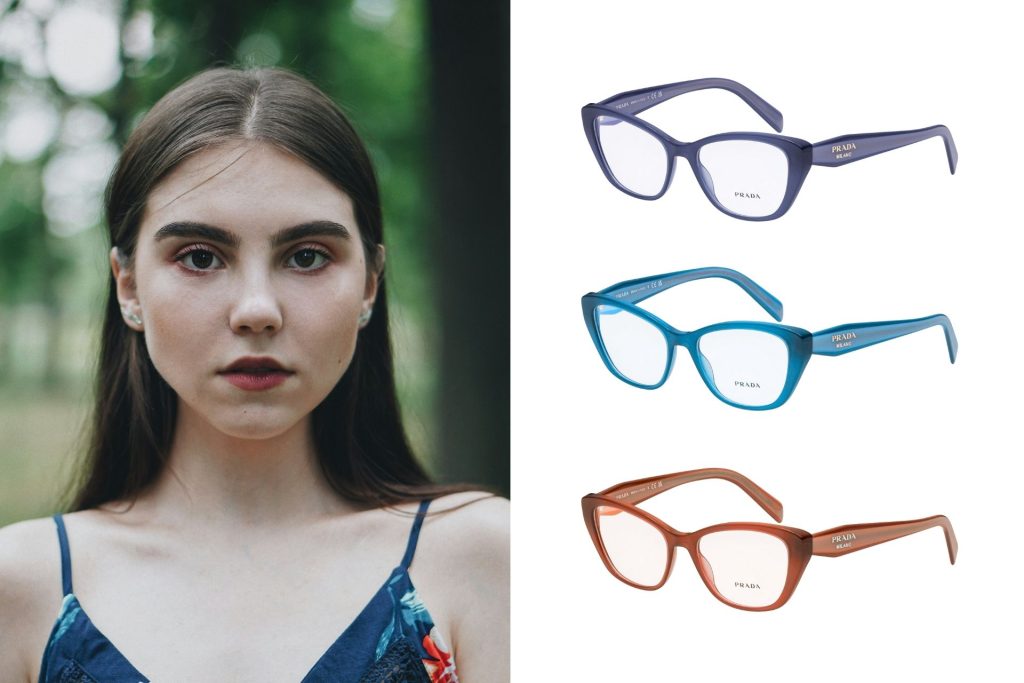
On the other hand, cool tones on the opposite side of the color wheel, like blues and purples, make beautiful brown eyes more noticeable. These opal blue Prada glasses are a playful example of how bold colors can complement dark brown eyes.
Other Colors To Try
- Green or teal frames can add a nice contrast to very dark brown eyes, making for a powerful combination.
- Gold, caramel, or tortoiseshell frames look fantastic with brown eyes.
- You can choose from a variety of metallic glasses, from polished brass to antique gold.
Colors To Avoid
- Brown eyes work with almost any color, but pastel shades can sometimes wash you out or make you look tired.
Glasses That Make Blue Eyes Pop
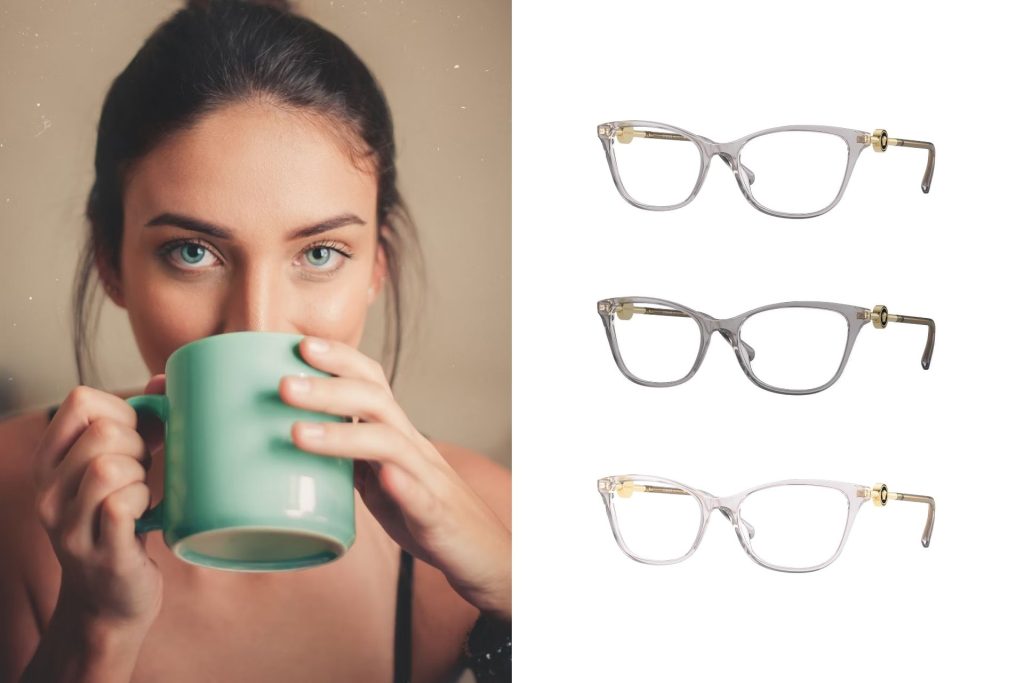
Blue eyes can vary from icy silver-blue to a rich, deep violet. So first, consider the tone of blue in your eyes. Grey eyeglass frames do wonders for light blue eyes! The subtle tones complement them quite well.
As you can see, the woman pictured below has mesmerizing ocean-blue eyes. The corresponding grey Versace glasses feature cool tones with minimal color, allowing your eyes to be the focal point.
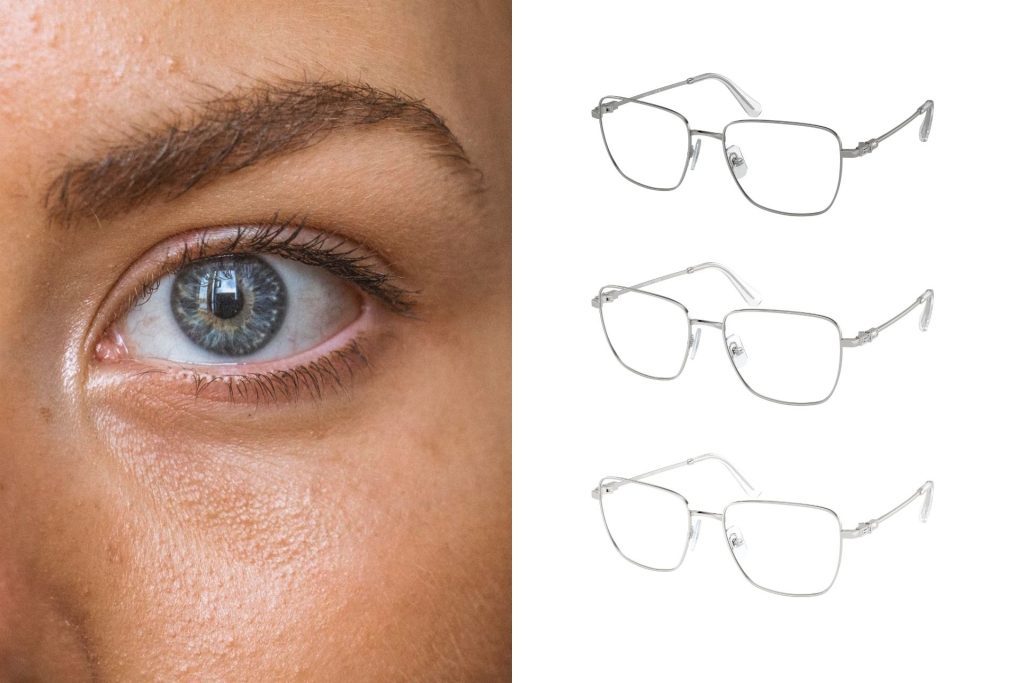
Silver frames also complement certain blue eyes, especially those with a touch of grey. Again, both are cool tones. The simple, slim Swarovski eyeglasses below let the model’s eyes shine without being distracting.
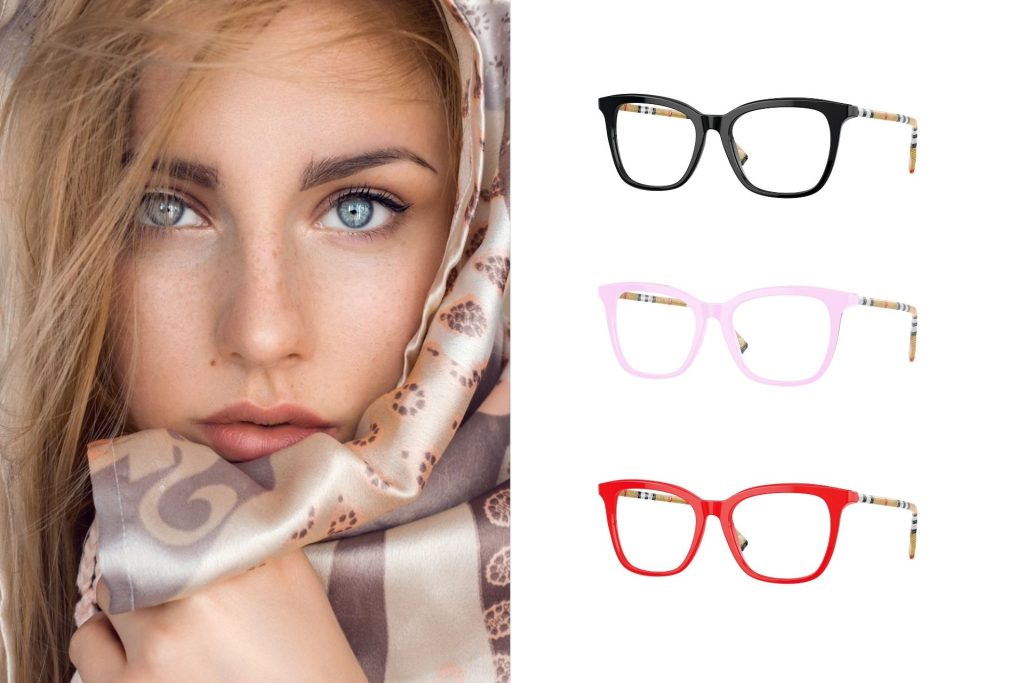
While black is achromatic and not part of the traditional color wheel, it’s a classic for a reason. It really makes crystal-blue eyes stand out! And this effect works with both light and dark hair.
But if you want to make a major impact, try anything in the red family. Blue and red are both primary colors, and cool (blue) and warm (red) create a bold contrast.
Can you see how any of these cat-eye Burberry eyeglasses would suit the model’s blue eyes?
Other Colors To Try
- Baby pink frames work in harmony with light blue eyes.
- Light brown, a desaturated, darker version of orange, can also emphasize a sparkling blue eye color.
Colors To Avoid
- Blue frames with blue eyes can cancel each other out, and finding a complementary blue isn’t always easy.
Glasses To Highlight Mesmerizing Green Eyes
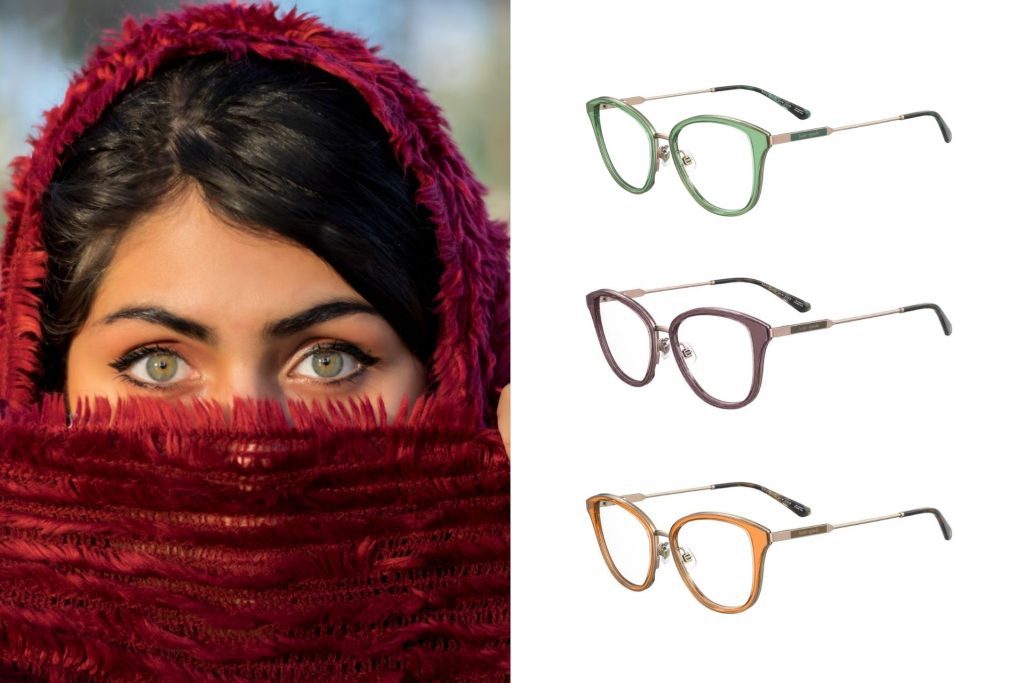
If you’re lucky enough to have green or hazel eyes, you want to make the most of your stunning eye color! Green eyes pair well with a surprising range of frame colors.
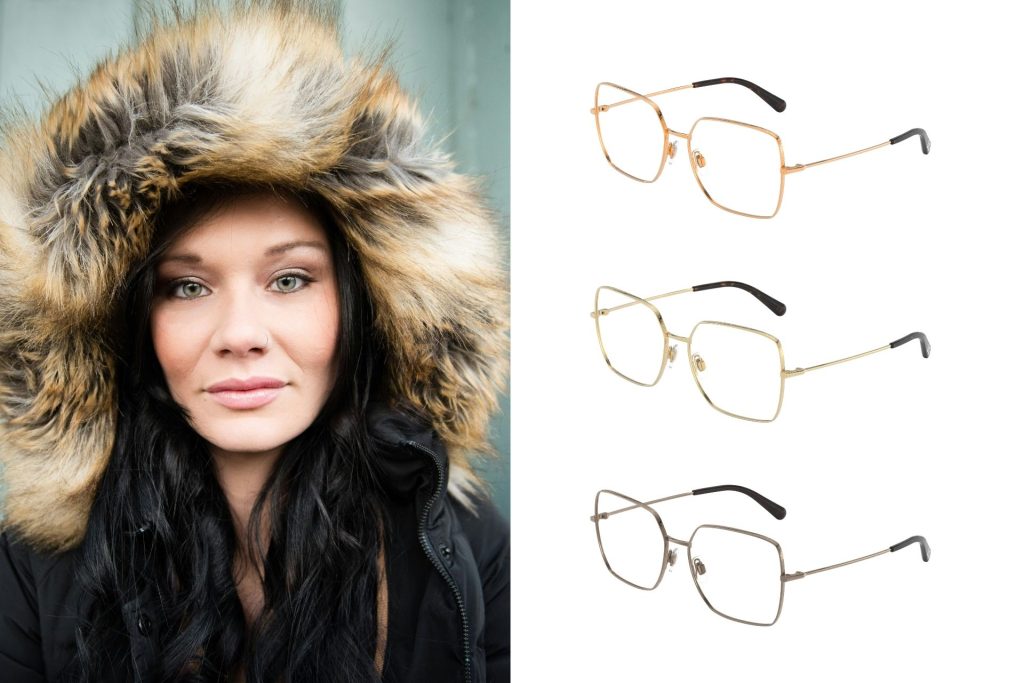
If you prefer metallic eyeglasses, consider gold frames. This yellow metal accentuates the warmth in your eyes. The slim gold Dolce & Gabbana frames in the photo below would look perfect with her light green eyes and dark hair.
Green also goes well with … green! But instead of picking a color that overwhelms your face, choose hues that blend well with the undertones in your eyes, hair, and skin.
For example, these emerald green Kate Spade eyeglasses would bring out the yellow undertones in the model’s eyes. The end result? An enchanting effect!
Other Colors To Try
- Brown frames can work wonders for green eyes. Try a solid or some multi-toned tortoiseshell frames.
- If you want to turn some heads, give orange frames a go! Yes, it’s a brave choice, but you can pull it off. Colors like coral can work with green due to their shared warmth, even though they’re not true complements.
Colors To Avoid
- Silver frames often pale in comparison to gold when paired with green eyes.
- Cool-toned purples can compete with green eyes, depending on the undertone. Warmer purples or reddish-plums may be a better match.
TL;DR Summary
The color wheel helps identify complementary hues and similar shades that create harmony or contrast, core concepts of color theory. This scientifically backed framework can be applied to eye colors and eyeglasses:
- Brown Eyes: Try gold, orange, or caramel tortoiseshell frames for a complementary look. Or go bold with purple, blue, or green for a striking effect.
- Blue Eyes: Choose colors that highlight the depth of your eyes. Opt for silver or grey for a subtle effect, or black, pink, or red for instant contrast.
- Green/Hazel Eyes: Consider similar colors like green and brown, or be daring with contrasting colors like orange for a noticeable pop!
When picking your frames, use them as guidelines, taking into account other factors such as your skin tone and hair color. But most importantly, keep in mind, these rules aren’t set in stone. Wear what works for YOU.
Now, go forth and start experimenting!

